wayground logo

Free Printable Worksheets

Font size

S
M
L
XL
Worksheets

Pretest for Fall Semester

Total questions: 77

Worksheet time: 4hrs 4mins

Name
Class
Date
1.
Ice melting
a)
Chemical Change
b)
Physical Change
2.
Wood burned in a fireplace
a)
Chemical Change
b)
Physical Change
3.
Cake batter baked in an oven
a)
Chemical Change
b)
Physical Change
4.

Photosynthesis is the process in which plants make sugar(glucose) and oxygen. It is a ---- property.

a)

Chemical

b)

Physical

5.

Solubility, the ability to dissolve, is a --- property.

a)

Chemical

b)

Physical

6.

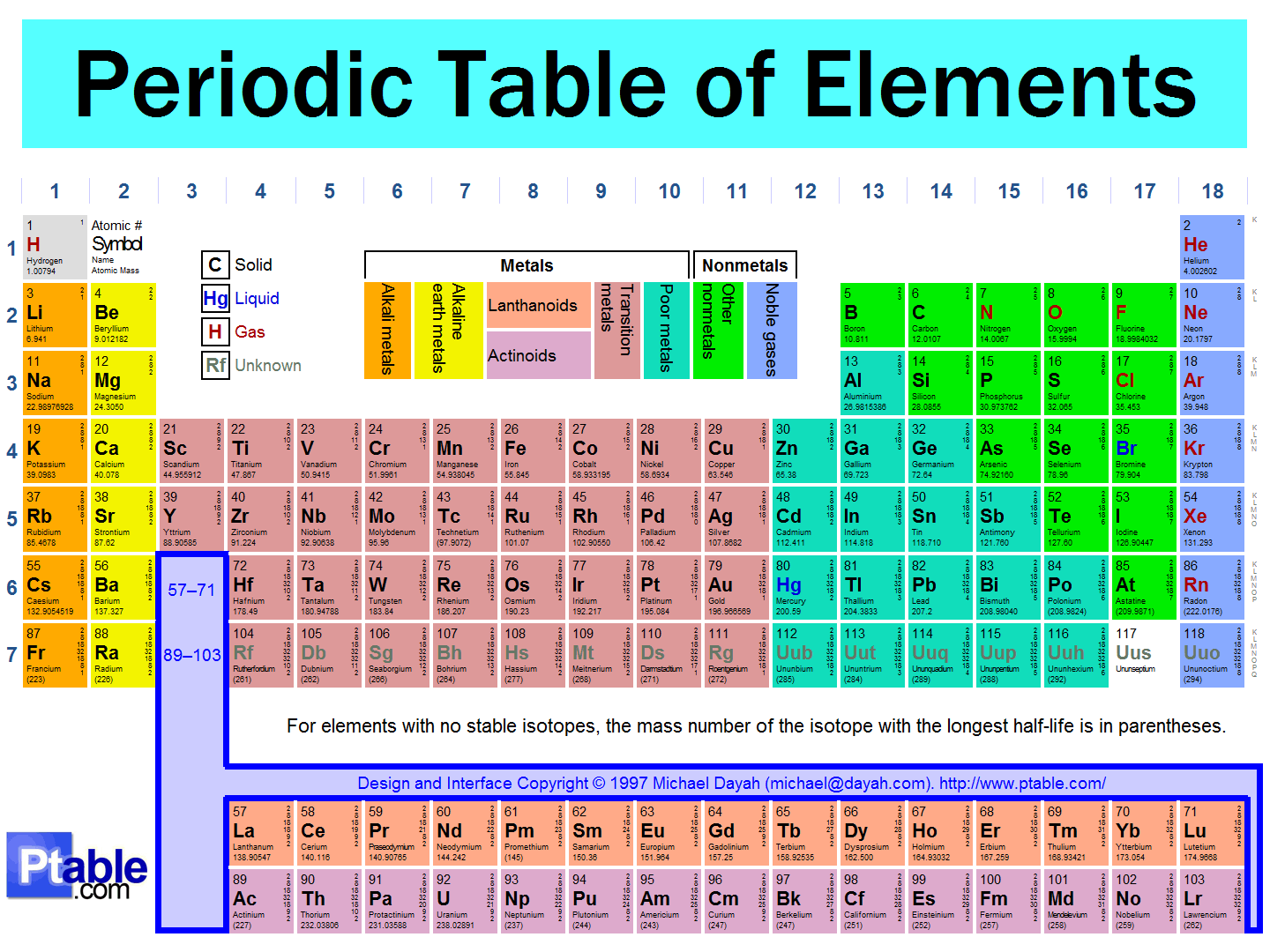
The vertical (up and down) columns in the Periodic Table are called

a)

groups

b)

towers

c)

periods

d)

atomic numbers

7.
Sodium (Na) is found in period 
a)
3
b)
2
c)
4
d)
1
8.
The phases of the moon are __________ because they repeat in a pattern.
a)
periodic
b)
group
c)
awesome
d)
halogens
9.
The atomic number tells you what?  READ THE ANSWERS CAREFULLY
a)
only the number of electrons
b)
 only the number of protons
c)
only the number of neutrons
d)
the number of both electrons and protons in an atom.
10.
What does the atomic mass tell you? 
a)
Basically,the number of electrons and protons
b)
The number of neutrons
c)
Basically, the number of protons and neutrons
d)
The number of protons.
11.
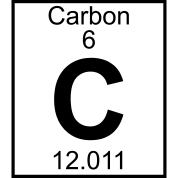
What does the 6 represent?
a)
atomic mass
b)
atomic number
c)
element name
d)
chemical symbol 
12.
What does 12.011 represent?
a)
atomic mass
b)
atomic number
c)
element name
d)
chemical symbol 
13.
Most of the mass of an atom is found it its _____.
a)
electron cloud
b)
nucleus
c)
atomic number
d)
empty space
14.
The atomic number of an element tells the number of _____ in the nucleus of an atom of that element.
a)
protons
b)
neutrons
c)
electrons
d)
isotopes
15.
Each is an example of matter except _____.
a)
a cloud
b)
air
c)
a dust particle
d)
a beam of light
16.
Rutherford's experiment showed that most of an atom is made up of _____.
a)
a nucleus
b)
an electron cloud
c)
empty space
d)
alpha particles
17.
An element is made up of only one kind of _____.
a)
isotope
b)
plastic
c)
atom
d)
metal
18.
What subatomic particles are located in the electron cloud?
a)
quarks
b)
protons
c)
electrons
d)
neutrons
19.
Which item on this element square is the chemical symbol?
a)
Copper
b)
29
c)
Cu
d)
63.546
20.

What are the three main groups of the periodic table?

a)

groups

b)

metal

c)

nonmetals

d)

metalloids

e)

periods

21.

What are the vertical columns on the periodic called?

a)

groups

b)

periods

c)

nonmetals

d)

metals

e)

metalloids

22.

What do the vertical columns on the periodic table tell us?

a)

The number of orbitals

b)

The number of valence electrons (electrons on the outer most shell)

23.

Who proposed a model with electrons moving in specific layers?

a)

Rutherford

b)

Bohr

c)

Thomson

d)

Dalton

24.

Who discovered the electrons?

a)

Rutherford

b)

Bohr

c)

Thomson

d)

Dalton

25.

This element has two valence electrons and two energy levels?

a)

Beryllium (Be)

b)

Lithium (Li)

c)

Zinc (Zn)

26.
Which of the following is an Alkali Metal? 
a)
Magnesium
b)
Chromium
c)
Sodium
d)
Fluorine 
27.
Which of the following is an Alkaline Earth Metal? 
a)
Calcium
b)
Lithium
c)
Phosphorus
d)
Copper 
28.
Which of the following is a transition metal? 
a)
Iron
b)
Oxygen
c)
Neon
d)
Barium
29.
Which of the following is a Halogen? 
a)
Bromine
b)
Rubidium
c)
Argon
d)
Beryllium
30.
Which of the following is a Noble Gas? 
a)
Krypton
b)
Chlorine
c)
Radium
d)
Gallium
31.
Which of the following is the most reactive group of metals? 
a)
Alkali
b)
Alkaline Earth
c)
Halogen
d)
Transition Metals
32.
Which of the following will have a larger radius than Zinc?
a)
Gallium
b)
Aluminum
c)
Magnesium
d)
Strontium
33.
Which of the following will have a higher electronegativity than arsenic (As)?
a)
Carbon (C)
b)
Neon (Ne)
c)
Antimony (Sb)
d)
Germanium (Ge)
34.
Which of the following will have a lower ionization energy than Scandium (Sc)?
a)
Helium (He)
b)
Titanium (Ti)
c)
Calcium (Ca)
d)
Magnesium (Mg)
35.
As atoms of elements in group 16 are considered in order from top to bottom, the electronegativity of each successive element....
a)
decreases
b)
increases
c)
remains the same
d)
none of the above
36.
As you move across the periodic table atoms tend to get smaller because, ______________.
a)
the atoms have more mass.
b)
the atoms have less mass
c)
the atoms have more protons.
d)
the atoms have less electrons.
37.
Electronegativity is...
a)
the ability of an atom to attract/ accept electrons
b)
the ability of an atom to lose electrons
c)
the energy required to remove an electron from a specific atom
d)
how easy it is to make friends. 
38.
Ionization energy is...
a)
the energy required to add an electron to a specific atom
b)
how much energy it takes to remove an electron from an atom
c)
the energy required to shield the outer electrons from the nucleus
d)
a measure of the ability of an atom to attract electrons
39.
The atom with the largest atomic radius in Group 18 is - 
a)
Ar
b)
He
c)
Kr
d)
Rn
40.
Which statement correctly and completely identifies a trend?
a)
Atomic radius decreases across a period and increases down a group.
b)
Electronegativity decreases across a period and decreases down a group.
c)
Ionization energy increases across a period and increases down a group.
d)
Ionic radius increases across a period and increases down a group.
41.
What is the noble gas shorthand electron for Sulfur atom?
a)
[Ar] 3p4
b)
[He] 3s23p4
c)
[Ne] 3s23p4
d)
[Na] 3s23p4
42.
What atom matches this electron configuration?
1s22s22p63s2
a)
Neon
b)
Magnesium
c)
Aluminum
d)
Potassium
43.
Which is associated with more energy? 
a)
2p
b)
2s
c)
3p
d)
1s
44.
What is the charge of an atom that has lost one electron?
a)
-1
b)
-2
c)
+1
d)
+2
45.
Anions are _______ that form ____________ ions and __________ electrons.
a)
nonmetals, positive, lose
b)
nonmetals, negative, gain
c)
metals, positive, gain
d)
metals, positive, lose
46.
What is the electronic configuration of iron?
a)
1s22s22p63s23p64s23d6
b)
1s22s22p63s23p63d8
c)
1s22p63s23p64s23d6
d)
1s22s22p63s23p64s13d6
47.
True or false: as you move along the spectrum, radio to gamma waves, the wavelengths decrease in size (get smaller)
a)
true
b)
false
48.
Select the correct order of waves on the EMS from the longest wavelength to the shortest wavelength
a)
Radio, Micro, Infra, Visible, Ultra, X-ray, Gamma
b)
Gamma, X-ray, Ultra, Vis, Infra, Micro, Radio
c)
Vis, Micro, Infra, Ultra, X-ray, Gamma, Radio
d)
Micro, Radio, Vis, Infra, Ultra, X-ray, Gamma
49.
How are electromagnetic waves different from other waves? 
a)
They have very short wavelengths 
b)
They transmit energy instead of matter 
c)
They can travel through empty space
d)
They can change direction by reflection 
50.
The distance between two crests or two troughs of a wave is called:
a)
frequency
b)
amplitud
c)
wavelength
d)
hertz
51.
Covalent bonds are between...
a)
Metal and Non-metal
b)
Non-metal and Non-metal
c)
Metal and Metal
52.
Ionic bonds are between...
a)
Metal and Non-metal
b)
Non-metal and Non-metal
c)
Metal and Metal
53.
Atoms are most stable when their outer shell is complete.
a)
true
b)
false
54.
Same repel, opposites
a)
avoid
b)
attract
c)
push
d)
pull
55.
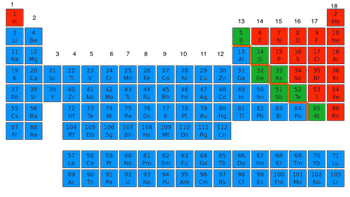
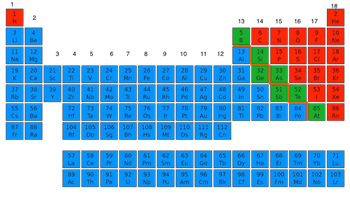
Where are metals located on the periodic table?
a)
Blue
b)
Green
c)
Red
56.
Where are the nonmetals located on the periodic table? 
a)
Blue
b)
Red
c)
Green
57.
Where are the metalloids located on the periodic table?
a)
Blue
b)
Red
c)
Green
58.
zinc fluoride
a)
ZnF2
b)
ZnF
c)
Zn2F
d)
Zn2F4
59.
sliver phosphide
a)
Ag3P
b)
Ag3PO4
c)
Ag3PO3
d)
AgP
60.
Sr(OH)2
a)
Strontium Hydroxide
b)
Strontium Hydride
c)
Strontium Dihydroxide
d)
Strontium Dioxygen Dihydride
61.
A binary covalent bond exists between
a)
2 metals
b)
1 metal and 1 nonmetal
c)
2 nonmetals
d)
Any 2 elements
62.
What is the correct name for C4H6?
a)
Carbon Hexahydride
b)
Pentacarbon Pentahydride
c)
Hexacarbon Tetrahydride
d)
Tetracarbon Hexahydride
63.
What is the correct name for NO?
a)
Mononitrogen Monoxide
b)
Nitrogen Monoxide
c)
Mononitrogen Dioxide
d)
Nitrogen Oxide
64.
What is the formula for Tricarbon Octahydride?
a)
Ca3O
b)
C2H8
c)
C3H8
d)
Ca3H8
65.
In a ___________change, a substance changes into a different substance.
a)
Physical
b)
Chemical
66.
In a chemical reaction, bonds are broken and new bonds are formed that create new substances. The bonds that are broken are called what?
a)
Reactants
b)
Products
c)
Atoms
d)
Catalysts
67.
The Law of Conservation of Mass states
a)
that matter exists in all states and reacts the same
b)
that matter can only be changed into new substances by introducing a catalyst
c)
that matter exists in the same state throughout any chemical change
d)
that matter cannot be created or destroyed and that the mass of the products must equal the mass of the reactants
68.
Which of the following IS a physical change?
a)
Getting a haircut
b)
Rusty metal
c)
sour milk
d)
A compound
69.
___________________ are the elements are compounds that leave (are formed in) a chemical
reaction.
a)
Polymers
b)
Bonds
c)
Reactants
d)
Products
70.
What is the left part of a chemical equation called?
H2 + O → H2O
a)
Reactants
b)
Products 
c)
Yields 
d)
Chemical Equation 
71.
What is the right part of a chemical equation called?
H2 + O H2O
a)
Reactants
b)
Products 
c)
Yields 
d)
Chemical Equation 
72.
Si + S8 →Si2S4
a)
Synthesis (combination)
b)
Decomposition
c)
Single replacement
d)
Double replacement
73.
KOH + H3PO4 → K3PO4 + H2O
a)
Synthesis (combination)
b)
Decomposition
c)
Single replacement
d)
Double replacement
74.
Pb(NO3)2 →PbO + NO2 + O2
a)
Synthesis (combination)
b)
Decomposition
c)
Single replacement
d)
Combustion
75.
__Al + __Fe3N2 -->__AlN + __Fe
a)
already balanced
b)
4,2,4,6
c)
2,1,2,3
d)
1,2,1,3
76.
__H2O2 --> __H2O + __O2
a)
already balanced
b)
2,1,1
c)
2,2,1
d)
2,1,2
77.
__H2O + __CO2 --> __C7H8 + __O2
a)
4,7,1,9
b)
4,7,1,7
c)
2,3,1,3
d)
already balanced