
 Worksheets
Chemistry Review
Total questions: 80
Worksheet time: 7hrs 40mins

(a) increases rate (b) decreases rate
(a) decreases rate (b) increases rate
(a) does not change rate (b) decreases rate
(a) increases rate (b) does not change rate

substance which decreases the rate of reaction
substance that increases temperature of a reaction
substance that decreases temperature of a reaction
substance which speeds up a reaction

What would the line for this new concentration look like?
Line looks the same, but the ending location is lower
Line will look exactly the same as existing line
Final and initial locations the same, but with a less steep line
Final and initial locations the same, but with a steeper line

decreases rate
increases rate
rate stays the same
rate doubles

A
B
C
D

36
39
41
43

pH 0
pH 6
pH 7
pH 10
pH 14

acidic
basic
neutral
amorphic

1.0
1.6
2.0
2.6

the pH increases continuously at the same rate
pH decreases slowly then suddenly around 18 cm^3 then slowly again
the pH decreases continuously at the same rate
pH increases slowly then suddenly around 18 cm^3 then slowly again

to show the end of the titration (when the litmus changes from pink to blue)
to show the end of the titration (when the litmus changes from blue to pink)
to show when to start the titration (when the litmus changes from pink to blue)
to show when to start the titration (when the litmus changes from blue to pink)

water
strontium chlorine
dihydrogen monoxide
strontium chloride

decreases slowly at first, then suddenly, then slowly again
increases slowly at first, then suddenly, then slowly agian
decreases at a regular rate
increases at a regular rate

18
23
26
31

W and Z
X and Z
X only
Y only

acidic phosphorus is a metal
acidic phosphorus is a non-metal
basic phosphorus is a metal
basic phosphorus is a non-metal

yellow to red/pink
red/pink to yellow
red/pink to blue
blue to red/pink

When Co3O4 is heated with hydrogen, cobalt metal can be formed. How does this equation show that is reduced?
it loses oxygen
it gains oxygen
oxygen does not change
oxygen is doubled
Potassium manganate(VII) is produced from manganese(IV) oxide by an oxidation reaction. What is meant by the term oxidation?
losing oxygen
gaining oxygen
oxygen being present
oxygen staying the same

Nickel can be obtained from nickel(II) oxide by heating it with a mixture of carbon monoxide and hydrogen. How does this equation show that the nickel(II) oxide is reduced?
it gains oxygen
it has oxygen present
oxygen remains the same
it loses oxygen

The equations shown are all redox reactions. Which oxide is oxidized in these reactions?
Fe2O3
CO
ZnO
NO
Iron from a blast furnace contains carbon, sulfur, silicon and phosphorus as impurities. Iron is converted into steel in a basic oxygen converter. The impurities undergo oxidation. What is meant by the term oxidation?
oxygen tripled
lose of oxygen
gain of oxygen
oxygen remains the same
Magnesium cannot be produced by electrolysis of aqueous magnesium chloride using inert electrodes. Name the product formed at the negative electrode (cathode) during the electrolysis of aqueous magnesium chloride.
magnesium
chlorine
oxygen
hydrogen
Magnesium cannot be produced by electrolysis of aqueous magnesium chloride using inert electrodes. Suggest how magnesium can be produced from magnesium chloride by electrolysis.
Make it solid before electrolysis
Make molten before electrolysis
Add more water to aqueous solution before electrolysis
Switch the chloride for bromine before electolysis
Predict the product of the electrolysis of molten zinc iodide at the negative electrode.
zinc
iodine
hydrogen
oxygen
Predict the product of the electrolysis of molten zinc iodide at the positive electrode.
zinc
iodine
hydrogen
oxygen

Magnesium is manufactured by the electrolysis of molten magnesium chloride. What information in the diagram shows that molten magnesium is less dense than molten magnesium chloride?
magnesium sank under the molten magnesium chloride
magnesium floats on the molten magnesium chloride
the magnesium and molten magnesium chloride mix
the diagram does not give enough information
Magnesium is manufactured by the electrolysis of molten magnesium chloride. One of the products of this electrolysis is magnesium. State the name of the other product.
hydrogen
oxygen
magnesium
chlorine
Magnesium is manufactured by the electrolysis of molten magnesium chloride. An unreactive gas is blown over the surface of the molten magnesium. Suggest why an unreactive gas and not air is blown over the surface of the molten magnesium.
to stop it reacting with air
there isn't enough air to supply
air is too hot
air is too cold

The diagram shows the structures of five substances. Which structure conducts electricity when molten
A
B
C
D
E

The diagram shows an electrical cable. Which statement about the substances used is correct?
The coating is plastic because it conducts electricity well.
The core is copper because it conducts electricity well.
The core is copper because it is cheap and strong.
The core is iron because it is cheap and strong.

The diagram shows the apparatus used for the electrolysis of molten sodium bromide. What does the term electrolysis mean?
a liquid that can conduct electricity
breakdown of a compound using electricity
the negative electrode
the positive electrode
The diagram shows the apparatus used for the electrolysis of molten sodium bromide. Which letter in the diagram represents the cathode?
R
S
U
T

A
B
C
D

A
B
C
D
Solutions of two chemicals are mixed. A reaction occurs and the temperature change is measured. Which statement is correct?
If the reaction is endothermic, the temperature decreases and energy is taken in.
If the reaction is endothermic, the temperature increases and energy is given out.
If the reaction is exothermic, the temperature decreases and energy is given out.
If the reaction is exothermic, the temperature increases and energy is taken in.
Some white anhydrous copper(II) sulfate powder is put into a beaker of water and stirred. What would show that the process was exothermic?
A blue solution is formed.
The beaker feels cooler.
The beaker feels warmer.
The powder dissolves in the water.

A
B
C
D

The electronic structures of five atoms, A, B, C, D and E, are shown. State which structure, A, B, C, D or E, represents an atom of phosphorus.
A
B
C
D
E
Complete the sentence about isotopes using words from the list:
atomic; compound; element; ions; molecular; nucleons
Isotopes are atoms of the same __________ which have the same __________ number but different number of __________.
compound; atomic; nucleons
element; nucleons; atomic
ions; atomic; molecular
element; atomic; nucleons

Which one of the following isotopes is used as a source of energy?
Iodine - 127
Uranium - 235
Xenon - 131
Zinc - 66
Aluminum - 29 is a radioactive isotope of aluminum. The only non-radioactive isotope of aluminum is Aluminum - 27. Describe, in terms of protons, neutrons and electrons, how the isotopes Aluminum - 29 and Aluminum - 27 are similar.
number of protons and electrons
number of neutrons
mass number
radioactive
Aluminum - 29 is a radioactive isotope of aluminum. The only non-radioactive isotope of aluminum is Aluminum - 27. Describe, in terms of protons, neutrons and electrons, how the isotopes Aluminum - 29 and Aluminum - 27 are different.
number of protons
number of electrons
number of neutrons
atomic number
Which statements about isotopes of the same element are correct?
- They are atoms which have the same chemical properties because they have the same number of electrons in their outer shell.
- They are atoms which have the same number of electrons and neutrons but different numbers of protons.
- They are atoms which have the same number of electrons and protons but different numbers of neutrons.
1 and 2
1 and 3
2 only
3 only
Element Q has 4 electrons in its outer shell and has 69 neutrons. Q conducts electricity. What is Q?
carbon (C)
lead (Pb)
thulium (Tm)
tin (Sn)

Argon, Ar, has a higher relative atomic mass than potassium, K, but appears before it in the Periodic Table. Why is argon listed before potassium in the Periodic Table?
Argon has fewer neutrons than potassium.
Argon has fewer protons than potassium.
Argon has more neutrons than potssium.
Argon has more protons than potassium.
Atoms contain electrons, neutrons and protons. What is the definition of nucleon number?
the number of neutrons in the nucleus of an atom
the number of protons in the nucleus of an atom
the total number of neutrons and protons in the nucleus of an atom
the total number of particles in an atom

Two atoms, X and Y, can be represented as shown. Which statement is not correct?
X and Y are atoms of different elements.
X and Y are isotopes.
X and Y have different mass numbers.
X and Y have the same number of electrons.
Uranium is a metal which has several radioactive isotopes. Some of these are used as sources of energy. State one other use of radioactive isotopes.
explosions
cancer treatment
bombs
security
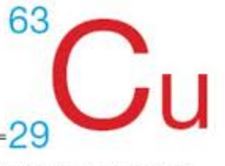

If both protons and neutrons are found in the nucleus, why is it positive?
The reason it is positive is because neutrons have a positive charge and protons have a negative charge.
The reason it is positive is because neutrons have a negative charge and protons have a positive charge
The reason it is positive is because neutrons have no charge and protons have a positive charge.
The reason it is positive is because neutrons have no charge and protons have a negative charge
Which one of the statements about the formation of a sodium ion from a sodium atom is correct?
A sodium atom gains an electron.
A sodium atom loses an electron.
A sodium atom loses a proton.
A sodium atom gains a proton.

The diagram shows the structures of five substances, A, B, C, D and E. Which structure contains chloride ions?
A
B
C
D
E

The diagram shows the structures of five substances, A, B, C, D and E. Which structure is a diatomic molecule?
A
B
C
D
E

The diagram shows the structures of five substances, A, B, C, D and E. Which structure is an element?
A
B
C
D
E

The electronic structures of atoms X and Y are shown. X and Y form a covalent compound. What is the formula?
X2Y
XY
XY2
XY6
Sodium sulfate is a solid with a high melting point.
Sodium sulfate conducts electricity when molten but not when solid.
Which type of structure is sodium sulfate?
structure of separated atoms
simple molecular structure
giant ionic structure
giant covalent structure

The electronic structure of five atoms, A, B, C, D and E, are shown. State which electronic structure represents an atom of an element in Group III of the Periodic Table.
A
B
C
D
E
The electronic structure of five atoms, A, B, C, D and E, are shown. State which electronic structure represents an atom of a monatomic gas.
A
B
C
D
E
The electronic structure of five atoms, A, B, C, D and E, are shown. State which electronic structure represents an atom of carbon.
A
B
C
D
E
The electronic structure of five atoms, A, B, C, D and E, are shown. State which electronic structure represents an atom which has 18 protons.
A
B
C
D
E
The electronic structure of five atoms, A, B, C, D and E, are shown. State which electronic structure represents an atom which forms a stable ion with a single negative charge.
A
B
C
D
E

The electronic structure of five atoms, A, B, C, D and E, are shown. State which electronic structure represents an atom of a metallic element.
A
B
C
D
E

How many neutrons does the carbon atom have?
(a)
How many protons does the carbon atom have?
(a)
How many protons does the potassium ion have?
(a)
How many electrons does the potassium ion have?
(a)

The structure of five substances, A, B, C, D and E, are shown. State which substance is a diatomic molecule.
A
B
C
D
E
The structure of five substances, A, B, C, D and E, are shown. State which substance contains bromide ions.
A
B
C
D
E
The structure of five substances, A, B, C, D and E, are shown. State which substance is an element.
A
B
C
D
E
Which statement describes positive ions?
Positive ions have more electrons than neutrons.
Positive ions have more protons than neutrons.
Positive ions have more electrons than protons.
Positive ions have more protons than electrons.

Glass is made from silicon(IV) oxide. Part of the structure of silicon dioxide is shown. Which one of the following best describes the structure of silicon dioxide?
giant covalent
giant ionic
simple atomic
simple molecular

The diagram shows part of the structures of five substances, A, B, C, D and E. Which one of these structures is a solid which is soluble in water?
A
B
C
D
E

The diagram shows the structures of five substances, A, B, C, D and E. Which structure has double covalent bonds?
A
B
C
D
E

