wayground logo

Free Printable Worksheets

Font size

S
M
L
XL
Worksheets

Properties of waves

Total questions: 170

Worksheet time: 2hrs 54mins

Name
Class
Date
1.
The ray of light that strikes a reflecting surface is called ________.
a)
incident ray
b)
reflected ray
c)
normal ray
d)
none of the above
2.
The imaginary line perpendicular to a reflecting surface is called _____.
a)
crooked line
b)
parallel line
c)
angular line
d)
normal line
3.
The angle produced as a source of light bounces off a reflecting surface is called ______.
a)
angle of crookedness
b)
angle of reflection
c)
angle of incidence
d)
angle of bounce
4.
Why can you see most objects? 
a)
they emit light
b)
light refracts through them
c)
light reflects off them
d)
They absorb light
5.
straight lines that represent light waves 
a)
Rays
b)
image
c)
lines
d)
visible light
6.
What is the line MN called in the given diagram
                               
a)
incident ray
b)
reflected ray
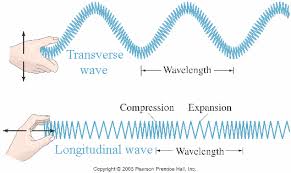
c)
reflecting surface
d)
normal
7.
what is the angle between the incident ray and the normal called as
a)
angle of incidence
b)
angle of reflection
c)
angle of convergent
d)
angle of divergent
8.
what is the angle between the reflected ray and the normal called as
a)
angle of incidence
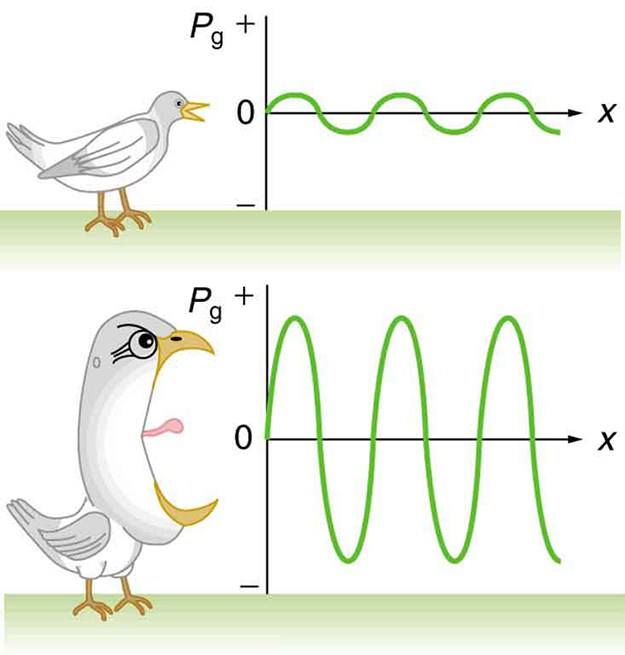
b)
angle of reflection
c)
angle of convergent
d)
angle of divergent
9.
If the angle of incidence is 45 degree, what is the angle between the incident ray and reflecting surface
a)
45
b)
90
c)
180
d)
none of the above
10.
What does incidence angle equal?
a)
reflection angle
b)
∠C
c)
∠D
d)
all of these
11.
a copy of an object formed by reflected or refracted rays of light
a)
image
b)
reflection
c)
regular reflection
d)
diffuse reflection
12.
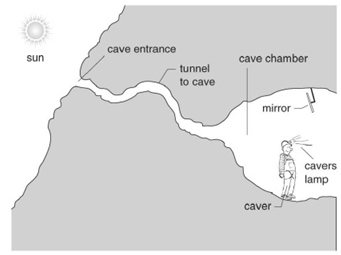
Which of the following is not a source of light? 
a)
A. candle
b)
B. caver’s lamp
c)
C. mirror
d)
D. sun
13.
If his lamp stopped working, what would the caver be able to see? 
a)
A. the tunnel to the cave
b)
B. a mirror
c)
C. nothing
d)
D. the walls of the cave
14.
What is A?
a)
Angle of incidence
b)
Angle of reflection
c)
Incident ray
d)
Reflected ray
15.
Law of reflection state that - The angle of incidence is .................. to the angle of reflection.
a)
equal
b)
double
c)
half
16.
........... – the angle between the normal and the reflected ray.
a)
Angle of incidence
b)
Angle of reflection
c)
Angle of coincidence
d)
Angle of direction
17.
........... – the angle between the normal and the incident ray.
a)
Angle of incidence
b)
Angle of reflection
c)
Angle of coincidence
d)
Angle of direction
18.
What is reflection?
a)
Reflection is the bouncing  of light off the surface that it strikes on.
b)
Reflection is the absorbing of light off the surface that it strikes on.
c)
Reflection is the bending of light off the surface that it strikes on.
d)
Reflection is the scattering of light off the surface that it strikes on.
19.
Which of these statements is true?
a)
Light travels in straight lines.
b)
Light is stopped when it meets a solid object.
c)
Light does not travel in straight lines.
d)
Light will only travel for about 2000km before it stops.
20.

When light hits an area and bounces back it is called:

a)

echo

b)

refraction

c)

reflection

d)

absorbing

21.

Light travels through air, water, glass and many other materials. What path does it travel to get from one place to another?

a)

sideways

b)

back and forth

c)

straight

d)

up and down

22.

Which color shirt would you rather wear outside on a sunny 90 degree day?

a)

black

b)

white

c)

gray

d)

navy blue

23.

When light goes from one material(medium) to another it becomes bent, what term means bent?

a)

reflected

b)

refracted

c)

absorbed

d)

turned

24.

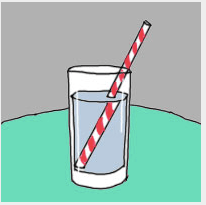
Why does the straw appear to be bent?

a)

light is reflected

b)

light is absorbed

c)

light is turned

d)

light is refracted

25.

When light passes from air to water, what happens to the speed of the light?

a)

speeds up

b)

slows down

c)

stays the same

26.

What is the best explanation for Mickey seeing himself in the mirror?

a)

refraction

b)

absorbed

c)

reflection

d)

flipped

27.

What do we call a material that light can travel through?

a)

air

b)

water

c)

medium

d)

pathway

28.
A cut piece of clear glass or plastic in the form of a triangle or other geometric shape.
a)
Person
b)
Prison
c)
Prism
d)
Preacher
29.
The way in which electric and magnetic forces interact
a)
Electromagnetic
b)
Spectrum
c)
Wavelength
d)
Prism
30.
Allows little to no light through.
a)
Transparent
b)
Translucent
c)
Opal
d)
Opaque
31.
The bending of waves as they pass from one substance into another.
a)
Reaction
b)
Reflection
c)
Refraction
d)
Repost
32.
Band of color in a rainbow, or from a light passing through a prism.
a)
Spectrum
b)
Space
c)
Prism
d)
Refraction
33.
The distance between one peak and the next in a wave
a)
Transpartent
b)
Scattering
c)
Wavelength
d)
Waste Pro
34.
The term for any wave that hits a surface and bounces off
a)
Transparent
b)
Translucent
c)
Refraction
d)
Reflection
35.
Blurs light as it passes through
a)
Transparent
b)
Translucent
c)
Opaque
d)
Refraction
36.
Transfer of energy when a wave disappears into a surface
a)
Transparent
b)
Refraction
c)
Reflection
d)
Absorption
37.
Allows most light through
a)
eflection
b)
Refraction
c)
Translucent
d)
Transparent
38.
The number of vibrations a wave makes in a given amount of time is a 
a)
Absorption
b)
Medium
c)
Frequency
d)
Photon
39.
A substance through which light travels.
a)
Wavelength
b)
Opaque
c)
Frequency
d)
Medium
40.
Light travels on straight lines.
a)
Light Bulb
b)
Sunshine
c)
Light Rays
d)
Frequency
41.
Light is a KIND of ENERGY.
a)
True
b)
False
42.
All light has a SOURCE, or something it comes from. 
a)
True
b)
False
43.
Which are the two type of light sources?
a)
Artificial and Natural
b)
Natural and Invented
c)
Artificial and Not Artificial
d)
All of them
44.
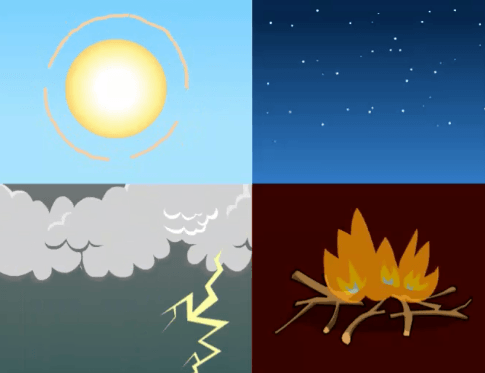
Which of these are examples of NATURAL sources of light?
a)
Sun 
b)
Stars
c)
Lightning
d)
ALL of them
45.
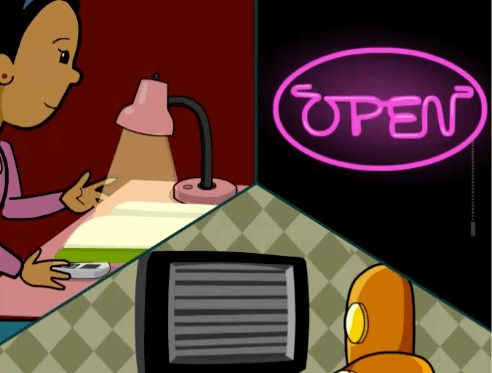
Which of these are examples of ARTIFICIAL sources of light?
a)
Lightbulbs
b)
Neon signs
c)
Televisions
d)
ALL of them
46.
What does ARTIFICIAL mean?
a)
Made by humans
b)
Natural
47.
Which of these is our MAIN (most important) source of light?
a)
Lightbulbs
b)
The Sun
c)
Fire
d)
All of them
48.
What happens when light hits an object?
a)
Some of the light jumps in different directions
(bounces)
b)
Some of the light gets absorbed by the object.
c)
Some of the light bounces back to your eye
d)
ALL of them.
49.
_______ is when light hits and object and it BOUNCES off.
a)
Reflection
b)
Refraction
50.
Which objects REFLECT more light?
a)
Shiny objects
b)
Dull objects (not shiny)
51.
Light can pass through objects.
a)
TRUE
b)
FALSE
52.
Through which objects does light pass MORE?
a)
Transparent objects, like glass windows
b)
Opaque objects (not transparent), like a plant
53.
Things make shadows because they ______ light.
a)
BLOCK
b)
PASS
54.
When light passes through things it ________. 
a)
BENDS
b)
STAYS in the SAME direction.
55.
___________ is when light BENDS or CHANGES direction.
a)
Reflection
b)
Refraction
56.
Refraction makes objects look different.
a)
TRUE
b)
FALSE
57.
Which of these objects use REFRACTION?
a)
Telescope
b)
Magnifying glass
c)
Microscope
d)
ALL of them
58.
A Magnifying glass uses refraction to make things look closer.
a)
TRUE
b)
FALSE
59.

In the diagram, which letter represents the angle of incidence?

a)

A

b)

B

c)

C

d)

D

60.

Which diagram represents specular reflection?

a)

A

b)

B

61.
How does light travel
a)
It curves around corners
b)
Really slow
c)
In a straight line
d)
In circles
62.

Which diagram represents diffuse reflection?

a)

A

b)

B

c)

C

d)

D

63.
The imaginary line perpendicular to a reflecting surface is called _____.
a)
crooked line
b)
parallel line
c)
angular line
d)
normal line
64.
Section B1a
Given that the angle of incidence = 30 degrees
a. Draw a ray diagram, labelling clearly the normal, incident ray, angle of incidence, reflected ray and angle of reflection accurately.
Which is the correct diagam? 
a)
A
b)
B
c)
C
d)
D
65.

In order to see a picture it must

a)

produce light

b)

reflect light

c)

absorb light

66.

To get the best reflection from a mirror you need

a)

a very shiny surface to reflect lots of light

b)

to stand right in front of it

c)

to shine a bright light on it

d)

it to produce light

67.
MCQ 011
According to the laws of reflection, if i = angle of incidence and r = angle of reflection,
a)
A. i =  r
b)
B. i >  r
c)
C. r >  i
d)
D. i is not equal to r
68.
MCQ 08
If a capital letter R is seen in an ordinary mirror, what does it look like?
a)
A
b)
B
c)
C
d)
D
69.
Carries energy from one place to another
a)
Waves
b)
Amplitude
c)
Frequency
d)
Crest
70.
Waves, including light waves and s waves, that moves perpendicular to the direction the wave is traveling
a)
Electromagnetic Spectrum
b)
Transverse Waves
c)
Medium
d)
Light Waves
71.
Top of the wave
a)
Wavelength
b)
Amplitude
c)
Trough
d)
Crest
72.
Bottom of the wave
a)
Crest
b)
Trough
c)
Frequency
d)
Wavelength
73.
The measurement of the distance the particles move from the resting point of the wave
a)
Wavelength
b)
Frequency
c)
Amplitude
d)
Crest
74.
The measurement from one point of the wave to the next identical part of the wave (for example, crest to crest or trough to trough)
a)
Crest
b)
Amplitude
c)
Frequency
d)
Wavelength
75.
The number of times a wave passes a certain point in a set period of time
a)
Frequency
b)
Amplitude
c)
Wavelength
d)
Amplength
76.
Transverse waves that have vibrating electric and magnetic fields that transfer energy from one place to another
a)
Amplitude
b)
Wavelength
c)
Electromagnetic Waves
d)
S Waves
77.
The full range of electromagnetic radiation from radio waves (longest wavelengths) to gamma rays (shortest wavelengths)
a)
S Waves
b)
Electromagnetic Spectrum
c)
P Waves
d)
Light Waves
78.
The matter (solid, liquid, or gas) through which waves can travel
a)
Medium
b)
Object
c)
Transverse Wave
d)
Wavelength
79.

Which transverse wave has the highest frequency?

a)

1

b)

2

c)

3

d)

4

80.
What kind of wave is pictured below?
a)
compressional wave
b)
transverse wave
c)
sound wave
d)
mechanical wave
81.
Which vocabulary term is used to identify the distance between points C & G?
a)
Amplitude
b)
Crest
c)
Frequency
d)
Wavelength
82.

What is transferred in waves?

a)

Energy

b)

Objects

c)

Magic

d)

Light

83.

Which one is an example of a transverse wave

a)

Punching a bag

b)

Loud Music

c)

Sneezing

d)

Water Waves

84.

In a transverse wave, how do the particles move?

a)

They don't move

b)

Sideways

c)

Up and down

d)

In a square

85.

Which one shows the amplitude of a wave?

a)
b)
c)
86.

Which one shows the wavelength of a wave?

a)
b)
c)
87.
A disturbance that travels through a medium as a longitudinal wave
a)
sound
b)
wavelength
c)
pitch
d)
frequency
88.
When a sound is louder what measurement gets bigger?
a)
Frequency 
b)
Amplitude 
c)
Wavelength 
d)
Crest
89.
What does pitch depend on?
a)
amplitude 
b)
frequency
c)
intensity 
d)
volume of sound
90.
Sound waves are ALWAYS what type of wave?
a)
Transverse
b)
Longitudinal 
c)
Depends 
d)
always different
91.
What is B?
a)
crest
b)
trough
c)
compression
d)
rarefaction
92.
True or False: Sound travels better through solids than through liquids
a)
True 
b)
False
93.
All waves carry
a)
energy
b)
light 
c)
matter
d)
particles
94.
The part of a longitudinal wave where the particles of the medium are close together.
a)
rarefaction
b)
compression
c)
crest
d)
trough
95.
A part in a longitudinal wave where the particles are spread apart
a)
compression
b)
rarefaction
c)
crest
d)
trough
96.
A wave that requires a medium through which to travel
a)
mechanical wave
b)
chemical wave
c)
electromagnetic wave
d)
pitch
97.
If you want to change the pitch of a sound, you have to change the ___
a)
frequency
b)
amplitude
c)
speed
d)
volume
98.
The speed of a sound wave depends on
a)
the frequency
b)
the medium
c)
both air temperature and medium
d)
the air temperature
99.
Which is a tool that is used in medicine to view internal organs and pregnancy.
a)
radar
b)
doppler
c)
ultrasound
d)
sonar
100.
A medium can be a .....
a)
solid
b)
liquid
c)
gas
d)
all of the above
101.

When our ears pick up sounds, our ears are really sensing...

a)

Transverse waves

b)

Echoes in time and space

c)

Vibrations

d)

Photons

102.
Which travels faster, light or sound?
a)
light
b)
sound
103.

The highest point on a transverse wave is the

a)

compression

b)

crest

c)

rest position

d)

trough

104.

The lowest point on a transverse wave is the

a)

compression

b)

crest

c)

rest position

d)

trough

105.

If the wavelength of a wave increased, what would happen to the frequency?

a)

decrease

b)

increase

c)

stay the same

106.
A disturbance that travels through a medium as a longitudinal wave
a)
sound
b)
wavelength
c)
pitch
d)
frequency
107.
Bending of waves around an object (such as through a doorway)
a)
sound
b)
diffract
c)
pitch
d)
volume
108.
The number of wavelengths that pass a point each second
a)
frequency
b)
wavelength
c)
pitch
d)
amplitude
109.
A wave in which the vibration is in the same direction as that in which the wave is traveling; sound waves
a)
longitudinal wave
b)
ocean wave
c)
transverse wave
d)
mechanical wave
110.
The part of a longitudinal wave where the particles of the medium are close together.
a)
rarefaction
b)
compression
c)
crest
d)
trough
111.
A part in a longitudinal wave where the particles are spread apart
a)
compression
b)
rarefaction
c)
crest
d)
trough
112.

the amount of wave cycles per second

a)

Hertz

b)

transverse wave

c)

rarefaction

113.

the length of one wave cycle

a)

wave speed

b)

wavelength

c)

wave

114.

the number of vibrations per second the ear receives, otherwise known as the sound's pitch.

a)

transverse wave

b)

compression

c)

frequency

115.

transfers energy through compressions and rarefactions in the material through which the wave travels.

a)

transverse waves

b)

longitudinal waves

c)

frequency

116.

the motion of the material is perpendicular to the direction that the energy travels.

a)

wavelength

b)

longitudinal waves

c)

transverse waves

117.

the scientific name for the colors of the rainbow

a)

frequency

b)

waves

c)

visible light spectrum

118.
Sound moves in a _________.
a)
Transverse wave
b)
Longitudinal wave
119.
How is sound produced?
a)
By the vibration of particles
b)
By the transfer of particles 
120.
Area of a longitudinal wave where particles are CLOSE together.
a)
Compression
b)
Rarefaction
121.
The reflection of sound waves off of a hard surface can create ______.
a)
A wave
b)
An echo 
122.
Soft surfaces _______ sound waves. 
a)
Reflect
b)
Absorb
123.
___________ measures  how close or  far particles are.
a)
Amplitude
b)
Frequency 
124.
_______ is the number of waves that pass a certain point at an specific time. 
a)
Frequency 
b)
Pitch
c)
Amplitude
d)
I don't know
125.
If you had to make some headphones to isolate sound, which material would you use?
a)
Soft, because they absorb sound. 
b)
Hard, because they reflect sound. 
126.
Which letter represents the wavelength of a wave?
a)
A
b)
B
c)
C
d)
D
127.
Which letter represents the amplitude of the wave?
a)
A
b)
B
c)
C
d)
D
128.
Which letter(s) represent the crest of the wave?
a)
A
b)
B & D
c)
B & F
d)
F
129.
Which letter(s) represent the trough of the wave?
a)
A
b)
B & D
c)
D
d)
C & G
130.
The image above shows a student using a Slinky to create a wave. The slinky is stretched at one end and the resulting wave travels back and forth. This is an example of a...
a)
Superposition Wave
b)
Refracted Wave
c)
Longitudinal Wave
d)
Transverse Wave
131.
Imagine one end of a rope is tied to a door handle. The other end is caused to vibrate vertically(up & down). The wave that travels along the rope is an example of a(n)...
a)
Electromagnetic Wave
b)
Microwave
c)
Transverse Wave
d)
Longitudinal Wave
132.
A mechanical wave cannot travel through...
a)
a vacuum(empty space).
b)
water.
c)
air. 
d)
glass.
133.
When the frequency of a wave increases, what happens to the wavelength?
a)
The wavelength is not directly affected by the frequency of a wave.
b)
The wavelength increases.
c)
The wavelength decreases.
d)
More specific information is needed to form a conclusion about the wavelength.
134.
Which of the following best explains the difference between transverse and longitudinal waves?
a)
Only transverse waves vibrate.
b)
Only longitudinal waves can travel through a solid.
c)
Particles only travel in a circular pattern along a longitudinal wave.
d)
Particles only travel perpendicular to the direction the energy travels in a transverse wave.
135.
Which vocabulary term is used to identify the distance between points C & G?
a)
Amplitude
b)
Crest
c)
Frequency
d)
Wavelength
136.
Which vocabulary term is used to identify point A on the diagram?
a)
Amplitude
b)
Crest
c)
Frequency
d)
Trough
137.
Which wave in the diagram has the greatest frequency?
a)
1
b)
2
c)
3
d)
4
138.
Which wave in the diagram has the greatest wavelength?
a)
1
b)
2
c)
3
d)
4
139.

When particles move parallel to the motion of the wave, the wave is called....

a)

Transverse

b)

Longitudinal

c)

S-wave

d)

EMR wave

140.

Which wave has the shortest wavelength?

a)

1

b)

2

c)

3

d)

4

141.

Which wave has highest frequency?

a)

A

b)

B

c)

C

d)

D

142.

Letter G represents...

a)

Compression

b)

Rarefaction

c)

Wavelength

d)

Amplitude.

143.

Which of these waves has the longest wavelength?

a)

P

b)

Q

c)

R

d)

S

144.

Which of these waves has the smallest amplitude?

a)

P

b)

Q

c)

S

d)

T

145.

Letter B represents...

a)

rarefaction

b)

compression

c)

wavelength

d)

amplitude

146.

Electromagnetic (EMR) waves are an example of....

a)

transverse waves

b)

longitudinal waves

c)

P-waves

d)

mechanical waves

147.

Sound waves are an example of

a)

S-waves

b)

transverse waves

c)

longitudinal waves

d)

EMR waves

148.

Which type of wave requires a medium in order travel?

a)

longitudinal waves

b)

transverse waves

c)

EMR waves

d)

S-waves

149.

Which statement is correct about the wave shown in the diagram?

a)

It is a transverse wave because the particles are moving perpendicular to the motion of the wave.

b)

It is a transverse wave because the particles are moving parallel to the motion of the wave.

c)

It is a longitudinal wave because the particles are moving perpendicular to the motion of the wave.

d)

It is a longitudinal wave because the particles are moving parallel to the motion of the wave.

150.

The two waves are similar in...

a)

frequency

b)

amplitude

c)

wavelength

d)

energy

151.

Which wave is carrying more energy?

a)

The blue wave because it has a larger amplitude.

b)

The blue wave because it has higher frequency.

c)

The red wave because it has higher amplitude.

d)

The red wave because it has higher frequency.

152.

The movement of these differ in longitudinal and transverse waves.

a)

Amplitude

b)

Frequency

c)

Particles

d)

Medium

153.

When a wave has increased frequency...

a)

the wavelengths become shorter.

b)

the wavelengths become longer.

c)

amplitude must increase.

d)

amplitude must decrease.

154.

The wave shown in the diagram is an example of a(n)...

a)

transverse wave

b)

EMR wave

c)

longitudinal wave

d)

S-wave

155.

The wave shown in the diagram is an example of a

a)

longitudinal wave

b)

mechanical wave

c)

P-wave

d)

transverse wave

156.

What kind of wave is being generated?

a)

Longitudinal

b)

Transverse

c)

Surface

d)

Electromagnetic

157.
Cell phones and televisions use this type of EM wave.  It has the longest wavelength with the lowest frequency.
a)
radio wave
b)
tv wave
c)
Gamma wave
d)
ultra violet
158.
Which portion of the electromagnetic spectrum includes the range of light that can be detected by the human eye? 
a)
ultraviolet light
b)
visible light
c)
infrared light
d)
x-rays
159.
If the wavelength of an electromagnetic wave is longer, what is true about the energy? 
a)
Energy is higher.
b)
Energy is lower. 
c)
Energy is not dependent on wavelength. 
d)
energy is cancelled out
160.
Which part of the electromagnetic spectrum has high enough energy to cause damage to eyes and skin, and sometimes even cancer? 
a)
infrared light
b)
visible light
c)
ultraviolet light
d)
microwaves
161.
Which of the following electromagnetic waves is given off as heat? 
a)
ultraviolet light
b)
x-rays
c)
gamma rays
d)
infrared rays
162.
A wave with a large wavelength will have a ______ frequency and _____ energy
a)
high, low
b)
high, high
c)
low, high
d)
low, low
163.
These are the waves that are used to penetrate solids and are used to create medical images.
a)
visible light
b)
gamma rays
c)
x rays
d)
microwaves
164.
The distance between one point of a wave to the same point on the next wave.
a)
frequency
b)
wavelength
c)
amplitude
d)
crest
165.
The type of wave with the shortest wavelength and highest frequency.  This type of wave is extremely harmful.
a)
radio
b)
infrared
c)
gamma
d)
x ray
166.
This type of EM wave has the 3rd longest wavelength. 
a)
Radio
b)
microwave
c)
x rays
d)
infrared
167.
If an object appears black, this means all 7 colors of the visible light spectrum are _____
a)
reflected
b)
abosrbed
c)
diffracted
168.
If an object appears white, this means all 7 colors of the visible light spectrum are _____
a)
reflected
b)
abosrbed
c)
diffracted
d)
refracted
169.
This color has the shortest wavelength
a)
Indigo
b)
red
c)
Yellow
d)
violet
170.
If an object appears blue, this means that ______
a)
all colors are absorbed except blue, blue is reflected
b)
all colors are reflected except blue, blue is absorbed