wayground logo

Free Printable Worksheets

NEW

Font size

S
M
L
XL
Worksheets

Heat and Temperature, Thermal Expansion, Heat Quantity, Heat Transfer

Total questions: 55

Worksheet time: 2hrs 50mins

Name
Class
Date
1.
What is the definition of CONDUCTION?
a)
When heat is transferred from objects like rays of light or electromagnetically.
b)
a  hot liquid or air that  expands, becomes less dense, and rises or becomes more dense, and sinks.
c)
When heat transfers from objects that are touching.
d)
When heat transfers through the heater or AC in your house.
2.
What is the definition of CONVECTION
a)
When heat transfers through the heater or AC in your house.
b)
When heat transfers from objects that are touching.
c)
a  hot liquid or air that  expands, becomes less dense, and rises or becomes more dense, and sinks.
d)
 hot liquid or air that  expands, becomes less dense, and rises or becomes more dense, and sinks.
3.
What is the definition of RADIATION
a)
 hot liquid or air that  expands, becomes less dense, and rises or becomes more dense, and sinks.
b)
When heat is transferred from objects like rays of light or electromagnetically.
c)
When heat transfers from objects that are touching.
d)
When heat transfers through the heater or AC in your house.
4.
What kind of heat transfer happens when the sun is heating your body?
a)
Conduction
b)
Radiation
c)
Convection
d)
Density
5.
Which of the following is an example of convection?
a)
A hair dryer is drying up your hair.
b)
When the AC or heater changes the temperature.
c)
When a car engine turns hot after being turned on.
d)
When you are making soup and the water is rising and lowering.
6.
What heat transfer happens when you burn your hand by touching a fire?
a)
Radiation
b)
Conduction
c)
Convectio
d)
I don't know!!!!!!!!!!!
7.
When a pot is  touching a stove that is on, what heat transfer is happening?
a)
I don't know??????
b)
Radiation
c)
Conduction
d)
Convection
8.
This is a lava lamp. When the light bulb heats the wax, the wax rises. When the wax cools, it falls. This cycle of rising/falling is an example of:
a)
Conduction.
b)
Convection.
c)
Radiation.
9.
Heat transfers from an area of ____temperature to an area of ___ temperature.
a)
high to low
b)
low to high
c)
high to high
d)
It can travel high to low and low to high. 
10.
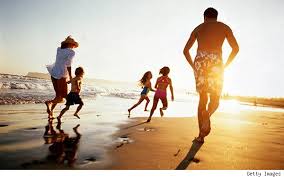
The sun shines down on this family as the play on the beach.
a)
conduction
b)
convection
c)
radiation
11.
A group of friends gather around a fire to stay warm.
a)
conduction
b)
convection
c)
radiation
12.
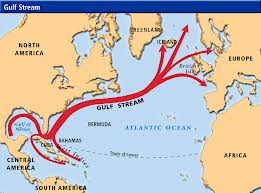
The Gulf Stream is a current that brings warm ocean water from the south to the north.
a)
conduction
b)
convection
c)
radiation
13.
Walking on the warm sand sand with your bare feet.
a)
conduction
b)
convection
c)
radiation
14.
Which direction will the heat flow while this person holds a hot cup of tea?
a)
from the cup to her hand
b)
from her hand to the cup
c)
no heat is transferred
15.
Which direction will the heat flow while this ice cap melts?
a)
there is no heat transfer
b)
from the icecap to the water
c)
from the water to the icecap
16.
The amount of energy required to raise the temperature 1ºC for every kilogram is called____?
a)
Thermal Energy
b)
Specific Heat
c)
Temperature
d)
Kinetic Energy
17.
What is the symbol for Thermal Energy?
a)
Q
b)
t
c)
m
d)
C
18.
What unit do you use to measure Thermal Energy?
a)
J/Kg ºC
b)
Kg
c)
ºC
d)
J
19.
What is the symbol for Specific Heat
a)
Q
b)
t
c)
m
d)
C
20.
What is the equation to measure change in Thermal Energy?
a)
Q=mc∆t
b)
Q=mc
c)
Q= ∆mct
d)
m=QC
21.
Water has a specific heat of 4184 J/KgºC.  Wood has a specific heat of 1760 J/KgºC.  What material needs more energy to raise the temperature 1ºC
a)
Wood
b)
Water
c)
Both are the same
22.
Copper, Stainless Steel, Carbon Steel, and Zinc were all heated using the same thermal energy.  What material would be the coolest after being heated?
a)
Copper
b)
Carbon Steel
c)
Zinc
d)
Stainless Steel
23.
A material was cooled from 100ºC to 40ºC.  What is the temperature change?
a)
60ºC
b)
40ºC
c)
-60ºC
d)
-40ºC
24.
What does temperature measure?
a)
Heat
b)
ºC
c)
Kinetic Energy
d)
Thermal Energy
25.
What is the SI unit for temperature?
a)
Kelvin
b)
Celcius
c)
Fahrenheit
d)
All of these
26.
How does heat flow?
a)
Always from cold to warm
b)
Always from warm to cold
c)
Both warm to cold & cold to warm
d)
It depends on the temperature
27.
Materials that conduct heat slowly are called
a)
Insulators
b)
Instigators
c)
Alligators
d)
Conductors
28.
Which of the following is NOT an insulator?
a)
Wool
b)
Plastic
c)
Copper
d)
Styrofoam
29.

How do molecules react when heat energy is added to them?

a)

They feel warmer but stay in place

b)

They feel warmer and move slower.

c)

They feel warmer and move faster

d)

Molecules do not react with heat energy only solar energy

30.

What is heat?

a)

The temperature of hot objects

b)

The energy transferred between hot objects

c)

The fire hot objects give off.

d)

All of the above

31.
What is thermodynamics?
a)
movement of heat
b)
it's magic
c)
measurement of heat
d)
none of them
32.
Temperature is a measure of the...
a)
total energy of molecules in a substance
b)
total kinetic energy of molecules in a substance
c)
average potential energy of molecules in a substance
d)
average kinetic energy of molecules in a substance
33.
An ice cube is placed on a table and begins to melt.  The following conclusion can be made.
a)
Energy is being absorbed by the table which causes the cube to melt.
b)
Energy is being transferred from the table to the ice cube.
c)
Energy is being created by the air and table and making the cube heat up.
34.
The Gulf Stream is a current that brings warm ocean water from the south to the north. What type of heat transfer is this?
a)
conduction
b)
convection
c)
radiation
d)
Insolation 
35.
It states that if two thermodynamic systems are each in thermal equilibrium with a third, then they are in thermal equilibrium with each other.
a)
First Law of Thermodynamics
b)
Second Law of Thermodynamics
c)
Third Law of Thermodynamics
d)
Zeroth Law
36.
At what temperature does water freeze in degrees Fahrenheit?
a)
212 degrees
b)
100 degrees
c)
32 degrees
d)
0 degrees
37.
At what temperature does water boil in degrees Fahrenheit?
a)
32 degrees
b)
68 degrees
c)
98.6 degrees
d)
212 degrees
38.
A(n) _____________ is a device for measuring temperature.
a)
thermometer
b)
barometer
c)
anemometer
d)
psychrometer 
39.
It is possible to reach absolute zero
a)
true
b)
false
40.
For the formula:
 Q= m c ∆T
The  units for specific heat are:
a)
g /J C
b)
°C/g J
c)
kJ/g
d)
J/g°C
41.
What would be the effect on the particles if more heat is supplied to the system?
a)
They would slow down
b)
They would stop moving
c)
They would speed up
d)
There would be no effect
42.

If two objects have different temperatures when they come in contact, heat will flow from the warmer object to the cooler one UNTIL ____________

a)

one reaches a temperature of zero

b)

they both have an equal temperature

c)

one runs out of energy

43.

If the specific heat of water is 4.18 J/g∙°C, how much heat is required to increase the temperature of 1.2 kg of water from 23 °C to 39 °C? (show your work)

a)

-80,256 J

b)

80.256 J

c)

80,256 J

d)

-80.256 J

44.
What is the specific heat of an unknown substance if 100.0 g of it at 200.0 °C reaches an equilibrium temperature of 27.1 °C when it comes in contact with a calorimeter of water.  The water weighs 75. g and had an initial temperature of 20.00 °C?  (Specific heat of water is 4.18 J/g°C) (show your work)
a)
0.111 J/g°C
b)
1.29 J/g°C
c)
0.129 J/g°C
d)
22225.85 J
45.
The SI unit of heat and energy is the __________.
a)
calorie
b)
heat
c)
joule
d)
watt
46.
A sample of iron receives 50.J of heat energy that raises the temperature of the iron by 25.0°C. If iron has a specific heat of 0.10 J/g°C, what is the mass of the iron sample?  (show your work)
a)
25g
b)
30g
c)
20g
d)
50g
47.
Calorimetry Question:
A piece of metal with a mass of 32.8 g is heated to 100.5°C and dropped into 138.2 g of water at 20.0°C.  The final temperature of the system is 30.2°C.  What is the specific heat capacity of the metal? (show your work)
a)
2.56 J/g°C
b)
0.391 J/g°C
c)
5.29 J/g°C
d)
3.50 J/g°C
48.
A metal cube at temperature of 10°C immersed in a liquid at temperature of 70°C.
What is the temperature of the metal cube when thermal equilibrium is achieved between the cube and the liquid?
a)
Between 10°C and 70°C
b)
More than 70°C
c)
Less than 10°C
d)
Same as the room temperature
49.

The specific heat of water is 4.18 J/g°C.

If 980. J of energy is added to 6.20 g of water at 18.0 °C, what is the final temperature of the water?

a)

37.8 °C

b)

-19.8 °C

c)

19.8 °C

d)

55.8 °C

50.

What does "ΔT" mean?

a)

A change in health

b)

A change in heat

c)

A change in height

d)

A change in temperature

51.

Calorimetry is accurate in measuring heat energy

a)

True

b)

False

52.
A bimetallic strip is made up of _____________________ welded together.
a)
two metals of the same kind 
b)
two different metals that expand and contract unequally
c)
two different metals that expand and contract equally
53.
Copper, Stainless Steel, Carbon Steel, and Zinc were all heated using the same thermal energy.  What material would be the coolest after being heated?
a)
Copper
b)
Carbon Steel
c)
Zinc
d)
Stainless Steel
54.
A high specific heat means...
a)
It heats up quickly with energy added
b)
It requires more energy to change temperature
55.
What has particularly high specific heat? 
a)
Water
b)
Gases 
c)
Metals 
d)
Poptarts