
 Worksheets
GCSE History Paper 1
Total questions: 115
Worksheet time: 1hrs 20mins
The 1920s in America were known as...
The Roaring 20s
The Boring 20s
The Snoring 20s
The falling 20s
Who pioneered the assembly line method of production?
Martin Luther King
Franklin D Roosevelt
Henry Ford
Herbert Hoover
What was the name of LBJs domestic policies?
The New Frontier
The New Deal
The Great Society
The Middle Way
Which of these are real alphabet agencies?
CCC
TRY
PWA
TVA
GDP
When was the first Civil Rights Act passed?
1982
1964
1965
1925
What film glorified the KKK and led to their revival in 1915?
The birth of a country
The birth of a state
The birth of a county
The birth of a nation
What are tariffs
Taxes on imported goods
Taxes on exported goods
Taxes on alcohol
Chewy sweets
Who gave the famous 'I have a dream speech' in Washington in 1963?
Martin Luther King
Malcolm X
Rosa Parks
JFK
What government programme during WW2 led to increased production from American companies?
The New Deal
The Great Society
Lend Lease
The New Frontier
Women who rebelled against social expectations in the 1920s were known as...
Trappers
Clappers
Rappers
Flappers
In what year was the Wall Street Crash?
1928
1929
1930
1931
What were the shanty towns named after the President during the Depression called?
Rooseveltvilles
Hoovervilles
Hardingvilles
Kennedyvilles
What % of the population was unemployed by 1933?
5
10
18
25
What law was passed in 1963, improving the status of women in America?
Equal Pay Act
Divorce Reform Law
Equal Rights Act
Marriage Law
What were the nicknames for movies with sound in the 1920s?
Loudies
Talkies
Speakies
Soundies
What name was given to the ban on alcohol in the USA from 1920-1933?
#nobooze
The Liquor Law
The Volstead Act
Prohibition
Who preached by 'any means necessary'?
Malcolm Z
Malcolm X
MLK
FDR
What court case led to the legalisation of abortion in 1973?
Toe vs. Jade
Roe vs. Wade
Brooker vs. Lillington
Murray vs. Varley
What event led to American entry in the the Second World War?
Hiroshima
D-Day
Operation Barbarossa
Pearl Harbor
What was hire purchase?
Buy now, pay later
Buying things to give back later
Discounted goods
A new telephone
Which of these was NOT a reason for the economic boom of the 1920s?
The impact of the First World War
The USAs natural resources
The New Deal
Republican government policies
In the 1920s, more women began to go out without...
...a chaperone
...a date
...clothes on
...a lift home
What name was given to the queues for free food during the Great Depression?
Cheesline
Milkline
Breadline
Snooker cue
What was the name of the feminist who wrote an influential books that inspired women to campaign for equality in the 1960s?
Margaret Thatcher
Betty Freidan
Beyonce
Eleanor Roosevelt
In the 1930s, which group of Americans was helped by the AAA?
African-Americans
Women
Workers
Farmers
What name was given to the laws that segregated African-Americans from whites?
Jim Crow Laws
James Magpie Laws
KKK laws
Civil Rights Laws
What event seemed to show that Prohibition was leading to an increase in crime and violence?
St. George's Day Massacre
St. Patrick's Day Massacre
St. Valentine's Day Massacre
St. Bartholomew's Day Massacre
What is LBJs presidency most remembered for?
The Great Society
The Vietnam War
His wacky haircuts
His assassination
Which one of these groups did NOT oppose the New Deal?
Democrats
The Supreme Court
Republicans
Radical politicians
Sacco and Vanzetti were victims of...
...Prohibition
...lynching
...The Red Scare
...fraud
How many black students tried to enrol at Central High School in 1957?
6
7
8
9
What was the name of the border between North and South Korea?
17th Parallel
24th Parallel
5th Parallel
38th Parallel
Who was the leader of North Korea during the Korean War?
Stalin
Kim Il-Sung
Syngman Rhee
Eisenhower
Who was the leader of South Korea during the Korean War?
Stalin
Kim Il-Sung
Syngman Rhee
Eisenhower
Who was the leader of the USSR during (most of) the Korean War?
Stalin
Kim Il-Sung
Syngman Rhee
Eisenhower
What was the name of the general put in charge of UN forces during the Korean War?
Macarthur
Big Mac
Macmahon
Mac and cheese
Which country boycotted the UN meeting which meant that a resolution was passed to support South Korea against the North?
UK
USA
USSR
France
Which country had recently turned communist, and supported North Korea?
Vietnam
Cambodia
China
USSR
What was the name of the Chinese communist army during the Korean War?
The People
The People's heroes
The People's volunteers
The Red Army
What situation had arisen in the Korean War in 1951, and would last until 1953?
Stalemate
Checkmate
Watergate
Amalgamate
What happened to General Macarthur?
He was fired by Truman
He was fired by Eisenhower
He was fired by Roosevelt
He was fired by Nixon
Where was the Korean War armistice signed?
Seoul
Pusan
Panmunjon
Pyongyang
Who controlled Vietnam before WW2
Germany
UK
France
Japan
Who controlled Vietnam during WW2?
Germany
UK
France
Japan
In what year were the French defeated by the Vietminh?
1954
1955
1964
1965
Where were the French defeated by the Vietminh?
Hue
Hanoi
Saigon
Dien Bien Phu
What was agreed about Vietnam at the Geneva conference in 1954?
It would be split in to North and South
It would hold free and fair elections
It would be communist
It would be capitalist
Who was the communist in charge of North Vietnam
Diem
Syngman Rhee
Ho Chi Minh
Kim Il-Sung
Which anti-communist was put in charge of South Vietnam from 1954-63?
Diem
Ho Chi Minh
Kim Phuc
Thich Quang Duc
What religion was Diem?
Protestant
Buddhist
Hindu
Catholic
What fighting force was established in 1960 to fight against Diem's government (and later the Americans)?
Vietminh
Vietcong
People's volunteers
Red Army
How were the Vietcong in South Vietnam supplied?
Airdrops
They supplied themselves
The Ho Chi Minh Trail
Amazon Prime
Which of these Presidents was not involved in events in Vietnam?
JFK
LBJ
Eisenhower
Nixon
Truman
Where was a US patrol ship allegedly fired upon by the North Vietnamese navy?
The Gulf of Mexico
The Gulf
The Gulf of Tonkin
The South China Sea
What terms refers to the mass bombing of Vietnam by the USA?
Operation Linebacker
Operation Overlord
Operation Barbarossa
Operation Rolling Thunder
What policy was used by JFK and Diem to try and limit the power of the Vietcong in the countryside?
Strategic hamlets
Strategic villages
Strategic towns
Strategic fields
What did some Buddhist monks do to protest against Diem's government?
Wrote leaflets
Meditated
Set themselves on fire
Started a revolution
What tactics were used by the Vietcong and Vietminh when fighting against superior armies?
Gorilla
Guerrilla
Ape
Monkey
What % of US casualties were caused by booby traps?
11%
22%
33%
44%
What % of US casualties were caused by ambushes?
11%
22%
33%
51%
Complete the name of this US tactic. Search and...
...find
...destroy
...burn
...demolish
Name the chemical weapons used by the USA in the Vietnam War.
Mustard gas
Napalm
Agent Orange
Uranium
Bleach
What system was used to call up American citizens to fight in the Vietnam War?
The Draft
Conscription
The Daft
The Raft
What event in 1968 was a coordinated series of attacks on US/ARVN towns, cities and bases?
The Tet Offensive
The My Lai Massacre
The Spring Offensive
The Kent State Massacre
After 1968, public opinion started...
...to turn in favour of the war
...to turn against the war
...to not care about the war
When was the Kent State University massacre?
1970
1971
1972
1973
Which country did Nixon order the invasion of, prompting further protests, such as at Kent State University?
Laos
Thailand
North Vietnam
Cambodia
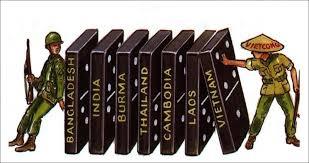


Which two Asian nations turned to communism before Vietnam following WWII?
China and Korea
Ethiopia and Nepal
Japan and Korea
India and China

Which city was the capital of North Vietnam?
Ho Chi Minh City
Bangkok
Saigon
Hanoi

Which city was the capital of South Vietnam?
Saigon
Grenada
Istanbul
Seoul
Which side ended up winning the war?
United States
South Vietnam
North Vietnam
North Korea
Nixon promised to achieve what in Vietnam?
"Silent Victory"
"Absolute Victory"
"Peace with Honor"
Peace with Victory"
What event led to the end of the Vietnam War and put Vietnam under a single regime?
Fall of Saigon
Fall of Ho Chi Minh
Rise of North Vietcong
Rise of Soviet Union
A long-term effect of the war was
and increase of American's trust in the government
A lack of trust in our leaders by the American people
the Baby Boom
an economic boom
President Nixon was dealing with which domestic event during his dealings with the Vietnam War?
The invasion of Mexico
The Kennedy Assassination trials
Watergate Scandal
signing of NAFTA
One outcome of the Vietnam War was...
The total trust of the U.S. Government
The U.S. reluctance to commit troops abroad in the future
The implementation of strict anti-Vietnamese immigration law
The death of over 1 million Americans

Which court case that declared segregation of schools ILLEGAL?
Brown v. Board of Education
Civil Rights Act of 1964
Plessy v. Ferguson
Bus rides to the South to ensure desegregation was enforced are called
Rosa Parks
Jim Crow Laws
Freedom Rides
The Great Society
Which national organization that helped fight for equal rights for African Americans?
LULAC
NCAA
NRA
NAACP

The Civil Rights Movement is mostly characterized by-
non-violent civil disobedience
violence and riots
economic prosperity
political corruption
What other industry grew because of increase in automobile sales in the 1920s?
service stations
farm machinery
air travel
radio broadcasting
Which group did not benefit from the economic boom of the 1920s?
factory workers
truck drivers
movie theater owners
farmers
What form of music became popular in the 1920s?
hip hop
rock and roll
country
jazz
Products made for personal use
consumer goods
installment buying
mechanization
urbanization
renaissance


Before World War II, Korea was ruled by
Russia
China
Japan
USA

Which of the statements are true about North Korea? Select all the right answers.
The USA controlled North Korea after WWII.
The USSR controlled North Korea after WWII.
Kim Il Sung was the communist leader of North Korea.
Syngman Rhee was the democratic leader of North Korea.

Which of the statements are correct about South Korea? Select all the correct answers.
The USA controlled South Korea after WWII.
The USSR controlled South Korea after WWII.
Syngman Rhee was the democratic leader of South Korea.
Syngman Rhee was the communist leader of South Korea.
How did the USA get involved in the Korean War?
They dropped nuclear bombs to force North Korea into surrendering.
They saved South Korea after it was invaded, then chased the North Korean forces into China.
They helped to negotiate for South Korea to surrender.
They fought directly with the USSR in Korea.
What happened when China decided to join the Korean War?
They managed to conquer Korea.
They helped North Korea push the USA and South Korean forces back across the 38th parallel.
They could not defeat the USA and South Korea, so North Korean forces remained in China.
They were attacked by the USA with nuclear weapons.

