wayground logo

Free Printable Worksheets

NEW

Font size

S
M
L
XL
Worksheets

Chemistry 3

Total questions: 61

Worksheet time: 1hrs 15mins

Name
Class
Date
1.
a)

A. a hypothesis

b)

B. a conclusion

c)

C. an observation

d)

D. a theory

2.
a)

Be 4/5

b)

Be 4/9

c)

Be 5/4

d)

Be 9/4

3.

3. Chlorine is a highly reactive element. It tends to gain one electron to become more stable. How does gaining one electron make chlorine more stable?

a)

A. Stability is increased with greater mass

b)

B. Mobility is reduced in atoms with extra electrons

c)

C. The outer energy level becomes the same as a noble gas.

d)

D. The most stable ratio of electrons to protons is achieved.

4.

4. The element lanthanum has an isotope with an atomic mass of 138.9 amu and an abundance of 99.91%. A second isotope has an atomic mass of 137.9 amu and an abundance of 0.09%. What is the average atomic mass of lanthanum?

a)

A. 138.4 amu

b)

B. 138.8 amu

c)

C. 138.9 amu

d)

D. 139.0 amu

5.

A carbon nucleus has a total mass of 12.0000 amu. When the individual masses of the particles in the nucleus are added separately, the total mass is 12.0956 amu. What is the reason for the difference in masses?

a)

A. Mass is converted into chemical energy

b)

B. Mass is converted into the nuclear binding energy

c)

C. Nuclear radiation has been given off in the form of small particles

d)

D. Each particle gains an electron when separated, increasing the mass

6.

Which statement explains why MOST of the mass of an atom is contained in the relatively small nucleus?

a)

A. Atoms are composed of less dense subunits than the nucleus.

b)

B. Protons and neutrons have more mass than electrons.

c)

C. The nucleus is located at the center of an atom.

d)

D. Atoms are composed of mostly empty space.

7.
a)

A. The chemical properties are different for each element.

b)

B. The atomic number is different for each element.

c)

C. They are allotropes of the same element

d)

D. They are isotopes of the same element.

8.

9. Which force is responsible for holding the nucleus of an atom together?

a)

A. electromagnetic force

b)

B. gravitational force

c)

C. strong force

d)

D. weak force

9.
a)

32.06 amu

b)

32.39 amu

c)

33.75 amu

d)

34.12 amu

10.
Physical or chemical change?
cutting a piece of paper in half
a)
Physical
b)
Chemical
11.
Over time, pure silver that is exposed to air turns a strange greyish brown color. This is an example of a ________________ change. 
a)
Physical
b)
Chemical
12.
Which state of matter has particles that are tightly packed?
a)
liquid
b)
gas
c)
solid
13.

Chemists can identify the composition of some unknown salts by conducting a flame test. When potassium salts are heated in a flame, a purple color is observed.


This is due to the movement of electrons between energy levels. What is the electron configuration of a potassium atom at ground state?

a)

1s2; 2s2; 2p6; 3s2; 3p6; 4d1

b)

1s2; 2s2; 2p6; 3s2;3p6; 3d1

c)

1s2; 2s2; 2d6; 3s2; 3d6; 4s1

d)

1s2; 2s2; 2p6; 3s2; 3p6; 4s1

14.
The electron configuration of an atom is 1s22s22p6.  The number of electrons in the atom is 
a)
3
b)
6
c)
8
d)
10
15.
What is the electron configuration for this atom?
a)
1s22s22p6
b)
1s22s22p5
c)
1s22s22p3
d)
2s22p3
16.

What is the shape of an s orbital?

a)

sphere

b)

dumbbell

c)

double dumbbell

d)

TOO COMPLEX TO KNOW IT.

17.
What is the noble gas shorthand electron for Sulfur atom?
a)
[Ar] 3p4
b)
[He] 3s23p4
c)
[Ne] 3s23p4
d)
[Na] 3s23p4
18.
What is the highest occupied energy level?
a)
4
b)
5
c)
6
d)
7
19.
Which orbital shows a violation of Hund's Rule?
a)
A
b)
B
c)
C
d)
D
20.
Which orbital shows a violation of the Pauli Exclusion Principle?
a)
A
b)
B
c)
C
d)
D
21.
Which element is pictured?
a)
neon
b)
fluorine
c)
magnesium
d)
argon
22.
What is incorrect about this orbital diagram?
a)
Both arrows in the 2p box should be pointing up
b)
There is nothing incorrect with this diagram
c)
In the there should only be 1 orbital in the first 2p box and one in the 2nd 2p box
d)
All the arrows should be pointing up.
23.

Typically, atoms are more stable when they are

a)

bonded together

b)

apart from each other

24.

Ionic bonding is between a

a)

nonmetal and nonmetal

b)

metal and nonmetal

c)

metal and metal

d)

Depends on the situation

25.

Covalent bonding is between a

a)

nonmetal and nonmetal

b)

metal and nonmetal

c)

metal and metal

d)

It depends on the situation

26.

What do positive ions tend to do?

a)

lose electrons

b)

gain electrons

c)

lose protons

d)

gain protons

27.

What happens when magnesium loses 2 electrons?

a)

It stabilizes to a net charge of 0

b)

It turns into an atom

c)

It becomes negatively charged

d)

It becomes positively charged

28.

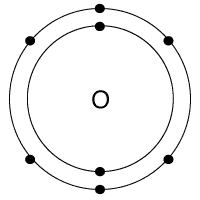
Which is the correct Lewis Structure for oxygen?

a)
b)
c)
d)
29.

What is the chemical formula for Lithium Nitride?

a)

Li3N

b)

LiN3

c)

NLi3

d)

N3Li

30.

Which category of elements usually form negative ions?

a)

metals

b)

nonmetals

c)

metalloids

d)

noble gases

31.
Which of the following has a full valence shell?
a)
Oxygen
b)
Neon
c)
Barium
d)
Carbon
32.
Which type of bond has a transfer of an electron from on atom to another?
a)
Polar Covalent 
b)
Non Polar Covalent
c)
Ionic
d)
Metallic
33.
Which of the following is a characteristic property of ionic compounds?
a)
They form hard, brittle crystals with characteristic shapes
b)
They have low melting points
c)
They have low boiling points
d)
They contain no charged particles
34.
What is the chemical name for the compound with the formula Na₂S?
a)
sodium sulfide
b)
sodium fluoride
c)
magnesium sulfide
d)
lithium oxide
35.
What is the name of PS3?
a)
phosphorus trisulfide
b)
phosphorus chloride
c)
phosphide trisulfide
d)
phosphate
36.

Which of the following molecules contains a central atom that does not obey the octet rule?

a)

BH3

b)

NF3

c)

CS2

d)

CH4

37.
What molecular shape is the structure shown here? (H2O)
a)
tetrahedral
b)
trigonal planar
c)
bent
d)
trigonal pyramidal
38.
How many electrons are shared in a triple bond?
a)
6
b)
3
c)
6 pairs
d)
5
39.
The desire for an element to have 8 atoms around it is called 
a)
Octet Rule
b)
Resonance
c)
Ionization energy
d)
Electronegativity
40.
What is the formula for this Compound
a)
PCl
b)
PCL5
c)
PCl5
d)
Phosphorous Penta Chloride
41.
What is the name of this Compound
a)
P2O5
b)
Phosphorous PentaOxide
c)
Diphosphorous pentaoxide
d)
Phosphourous Oxide
42.
Which of these forces applies to all molecules
a)
London Dispersion
b)
Dipole dipole
c)
Hydrogen Bonding
d)
Covalent bonding
43.
Which of these would be covalently bonded
a)
Fr and K
b)
Sc and O 
c)
F and Cl
d)
He and Pt
44.
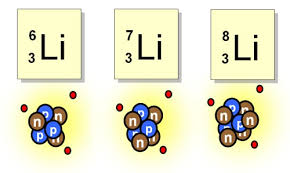
which atom has  4 neutrons?
a)
Li-6
b)
Li-7
c)
Li-8
d)
they have the same # of neutrons
45.
24.1% of all the isotopes of a an element have a mass of 75.23 amu, 48.7% have a mass of 74.61 amu, and 27.2% have a mass of 75.20 amu.
What is the average mass of this element?
a)
74.92 amu
b)
24.97 amu
c)
75.01 amu
d)
74.51 amu
46.
An isotope has three forms.  30% have a mass of 4 amu, 20% have a mass of 5 amu and 50% have a mass of 3 amu.  Average atomic mass will be closest to
a)
2 amu
b)
3 amu
c)
4 amu
d)
5 amu
47.

Calculate the average atomic mass of the element iron (Fe) using the following data:

[Isotope / % abundance]

[Iron 54 / 6% ] [Iron 56 / 92% ] [ Iron 57 / 2% ]

a)

53.7 amu

b)

54.9 amu

c)

5592.0 amu

d)

55.9 amu

48.
What is the overall charge of this atom?
a)
+3
b)
-3
c)
0
d)
+1
49.
Which statement about the atomic nucleus is correct?
a)
The nucleus is made of protons and neutrons and has a negative charge
b)
The nucleus is made of protons and neutrons and has a positive charge
c)
The nucleus is made of electrons and has a positive charge
d)
The nucleus is made of electrons and has a negative charge
50.
Cations are
a)
positive
b)
negative
c)
on the right side of the periodi table.
d)
nonmetals
51.

What element has the shorthand electron configuration of

[Ar]4s23d104p2

a)

Germanium

b)

Tin

c)

Gallium

d)

Silicon

52.

Magnesium exists as three isotopes shown above. What is the average atomic mass?

a)

18.39 amu

b)

20.74 amu

c)

22.56 amu

d)

24.31 amu

53.
What does the 1.00794 stand for?
a)
Hydrogen
b)
atomic number
c)
atomic mass
d)
atomic explosion
54.
What is the atomic number of this atom?
a)
2
b)
4
c)
6
d)
none of the above
55.
An alloy is a mixture of metals, ___ types are common.
a)
Three
b)
Two
c)
Four
d)
Ten
56.
Diamond and graphite have high melting points.
a)
True
b)
False
57.
Are discrete and giant covalent substances both good conductors?
a)
No 
b)
Yes
c)
It depends on the day
d)
I don't care
58.
Giant covalent bonds are ____ conductors.
a)
Train
b)
Poor
c)
Strong
d)
Rich
59.
______ and _______ are allotropes, made entirely of carbon atoms, and covalently bonded together in a continuous network.
a)
Diamond, graphite
b)
Dioxygen, ozone
60.
Identify the non electron deficient molecule
a)
KCl
b)
BeCl2
c)
AlCl3
d)
BF3
61.
Boron nitride is a good insulator because..
a)
B has a higher electronegativity than N so holds onto the electrons
b)
N has a higher electronegativity than B so holds onto the electrons
c)
It has delocalised electrons
d)
It has an unbondeed p-orbital to form 4 bonds N.