wayground logo

Free Printable Worksheets

Font size

S
M
L
XL
Worksheets

Unit2 Biology - Asexual Reproduction

Total questions: 42

Worksheet time: 2hrs 20mins

Name
Class
Date
1.
Which statement best describes the process of asexual reproduction?
a)
new organisms are usually genetically identical to the parent
b)
the reproductive cycle involves the production of games
c)
nuclei of sex cells fuse to form a zygote
d)
it involves the production of genetic copies 
2.
In asexual reproduction, all of the offspring are:
a)
Physically Identical
b)
Genetically Identical
c)
Physically and Genetically Identical
d)
Not Identical
3.
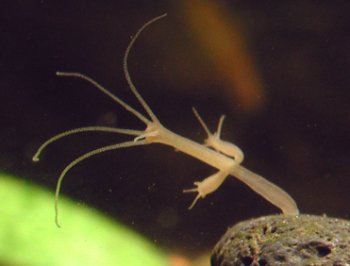
A hydra reproduces when an outgrowth, or bud, forms and continues to develop until if falls off of the parent. This is an example of:
a)
Binary Fission
b)
Sporulation
c)
Budding
d)
Vegetative Propagation
4.
a)
budding
b)
sporulation
c)
vegetative propagation
d)
binary fission
5.
This is when a new organism grows by cell division on the body of its parent. The bud, or offspring is identical to the parent. The bud, when large enough, can break off of the parent and live on its own.  Examples of this include yeast, hydra and potatoes.
 
a)
Regeneration
b)
Vegetative propagation
c)
Fission
d)
Budding
6.
a)
budding
b)
binary fission
c)
sporulation
d)
regeneration
7.
What type of asexual reproduction is taking place?
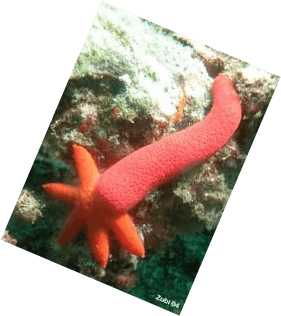
Fishermen work hard to catch and remove all the starfish that get into their favorite shell fishing beds and the “underwater farms” where they raise clams and oysters. In the past, they put the starfish into their boats, cut them up with knives, and then throw the pieces of starfish overboard. They thought this would kill the starfish. What they did not know was that each piece of starfish will grow into a whole new animal.

a)
Regeneration
b)
Vegetative propagation
c)
Budding
d)
Fission
8.
How many parent(s)are needed for asexual?
a)
4
b)
1
c)
9
d)
100
9.
When a starfish grows a new body off a broken arm, what kind of reproduction is this?
a)
Sexual
b)
Differentiation
c)
Asexual 
d)
Specialization
10.
What are some of the facts about asexual reproduction?
a)
Takes only one mate to reproduce and takes a longer time to reproduce
b)
Takes a shorter amount of time to reproduce and it takes two mates to reproduce
c)
Reproduces diverse offspring and takes a longer time to reproduce
d)
Takes only one mate to reproduce and takes a shorter time to reproduce
11.
This produces 2 identical cells.
a)
mitosis
b)
meiosis
12.

All of the offspring of an organism have the same genetic material, which is identical to the parent organism. From this, we can conclude that this organism -

a)

makes its own food

b)

is unicellular

c)

live in a marine habitat

d)

reproduces asexually

13.

California blackworms, also known as mudworms, are able to break apart. Each body section that broke apart is able to become an identical new worm. What type of reproduction does this example represent?

a)

Sexual reproduction

b)

Asexual reproduction

14.

Reproducing asexually will produce offspring ...

a)

genetically different from each other

b)

genetically identical to the parent

15.
What is a disadvantage of asexual reproduction?
a)
New species of organisms cannot come into being.
b)
The offspring does not multiply rapidly.
c)
The offspring does not live for long.
d)
All of these
16.
Prokaryotes reproduce asexually through -
a)
Spore formation
b)
Vegetative propagation
c)
Binary fission
17.
In general, asexual reproduction is used by _______ organisms.
a)
simple
b)
extinct
c)
complex
18.

Which is a type of Asexual Reproduction

a)

Sexual

b)

Binary fission

c)

Cells

d)

organism

19.
Which type of asexual reproduction is taking place?
A planarian is a non-parasitic flatworm.  If a planarian was injured by a predator, it could re-grow its body parts.  If the body parts were not eaten by the predator, the part could re-grow into a whole new planarian as well.
a)
Budding
b)
Fission
c)
Vegetative propagation
d)
Regeneration
20.
Provided is a table of organisms and some data on their characteristics. Based on the information in the table, which organism is likely to produce offspring with the greatest genetic diversity?
a)
Black mold
b)
Bell tree dahlia
c)
Spruce
d)
Hydra
21.
This occurs when an offspring grows from a piece of its parent. Examples include Sea Stars, Sea urchins, sea cucumber, sponges, and planarians
a)
Vegetative propagation
b)
Budding
c)
Regeneration
d)
Fission
22.

___________________ is a type of asexual reproduction in which a piece of a parent organism breaks off to form an new organism (ex. starfish).

a)

fission

b)

budding

c)

fragmentation

d)

fertiliztion

23.

When a single-celled organism splits into 2 new organisms it is called _________________.

a)

fragmentation

b)

fission

c)

budding

d)

sporulation

24.

What are some advantages of asexual reproduction are: (select all that apply)

a)

it only requires one organism

b)

it takes less energy than sexual reproduction

c)

offspring are already well-adapted for the environment

d)

there is a lot of genetic variety

25.

Which of the following is not a benefit of asexual reproduction?

a)

Offspring will be successful in an unchanged environment.

b)

Good at adapting to changing environments.

c)

Only requires one parent to produce offspring.

d)

Can reproduce rapidly.

26.

Asexual reproduction is associated with what type of cell division?

a)

Mitosis

b)

Meiosis

27.

An organism that has been reproduced by asexual means receives ______________ of its chromosomes from its one parent.

a)

3

b)

25%

c)

50%

d)

100%

28.
Which process is considered to be faster? 
a)
Asexual
b)
Sexual 
29.
In mitosis there will be __________daughter cells and they will be ________to the parent cell
a)
four, with 1/2 # of chromosomes
b)
two, identical
30.
What kind of production is fast and requires less energy
a)
sexual
b)
asexual
31.
what kind of producers are eukaryotic cells?
a)
sexual
b)
asexual
32.
WHAT kind of reproducers are prokaryotic cells?
a)
sexual 
b)
asexual
33.
What kind of reproduction requires more energy and is slow?
a)
sexual
b)
asexual
34.

In which ways can genetic engineering can improve crops

a)

Make them pest or drought resistant

b)

Make them more nutritious

c)

Make them larger

d)

All answers are correct

35.
Advantages of genetically modified crops include(s)
a)
insect resistance
b)
drought/freeze resistance
c)
higher yield
d)
all of these are reasons for using GMOs
36.
Rice modified to have more Vitamin A
a)
Genetic engineering
b)
Cloning
37.
Sugar beets modified to grow faster and to be more resistant to weeds.
a)
Genetic engineering
b)
Cloning
38.
GMO stands for
a)
Genetically Made Organism
b)
Growing More Organisms
c)
Genetically Modified Organism
d)
Growing Many Organisms
39.
What is 1 significant issue with many Genetically Modified Organisms?
a)
They are too expensive to be useful
b)
Take a long time to make
c)
May affect other organisms in their environment
d)
Might evolve more quickly
40.
Why do farmers choose to use GM crops rather than regular crops?
a)
They are safer
b)
They are more productive
c)
They are less expensive
d)
They are less controversial
41.
Which agricultural benefit can biotechnology  provide?
a)
developing plants that are less dependent on the sun for energy
b)
developing plants that are less sensitive to variations in environmental temperatures
c)
developing plants with inheritable traits unrelated to the genetic material they contain
d)
developing plants that will not die
42.
Which of these is not a way in which biotechnology can benefit agriculture?
a)
increase crop population
b)
reducing the loss of crops to insects
c)
producing better-tasting fruits
d)
improving farm machinery