Wayground logo

Free Printable Worksheets

Font size

S
M
L
XL
Worksheets

Unit 8

Total questions: 64

Worksheet time: 48mins
Name
Class
Date
1.
Temperature, light, air, water, and soil are all  _____  parts of the environment
a)
alive
b)
biotic 
c)
abiotic
d)
living
2.
Is a deer an abiotic or biotic factor? 
a)
abiotic
b)
biotic
3.
Is a weather an abiotic or biotic factor? 
a)
abiotic
b)
biotic
4.
Is sunlight an abiotic or biotic factor? 
a)
abiotic
b)
biotic
5.
Which of the following is not an abiotic factor?
a)
sun
b)
temperature
c)
soil
d)
grass
6.
A nonliving element in an ecosystem is an 
a)
animal
b)
abiotic factor
c)
biotic factor
d)
organism
7.
Which of the fallowing has only abiotic factors?
a)
Sunlight, algae, and temperature
b)
Guppy, crab, oxygen
c)
Sunlight, soil, and weather
d)
Algae, temperature, and dog
8.
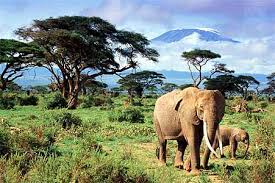
What are the biotic factors in this image?
a)
sunlight, elephants, and grasses
b)
sunlight, water,  and air
c)
elephants, plants, trees 
9.
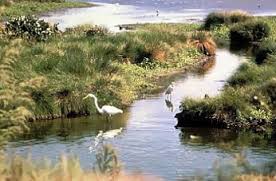
What are the abiotic factors in this image? 
a)
water, sunlight, dirt, air
b)
birds and plants
c)
water, plants, and birds 
10.
What kind of soil is found in the desert?
a)
humus
b)
sand
c)
dirt
d)
flowers
11.
Which adaptation helps plants to conserve water?
a)
thick stems
b)
spines
c)
wide leaves
d)
small leaves
12.
Which adaptations help plants STORE water?
a)
long, thick roots
b)
thick stems and waxy skin
c)
shallow, wide roots
d)
large leaves and thorns
13.
Which adaptation helps some desert animals stay cool?
a)
light colored fur
b)
long ears
c)
short, thick fur
d)
small feet
14.
A large ecosystem is called a ______
a)
Ecosystem
b)
Habitat
c)
Biome
d)
Niche
15.
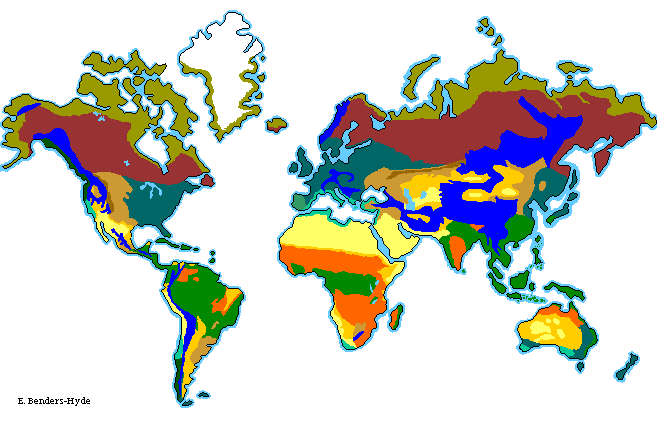
What is the main factor that separates the biomes?
a)
Land
b)
Water
c)
Climate
d)
Longitude
16.
Which Biome has permafrost?
a)
Temperate Forest
b)
Rainforest
c)
Taiga
d)
Tundra
17.
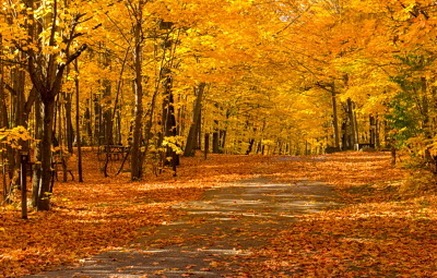
Which biome has deciduous trees (which lose their leaves)?
a)
Temperate Forest
b)
Rainforest
c)
Grasslands
d)
Taiga
18.
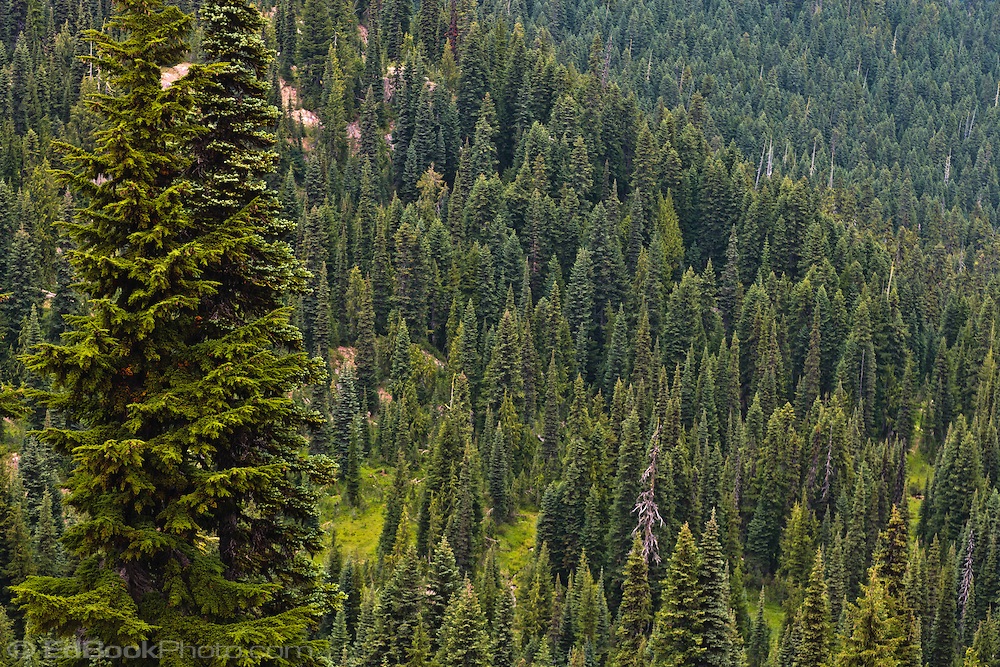
Which biome has coniferous trees (which don't lose their leaves)?
a)
Taiga
b)
Temperate Forest
c)
Tundra
d)
Grasslands
19.
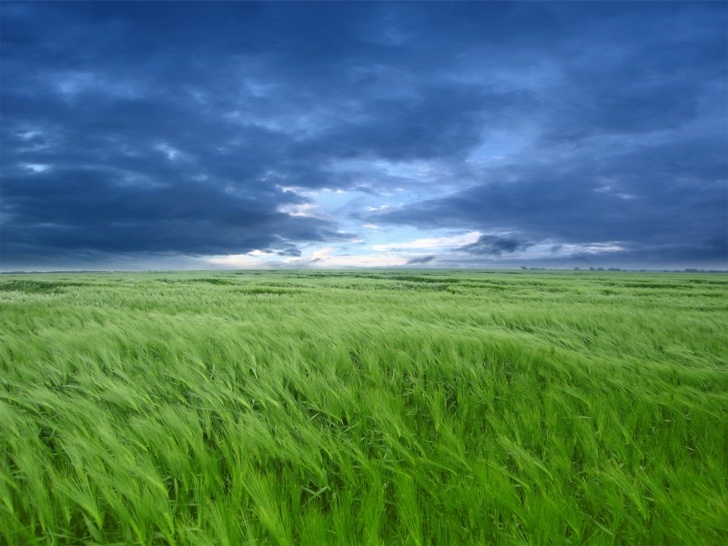
Which biome has wide-open fields of grass?
a)
Taiga
b)
Grasslands
c)
Temperate Forest
d)
Rainforest
20.
Which biome has the most variety of plants and animals?
a)
Temperate Forest
b)
Rainforest
c)
Tundra
d)
Grasslands
21.
Which biome has 4 seasons?
a)
Taiga
b)
Tundra
c)
Grasslands
d)
Temperate Forest
22.
Which biome is home to cacti, scorpions, coyotes, kangaroo rats, and lizards?
a)
Desert
b)
Grasslands
c)
Temperate Forest
d)
Taiga
23.
Which biome could an animal who hibernates in the winter to survive the cold live in?
a)
Grasslands
b)
Taiga
c)
Desert
d)
Rainforest
24.
In which biome does an organism have to be able to conserve water to survive?
a)
Rainforest
b)
Taiga
c)
Desert
d)
Temperate Forest
25.

In which biome would you find permafrost? This is the layer of soil that is frozen all the time.

a)

coniferous forest (taiga)

b)

desert

c)

tundra

d)

grassland

26.

Which biome has a dry season and a wet season?

a)

tundra

b)

tropical rain forest

c)

desert

d)

savanna

27.

Which biome gets the most amount of rain every year?

a)

decidious forest

b)

tropical rain forest

c)

desert

d)

tundra

28.

Which biome has the greatest amount of biodiversity? (the most different kinds of organisms)

a)

tundra

b)

grassland

c)

desert

d)

tropical rain forest

29.

Which biome has trees that lose their leaves in the fall and regrow them in the spring?

a)

deciduous forest

b)

coniferous forest (taiga)

c)

tropical rain forest

d)

desert

30.

Which biome is the coldest?

a)

tundra

b)

desert

c)

grassland

d)

savanna

31.

Which biome has conifer trees or evergreens? These trees have needles that are coated in a waxy substance and drop cones.

a)

deciduous forest

b)

desert

c)

coniferous forest (taiga)

d)

tropical rain forest

32.

Which biome is found around the equator where it is warm all year long?

a)

tundra

b)

tropical rain forest

c)

grassland

d)

coniferous forest (taiga)

33.

Which biome has NO trees because much of the ground is frozen all the time?

a)

tundra

b)

desert

c)

savanna

d)

coniferous forest (taiga)

34.

Which biome is the warm and very wet forest?

a)

tundra

b)

tropical rain forest

c)

coniferous forest (taiga)

d)

deciduous forest

35.
the trees in this biome are characterized by needle-like leaves that are called conifers
a)
Desert
b)
Taiga
c)
Tundra
d)
Grasslands
36.
lichens, mosses, grasses, and other low-growing plants are common vegetation in this biome due to the permafrost, low rainfall, and very cold temperatures
a)
Desert
b)
Taiga
c)
Tundra
d)
Grasslands
37.
This biome's soil can be described as permafrost
a)
Taiga
b)
Tundra
38.
This biome gets the highest percentage of rain yearly
a)
Taiga
b)
Temperate Deciduous Forest
c)
Tropical Rainforest
d)
Grasslands
39.
True of False?  
Animals that live in the desert have adapted to live with little water since the desert gets little rainfall.
a)
True
b)
False
40.
The climate in a tropical rain forest can be described as
a)
cold and wet 
b)
warm and dry 
c)
cold and dry 
d)
warm and wet 
41.
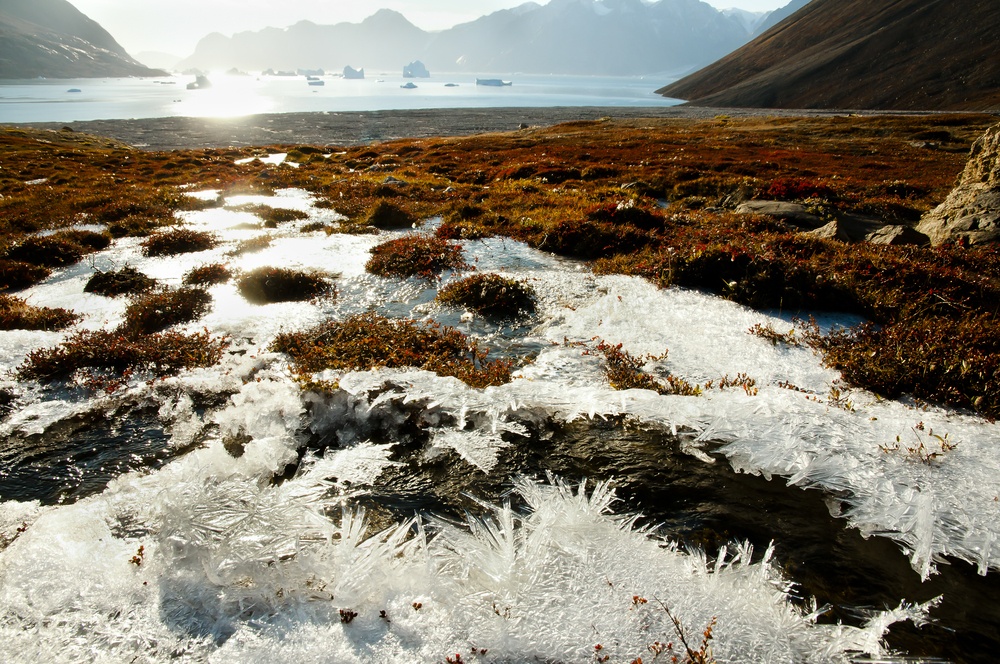
What is this biome?
a)
Arctic Tundra
b)
Desert
42.
What is this biome?
a)
Grassland
b)
Desert
43.
An animal's color or pattern that helps it blend into its surroundings
a)
Environment 
b)
Mimicry
c)
Camouflage
44.
An adaptation that helps an animal hide from predators
a)
migration
b)
camouflage
c)
hibernation
d)
extinction
45.
What adaptation does a musk ox have that allows it to survive in a cold climate. 
a)
claws
b)
horns
c)
round eyes
d)
fur
46.
The polar bear's white fur allows it to hide in the cold arctic. This adaptation is called________________.
a)
White on white
b)
Camouflage
c)
Color matching
d)
behavioral adaptation 
47.
Most desert plants have spines. How does this adaptation help them survive in a harsh environment?
a)
The spines capture water
b)
The spines make it colder
c)
The spines will make it rain
d)
The spines will protect the plant from animals that want to eat it
48.
Cactus have a thick, hard surface (cuticle) that prevent ______________ from evaporating.
a)
Water
b)
Air
c)
Sugar
d)
light
49.
What is the function (job) of fish gills?
a)
To absorb water from the water
b)
To make the fish faster
c)
To make the fish lighter
d)
To absorb oxygen from the water
50.
What adaptation most likely helps this bird fly?
a)
A strong beak
b)
Small feet
c)
Hollow bones 
d)
The color of the bird
51.
Why do hollow bones help birds during flight?
a)
Hollow bones make the birds weigh less
b)
Hollow bones are full of heavy blood
c)
Hollow bones store water
d)
Hollow bones are made of feathers 
52.
Xylem is a plant adaptation that allows plants to transport ______________ up the stem.
a)
Salt 
b)
Sugar
c)
Water
d)
Coffee
53.
Anteaters have a long thin snout and even longer tongue. What is this adaptation most likely for?
a)
To reach through small tunnels in the ground where it can find insects.
b)
To reach for fruits in trees
c)
To fight off predators 
d)
'to lick himself after eating 
54.
The Great Horned Owl has his eyes in the front of his head. What can you conclude about this fact?
a)
The Horned Owl is a prey
b)
The Horned Owl is a predator
55.
Goats have eyes on the side of the head. What does this adaptation say about the animal?
a)
He is a prey, and it allows goats to have a wide viewing range
b)
He is a prey, and it allows goats to have a smaller viewing range.
c)
Goats are predators 
d)
Goats are predators, and this allows them to see more
56.
Define Adaptation.
a)
How an organism has NOT changed and continues to live in an environment 
b)
All animals can live in any environment 
c)
How an organism grows over time
d)
Special features or behaviors that allow an animal to survive in an environment.
57.
This stick insect is using ________________ to blend in to it's environment. 
a)
air 
b)
terra
c)
camouflage 
d)
synthesis 
58.
Some grasses grow in hot dry areas. Why might they grow deep roots?
a)
to protect the plant from sun damage
b)
to take in as much light as possible
c)
to spread seeds to new places
d)
to reach water down below
59.
Why might some plants that grow on the shady rain forest floor have large leaves?
a)
to stay safe from predators
b)
to attract different animals
c)
to survive harsh winters with heavy snowfall
d)
to take in as much sunlight as possible
60.

Helps the plant to anchor to the soil and get water and nutrients.

a)

Leaves

b)

Stems

c)

Roots

d)

Odd shapes

61.

Plants use _______to capture the sun's energy and produce the food they consume.

a)

flowers

b)

photosynthesis

c)

roots

d)

stems

62.
 Which of these BEST describes how some birds survive when the weather gets cold? 

     
a)
 a.   They store twigs and sticks in their nest 
b)
 b. They migrate to a warmer climate 
c)
 c. They grow more feathers to stay warm in the winter 
d)
 d. They hide in bushes and wait for warm weather 
63.
How do adaptations help animals?
a)
To hide from predators
b)
to hunt for food
c)
to survive in their habitats
d)
All of these are correct
64.
I am an animal that lives in the arctic. I have adaptations that allow me to survive in my environment. Which of the following is an adaptation that will allow me to survive the arctic?
a)
thick white fur 
b)
speed
c)
digging in the ground 
d)
short, fluffy tail