Wayground logo

Free Printable Worksheets

Font size

S
M
L
XL
Worksheets

Atoms & Subatomic Perticles

Total questions: 60

Worksheet time: 57mins

Name
Class
Date
1.

In a stable atom the amount of electrons is equal to

a)

neutrons

b)

protons

c)

atomic mass

d)

neutrons + protons

2.
The first orbital can hold a maximum of how many electrons?
a)
2
b)
3
c)
8
d)
6
3.
What is the difference between the number of electrons in an atom of Calcium, Ca, and the number of electrons in an atom of Aluminum, Al?
a)
20
b)
7
c)
13
d)
27
4.
What types of particles are found in the cloud surrounding the atom's nucleus?
a)
Positively charged particles and negatively charged particles
b)
Negatively charged particles only
c)
Neutral particles and positively charged particles
d)
Positively charged particles only
5.

All of the following are terms used to describe the location of the electrons except.

a)

negatively charged orbital

b)

dense and negatively charged nucleus

c)

negatively charged electron cloud

d)

neutral empty cloud

6.
Where is the neutron located?
a)
In the loose nucleus with the electron
b)
In the dense nucleus with the protons
c)
In the electron cloud
d)
The nucleus floats on orbitals
7.
How many neutrons does oxygen have?
a)
16
b)
15.99
c)
8
d)
Doesn't contain any neutrons
8.
How many neutrons does the an element with an atomic number of 3 and a mass of 6.9 contain?
a)
6.9
b)
4
c)
3
d)
7
9.
An atom with 19 protons, and 19 electrons and a mass of 39 has how many neutrons?
a)
19
b)
39
c)
20
d)
58
10.
How many neutrons does an element have with the atomic number of 36?
a)
36
b)
84
c)
48
d)
18
11.
An atom has 5 protons, 6 neutrons, and 5 electrons. What is the charge of the atom's nucleus?
a)
-5
b)
+6
c)
+5
d)
-6
12.
Sodium has an atomic number of 11, how many protons does this atom have?
a)
22
b)
11
c)
12
d)
2
13.
Where is the proton located?
a)
In the very dense nucleus
b)
Floating around in the negative electron cloud
c)
the loose nucleus
d)
the positive electron cloud
14.

Different elements can have the same number of protons?

a)

True

b)

False

15.

Which subatomic particles is counted to determine the type of element the atom represents?

a)

proton

b)

neutron

c)

electron

d)

boron

16.

The nucleus of an atom contains which subatomic particles?

a)

protons and electrons

b)

protons and neutrons

c)

electrons and neutrons

d)

protons, electrons, and neutrons

17.

What is the center of an atom called?

a)

The headquarters

b)

The centrometer

c)

The hypothesis

d)

The nucleus

18.

Which subatomic particle as no charge, also known as a neutral charge?

a)

proton

b)

neutron

c)

electron

d)

chakra

19.

Which subatomic particle has a negative charge?

a)

proton

b)

neutron

c)

electron

d)

cybertron

20.
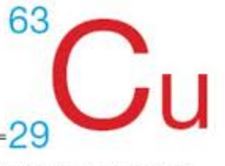
How many electrons does a Copper atom have?
a)
63
b)
29
c)
92
d)
34
21.
How many neutrons does a Hydrogen atom have?
a)
1
b)
2
c)
3
d)
0
22.
Atomic mass - Atomic Number =
a)
protons
b)
neutrons
c)
electrons
d)
Average Mass
23.
An element is defined by its number of 
a)
protons
b)
electrons
c)
neutrons
d)
protons + electrons
24.
Which of the subatomic particles is the lightest
a)
all have the same mass
b)
protons 
c)
neutrons 
d)
electrons
25.
The relative mass of an electron is...
a)
1
b)
2
c)
0
d)
3
26.
The relative mass of a proton/neutron is.....
a)
0
b)
1
c)
2
d)
3
27.
Most of an atom's mass is found in the
a)
electrons.
b)
nucleus.
28.
How many valence electrons are in an atom of Se?
a)
2
b)
8
c)
6
d)
5
29.
How many valence electrons are in an atom of Ba?
a)
2
b)
8
c)
4
d)
1
30.
How many valence electrons are in an atom of Sn?
a)
3
b)
8
c)
4
d)
1
31.
How many valence electrons are in an atom of P?
a)
4
b)
5
c)
2
d)
3
32.
How many valence electrons are found in atoms of group 1?
a)
7
b)
6
c)
4
d)
1
33.
How many valence electrons are found in atoms of Calcium?
a)
4
b)
5
c)
2
d)
3
34.
How many valence electrons are found in atoms of aluminum?
a)
6
b)
3
c)
13
d)
16
35.
Which group has the greatest number of valence electrons?
a)
1
b)
14
c)
18
d)
16
36.
a)
2
b)
8
c)
3
d)
13
37.
a)
12
b)
7
c)
8
d)
14
38.
Valence electrons are the...
a)
Innermost electrons
b)
Middle electrons
c)
Outermost electrons
d)
Any electrons
39.

Hydrogen needs _____ electrons in its valence shell to be stable.

a)

4

b)

6

c)

8

d)

2

40.

All atoms are most stable with (or would "prefer") how many electrons in their valence shell?

a)

1

b)

2

c)

8

d)

18

41.
How many valence electrons does Neon have?
a)
18
b)
8
c)
10
d)
2
42.
According to the octet rule most elements need _______ valence electrons.
a)
2
b)
8
c)
6
d)
18
43.
How many valence electrons are found in atoms of group 14?
a)
4
b)
3
c)
14
d)
16
44.
Which element has 3 more electrons than Calcium (Ca) ?
a)
Fluorine
b)
Vanadium
c)
Tungsten
d)
Argon
45.
This element has 20 neutrons and 19 negatively charged particles
a)
Kr
b)
K
c)
Rb
d)
Xe
46.
What element is this?
a)
Helium
b)
Hydrogen
c)
Argon
d)
Silver
47.
Which of the following is the correct number of protons, neutrons, and electrons for an atom of phosphorus?
a)
protons = 15
neutrons = 15
electrons = 15
b)
protons = 15
neutrons = 16
electrons = 15
c)
protons = 15
neutrons = 16
electrons = 16
d)
protons = 16
neutrons = 15
electrons = 16
48.
How many electrons can the 2nd electron shell hold?
a)
2
b)
3
c)
8
d)
18
49.
What is the name of this element?
a)
Beryllium
b)
Boron
c)
Barium
d)
Bromine
50.
What is the mass number of this atom?
a)
1
b)
3
c)
4
d)
7
51.
What is the atomic number of this atom?
a)
2
b)
4
c)
6
d)
none of the above
52.
What group does this element belong to?
a)
Group 1: Alkali metals
b)
Group 18: Noble Gases
c)
Group 2: Alkaline-Earth Metals
d)
Group 17: Halogens
53.

Which element is this?

a)

Nickel

b)

Neon

c)

Sodium

d)

Nitrogen

54.

Name this element.

a)

Neon

b)

Magnesium

c)

Sodium

d)

Manganese

55.

What element is this?

a)

Na

b)

P

c)

N

d)

S

56.

Which Bohr model represents Be?

a)
b)
c)
d)
57.

Which Bohr model represents Oxygen?

a)
b)
c)
d)
58.

Which Bohr model represents Neon?

a)
b)
c)
d)
59.
Where electrons are likely to be found as they travel around the nucleus
a)
Nucleus
b)
Electron Cloud
c)
Within a Proton
d)
Within a Neutron
60.
Discovered the nucleus of the atom through the Gold Foil Experiment
a)
Rutherford
b)
Chadwick
c)
Thomson
d)
Dalton