
 Worksheets
Water Pollution ES TEST pops
Total questions: 49
Worksheet time: 26mins

Although bottled-water plants are regulated by the government, the bottled water is tested for pollutants far more than tap water.
TRUE
FALSE
Bottled water is simply tap water that has been filtered and treated with various chemicals.
TRUE
FALSE

Explain Alaska’s solution to global water shortage
Bag up local water in plastic bags, then float it down to California to be sold.
Alaska wants to sell the ice bergs in their waters for a profit
Alaska will infuse our aquifers with fresh water from their surface waters
Eskimos are willing to show scientist how to purify the brackish salt aquifers

What is the end result of Artificial Eutrophication
Pond turns green
An increase of plant life
The arrival of many migratory birds
Pond death

This type pollution is relatively easy to regulate and control because it is easily identified and traced
Point Pollution
Air Pollution
Non Point Pollution
General Pollution
Aquifer Damage

What is meant by TOWING WATER
Towing water = bottled water
Dragging down an iceberg to be used as a water source
Using the Water Currents to move objects
Water that tugboats are using to help ships in distress

This is what is left after human body waste goes through a sewage treatment plant
Excrement
Sludge
Manure
Nutritional Supplements

What is Ground Water
Ground water is all the water that falls as precipitation
Ground water created by Grinding Plants and recycling the juice
Water that seeps into the soil
Ground water is found at the bottom of surface water

This increase of toxin as it moves up the food chain is called
Biological Magnification
Apex Magnification
Toxicity
Biological Toxicity

Florida has a sand aquifer. In seasons of drought, two major problems occur
Sink holes occur because the aquifer caves in
Water must be purchased from Alaska
People are forced to move to states that have a clay aquifer
Salt water comes in and pollutes the aquifer

Large underground rock formations that store large amounts of groundwater
Aquifer
Aquatic Support Systems
Ground Water
Natural Underground water banks

A structure built across a river or stream that restricts the flow of water traveling downstream.
Reservoir
Dam
Refuge
Pontoon
Mole Hill

When it rains and the water seeps into the soil, it will continue to go downward until it is stored in the aquifer.
Drainage of the aquifer
Creation of groundwater
Recharging the aquifer
Infiltration of the watershed

Of all the total water on the Earth, How much of it is freshwater?
23 %
100 %
50 %%
77 %

When hot water is pumped back into the river or lake, it alters the physical environment
Comfort zone destruction
Buoyance level confusion
Thermal Pollution
Water level of river increases

How do Rivers cause Controversy?
Everyone wants river front property
Locals are complaining about people partying on Pontoons near their property.
Fighting over Water rights
People are blaming each other for the pollution problems
What does "potable" mean?
Safe to drink
Frozen
Liquid water
Dirty water
Which of the following is an unsafe material that can be found in drinking water?
Fish
Pathogens
Minerals
None of these
When oxygen saturation is in a tolerable and stable amount.

Water pollution occurs when:
Harmful substances enter a water supply
Industries dispose of waste safely and correctly.
Industries cut costs with waste disposal.
None of the above.

We can prevent water pollution by:
Reduce the use of plastic.
Properly dispose of chemicals.
Clean up after your animals.
All of the above
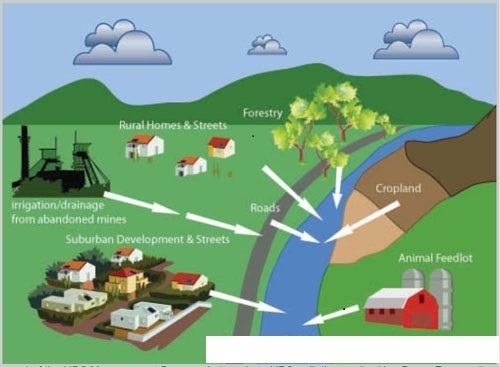
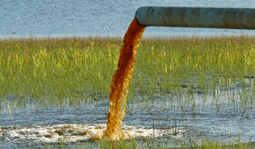


______________________ is an area of the earth’s surface from which water soaks down into the aquifer


What is water pollution?
Pollution that comes from water.
There is not such thing as this ''water pollution''.
Pollution that comes from land or air that ends up in the ocean.
Fire and water together.

Which of the following is a nonpoint source of pollution?
sewage treatment plant
underground mines
chemical and sediment runoff
oil tankers

What is the difference between Point and nonpoint sources?
Point (Specific location) Nonpoint (broad, all areas)
There is no difference
Point (Broad, all areas) Nonpoint (specific location)

Water may be used to cool power plants and released back into the environment causing
thermal pollution
chemical pollution
heavy metal pollution
sedimentation

Soil erosion that results from land clearing practices for farming or urbanization may cause
thermal pollution
chemical pollution
heavy metal pollution
water pollution due to soil particles washing into the river or standing water
Which of the following is not a natural
cause of water pollution?
a. Volcanoes
b. Animal waste
c. Oil spills
d. Silt from storms and floods
What can happen to fish when there
isn't enough oxygen in the water?
a. They can suffocate
b. They can no longer float in the water
c. They can't see
d. They grow really big
True or False?
Many people on Earth do not have
access to clean water.
True
False
sludge
medication and vitamin supplements

The area of land that drains into the nearest river is called a(n)...
runoff
aquifer
watershed
valley
Water is stored underground, in a structure called a(n)...
cavern
well
aquifer
river
________________ pollutants put directly into the air by human activity
Primary
Secondary
Tertiaary
Organic
_______________ is an atmospheric condition that traps pollution near the ground
Temperature inversion
Pressure
inversion
Temperature anomaly
Pressure
gradient
Which is a secondary air pollutant?
ozone
carbon monoxide
particulate matter
nitrogen oxides
Volatile organic compounds are ____________,
tiny particles of liquid or solid matter.
produced by chemical interactions between sulfur and oxygen.
an odorless, colorless poisonous gas.
.
organic chemicals that form toxic fumes

