
 Worksheets
Honors Unit 2 Biochemistry Review
Total questions: 68
Worksheet time: 2hrs 31mins
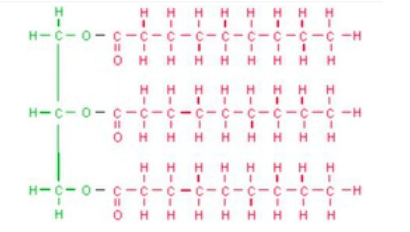

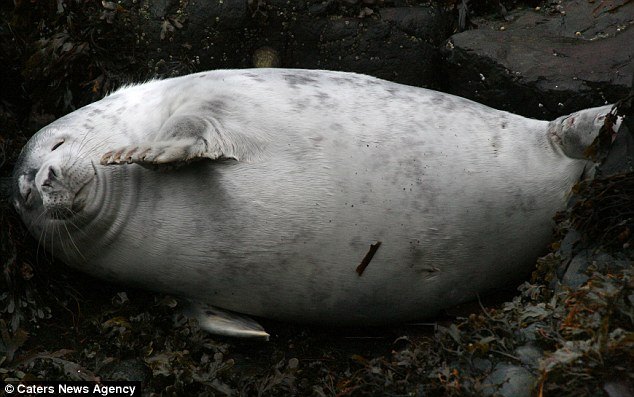


Polymer's split apart to form ________, by __________.
monomers, hydrolysis
monomers, dehydration synthesis
amino acids, hydrolysis
amino acids, dehydration synthesis

In the graph, the energy level needs to increase before it goes back down. The increase is called the:
enzyme energy
substrate
activation energy
active site

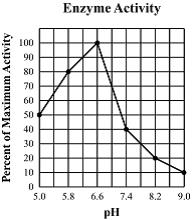
What is shown?
Increasing the temperature does not affect the rate of the reaction.
Increasing the temperature increases the rate of reaction until too high a temperature is reached.
Increasing the reaction rate will cause a change in the temperature.

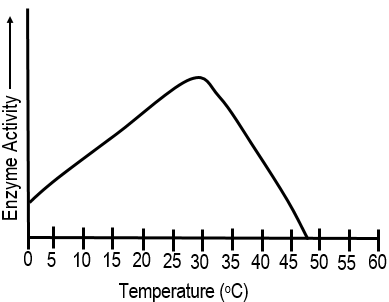
In the figure, why doesn't the reaction rate continue to increase as the temperature increases?
It does.
It reaches the saturation point where no active site is bonded to the activation energy.
At too high of a temperature, the protein changes shape and can no longer function.
A substrate in an enzyme catalyzed reaction is also called
an active site.
activation energy.
the reactant.
the product.
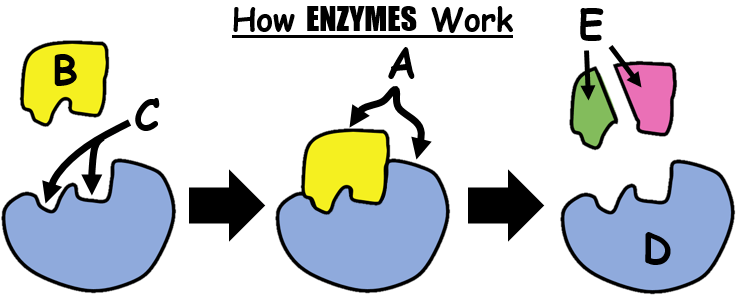
Letter D...
active site
enzyme
substrate
products

Letter C...
active site
enzyme
substrate
products


The prefix "mono" means...
Two
One
Many
Few
The prefix "poly" means...
One
Two
Many
Want a cracker

Which of these are examples of polysaccharides?
DNA, RNA
Fats, hormones
polypeptides
starches, cellulose, glycogen
Equations
(A) glucose + glucose --> maltose + water
(B) amino acid + amino acid --> dipeptide + water
Which statement about processes A and B is correct?
Peptide + Water ---> Amino acid + Amino Acid
What type of reaction does this demonstrate?






A hydrocarbon chain that is sometimes considered to be a monomer of lipids.
Fatty Acids
Nucleic Acids
Proteins
Lipids

Single bond between Carbon and Hydrogen chains.
Tends to be solid at room temperature like butter.
Saturated Fats
Unsaturated Fats
Carbohydrates
Proteins

Double bond between Carbon and Hydrogen chains.
Tends to be liquid at room temperature like oils.
Polysaccharides
Lipids
Saturated Fats
Unsaturated Fats
The indicator for glucose, simple sugar
iodine
biuret's
benedict's + heat
indophenol
silver nitrate
The indicator for starch, complex sugars
iodine
biuret's
benedict's + heat
indophenol
silver nitrate
The indicator for protein
iodine
biuret's
benedict's + heat
indophenol
silver nitrate
The result of a positive test for glucose, simple sugar
light purple
black/purple
orange when heated
clear
white precipitate
The result of a positive test for protein
light purple
black/dark purple
orange when heated
clear
white precipitate
The result of a positive test for starch, complex sugar
light purple
black/dark purple
orange when heated
clear
white precipitate

