wayground logo

Free Printable Worksheets

Font size

S
M
L
XL
Worksheets

1st 6 Weeks Review

Total questions: 115

Worksheet time: 5hrs 3mins

Name
Class
Date
1.
Which graph does NOT pass the vertical line test?
a)
Graph 1
b)
Graph 2
c)
Graph 3
d)
Graph 4
2.
Is this a function? Explain.
a)
Yes; it passes the horizontal line test.
b)
No; it is not a straight line.
c)
Yes; it passes the vertical line test.
d)
No; there is a line connecting the dots.
3.
a)
Function
b)
Not a Function
4.
a)
Function
b)
Not a Function
5.
a)
Function
b)
Not a Function
6.
a)
Function
b)
Not a Function
7.
What is the range of the graph?
Remember: Range is y! 
a)
1 ≤ x ≤ 5
b)
1 < x < 5
c)
1 ≤ y ≤ 5
d)
1 < y < 5
8.
What is the domain of the graph?
Remember:  Domain is x
a)
1≤ x ≤ 4
b)
1 < x < 4
c)
1≤ y ≤ 4
d)
1 < y < 4
9.
What is the RANGE?
a)
all real numbers
b)
[1, ∞)
c)
(-∞, 1]
d)
none of these
10.
What is the range of the function?
a)
[-1, +∞)
b)
(-1,1)
c)
[1.5, +∞)
d)
(-2, 2)
11.
What is the range? 
a)
[-∞, +∞]
b)
[-2, 2]
c)
(-∞, ∞)
d)
[0, 2]
12.
a)
(-∞, ∞)
b)
[0, ∞)
c)
[-5, 5]
d)
(0, ∞)
13.
For the function {(0,1), (1,-3), (2,-4), (-4,1)}, write the domain and range.
a)
D: {1, -3, -4,}
R: {0, 1, 2, -4}
b)
D: {-4, 0, 1, 2}
R:{-4, -3, 1}
c)
D: {0, 1, 2, 3, 4}
R:{1, -3, -4}
d)
D: {0, 1, 2, -4}
R: {1, -3, -4, 1}
14.
What is the range of the following relation:
(9, -2) (4, 3)  ( 8, 10) ( -4, 8)
a)
{-4, 4, 8, 9}
b)
{-2, 3, 8, 10}
c)
{(9, -2) ( 4, 3)}
d)
{(8, 10) (-4, 8)}
15.
Over what interval is this function constant?
a)
-5 < x < ∞
b)
-3 < x < 4
c)
4 < x < ∞
d)
-5
16.
When is this function increasing?
a)
-2.5 < x < 2.5
b)
0 < x < 5
c)
0 < x < 55
d)
-5 < x < 0
17.
List the types of intervals that the graph demonstrates in order.
a)
decreasing, constant, increasing, constant
b)
increasing, decreasing, constant
c)
increasing, constant, increasing, constant
d)
increasing, constant, decreasing, constant
18.
Where is the decreasing?
a)
( −∞, −2.55) U (0, 2.55)
b)
(∞, −6.25) U (36, −6.25)
c)
(−∞, ∞)
d)
(−∞, 0)
19.
What are all the x-intercepts?
a)
(−2.55, 0), (2.55, 0)
b)
(−3,0), (−2,0), (2,0), (3,0)
c)
(0, 36)
d)
(−∞,∞)
20.

What is/are the increasing interval(s) for the function shown?

a)

(3, 1)\left(-3,\ 1\right)

b)

(4, 8)\left(4,\ 8\right)

c)

(,1) and (3, 1)\left(-\infty,1\right)\ and\ \left(-3,\ 1\right)

21.

What is/are the decreasing interval(s) for the function shown?

a)

 (2, 4) and (8, )\left(2,\ 4\right)\ and\ \left(8,\ \infty\right) 

b)

 (, 1) and (8, )\left(-\infty,\ 1\right)\ and\ \left(8,\ \infty\right) 

c)

 (,1), (3, 1) and (8, )\left(-\infty,1\right),\ \left(-3,\ 1\right)\ and\ \left(8,\ \infty\right) 

d)

 (, 1), (2, 4) and (8, )\left(-\infty,\ 1\right),\ \left(2,\ 4\right)\ and\ \left(8,\ \infty\right) 

22.

What is the increasing interval on the function shown?

a)

(, 1)\left(-\infty,\ 1\right)

b)

(, 2)\left(-\infty,\ 2\right)

c)

(2, )\left(2,\ \infty\right)

d)

(1, )\left(1,\ \infty\right)

23.
a)

Decreasing Interval

b)

Increasing Interval

c)

Constant Interval

d)

Positive Interval

e)

Negative Interval

24.
a)

Decreasing Interval

b)

Increasing Interval

c)

Constant Interval

d)

Positive Interval

e)

Negative Interval

25.
a)

Decreasing Interval

b)

Increasing Interval

c)

Constant Interval

d)

Positive Interval

e)

Negative Interval

26.
a)

Decreasing Interval

b)

Increasing Interval

c)

Constant Interval

d)

Positive Interval

e)

Negative Interval

27.
a)

Decreasing Interval

b)

Increasing Interval

c)

Constant Interval

d)

Positive Interval

e)

Negative Interval

28.
a)

Decreasing Interval

b)

Increasing Interval

c)

Constant Interval

d)

Positive Interval

e)

Negative Interval

29.
a)

Decreasing Interval

b)

Increasing Interval

c)

Constant Interval

d)

Positive Interval

e)

Negative Interval

30.
a)

Decreasing Interval

b)

Increasing Interval

c)

Constant Interval

d)

Positive Interval

e)

Negative Interval

31.
a)

Decreasing Interval

b)

Increasing Interval

c)

Constant Interval

d)

Positive Interval

e)

Negative Interval

32.

For what values of x is f(x) > 0?

a)

All real numbers

b)

All real numbers greater than 1

c)

All real numbers less than -3 or greater than 2

d)

All real numbers greater than -3 and less than 2

33.

For what values of x is f(x) > 0?

a)

All real numbers

b)

All real numbers greater than -2 and less than 2

c)

All real numbers less than -2 or greater than 2

d)

All real numbers greater than 0

34.

end behavior

a)
b)
c)
d)
35.

end behavior

a)
b)
c)
d)
36.

This graph increases from...

a)

( -1, 1 )

b)

( 0, 4 )

c)

[ -1, 1 ]

d)

[ 0, 4 ]

37.

This graph is decreasing on the intervals...

a)

( -∞, -2 ) U ( 2, ∞ )

b)

( -∞, 0 ) U ( 4, ∞ )

c)

( -2, 2 )

d)

( 0, 4 )

38.
What is the end behavior as x → +∞, f(x)→ ?
a)
-∞
b)
39.
What does it mean to find the inverse of a function?
a)
the x's and y's are switched
b)
the x's and y's are divided by 2
c)
the x's and y's are made negative
d)
the x's and y's are the same
40.
If the equation of f(x) goes through (1, 4) and (4, 6), what points does f-1(x) go through?
a)
(1, 4) and (4, 6)
b)
(-4, -1) and (-6, -4)
c)
(-1, -4) and (-4, -6)
d)
(4, 1) and (6, 4)
41.
What's the name of the inverse of g(x)?
a)
f(x)
b)
f-1(x)
c)
y
d)
g-1(x)
42.
What is the inverse of the function
f(x) = 2x + 4   ?
a)
f-1(x) = 4(x -2)
b)
f-1(x) = (x-4)/2
c)
f-1(x) = x/2 - 4
d)
f-1(x) = x/4 + 2
43.
are these inverse functions?
a)
no
b)
yes
c)
no way to tell
44.
are these inverse functions?
a)
no
b)
yes
c)
no way to tell
45.
a)
9 - √17
b)
4
c)
2
d)
√8
46.
a)
A.
b)
B.
c)
C.
d)
D.
47.
a)
A.
b)
B.
c)
C.
d)
D.
48.
Given
f(x) = 3x2 + 7x and g(x) = 2x2 - x - 1, find (f + g)(x).
a)
11x2 - 1
b)
5x4 + 6x2 - 1
c)
5x2 + 6x - 1
d)
5x2 + 8x - 1
49.
When f(x) = 4x+8 and
g(x) = x+3, find
(f⋅g)(x)
a)
4x2+24
b)
4x2+20x+24
c)
4x2+12x+24
d)
4x2+4x+24
50.
f(x) = 3x + 10
g(x) = x - 2
Find g(f(-10))
a)
-42
b)
-26
c)
-18
d)
None of these.
51.

Solve: 25x = 5

a)

x = 1

b)

x = -2

c)

x = 2

d)

x = 1/2

52.
Solve: 2x = 4x+1
a)
x = -2
b)
x = 2
c)
x = -3
d)
x = 3
53.
Solve for x:
122x-10 = 1
a)
1
b)
10
c)
-5
d)
5
54.

Write in logarithmic form.

52 = 25

a)

log52 = 25

b)

log225 = 5

c)

log255 = 2

d)

log525 = 2

55.

Change to Exponential Form:

log636 = 2

a)

26=36

b)

62=36

c)

362=6

d)

366=2

56.
Logarithms are the inverse of ___________.
a)
Trees
b)
Quadratics
c)
Square
d)
Exponential
57.

Find the inverse of f(x)=log4(x+4)

a)

f-1(x)=4(x-4)

b)

f-1(x)=4x+4

c)

f-1(x)=4x-4

d)

f-1(x)=4x

58.

Find the inverse of y=9x

a)

y=logx9

b)

y=log109

c)

x=logy9

d)

y=log9x

59.
Classify the following graph.
a)
Exponential Growth
b)
Exponential Decay
c)
Logarithmic
60.
Classify the following graph.
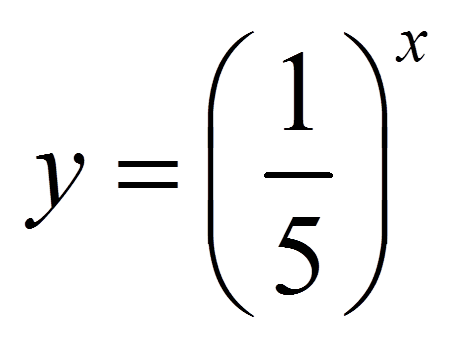
a)
Exponential Growth
b)
Exponential Decay
c)
Logarithmic
61.
Classify the following graph.
a)
Exponential Growth
b)
Exponential Decay
c)
Logarithmic
62.
What equation matches the graph?
a)
f(x) = 3x
b)
f(x) = (⅓)x
c)
f(x) = log₃(x)
63.
Where would the asymptote be for this graph?
a)
y = 4
b)
y = -4
c)
x = 3
d)
x = -3
64.
What is the asymptote of this function:
 f(x) = 2x-1 + 3
a)
x = 1
b)
x = -1
c)
y = 3
d)
y = - 3
65.
What is the relationship between
f(x) = log₅(x)
and
g(x) = 5x?
a)
No Relationship
b)
Inverses
c)
Same Function
66.
As x --> 1, f(x) --> ____
a)
0
b)
c)
-∞
d)
1
67.
As x --> ∞, f(x) --> ____
a)
0
b)
c)
-∞
d)
1
68.

Describe the transformation that occurred

p(x) = f(x + 3)

a)

Right 3 units

b)

Vertical Stretch

c)

Up 3 units

d)

Left 3 units

69.

Describe the transformation that occurred.

h(x) = f(x) + 2

a)

up 2 units

b)

left 2 units

c)

Vertical Strech

d)

right 2 units

70.
Which transformation maps the graph of
f(x) = x2 to the graph of g(x) = (x + 4)2?
a)
a translation shifting f(x) 4 units up
b)
a translation shifting f(x) 4 units down
c)
a translation shifting f(x) 4 units to the left
d)
a translation shifting f(x) 4 units to the right
71.
Which equation describes the transformation of shifting f(x)=x3 two units right?
a)
x3 + 2
b)
x3 - 2
c)
(x + 2)3
d)
(x - 2)3
72.
Which equation describes the transformation of shifting f(x)=x3 three units left?
a)
x3 + 3
b)
x3 - 3
c)
(x + 3)3
d)
(x - 3)3
73.
Identify the transformation from the graph of f(x)=2x to the graph g(x)=2x-3
a)
shifted up three units
b)
shifted down three units
c)
shifted left three units
d)
shifted right four units
74.
Describe the transformation:
4f(x)
a)
Horizontal Stretch
b)
Horizontal Compress
c)
Vertical Stretch
d)
Vertical Compress
75.
Describe the transformation from dotted to solid.
a)
f(x + 4)
b)
f(x - 4)
c)
f(x) + 4
d)
f(x) - 4
76.
Describe the transformation from dotted to solid.
a)
f(x + 5) + 3
b)
f(x +3) + 5
c)
f(x - 5) + 3
d)
f(x - 3) + 5
77.
Compare the function y = 0.3x2 to the parent function y = x2
a)
Wider
b)
Narrower
78.
Compare the function y = 5x2 to the parent function y = x2
a)
Wider
b)
Narrower
79.
DOMAIN?
a)
(-∞,∞)
b)
[0,∞)
c)
(-∞,0]
d)
-2, 2
80.
What is the RANGE?
a)
(-∞,∞)
b)
[0,∞)
c)
(-∞,0]
d)
[-∞,∞]
81.
Name the parent function. 
a)
linear
b)
constant
c)
absolute value
d)
quadratic
82.
Name the parent function.
a)
linear
b)
quadratic
c)
absolute value
d)
cubic
83.
Name the parent function.
a)
linear
b)
quadratic
c)
cubic
d)
logarithmic
84.
Name the parent function.
a)
quadratic
b)
cubic
c)
square root
d)
logarithmic
85.
a)
A
b)
B
c)
C
d)
D
86.
Is this exponential growth or decay?
a)
Growth
b)
Decay
87.
A new savings account is opened with $400 and gains 3% every year. What is the exponential function?
a)
f(x)=400(1+3)x
b)
f(x)=400(1-0.03)x
c)
f(x)=400(1+0.03)x
d)
f(x)=400(0.03)x
88.

Is the following function an example of decay or growth?

f(x) = 2(1.25)x

a)

Exponential Growth

b)

Exponential Decay

89.

This is the horizontal line which the values of the function approach but do not cross :

a)

Asymptote

b)

Growth Factor

c)

Axis of symmetry

d)

Curve

90.

What is the initial value of the situation represented by f(x)=0.05(2)x?

a)

0.05

b)

2

c)

0.1

d)

1

91.
Convert 3% to a decimal
a)
3
b)
.3
c)
.03
d)
.003
92.
There were 417 cell phones sold at an electronics store in January. Since then, cell phone sales at this store have increased at a rate of 3.75% per month. At this rate of growth, which function can be used to determine the monthly cell phone sales x months after January?
a)
f(x) = 417(3.75)x
b)
f(x) = 417(0.0375)x
c)
f(x) = 417(1.0375)x
d)
f(x) = 417(1.375)x
93.
Which of the following functions shows an initial amount of $15 and an increase of 35% each year?
a)
y = 15(35)x
b)
y = 15(1.35)x
c)
y = 15(0.35)x
d)
y = 35(1.15)x
94.
Daniel’s Print Shop purchased a new printer for $35,000. Each year it depreciates at a rate of 5%. How much will the printer be worth in 8 years?
a)
$23,219.72
b)
$136.72
c)
$51,710.94
d)
$16,710.94
95.
If f(x) = 2x-9, what is f(3)?
a)
6
b)
-3
c)
3
d)
-6
96.
Suppose a culture of bacteria begins with 5000 cells and dies by 30% each year. Write an equation that represents this situation.
a)
y=5000(0.7)x
b)
y=30(5000)x
c)
y=5000(1.3)x
d)
y=5000xx
97.
What is g(7) if:
a)
-17
b)
-13 
c)
13       
d)
17
98.

What is g(-2) if:

a)

-7

b)

7

c)

1

d)

-1

99.
∣ 2x + 9 ∣ = 15
a)
x = 3 
b)
x = 3
x = -6
c)
x = 3
x = -12
d)
x = 6
x = -12
100.

What is the domain of y =  x + 2\sqrt{x\ +\ 2}  

a)

All real numbers

b)

All real numbers except  2-2  

c)

All real number greater than or equal to  2-2  

d)

All real numbers greater than  2-2  

101.
What are the zeros of the function?
a)
4,1
b)
3,1,-2,-5
c)
-3, -1, 2, 5
d)
-2,4
102.

Which root has a multiplicity of 2?

a)

-1

b)

2

c)

4

d)

-4

103.

f(x)=(x+4)(x-3)(x-2)

List the zeros for this function.

a)

x = -4, x = 3, x = -2

b)

x = -4, x = 3, x = 2

c)

x = -4, x = -3, x = 2

d)

x = 4, x = 3, x = 2

104.

What is another way to say "where a function crosses the x-axis"?

a)

x-intercept

b)

zero

c)

root

d)

all of these.

105.
What are the solutions?
a)
0 and 8
b)
-2 and -4
c)
3 and -1
d)
2 and 4
106.

What are the zeros of  f(x)=(3x+1)(x2)2f\left(x\right)=\left(3x+1\right)\left(x-2\right)^2  

a)

 1, 2-1,\ 2  

b)

 1, 2, 3-1,\ 2,\ 3  

c)

 13, 2-\frac{1}{3},\ 2  

d)

 13, 2 (mult 2)-\frac{1}{3},\ 2\ \left(mult\ 2\right)  

107.

What degree is this function?

a)

Even

b)

Odd

c)

Positive

d)

Negative

108.

What is the Leading Coefficient of this function?

a)

Even

b)

Odd

c)

Positive

d)

Negative

109.

Which equation could represent a graph with x–intercepts of (5, 0) and (–2, 0)?

a)

y = x(5x - 2)

b)

y = x(2x - 5)

c)

y = (x - 2)(x + 5)

d)

y = (x + 2)(x - 5)

110.

Identify all x–intercepts of the function below.

f(x) = 2(x - 4)(x + 8)

a)

(4, 0)

b)

(-4, 0)

c)

(8, 0)

d)

(-8, 0)

e)

(2, 0)

111.

The graph of f(x) is shown. Identify each factor of f(x).

a)

(x - 4)

b)

(x - 2)

c)

(x + 2)

d)

(x + 4)

e)

(x + 8)

112.

What are the solutions for the quadratic y = (x + 3)(x - 8)?

a)

3, 8

b)

9, 10

c)

-3, 8

d)

0, 7

113.

If x = 1/2 and x = 5/3 are the solutions, what is the factored form of the quadratic?

a)

(2x - 1)(3x - 5)

b)

(2x + 1)(3x + 5)

114.
If $1,000 is invested at 16% interest, compounded continuously, for five years, what is the ending balance?
a)
$1,225,54
b)
$2,225.54
c)
$22,255.40
d)
$225.54
115.
Principal: $5000
Interest Rate: 3.75%
Time: 25 years
Compounded Monthly
State the future account balance.

a)
$12712.31
b)
$12,749.30
c)
$12,657.59
d)
$12550.84