wayground logo

Free Printable Worksheets

Font size

S
M
L
XL
Worksheets

Honors Chemistry 1.5-1.6 REVIEW

Total questions: 117

Worksheet time: 1hrs 7mins

Name
Class
Date
1.
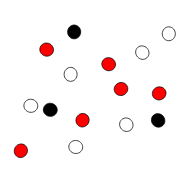
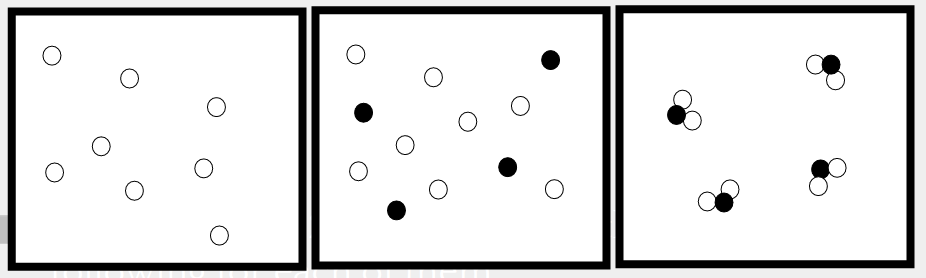
This picture represents: 
a)
Element
b)
Compound
c)
Mixture of Elements
d)
Mixture of Compounds
2.
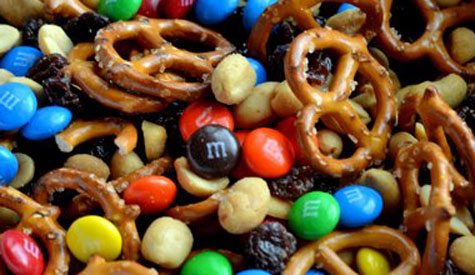
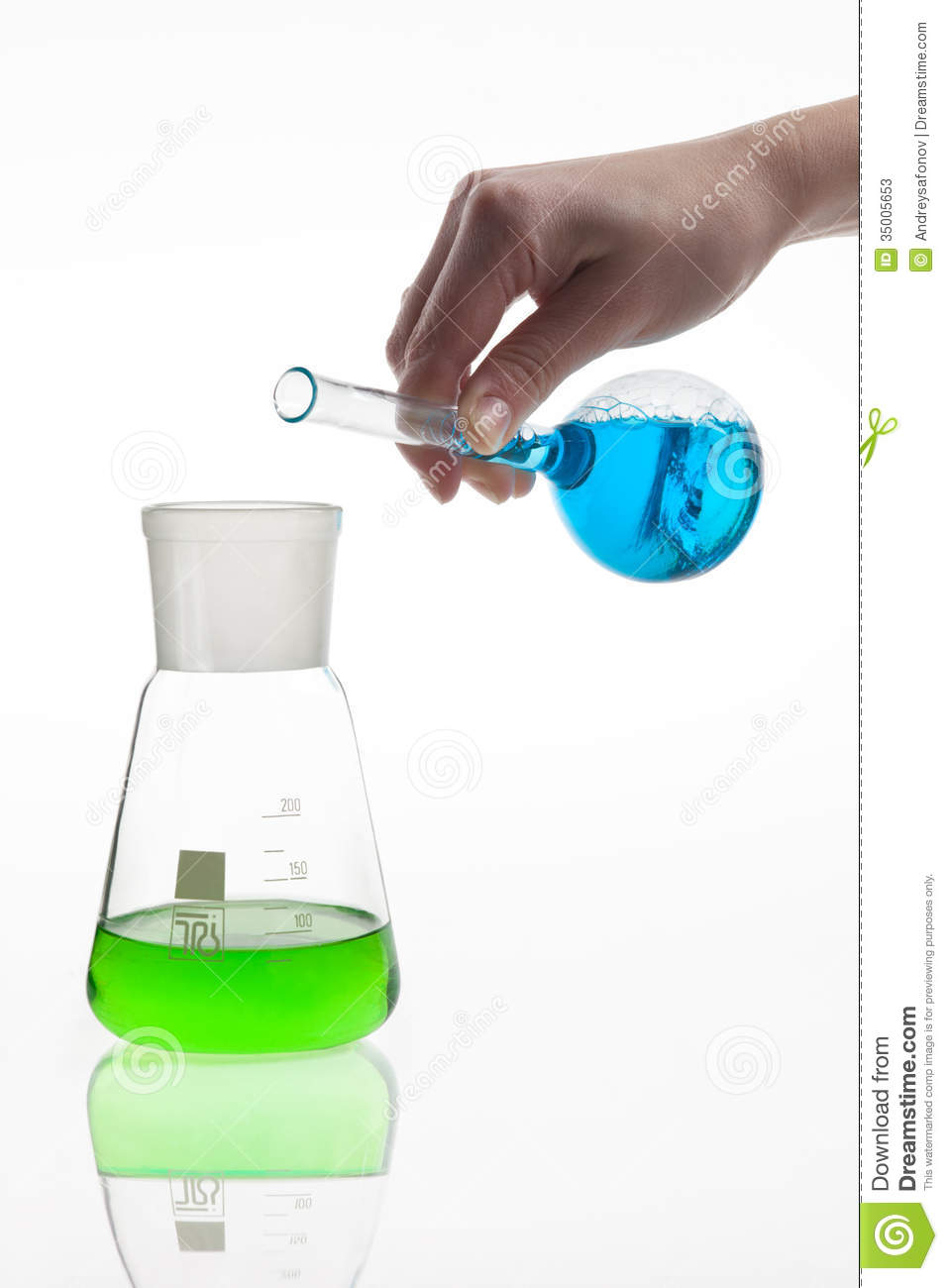
What type of mixture is this?
a)
homogenous mixture
b)
chemical
c)
heterogeneous mixture 
d)
solid mix
3.
A substance with two or more elements that are combined in a fixed proportion
a)
colloid
b)
compound
c)
element
d)
solution
4.
A substance in which all the atoms are the same
a)
colloid
b)
homogeneous mixture
c)
solution
d)
element
5.
A mixture in which different materials can be identified easily
a)
element
b)
heterogeneous mixture
c)
homogeneous mixture
d)
solution
6.
A mixture that contains two or more substances blended evenly throughout
a)
heterogeneous mixture
b)
homogeneous mixture
c)
suspension
d)
colloid
7.
Which of the following is an element?
a)
Sugar
b)
Salt
c)
Water
d)
Oxygen
8.
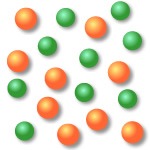
This picture represents which of the following?
a)
element
b)
compound
c)
mixture
9.
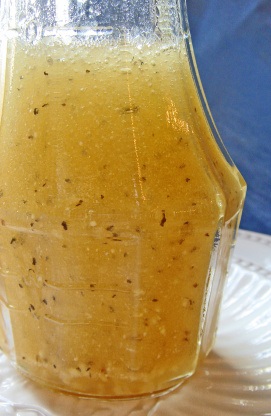
Italian Salad Dressing is a . . .
a)
heterogeneous mixture
b)
homogeneous mixture
c)
Pure Substance
d)
Compound
10.
Can usually be separated in your kitchen (by physical means)
a)
Pure Substance & Element
b)
Pure Substance & Compound
c)
Mixture & Homogenous
d)
Mixture & Heterogenous
11.
A mixture that is so evenly mixed you can't see the parts.  Such as Kool-Aid
a)
Homogeneous Mixture
b)
Heterogeneous Mixture
c)
Pure Substance
12.
A combination that can be separated by physical processes is a .....
a)
Pure Substance
b)
Glucose
c)
Element
d)
Mixture
13.
A mixture that is NOT evenly distributed is called ....
a)
Compounded
b)
Homogenous
c)
Heterogenous
d)
Salty
14.
If you change a substance into a new substance...
a)
Partial Change
b)
Physical Change
c)
Chemical Change
d)
Freezing
15.
Changing the phase, size or shape of something....
a)
Chemical change
b)
Physical Change
c)
Suspension
d)
Colloid
16.
This picture represents: 
a)
Element
b)
Compound
c)
Mixture of Elements
d)
Mixture of Compounds
17.
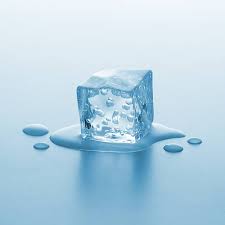
Which is NOT a chemical change?
a)
Leaves changing colors in the fall
b)
Iron rusting
c)
Digesting Lunch
d)
Ice Melting
18.
Which one of these pictures represents a mixture? 
a)
1
b)
2
c)
3
d)
1, 2 and 3
19.
Is burning wood a chemical or physical change?
a)
chemical
b)
physical
20.
A gold bar is an example of a.....
a)
pure element
b)
pure compound
c)
heterogeneous mixture
d)
homogeneous mixture
21.
All matter is made up of .....
a)
Compounds
b)
Atoms
c)
Molecules
d)
Sunshine
22.
Are made from a combination of 2 or more elements...
a)
Molecules
b)
Pure Substances
c)
Compounds
d)
Elements
23.
H2 would be a .....
a)
Molecule
b)
Compound
c)
Solid
d)
Problem
24.
CO2 would be a .....
a)
Compound
b)
Molecule
c)
Compound AND Molecule
d)
Sandwich
25.
Which is NOT a chemical change?
a)
Leaves changing colors in the fall
b)
Iron rusting
c)
Digesting Lunch
d)
Ice Melting
26.
Any characteristic of a material, such as shape or size, that you can observe or attempt to observe without changing the identity of the material.
a)
physical change
b)
chemical change
c)
physical property
d)
chemical property
27.
Which of the following can only be observed when it is changing composition?
a)
chemical property
b)
physical property
28.
Element or compound that can't be broken down into simpler components and maintains the properties of the original substance.
a)
compound
b)
substance
c)
element
d)
law of conservation of mass
29.
Which of the following is not a compound?
a)
vinegar
b)
sugar
c)
salt 
d)
carbon dioxide
30.
Which of the following are not examples of physical properties?
a)
density
b)
malleability
c)
magnetism
d)
tarnish
31.
True or False: The two types of substances are elements and compounds.
a)
True
b)
False
32.
True or False: Matter is divided into two main groups: substances and mixtures.
a)
True
b)
False
33.
Which of the following is not a homogeneous mixture?
a)
orange juice
b)
vinegar
c)
soft drinks
d)
pool water
34.
Which of the following is NOT a heterogeneous mixture?
a)
rocks
b)
apples
c)
cheese
d)
kool-aide
35.
Which word means to be pounded into sheets?
a)
ductile
b)
malleable
c)
dissolvable
d)
ferment
36.

What is a solid?

a)

particles that are tightly compacted

b)

particles that are not tightly compacted

37.

what is a liquid?

a)

a substance that flows freely but is of constant volume

b)

a substance or matter in a state in which it will expand freely

c)

firm and stable in shape

38.

what is a gas?

a)

a substance or matter in a state in which it will expand freely to fill the whole of a container

b)

the basic unit of a chemical element

c)

an atom or molecule with a net electric charge due to the loss or gain of one or more electrons.

39.

How would you describe the way molecules move when the molecules are solid?

a)

the molecules are moving in place.

b)

the molecules are moving around each other.

c)

the molecules are moving away from each other.

d)

the molecules are not moving

40.

Molecules are always moving no matter what phase they are in: solid, liquid, gas.

a)

True

b)

False

41.
Solid, liquid and gas are examples of?
a)
phases
b)
temperature
c)
scale
d)
refute
42.

What happens to molecules when the temperature drops or lowers?

a)

The molecules get closer together

b)

The molecules start moving faster.

c)

The molecules stop moving.

d)

The molecules become smaller.

43.
Anything that takes up space and has mass is
a)
Matter
b)
Volume
c)
Liquid
d)
Atom
44.
The amount of space that matter takes up
a)
Matter
b)
Volume
c)
Liquid
d)
Atom
45.
Matter that have volume, but no shape
a)
Matter
b)
Volume
c)
Liquid
d)
Atom
46.
A tiny building block of matter is 
a)
Liquid
b)
atom
c)
Volume
d)
Gas
47.
The tool used to measure mass
a)
gas
b)
balance
c)
physical property
d)
condensation
48.
How something looks, sounds, feels, smells, or tastes  
a)
gas
b)
balance
c)
physical property
d)
condensation
49.
A liquid flows and takes its container’s 
a)
shape
b)
volume
c)
temperature
50.
In an endothermic reaction, heat is ,,,
a)
taken in
b)
given out
51.
What type of reaction occurs in a hand warmer
a)
exothermic
b)
endothermic
52.
If a chemical reaction is EXOTHERMIC, the temperature would....
a)
Stay the same
b)
Increase
c)
Decrease
53.
When iron nails get rusty, heat is released.  What process is this?
a)
Exothermic
b)
Endothermic
54.
Is the combustion of gasoline endothermic or exothermic?
a)
Endothermic
b)
Exothermic
55.
During an endothermic reaction in a beaker if we are part of the surroundings and touched the beaker, it would feel _______. 
a)
Warm
b)
Cold
56.
A student mixed two chemicals to allow them to react. The temperature before the reaction was 25 ° C. The temperature after the reaction was 18° C. Which of the following is true? 
a)
The temperature changed 
b)
It is an endothermic reaction
c)
It is an exothermic reaction 
d)
Two of the answers are correct 
57.
What happens to the bonds when 2 substances react
a)
They break so new bonds can form
b)
Nothing the bonds are too strong
c)
They change colour
58.

02 (g)+ 2H2-------------2H20 + Energy

a)

endothermic

b)

exothermic

59.

6CO2 + 6H20 + Energy --------------- C6 H12 06 + 6O2

a)

endothermic reaction

b)

exothermic reaction

60.

Properties that DO depend on the amount of matter present.

a)

Mass

b)

Hardness

c)

Extensive

d)

Intensive

61.

Properties that depend on the identity of substance.

a)

Mass

b)

Hardness

c)

Extensive

d)

Intensive

62.

Which of the following is an extensive property?

a)

Color

b)

Mass

c)

Odor

d)

Luster

63.

Which of the following is an extensive property?

a)

Hardness

b)

Boiling Point

c)

Density

d)

Weight

64.

How shiny a substance is.

a)

Luster

b)

Conductivity

c)

Hardness

d)

Volume

65.

The ability of a substance to be drawn into thin wires.

a)

Hardness

b)

Color

c)

Conductivity

d)

Ductility

66.

The ability of a substance to allow the flow of energy or electricity.

a)

Conductivity

b)

Odor

c)

Hardness

d)

Ductility

67.

The mass of a substance divided by its volume.

a)

Volume

b)

Density

c)

Mass

d)

Length

68.

Which of the following is an intensive property?

a)

Color

b)

Mass

c)

Volume

d)

Weight

69.
The melting point of ice is 00 C. This is an example of ________.
a)
physical intensive property
b)
physical extensive property
c)
Chemical change
d)
Chemical property
70.
The density of pyrite is 5g/cm. This is an example of 
a)
physical intensive property
b)
physical extensive property
c)
chemical change
d)
chemical property
71.
The mass of a lead cube is 64 grams. This is an example of 
a)
physical intensive property
b)
physical extensive property
c)
chemical change
d)
physical change
72.
Salt is soluble in water.
a)
chemical change
b)
chemical property
c)
physical intensive property
d)
physical extensive property
73.
Crumpling paper is an example of 
a)
physical change
b)
chemical change
c)
physical property
d)
chemical property
74.
Wood burning is an example of _______
a)
physical intensive property
b)
physical extensive property
c)
chemical change
d)
Physical change
75.
Physical properties of a substance include _________
a)
color and odor
b)
melting and boiling points
c)
density 
d)
all of the choices are correct
76.
When a substance melts, the kinetic energy _____________.
a)
decreases
b)
stays the same
c)
increases
d)
decreases then increases
77.

Hector is standing in a closed room with a balloon filled with helium gas. If Hector pops this balloon, what will happen to the molecules in the helium gas?

a)

They will condense into a cloud around Hector.

b)

They will fall to the floor as a structured solid.

c)

They will expand and flow through the room

d)

They will flow to the floor and form a puddle.

78.

In which state of matter will there be the LARGEST space between molecules?

a)

Solid

b)

Liquid

c)

Gas

79.
What does this picture represent? 
a)
solid
b)
liquid
c)
gas
d)
plasma
80.
What does this picture represent? 
a)
solid
b)
liquid 
c)
gas
d)
plasma
81.

Plasma can be found in which of the following

a)

Auroras

b)

Lightening

c)

LED light bulbs

d)

Stars

e)

Moons

82.

What are the products of the chemical reaction pictured?

a)

CH4 and CO2

b)

CH4 and O2

c)

CO2 and H2O

d)

O2 and H2O

83.
Consider the chemical equation CH4 + 2 O2 → CO2 + 2 H2O. In this equation, CH4 is a
a)
product
b)
reactant
c)
displacement
84.
What is the left part of a chemical equation called?
H2 + O → H2O
a)
Reactants
b)
Products 
c)
Yields 
d)
Chemical Equation 
85.
Consider the chemical equation CH4 + 2 O2 → CO2 + 2 H2O. In this equation, CH4 is a
a)
product
b)
reactant
c)
displacement
86.

How many reactants are in A + B ---> C ?

a)

1

b)

2

c)

3

d)

4

87.

How many products are in A + B ---> 2C

a)

1

b)

2

c)

3

d)

4

88.
2H2 + O2 ----> 2H2O What is the product?
a)
------>
b)
2H2O
c)
2H2+ O2
89.

Which compounds are the PRODUCTS of this reaction?

a)

CO2 + H2O

b)

C6H12O6 + O2

c)

C6H12O6 + CO2

d)

H2O + O2

90.
Iron is a good conductor, malleable and magnetic. What type of element is Iron? 
a)
Metal
b)
Nonmetal
c)
Metalloid
d)
Pretty
91.
Silicon is a semiconductor and has properties of both metals and nonmetals. What type of element is Silicon? 
a)
Metal
b)
Nonmetal
c)
Metalloid
d)
Pretty
92.
Which elements are found on the left to middle of The Periodic Table? 
a)
Metals
b)
Nonmetals
c)
Metalloids
d)
Candles
93.
Which elements are found on the right side of The Periodic Table?
a)
Metals
b)
Nonmetals
c)
Metalloids
d)
Water
94.
Which element is a metalloid?
a)
Titanium
b)
Selenium
c)
Potassium
d)
Polonium
95.
How would this element be classified?
a)
Metal
b)
Nonmetal
c)
Metalloid
d)
Metamorphic
96.
Some characteristics of a metal are that it is malleable and ductile.
a)
TRUE
b)
FALSE
97.
What is a conductor?
a)
Heat and electricity move through them easily
b)
able to be drawn into a wire
c)
able to be hammered into different shapes
d)
shiny
98.
What is high density?
a)
able to be drawn into a wire
b)
a substance that has both metal and nonmetal properties
c)
lustrous and shiny
d)
heavy for its size
99.
Where are metalloids located on the periodic table?
a)
to the right of nonmetals
b)
along the zig-zag line
c)
to the left of the zig-zag line
d)
to the right of the zig-zag line
100.
A substance that is shiny and a good conductor would be classified as a
a)
nonmetal
b)
metalloid
c)
metal
d)
metallica
101.
A substance that can be hammered into different shapes would be classified as a 
a)
metal
b)
nonmetal
c)
metalloid
d)
metallica
102.
Which of the following is an Alkali Metal? 
a)
Magnesium
b)
Chromium
c)
Sodium
d)
Fluorine 
103.
Which of the following is an Alkaline Earth Metal? 
a)
Calcium
b)
Lithium
c)
Phosphorus
d)
Copper 
104.
Which of the following is a transition metal? 
a)
Iron
b)
Oxygen
c)
Neon
d)
Barium
105.
Which of the following is a Halogen? 
a)
Bromine
b)
Rubidium
c)
Argon
d)
Beryllium
106.
Which of the following is a Noble Gas? 
a)
Krypton
b)
Chlorine
c)
Radium
d)
Gallium
107.
The period for Bromine is ___________.
a)
3
b)
2
c)
4
108.
Which elements have the most similar chemical properties?
a)
K and Na
b)
K and Ca
c)
K and Cl
d)
K and S
109.
Elements in the same ________ are more chemically similar.
a)
group
b)
period
c)
club
d)
table
110.
The majority of elements on the periodic table are
a)
man made.
b)
nonmetals.
c)
metals.
d)
gases.
111.

Semiconductors, or metalloids, can be described as...

a)

same as nonmetals

b)

bad conductors

c)

characteristics of metals and nonmetals

d)

same as metals

112.

Which of the following elements is a semiconductor?

a)

Boron

b)

Aluminum

c)

Lead

d)

Bismuth (Bi)

113.
Beryllium is in group number______.
a)
Group 2
b)
Group 3
c)
Group 4
d)
Group 7
114.
Milk is a 
a)
solution
b)
suspension
c)
colloid
115.
A colloid is a mixture that contains undissolved particles. 
a)
True
b)
False
116.
type of mixture that doesn't separate on its own but still contains undissolved particles
a)
solution
b)
colloid
c)
suspension
117.

Milk and gelatin are examples of __________________.

a)

suspensions

b)

colloids

c)

solutions