
 Worksheets
SCH4U Exam Review
Total questions: 120
Worksheet time: 3600secs
The principle quantum number, n, represents the:
spin value
suborbital value
energy level
magnetic value
With each higher energy level, the electrons are
lower in energy
more stable
weaker
farther from the nucleus
What is the name of the orbital at n = 4, l = 3?
4f
4d
3s
3p
Write a set of quantum numbers for a 4d orbital.
n = 4,
l = 1,
ml = 0,
ms = -1/2
n = 4
l = 2
ml = 0
ms = -1/2
n = 4,
l = 0
ml = 2,
ms = -1/2
Which set of Quantum numbers is NOT allowed
n = 3,
l = 1,
ml = 1,
ms = -1/2
n = 2,
l = 1,
ml = -2,
ms = +1/2
n = 4,
l = 2,
ml = -1,
ms = -1/2
If n = 2, what are the allowed values of l?
0
1
0, 1
0, 1, 2
For l = 0, tick the possible values of m:
-2
-1
0
1
2
For l = 2, What are the possible values for ml ?
-2, -1, 0, 1, 2
-1, 0, 1
0
0, 1,
0, 1, 2
What is the total number of orbitals for energy level n = 5?
5
10
25
50
What is the maximum number of electrons that can be held by energy level n = 4?
4
8
16
32
Each individual orbit can hold a maximum of how many electrons?
Depends on the orbital type
2
1
0
What is the name for the orbital at n = 3, l = 2?
3d
3f
2s
2d
Which quantum number gives the total number of orbitals?
Principal quantum, n
Angular Momentum, l
Magnetic Quantum, ml
Spin Quantum, ms
According to the Pauli Exclusion Principle, which statement is true?
Electrons can have the same quantum numbers
Two electrons sharing an orbital must have the same spin
Two electrons sharing an orbital must have opposite spins

What molecular shape is the structure shown here? (H2O)
tetrahedral
trigonal planar
bent
trigonal pyramidal

What is the Electron Group Geometry of H2O?
Linear
Octahedral
Trigonal Planar
Tetrahedral

What molecular shape is the structure shown here? (BCl3)
linear
trigonal planar
tetrahedral
trigonal pyramidal

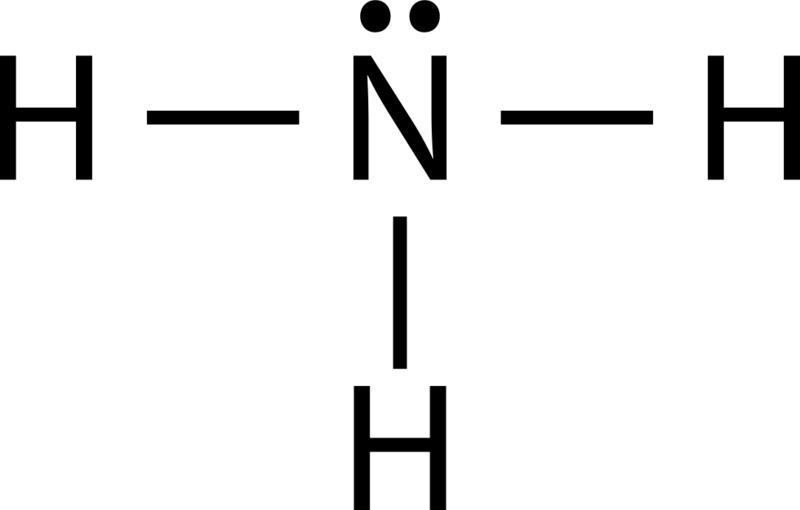
What molecular shape does this molecule exhibit?
linear
tetrahedral
trigonal pyramidal
trigonal planar

What is the electron group geometry of this molecule?
Octahedral
T-Shape
Trigonal Planar
Trigonal Bipyramidal

What is the molecular shape of this molecule?
Trigonal Planar
Tetrahedral
Trigonal Pyramidal
Bent/Angular

What is the MS of this molecule?
Trigonal Planar
Bent/Angular
Trigonal Pyramidal
Linear
Is this molecule polar or nonpolar?
Polar
Nonpolar

Is this molecule polar or nonpolar?
Polar
Nonpolar

What is the EGG of this shape?
Seesaw
Trigonal Planar
Trigonal Pyramidal
Trigonal Bipyramidal
Is this molecule polar or nonpolar?
Polar
Nonpolar

What is the MS of this molecule?
Trigonal Bipyramidal
Octahedral
Tetrahedral
T-Shaped
Is it polar or nonpolar?
Polar
Nonpolar

What is the MS of this molecule?
Trigonal Planar
Square Planar
Trigonal Bipyramidal
Octahedral
Is this molecule polar or nonpolar?
Polar
Nonpolar

What is the EGG of this molecule?
Octahedral
Trigonal Bipyramidal
Tetrahedral
Trigonal Planar
What is the MS of this molecule?
Linear
Trigonal Bipyramidal
T-Shaped
Trigonal Planar
Is this molecule polar or nonpolar?
Polar
Nonpolar
Lone pairs often mean...
polar
expanded octet
nonpolar
double bonds
The central atom of a Lewis Structure has...
highest electronegativity
lowest electronegativity
is fewest in number
has a full valence
Which of the following is a saturated hydrocarbon?
alkanes
alkenes
alkynes
aromatic
Alkenes and alkynes are what type of hydrocarbon?
saturated
unsaturated
aromatic
cyclic
When naming hydrocarbons, we number the carbons so that the position numbers are...
left to right
depends on the compound
the lowest possible
the highest possible
If there was an ethyl and a methyl branch in a hydrocarbon, which one would come first in the name?
methyl
the root
the suffix
ethyl
The longest chain of C atoms must contain any double or triple bonds.
True
False
Which of the following would be named cyclopropane?


Name the molecule
1,3-dimethylpentane
2,5-dimethylpentane
1,3-dimethylpentene
2,5-dimethylpentene

Name the molecule
1-ethyl-3-methylcylobutane
1-ethyl-3-methylcylobutene
1-methyl-3-ethylcyclobutane
3-methyl-1-ethylcyclobutane
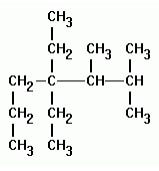

4-ethyl-6-methylnonane
3-propyl-5-methyloctane
2,4-dipropylhexane
4-ethyl-2-propylheptane

What is the correct name for the alkyne shown?
butyne
1-butyne
2-butyne
1-methyl-1-propyne

What is the functional group of alcohols?
–NH2
–COOH
–CHO
–OH
–NO2

What is the name of this product?
1– propanol
1– propene
ethylene glycol
3– propanol
1,2,3 – propanetriol
Which one is a tertiary alcohol?


Which of the names below can be used to correctly name the above compound?
Isobutanol
Tertiary butanol
2-methyl -2-propanol

Classify the types of alcohol of the following molecule.
Primary alcohol
Secondary alcohol.
Tertiary alcohol
Aromatic alcohol.

Give the IUPAC name for the following sructure.
1,2- cyclopentanol.
1,2-pentanol.
1,2–cyclopentanediol.
1,2-pentanediol
Give the structure corresponding to 3–cyclohexyl–3–pentanol.


Which of the following alcohol is a primary alcohol?


The IUPAC name for this compund is
1-butanol
2-butanol
2-methyl-2-propanol
2-propanol

Which group has the following functional group?
hydrocarbon
alchohol
ether
ester

Name the compound....
propanol
dimethyl ether
mthyoxymethane
methoxyethane

Please name the following
1-ethoxy-1-methylcyclohexane
2-ethoxy-1-methylcyclohexane
1-diethoxy-1-methylcyclohexane


Which of the following is 1-bromopropane?


What is the name of this haloalkane?
1-chlorobutane
2-chlorobutane
1-chloropropane
2-chloropropane

What is the name of this haloalkane?
1-chloroethane
2-chloroethane
3-chloroethane
2-chloropropane
Which is 3-chloro-2,2-dimethylbutane?


Ethers have what type of functional group?
-N
-OH
C=O
-O-
Aldehydes have what type of functional group?
C=O on the end
C=O within the chain
-O-
-N
Ketones have what type of functional group?
C=O on the end
C=O within the chain
-OH
-O-
What type of group does carboxylic acids have?
C=O
-OH
C=O and -OH
-N
What type of group do esters have?
C=O and C-O
C-O
C=O
C=O and C-OH
What type of groups do amines have?
-N
-N and C=O
C=O
-OH
What group do amides have?
-N
C=O
C=O and -N
C=O and -OH
What is the difference between aldehydes and ketones?
Aldehydes have C=O on the end
Ketones have C=O on the end
There is no difference
Aldehydes have a single C-O bond
What is the difference between amines and amides?
Amides are longer
There is no difference
Amides only have C-N
Amines only have C-N
What is the difference between ethers and esters?
Ether: C-O-C
Ester: C=O, C-O
Ether: C=O, C-O
Ester: C-O-C
Ethers have the same group but within the chain
No difference


What major type of organic reaction is this?
Addition Reaction
Elimination Reaction
Substitution Reaction
Rearrangement Reaction

What major type of organic reaction is this?
Addition Reaction
Elimination Reaction
Substitution Reaction
Rearrangement Reaction

What major type of organic reaction is this?
Addition Reaction
Elimination Reaction
Substitution Reaction
Rearrangement Reaction
The specific heat of platinum is 0.133 J/g°C. How much heat(Q) is released when a 10 g piece of platinum cools from 100°C to 50°C?
66.5 J
665 J
0.0266 J
0.665 J
Determine the heat energy needed to heat the water in the pot to boiling.

O2(g) + 2 H2 (g) → 2 H2O (g) + Energy
endothermic
exothermic
6 CO2+ 6 H2O + Energy → C6H12O6 + 6 O2
endothermic reaction
exothermic reaction
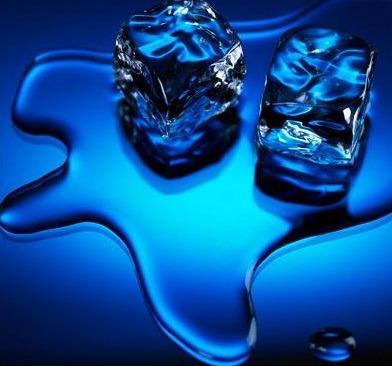
____ reactions usually feel cold.
endothermic
exothermic

What type of reaction is this?
Exothermic
Endothermic
Energy Producing
No way to tell

2SO2(g)+O2(g) ⇌ 2SO3(g) + Heat
Increasing the temperature will...
shift equilibrium right
shift equilibrium left
increase pressure
have no change
2SO2(g)+O2(g) ⇌ 2SO3(g) + Heat
Adding SO3(g) will
shift equilibrium right
shift equilibrium left
increase K
have no change
2SO2(g)+1O2(g) ⇌ 2SO3(g) + Heat
Increasing the pressure on the system will...
shift equilibrium right
shift equilibrium left
slow rate of reaction
have no change

CoCI42- +6H2O →Co(H2O)62+ + 4CI- + Heat
What will happen when the temperature is increased?
Position of equilibrium will shift to left and become more blue
Position of equilibrium will shift to right and become more pink
No change in position of equilibrium
Position of equilibrium will shift to left and become more pink

What happens to the equilibrium if we remove carbon monoxide (CO)?
It shifts left, towards the reactants
It shifts right, towards the products
It does not shift
A Bronsted Lowry acid:
donates H+ to another substance
accepts H+ from another substance
produces H+
produces OH-
A Bronsted Lowry base:
donates H+ to another substance
accepts H+ from another substance
produces H+
produces OH-
In the equation below, what is the Bronsted Lowry acid (donates H+)?
HCl + NH3 → Cl- + NH4+
HCl
NH3
Cl-
NH4+
In the equation below, what is the Bronsted Lowry base (accepts H+)?
HCl + NH3 → Cl- + NH4+
HCl
NH3
Cl-
NH4+
Which product in the following equation is a conjugate base?
H2O + HCl → H3O+ + Cl-
Water
Hydrogen chloride
Hydronium
Chloride
What is the conjugate acid in the following equation?
PO4-3 + HNO3 → NO3- + HPO4-2
PO43-
HNO3
NO3-
HPO42-
What is the conjugate base of H2SO4?
SO42-
H2SO3
HSO3-
HSO4-
HBr is the conjugate acid of
Br-
Br2
H2Br
none of the above

