wayground logo

Free Printable Worksheets

Font size

S
M
L
XL
Worksheets

MEGA BIOLOGY REVIEW

Total questions: 118

Worksheet time: 1hrs 22mins

Name
Class
Date
1.

What is the monomer of a lipid?

a)

Amino Acid

b)

Fatty Acid

c)

Monosaccharides

d)

Glucose

2.

What is the function of carbohydrates?

a)

Short term energy

b)

Long term energy

c)

Storing genetic information

d)

Speeding up chemical reactions

3.

What is one of the functions of lipids?

a)

Storing genetic information

b)

Long Term Energy

c)

Short Term Energy

d)

Acting as chemical signals

4.

What is the function of nucleic acids?

a)

Short Term Energy

b)

Storing Genetic Information

c)

Long Term Energy

d)

Speeding Up Chemical Reactions

5.

What is one of the functions of proteins?

a)

Long Term Energy

b)

Short Term Energy

c)

Storing Genetic Information

d)

Speeding Up Reactions in Cells

6.
What is the energy needed to start an chemical reaction referred to?
a)
Cascading Energy
b)
Potential Energy 
c)
Kinetic Energy
d)
Activation energy
7.
What is being represented by the letter A in the image?
a)
Substrate
b)
Enzyme
c)
Product
d)
Complex
8.
What is being represented by the letter B in the image?
a)
Substrate
b)
Enzyme
c)
Substrate
d)
Product
9.
Every living organism is made up of one or more cells
a)
True
b)
False
10.
A cell is...
a)
the basic unit of structure and function in living organism
b)
an organism
c)
a basic part of everything that we see
d)
found only in animals, not plants
11.
The Golgi apparatus _____.
a)
packages cell products for export
b)
eliminates waste
c)
stores DNA
d)
makes energy
12.
Which organelle is only found in a plant cell? 
a)
nucleus
b)
chloroplast
c)
mitochondria
d)
cell membrane
13.
This organelle creates energy.
a)
Nucleus
b)
Ribosome
c)
Mitochondria
d)
ER
14.
Where is DNA stored in a cell? 
a)
Lysosomes
b)
Golgi Complex
c)
Ribosomes
d)
Nucleus
15.
What is the fluid inside a cell called? 
a)
Endoplasimic Reticulum
b)
Orange Juice
c)
Water
d)
Cytoplasm
16.
This organelle makes proteins. 
a)
Cell membrane
b)
Nucleus
c)
Ribosome
d)
ER
17.

What is the image above:

a)

Chromosome

b)

Chromotid

c)

Centromere

d)

Centriole

18.

A chromosome is packaged

a)

DNA

b)

Protein

c)

Carbohydrates

d)

Lipids

19.

What stage of mitosis is depicted here

a)

Prophase

b)

Anaphase

c)

Telophase

d)

Metaphase

20.

What stage of mitosis is depicted here

a)

Prophase

b)

Metaphase

c)

Anaphase

d)

Telophase

21.

What stage of mitosis is depicted here

a)

Prophase

b)

Metaphase

c)

Anaphase

d)

Telophase

22.

What stage of mitosis is depicted here

a)

Prophase

b)

Metaphase

c)

Anaphase

d)

Telophase

23.

The picture above represents what happens after mitosis which is

a)

Interphase

b)

Cytokinesis

c)

Metaphase

d)

G1

24.

In which phase does crossing-over happen?

a)

Prophase I

b)

Prophase II

c)

Metaphase I

d)

Anaphase II

25.

What phase is this?

a)

Metaphase I

b)

Prophase II

c)

Telophase I

d)

Anaphase II

26.

What phase is this?

a)

Metaphase II

b)

Prophase I

c)

Telophase I

d)

Anaphase I

27.

What is the cell process called that produces identical cells?

a)

Mitosis

b)

Meiosis

c)

Photosynthesis

d)

Cellular Respiration

28.

Which results in offspring that are genetically unique and display a combination of traits from each parent?

a)

Sexual

b)

Asexual

c)

Neither

d)

Both

29.

Which type of reproduction results in offspring that are identical to the parent?

a)

Sexual

b)

Asexual

c)

Neither

d)

Both

30.

A bee flies from one apple blossom to another and transfers pollen as it goes. Which type results from pollination?

a)

Sexual

b)

Asexual

c)

Neither

d)

Both

31.
What is one disadvantage of sexual reproduction?
a)
Only one parent needed
b)
Off spring are exact copies of parents
c)
Happens very quickly
d)
Needs two parents
32.

What kind of reproduction is pictured?

a)

spore reproduction

b)

fragmentation

c)

parthenogenesis

d)

budding

e)

runner

33.

What kind of reproduction is pictured?

a)

spore reproduction

b)

fragmentation

c)

parthenogenesis

d)

budding

e)

runner

34.

What is a gamete?

a)

sex cell

b)

human cells

c)

plant cells

d)

plant and animal cells

35.
What is an advantage of sexual reproduction?
a)
Allows genetic variation
b)
Only needs one parent
c)
Offspring are exact copies of parent
36.

What are the four nitrogenous bases found in DNA?

a)

Adenine

b)

Thymine

c)

Glucose

d)

Guanine

e)

Cytosine

37.

Which of the following will pair with Adenine?

a)

Guanine

b)

Thymine

c)

Cytosine

38.

Which of the following will pair with Cytosine?

a)

Thymine

b)

Guanine

c)

Adeine

39.
What determines the code, or information, of a DNA molecule?
a)
the shape (structure) of the nitrogen bases
b)
the order (sequence) of the nitrogen bases
c)
the color of the nitrogen bases
d)
the frequency (number) of nitrogen bases
40.
The enzyme that unzips the DNA to prepare for replication
a)
helicase
b)
replicase
c)
polymerase
d)
synthase
41.
DNA replication results in two DNA molecules,
a)
each one with two original strands
b)
each one with two new strands
c)
each one with one new strand and one original strand
d)
one with two new strands and the other with two original strands
42.

In what process is mRNA synthesized?

a)

Transcription

b)

Translation

c)

DNA Replication

d)

Mitosis

43.

Where does TRANSCRIPTION occur?

a)

Nucleus

b)

Ribosome

c)

Cytoplasm

d)

Mitochondria

44.

Why must transcription occur where DNA can be found?

a)

because DNA can't leave

b)

because ribosomes are in the nucleus

c)

because DNA polymerase is found there

d)

because helicase unzips the DNA

45.

A polypeptide is a sequence of ____________________ held together by a ______________ bond.

a)

amino acids; peptide

b)

fatty acids; ionic

c)

proteins; hydrogen

d)

fatty acids; covalent

46.

TRANSCRIBE this DNA sequence: TACGTTACT

a)

AUGCAAUGA

b)

ATGCAATGA

c)

AUGGATUGA

d)

TACGTTACT

47.
The DNA sequence ATCAGCGCTGGC is part of a gene. how many amino acids are coded for by this message?
a)
4
b)
8
c)
12
d)
20
48.
Choose the nucleotide sequence of the RNA strand that would be complementary to the following strand: 
GTAGTCA
a)
UATUAGA
b)
ACGACTG
c)
CAUCAGU
d)
CATCAGT
49.
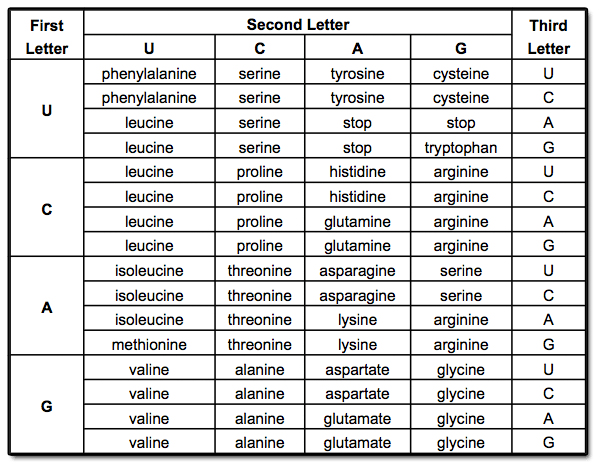
What amino acid is represented by the codon UUA?
a)
Phenylalanine
b)
Tyrosine
c)
Leucine
d)
Stop codon
50.
If T=Tall & t=short, what is the genotypic ratio?
a)
1:3
b)
3:1
c)
1:2:1
d)
2:2
51.
B = brown fur  b = white fur
In the Punnett square, what is the probability for white fur
a)
0%
b)
25%
c)
50%
d)
75%
52.
In the Punnett square shown, what must the genotype of the missing parent be?
a)
BB
b)
Bb
c)
bb
d)
Tt
53.
What is the yellow seed genotype?
a)
aa
b)
Aa
c)
AA
d)
AA or Aa
54.

Which of the following refers to the expression of traits by alleles?

a)

Phenotype

b)

Genotype

c)

Prototype

55.

Which of the following refers to the pair of alleles?

a)

Phenotype

b)

Genotype

c)

Prototype

d)

Bialleleism

56.

What type of inheritance pattern does the diagram represent?

a)

Incomplete Dominance

b)

Codominance

c)

Multiple Alleles

d)

Polygenic Inheritance

57.

The two cows on the top are the parents and the cow on the bottom is the offspring. What is the type of inheritance pattern is being exhibited?

a)

Incomplete Dominance

b)

Codominance

c)

Multiple Alleles

d)

Polygenic Inheritance

58.

If the image were real, it would represent what type of inheritance pattern?

a)

Incomplete Dominance

b)

Codominance

c)

Multiple Alleles

d)

Polygenic Inheritance

59.

A roan (RW) bull mated with a red (RR) cow. What is the probability or producing a white (WW) cow?

a)

25%

b)

50%

c)

100%

d)

0%

60.

Mama Isabella has a blood type of O. Her son, Norman, has also a blood type of O. What is the blood type of Norman's father?

a)

A

b)

B

c)

AB

d)

O

61.

Pink color in snapdragon flowers are a result of

a)

incomplete dominance of red and white alleles

b)

a missing allele

c)

codominance of pink and red alleles

62.

What is the carrying capacity of the graph?

a)

1000

b)

8000

c)

800

d)

600

63.

This may cause a population to increase

a)

increase of food supply

b)

removal of predators

c)

removal of disease

d)

all of these

64.
If a disease destroying barley plants in a field swept through an ecosystem, what would happen to the barley eating bird population in the the field ?
a)
The bird population would stay the same
b)
The bird population would infinitely increase
c)
The bird population would decrease
65.

If the carrying capacity of a predator decreases, what will happen to the carrying capacity of the prey?

a)

Will Increase

b)

Will Decrease

c)

Will stay the same

66.
The largest number of individuals that an area can support is called its _______.
a)
limiting factor
b)
abiotic factor
c)
resource availability
d)
carrying capacity
67.

Factors that keep the number of organisms from growing too large

a)

Biotic factors

b)

Abiotic factors

c)

Limiting Factors

d)

Carrying Capacity

68.

droughts, floods, hurricanes and fires

a)

Density Dependent

b)

Density Independent

69.

Weakness due to stress levels

a)

Density Dependent

b)

Density Independent

70.
Ostriches and gazelles eat together.  They both watch for predators and danger.  Since they see things differently, they each can identify threats the other animal may not see.  Both species are benefited.  
a)
mutualism
b)
commensalism
c)
predation
d)
parasitism
71.
Mistletoe takes water and nutrients from the oak tree. This is good for the mistletoe but bad for the tree.
a)
mutualism
b)
commensalism
c)
parasitism
d)
competition
72.
A bison walks through the grass, insects fly up and are seen and eaten by egretsThis neither harms nor helps the bison, but it is easier for the egrets to get food.
a)
mutualism
b)
parasitsm
c)
commensalism
d)
competition
73.

Which is a synonym for an autotroph?

a)

heterotroph

b)

consumer

c)

producer

74.

What is the role of the fungi?

a)

autotroph

b)

heterotroph

c)

decomposer

d)

carnivore

e)

consumer

75.

Which organism is the producer of this ecosystem?

a)

phytoplankton

b)

krill

c)

fish

d)

leopard seal

76.

Which organism is the secondary consumer?

a)

phytoplankton

b)

krill

c)

fish

d)

leopard seal

77.

Which organism is the apex predator?

a)

phytoplankton

b)

krill

c)

fish

d)

leopard seal

78.
Combustion is another word for
a)
burning
b)
melting
c)
exploding
d)
incinerating 
79.
How does the carbon in grass become part of a living animal?
a)
by eating the grass
b)
It doesn't end up in the animal no matter what
c)
It ends up in its food chain
d)
It breathes in carbon given out by the plant
80.
Why is the increase in greenhouse gasses an issue
a)
It causes climate change and increase in the global temperature 
b)
It can lead to a major increase in greenhouses
c)
It leads to more factories
d)
It causes a moajor decrease in people
81.
What process keeps Earth's temperature suitable for life
a)
Convention currents
b)
Greenhouse Effect
c)
Albedo Effect
d)
Water Cycle
82.
Which process takes carbon dioxide out of the atmosphere?
a)
respiration
b)
combustion
c)
decomposition
d)
photosynthesis
83.

What process converts nitrogen gas into a biologically useful (fixed) form?

a)

Respiration

b)

Assimilation

c)

Denitrification

d)

Nitrogen fixation

84.

Which organisms play the largest role in converting nitrogen into various usable forms and back to a gas form?

a)

rabbits

b)

bacteria

c)

plants

d)

worms

85.

What do amphibians, birds, prosimians and humans all have in common? Check all that apply.

a)

Hair

b)

Endothermic

c)

Eukaryotic

d)

Tetrapod

e)

Vertebrate

86.

What do both the squirrel and lion have in common that the other animals do not?

a)

They are both vertebrates

b)

They both have lungs

c)

They are both mammals

d)

They both lose their canine teeth.

87.

Which group of animals on this tree are most closely related to birds?

a)

Saurischian dinosaurs

b)

Ornithischian dinosaurs

c)

Crocodiles

d)

None of these are related to birds

88.

What number is the common ancestor of C and D

a)

1

b)

2

c)

3

d)

4

89.

Phylogeny is usually represented by a tree diagram called a _________ - _____

a)

Genetic Line

b)

Phylogenetic Tree

c)

Photographic Queue

d)

Future Babies

90.

Which organism is the most distantly related to all the others?

a)

Raccoon

b)

Dog

c)

Giant Panda

d)

Sun Bear

91.

What is the cause of increased carbon dioxide in the atmosphere?

a)

burning fossil fuels

b)

breathing

c)

garbage

92.
How do invasive plants damage the environment?
a)
Compete with native species
b)
Change plant community
c)
Alter diversity
d)
All of these
93.

Which of these is one cause of deforestation?

a)

Urbanization

b)

Buying a Christmas tree during the holidays

c)

Overbreeding birds in the wild

d)

Cutting down the tree in your backyard

94.
What is deforestation?
a)
Clearing Earth's forests on a massive scale
b)
Eating too much vegetables
c)
Going to a forest and pulling weeds
d)
Clearing the five trees in my backyard
95.

The threat to biodiversity that occurs when the homes of different species are destroyed

a)

pollution

b)

habitat destruction

c)

overexploitation

d)

climate change

96.

When human-made chemicals and garbage find their way into nature and harm the air, soil, and water it is called

a)

pollution

b)

habitat destruction

c)

overexploitation

d)

climate change

97.
What is the major cause for air pollution? 
a)
factories and cars
b)
cigarretes 
c)
deforestation
d)
oil spills
98.
Concentration of toxins in an organism as a result of ingesting other plants/animals in which the toxins are widely distributed
a)
biomagnification
b)
point-source pollution
c)
artificial eutrofication
d)
consumable pollution
99.
A solution with a pH of 3.6 would be...
a)
Acid
b)
Base
c)
Neutral
d)
Acid and Base
100.
A solution with a pH of 8.6 would be...
a)
Acid
b)
Base
c)
Neutral
d)
Acid and Base
101.
According to the pH range which substance is more acidic than lemon juice
a)
Hydrochloric acid
b)
cabbage
c)
milk
102.
Bleach is a strong base, what is the pH level of bleach?
a)
13
b)
14
c)
1
d)
2
103.
Which kingdoms are prokaryotic?
a)
Archaebacteria and Animalia
b)
Eubacteria and Archaebacteria
c)
Fungi and Protista
d)
Plantae and Eubacteria
104.
This domain is characterized by bacteria that can live in extreme environments, such as hot springs.
a)
Archaea
b)
Bacteria
c)
Eukarya
d)
Prokarya
105.
 You would find mushrooms and molds in which kingdom?
a)
Plantae
b)
Protists
c)
Fungi
d)
Animalia
106.
What is the difference between Archaebacteria and Eubacteria?
a)
Eubacteria are eukaryotic.
b)
Archaebacteria are multicellular.
c)
Archaebacteria can live in extreme environments.
d)
Archaebacteria are found everywhere.
107.
Which kingdom contains multicellular, heterotrophic organisms whose cells have NO cell walls?
a)
Protista
b)
Fungi
c)
Plantae
d)
Animalia
108.
These organisms are best classified as...
a)
eukaryotic, multicellular, and heterotrophic
b)
eukaryotic, multicellular, and autotrophic
c)
eukaryotic, unicellular, and heterotrophic
d)
prokaryotic, multicellular, and heterotrophic
109.
Identify the kingdom...
Multicellular organism with cell walls made of chitin found growing on a decomposing manure pile.
a)
Archaebacteria
b)
Eubacteria
c)
Protista
d)
Fungi
110.
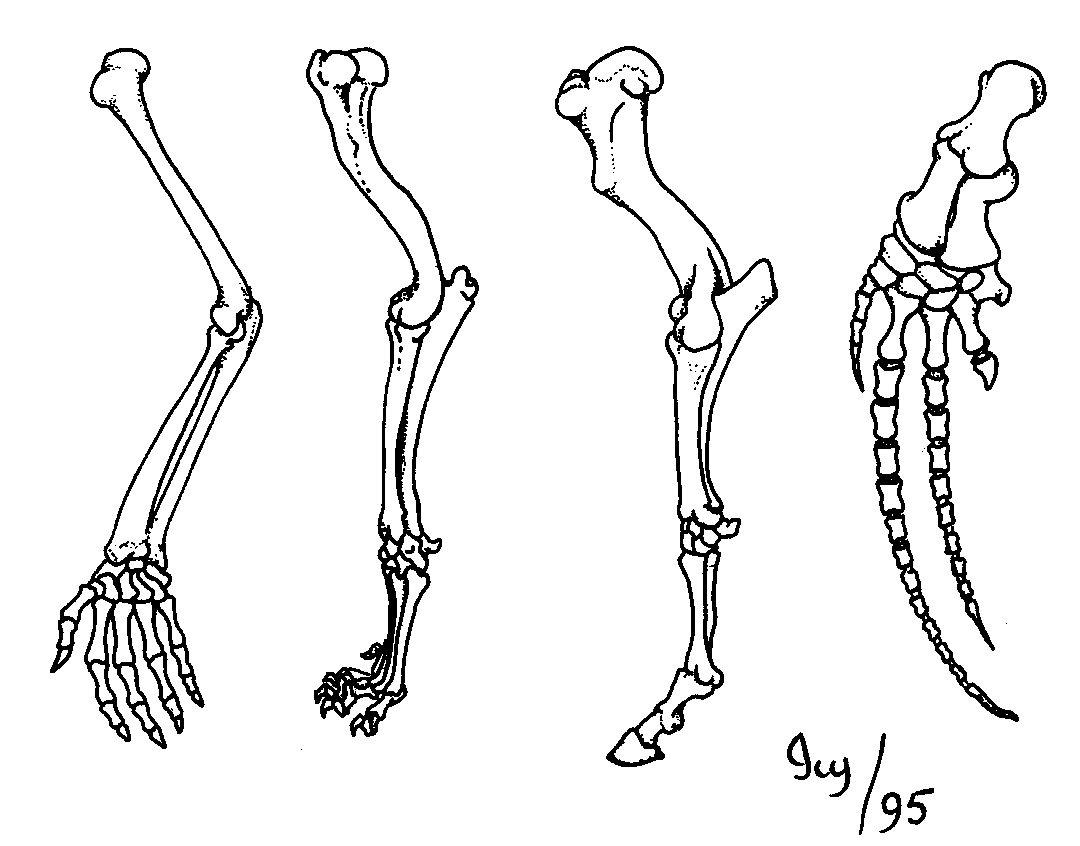
Structures with the same parts have different functions; suggests that organisms share a common ancestry
a)
vestigial structures
b)
homologous structures
c)
adaptive radiation
d)
fossil
111.
Study of embryos of various organisms to show a common ancestor because of similarities in development
a)
natural selection
b)
embryology
c)
speciation
d)
evolution
112.
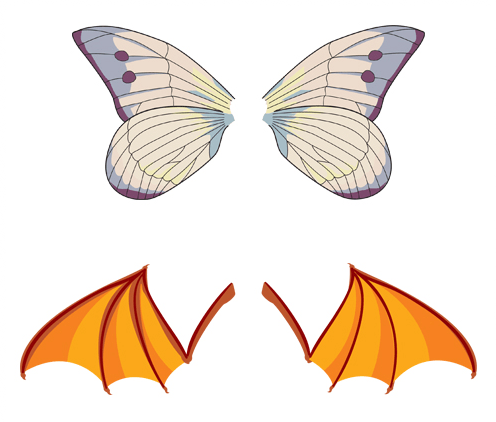
Some organisms that share a common ancestor have features that have different functions, but similar structures.  These are known as
a)
vestigial structures
b)
analogous structures
c)
homologous structures
d)
fossil structures
113.
How do fossils provide evidence that evolution has happened on Earth?
a)
Fossils show how the sizes of certain animals has changed drastically over millions of years
b)
Fossils show that some species have gone extinct
c)
Fossils show how life forms present today are different than those from the past
d)
Different sedimentary rock layers provide evidence for how the environment has changed over time
114.
The diagram illustrates an embryonic stage of two organisms.

Which of the following can be determined by observing the embryos shown in the diagram
a)
The organisms share a common ancestry.
b)
The organisms belong to the same genus.
c)
The organisms are native to the same geographic areas.
d)
The organisms will grow into anatomically similar adults.
115.
Humans, birds, whales, and lizards all have similar arm bones. What is the reason for this?
a)
The function of these bones is the same in all animals
b)
They live in similar environments
c)
They have a common ancestor
d)
All organisms resemble humans
116.

What is this an example of?

a)

Homologous structure

b)

Analogous structure

c)

Vestigial organs

d)

Functional adaption

117.

What best describes the hind leg bones seen in the whale?

a)

The bones are analogous structures to the fins of living fish.

b)

The bones are vestigial structures that had a function in an ancestor.

c)

The bones are homologous structures to the wings of butterflies.

d)

The bones are fossil structures from an extinct ancestor.
118.
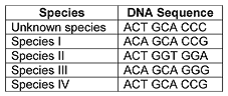
According to this data, the unknown bacterial species is most closely related to: 
a)
Species I
b)
Species II
c)
Species III
d)
Species IV