wayground logo

Free Printable Worksheets

NEW

Font size

S
M
L
XL
Worksheets

Colonies to Nation (1680–1783)

Total questions: 77

Worksheet time: 51mins

Name
Class
Date
1.
What is the Declaration of Independence?
a)
A paper signed on July 4th stating that the America Colonies were now free and independent
b)
A document signed in 1215 limiting the kings power
c)
A document that set up self goverment for the Pilgrims
2.
What did the Stamp Act Tax?
a)
Stamps :) 
b)
newspapers, documents, almanacs etc...
c)
Tea
d)
Lead, glass, and cotton
3.
What is the Magna Carta?
a)
The document the Pilgrims wrote to set up their government in the Americas
b)
A document that limited the kings power in 1215
c)
A paper signed in 1776 declaring independence from Great Britain
4.
Grievences
a)
Another word for complaint
b)
Another word for charter
c)
Freedoms you are born with
5.
What is a Charter?
a)
A boat
b)
A document giving people the right to settle a new country or land
c)
The principle that the law applies to everyone
d)
A document that lets people choose their representatives
6.
What us the Townshend Act?
a)
Restricted manufacture of goods in the colonies
b)
Taxed Tea
c)
Made the colonist house soldiers
7.
What were the Intolerable Acts?
a)
Taxed tea
b)
Forced colonist to house troops
c)
Laws passed by Britain to control rebellious actions
8.
What was the English Bill of Rights?
a)
It created self-government for the colonist
b)
It expanded the rights of the people and parliament 
c)
It limited the kings power in 1215
9.
What was the Mayflower Compact
a)
Limited the Kings power in 1215
b)
Created Self-government for the puritans/pilgrims
c)
Declared independence from Great Britain
10.
What is the definition of act?
a)
A law
b)
A job
c)
A car
11.

English philosopher who advocated the idea of a "social contract" in which government powers are derived from the consent of the governed and in which the government serves the people; also said people have natural rights to life, liberty and property.

a)

Thomas Jefferson

b)

John Locke

c)

John Adams

d)

George Washington

12.

A movement during the late 1600s and 1700s in Europe where philosophers put forth the theory that both the physical world and human nature operated in an orderly way according to natural laws that were figured out by man using reason and logic.

a)

Civil Rights Movement

b)

Progressive Movement

c)

Great Awakening

d)

Enlightenment

13.

Religious revival in the American colonies during the 1700s (eighteenth century) which stressed being "born again" and where pietism lead to different types of churches such as Baptist, Presbyterian, and Methodist amongst others.

a)

Great Awakening

b)

Enlightenment

c)

Christian Reformation

d)

Colonial Church Movement

14.
What word means: refuse to buy; stop buying; or refusing to give your business to a certain company or business. 
a)
boycott
b)
grievience
c)
tariff
d)
nullification 
15.
Influenced independence in the colonies. Believed that government was a “social contract” and that the purpose of government was to protect individual freedom and property. 
a)
John Locke
b)
Wentworth Cheswell
c)
Benjamin Franklin
d)
George Washington
16.
Which phrase became popular after passage of the Stamp Act?
a)
“The rights of Englishmen”
b)
“Give me liberty or give me death”
c)
“Life, liberty, and the pursuit of happiness”
d)
“No taxation without representation“
17.

What act led to colonists boycotting British goods?

a)

Tea Act

b)

Stamp Act

c)

Quartering Act

d)

Townshend Act

18.
The best government, said which of the following men, is achieved by the separation of powers?:
a)
Montesqiueu
b)
Voltaire
c)
Diderot
d)
Hobbes
19.
The Enlightenment?
a)
was based upon the assumption that science and reason can explain all things.
b)
rejected the claims of modern science
c)
was widely attacked by the royalty and nobility of Europe
d)
regarded human progress as an impossibility "in this best of all possible worlds
20.
The ability of one branch of government to limit the power of the other is called ___.
a)
a natural law
b)
checks and balances
c)
a social contract
d)
laissez-faire
21.
What did Thomas Hobbes believe?
a)
Humans should hurt other humans
b)
Humans were naturally cruel, selfish, and greedy
c)
Humans are all so kind and wonderful
d)
Humans should go to church every day
22.
John Locke believed that the purpose of government was to protect people’s natural rights.
a)
True
b)
False 
23.
During the Enlightenment, many people placed their faith in ___.
a)
the church
b)
the military
c)
reason
d)
science
24.
A government leader who has all the power
a)
Democracy
b)
Anarchy
c)
Absolute Monarchy
d)
Separation of Powers
25.
Life, Liberty and Property or the Pursuit of Happiness
a)
Natural Rights
b)
Democracy
c)
Anarchy
d)
Divine Right of Kings
26.
I believe if a government does not serve its people, the government should be overthrown. Who am I?
a)
Thomas Hobbes
b)
Voltaire
c)
John Locke
d)
Mary Wollstonecraft
27.
I believe that you should give up your rights in order for the government to protect you. The founders of America ignored my ideas. Who am I? 
a)
Thomas Hobbes
b)
John Locke
c)
Mary Wollstonecraft
d)
Montesquieu 
28.

Which of the following is true about Enlightenment ideas?

a)

The Great Awakening caused Enlightenment ideas to become unpopular

b)

Galileo and Copernicus were key in spreading Enlightenment ideas.

c)

Benjamin Franklin's inventions helped uneducated people understand Enlightenment ideas.

d)

Enlightenment ideas spread rapidly in the 13 English colonies.

29.

All of the following are examples of colonial self-government EXCEPT

a)

New England town meetings

b)

the Mayflower Compact.

c)

the Quartering Act.

d)

the Jamestown House of Burgesses.

30.

Which person is an example of a colonist who represented the Enlightenment spirit?

a)

Nicholas Copernicus

b)

Benjamin Franklin

c)

John Locke

d)

Baron de Montesquieu

31.

Montesquieu believed that separation of powers would

a)

encourage freedom of the press.

b)

lead to debate and argument, which would be good for a country.

c)

prevent any one person or group from having too much power.

d)

make political leaders listen to the people.

32.

Who among the following had a direct impact on the Founders of the United States?

a)

John Locke and Galileo

b)

Montesquieu and Copernicus

c)

John Locke and Montesquieu

d)

Isaac Newton and Galileo

33.
What is another name for British soldiers?
a)
Redcoats
b)
Patriots
c)
Minutemen
d)
Continental Soldiers
34.
What did we call colonists who did NOT want independence from England?
a)
Minutemen
b)
Traitors
c)
Militia
d)
Loyalists
35.
"No ________ without representation"
a)
voting
b)
taxation
c)
rights
d)
liberty poles
36.
What was the purpose of the Boston Tea Party?
a)
to punish merchants for selling imported tea.
b)
to see who could throw a barrel further.
c)
to frame the Native Americans.
d)
to protest taxes
37.
Who were the Minutemen?
a)
Patriots who were ready to fight at a minutes notice
b)
British soldiers who were ready to fight at a minutes notice
c)
Sons of Liberty who were ready to fight at a minutes notice
d)
Hessians who were ready to fight at a minutes notice
38.
How many people died at the Boston Massacre?
a)
2
b)
6
c)
3
d)
5
39.
An attempt to overthrow or change one government for another; like a rebellion
a)
Imperial
b)
Militia
c)
Revolution
d)
I don't know
40.
Early revolutionary battle where 1,000 British troops died and realized the American Colonists were tougher than they though.
a)
Battle of Bunker Hill
b)
Lexington and Concord
c)
Battle of Saratoga
d)
Battle of Yorktown
41.

What is a small army made of ordinary citizens

a)

treason

b)

militia

c)

minuteman

d)

continentla army

42.
What was the name of the event where British soldiers fired into a mob of colonists killing several people?
a)
Boston Tea Party
b)
Intolerable Acts
c)
Boston Massacre
d)
Declaration of Independence
43.
The ideas of Locke and Rousseau are found MOST easily in which of these documents?
a)
The Declaration of Independence
b)
The Communist Manifesto
c)
The Gettysburg Address
d)
The United Nation's Charter
44.
Who developed the idea of the three branches of government?
a)
John Locke
b)
Jean Jacques Rousseau
c)
Montesquieu
d)
Thomas Hobbes
45.
What is the Enlightenment (short version)?
a)
An intellectual movement
b)
A religious movement
c)
A political movement
d)
An economic movement
46.
My ideas directly influenced French citizens to overthrow their monarch. Who am I? 
a)
Jean-Jacques Rousseau
b)
Montesquieu 
c)
Mary Wollstonecraft
d)
Thomas Hobbes
47.

How did the discoveries of the Scientific Revolution impact the Roman Catholic Church?

a)

They supported church teachings

b)

They sparked a renewed interest in the church

c)

brought in more money for the church

d)

They challenged the church's teachings

48.

How was Nicolas Copernicus involved in the debate over these two theories?

a)

He challenged the beliefs of the church

b)

The church made him a saint for his discovery

c)

He agreed with Ptolemy

d)

He disproved Aristotle

49.

What did the Stamp Act tax?

a)

Sugar

b)

All mailings sent throughout the colonies

c)

Tea from India

d)

Paper materials and Legal documents

50.

Why did the British impose the Stamp Act?

a)

As payback for the repeal of the sugar act

b)

To repay debts formed from the French and Indian War

c)

To punish the colonies for the Declaration of Independence

d)

To help defeat the French in the 7 Years War

51.

Why were the colonists so angry about taxes?

a)

they could not afford to pay the taxes

b)

they gave enough money to the King already

c)

they thought England should be responsible for their debt

d)

they had no representation in parliament

52.

How did the colonist protest against the Stamp Act?

a)

They refused to pay the tax

b)

they boycotted british goods

c)

They burned the stamped paper in the streets

d)

All of the above

e)

None of the above

53.

What document did the colonists write to share their concerns with England and to break away?

a)

Mayflower Compact

b)

Bill of Rights

c)

Magna Carta

d)

Declaration of Independence

54.

Which of the following led to the writing of the Declaration of Independence?

a)

Colonists started to trade more

b)

Colonists became more religious

c)

Colonists wanted change in the government

d)

Colonists wanted more help from the military

55.

What does opposition mean?

a)

For something

b)

Supporting something

c)

Against something

d)

a position

56.

What are unalienable rights?

a)

Rights that government cannot take away

b)

Rights that government takes away

c)

rights for aliens

d)

Government is needed to promote equality

57.

Where does government get their power?

a)

God

b)

Elected officials

c)

The people

d)

The President

58.

Forced colonists to give shelter (house) to British soldiers

a)

Sugar Act

b)

Townshend Act

c)

Quartering Act

d)

Housing Act

59.

This was a direct response to the Boston Tea Party

a)

Declaration of Independence

b)

Intolerable Acts

c)

Stamp Act

d)

Tea Act

60.

What were the colonists response to the harsh taxes and English policies?

a)

Boycotted buying British stuff

b)

Went back to England

c)

Teamed up with the French and fought the Native Americans

d)

Killed the King

61.

self-evident

a)

obvious

b)

thinking about oneself

c)

a complaint

d)

to get rid of

62.

life, liberty, and the pursuit of happiness

a)

Separation of powers

b)

alien's rights

c)

Checks and balances

d)

unalienable rights

63.
The Preamble is...
a)
in the beginning of the Declaration...
b)
the conclusion.
c)
in the middle.
d)
not in the Declaration.
64.
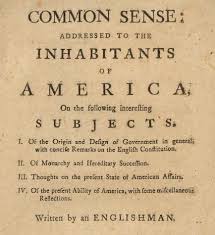
Who wrote a pamphlet called "Common Sense"?
a)
George Washington
b)
Thomas Paine
c)
Thomas Jefferson
d)
Patrick Henry
65.

What is a refusal to buy goods called?

a)

repeal

b)

boycott

c)

rebellion

d)

quartering

66.
According to the Declaration,  what causes a government to be just? 
a)
powerful institutions
b)
a Bill of Rights 
c)
ease of altering 
d)
Consent of the people being governed
67.
The Declaration of Independence states, “That whenever any form of government becomes destructive of these ends, it is the Right of the People to alter or abolish it.” Which Enlightened idea do these words describe?
a)
need to ensure a representative government.
b)
social contract between government and the people.
c)
revolutionary intent to overthrow the current government.
d)
return to a society that has no central authority.
68.
Which word means a person in the American colonies who opposed independence and wanted the colonies to remain under the control of the king and Great Britain?
a)
Loyalist
b)
Patriot
c)
Neutral
d)
Colonist
69.
This person was King of Great Britain during the time of the American Revolution.
a)
King Louis
b)
King Ferdinand
c)
King George III
d)
King Charles
70.

What were the effects of the American victories at Trenton & Princeton?

a)

The British build a new capitol building.

b)

the Patriots started speaking with a British accent

c)

the victories boosted Patriot spirits & many joined the Continental Army

d)

many Patriots sailed to Europe to protest.

71.

What disadvantages did the Continental army have?

a)

The Continental soldiers were poorly trained & disorganized, and Congress was slow in supplying money for the army.

b)

many patriots wanted disliked George Washington

c)

many patriots missed their kids.

d)

many patriots were missing home cooked meals.

72.

Why was the Battle of Saratoga important?

a)

The British uniform was too bright and many died as a result.

b)

The British got lost on the way to the battle and couldn't fight.

c)

It encouraged France to enter into a formal alliance with the Americans.

d)

The British won.

73.

Which battle convinced France and other European powers that the colonists had a chance to win independence?

a)

Lexington

b)

Yorktown

c)

Saratoga

d)

Princeton

74.

What was the significance of the Battles of Lexington and Concord?

a)

The fighting signaled the start of the American Revolution.

b)

Britain gave up any attempt to keep its North American colonies.

c)

The outcome proved that militias were no match for British troops.

d)

The fighting ended colonists’ resistance to British authority.

75.

The Renaissance placed new emphasis on

a)

salvation of the soul.

b)

the divine right of kings.

c)

laws governing politics and society.

d)

development of the individual.

76.

Which of the following is true about Enlightenment ideas?

a)

The Great Awakening caused Enlightenment ideas to become unpopular.

b)

Galileo and Copernicus were key in spreading Enlightenment ideas.

c)

Benjamin Franklin's inventions helped uneducated people understand Enlightenment ideas.

d)

Enlightenment ideas spread rapidly in the 13 English colonies.

77.

All of the following are examples of colonial self-government EXCEPT

a)

New England town meetings.

b)

the Mayflower Compact.

c)

the Quartering Act.

d)

the Jamestown House of Burgesses.