wayground logo

Free Printable Worksheets

Font size

S
M
L
XL
Worksheets

Cell Review Honors

Total questions: 42

Worksheet time: 1hrs 24mins

Name
Class
Date
1.

Which of the following is a plant cell?

a)
b)
2.

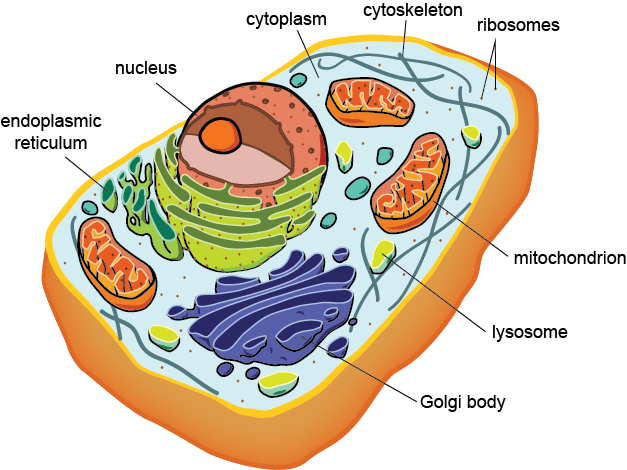
This organelle is the jelly like fluid found in both plant and animal cells. It functions to provide cushion to the organelles.

a)

Nucleus

b)

Mitochondria

c)

Cytoplasm

d)

Cell Wall

3.

This is the powerhouse of the cell. Its primary function is to regulate energy for the cell

a)

Mitochondria

b)

Ribosomes

c)

Large Vacuole

d)

Small Vacuole

4.

This Organelle is found in both plants and animals. In animals they are small and in plants they are large. Responsible for water storage.

a)

Cytoplasm

b)

Ribosomes

c)

Vacuoles

d)

Nucleus

5.

This organelle is found in plant cells only. Responsible for providing structure to the plant.

a)

Cell wall

b)

Cell membrane

c)

Bones

d)

Cytoplasm

6.
Directs all cell activities through the DNA located there.
a)
Lysosomes
b)
Nucleus
c)
ribosomes
d)
Mitochondria
7.
Which organelle is only found in a plant cell? 
a)
nucleus
b)
chloroplast
c)
mitochondria
d)
cell membrane
8.
Where are proteins made?
a)
Golgi body
b)
Mitoichondria
c)
Chromosomes
d)
Ribosomes
9.

The ___________ is the basic unit of life

a)

organ

b)

cell

c)

atom

d)

tissue

10.
What is the function of a cell wall?
a)
to protect and support the cell
b)
to perform different functions in each cell
c)
to prevent water from passing through it
d)
to prevent oxygen from entering the cell
11.
Has membrane bound organelles
a)
Prokaryote
b)
Eukaryote
c)
both
12.
Oldest type of cell
a)
Prokaryote
b)
Eukaryote
c)
both
13.
Smaller
a)
Prokaryote
b)
Eukaryote
c)
both
14.

Has cell membrane

a)

Prokaryote

b)

Eukaryote

c)

both

15.
Has cytoplasm
a)
Prokaryote
b)
Eukaryote
c)
both
16.
Has nucleus
a)
Prokaryote
b)
Eukaryote
c)
both
17.
Bacteria
a)
Prokaryote
b)
Eukaryote
c)
both
18.
more complex
a)
Prokaryote
b)
Eukaryote
c)
both
d)
both
19.
plants
a)
Prokaryote
b)
Eukaryote
c)
both
20.
Which type of cell?
a)
Prokaryote
b)
Eukaryote
21.
A single-celled organism that lacks a membrane-bound nucleus, mitochondria, or any other membrane -bound organelle .
a)
Prokaryote
b)
Eukaryote
c)
Nucleus
d)
Single-celled organism
22.
Which of the following scientists contributed to the cell theory?
a)
Rudolf Virchow, Robert Hooke, Anton van Leuwenhoek
b)
Matthais Schleiden, Theodor Schwann, Rudolf Virchow
c)
Robert Hooke, Theodor Schwann, Anton von Leuwenhoek
d)
Theodor Schwann, Matthais Schleiden, Robert HookeOption 4 (optional)
23.
Which of the following statements is not part of the cell theory?
a)
Cells are the basic unit of structure and function in all living things.
b)
All cells are produced from other cells.
c)
Only animal cells are composed of cells.
d)
All living things are composed of cells.
24.
If the eyepiece of your scope has a power of 10, and the selected objective lens has a power of 20,what is the total magnification?
a)
20x
b)
30x
c)
200x
d)
2000x
25.
When should the fine adjustment knob always be used?
a)
with the low power objective only
b)
with the medium power objective only
c)
with the high power objective only
d)
with both the medium and high power objectives
26.
When you focus on a new specimen, always begin with
a)
low power and coarse adjustment.
b)
low power and fine adjustment
c)
high power and coarse adjustment
d)
high power and fine adjustment
27.
What is part 1?
a)
eye piece
b)
body tube
c)
arm
d)
coarse adjust
28.
What part is 3?
a)
eye piece
b)
base
c)
arm 
d)
coarse adjust
29.
What part is 5?
a)
coarse adjustment
b)
fine adjustment
c)
diaphragm
d)
stage
30.
What is part 11?
a)
coarse adjustment
b)
fine adjustment
c)
diaphragm
d)
stage
31.
"Garbage collectors" of the cell that remove waste: 
a)
Cell Membrane
b)
Centrioles
c)
Lysosomes
d)
Nucleus
32.
"Garbage collectors" of the cell that remove waste: 
a)
Cell Membrane
b)
Centrioles
c)
Lysosomes
d)
Nucleus
33.
Protective outermost layer of the cell: 
a)
Cell Membrane
b)
Nucleus
c)
Chromatin
d)
Microtubules 
34.
Protective membrane that surrounds the nucleus: 
a)
Chromatin
b)
Vesicles 
c)
Centrioles
d)
Nuclear Envelope
35.
Creates fat for storing energy: 
a)
DNA
b)
Centrioles
c)
Lysosomes
d)
Smooth Endoplasmic Reticulum
36.
"Envelopes" of the cell, used for transporting material: 
a)
Vesicles
b)
Centrioles
c)
ATP
d)
Mitochondria
37.

Maze-like organelle that makes proteins and has ribosomes:

a)

Rough Endoplasmic Reticulum

b)

Lysosomes

c)

Nucleus

d)

Chromatin

38.

____________ & _________________ are organelles that definitely arose from endosymbiosis.

a)

Nucleus and cell membrane

b)

Chloroplast and mitochondria

c)

Mitochondria and nucleus

d)

Cell wall and chloroplast

39.

What are evidence to support endosymbiotic theory?

a)

Mitochondria is found outside the cells

b)

Mitochondria and chloroplast can divide independently

c)

Mitochondria and chloroplast have their own cell membrane

d)

Mitochondria and chloroplast have their own genetic material

40.

Why type of cell does not contain membrane bound organelles?

a)

Animal Cells

b)

Prokaryotic Cells

c)

Eukaryotic Cells

d)

Plant Cells

41.

Uses oxygen

a)

aerobic

b)

anaerobic

c)

both

42.

Happens without oxygen

a)

aerobic

b)

anaerobic

c)

both