Wayground logo

Free Printable Worksheets

Font size

S
M
L
XL
Worksheets

Weather Factors, Atmosphere, and Scientific Method

Total questions: 75

Worksheet time: 2hrs 30mins
Name
Class
Date
1.
Which gas in our atmosphere is most abundant?
a)
Argon
b)
Oxygen
c)
Nitrogen
d)
Carbon Dioxide
2.
The air in the troposphere has a greater density than the air in any other layer of the atmosphere,
a)
True
b)
False
3.
What percentage of our atmosphere is made up of other gases such as argon, water vapor, and carbon dioxide?
a)
1%
b)
21%
c)
78%
d)
90%
4.
What is the percentage of oxygen in Earth's atmosphere?
a)
1%
b)
21%
c)
78%
d)
90%
5.
What is the percentage of nitrogen in Earth's atmosphere?
a)
1%
b)
21%
c)
78%
d)
90%
6.
In which layer of the atmosphere does weather occur?
a)
Mesosphere
b)
Thermosphere
c)
Stratosphere
d)
Troposphere
7.
What decreases as you go up in the atmosphere?
a)
Altitude
b)
Atmosphere
c)
Meteors
d)
Air Pressure
8.
What is the lowest main layer of Earth's atmosphere?
a)
Thermosphere
b)
Troposphere
c)
Stratosphere
d)
Mesosphere
9.
What is the second lowest main layer of Earth's atmosphere?
a)
Thermosphere
b)
Troposphere
c)
Stratosphere
d)
Mesosphere
10.
What are the 2 most abundant gases in Earth's atmosphere?
a)
carbon dioxide and oxygen
b)
carbon dioxide and nitrogen
c)
nitrogen and oxygen
d)
nitrogen and hydrogen 
11.
This layer is where weather occurs.
a)
troposphere
b)
thermosphere
c)
exosphere
d)
stratosphere
12.
Which of the following is the correct order of the atmosphere layers from Earth to space?
a)
troposphere, stratosphere, mesosphere, thermosphere, exosphere
b)
troposphere, mesosphere, thermosphere, exosphere, stratosphere
c)
thermosphere, stratosphere, mesosphere, troposphere, exosphere
d)
troposphere, stratosphere, mesosphere, exosphere, thermosphere
13.
The density of our atmosphere _____________ with an increase in altitude.
a)
Increases
b)
Gets greater
c)
Decreases
d)
Gets heavier
14.
Which layer is the coldest?
a)
Troposphere
b)
Stratosphere
c)
Mesosphere
d)
Thermosphere
15.
Which layer protects the earth from meteors?
a)
Troposphere
b)
Stratosphere
c)
Mesosphere
d)
Thermosphere
16.
Describe how the ozone layer protects the earth.
a)
Absorbs solar radiation, Protects Earth from UV Rays,  and emits heat
b)
Ozone in the lower atmosphere is a pollutant
17.
Airplanes fly in which layers of the atmosphere?
a)
Troposphere, Stratosphere, and Mesosphere
b)
Stratosphere and Mesosphere
c)
Troposphere and Stratosphere
d)
Troposphere Stratosphere, Mesosphere, and Thermosphere
18.
As altitude increase, the air pressure
a)
does not change
b)
increases
c)
decreases
19.
The force that air exerts on all objects is called-
a)
density
b)
altitude
c)
infrared radiation
d)
air pressure
20.
From Earth to space, the main layers of the atmosphere are
a)
Mesosphere, Troposphere, Ionosphere, Thermosphere
b)
Troposphere, Stratosphere, Mesosphere, Thermosphere
c)
Troposphere, Mesosphere, Ionosphere, Thermosphere
d)
Stratosphere, Troposphere, Ionosphere, Thermosphere
21.
Which layer of the atmosphere do most satellites orbit the Earth?
a)
Stratosphere
b)
Mesosphere
c)
Exosphere
d)
Ionosphere
22.
Which layer of the atmosphere contains the ozone layer? 
a)
Mesosphere
b)
Stratosphere
c)
Ionosphere
d)
Exosphere
23.
Which layer has the hottest molecules?
a)
Thermosphere
b)
Mesosphere
c)
Exosphere
d)
Stratosphere
24.
Which layer contains the least number of molecules (mainly hydrogen and helium)?
a)
Thermosphere
b)
Exosphere
c)
Troposphere
d)
Stratosphere
25.
Which layer contains the ionosphere, a layer of charged particles, that interact with solar winds to cause the auroras?
a)
Exosphere
b)
Stratosphere
c)
Thermosphere
d)
Mesosphere
26.
Which layer protects humans from most of the harmful UV radiation received from the sun?
a)
Clouds
b)
Exosphere
c)
Ionosphere
d)
Ozone Layer
27.
A mixture of gases and particles that surround a planet, held by gravity is called the-
a)
greenhouse effect
b)
atmosphere
c)
jet stream
d)
blanket
28.
The layers of the atmosphere are calssified according to changes in
a)
temperature and air pressure
b)
altitude and air quality
c)
humidity and temperature
d)
air pressure and oxygen
29.
Which statement best describes the atmosphere.
a)
Made of only elements
b)
Made of only compounds
c)
Made of a mixture of elements and compounds
d)
Made of only metals
30.
What causes acid rain?
a)
High concentrations of sulfuric or nitric acid from pollution
b)
Fertilizer use
c)
Pesticide use
d)
CFCs
31.
Combines with other pollutants to form acid rain
a)
Nitrogen oxides & sulfur dioxide
b)
Particulate matter & lead
c)
Nitrogen oxides & ground-level ozone
d)
Sulfur dioxide & ground-level ozone
32.
Out of the following, choose the outermost layer of the atmosphere-
a)
Troposphere
b)
Thermosphere
c)
Stratosphere
d)
Mesosphere
33.
—The Clean Air Act- regulates vehicle emissions.
a)
true
b)
false
34.
What can humans do to reduce the effects of acid rain?
a)
Develop Alternate Energy Sources (Solar Power, Wind Energy)
b)
Use Less Energy
c)
Stop Burning Fossil Fuels
d)
All of the Answers are Correct
35.

Can be traced back to the point of origin.

a)

Point Source Pollution

b)

Non-point source pollution

36.

Cannot easily be traced to the source of the pollution.

a)

Point Source Pollution

b)

Non-point source pollution

37.
What is a hypothesis?
a)
A hypothesis is the right answer to an experiment.
b)
A hypothesis is the wrong answer to an experiment.
c)
A hypothesis is an educated guess.
38.
The test of a hypothesis is called a
a)
control
b)
dependent variable
c)
conclusion
d)
experiment
39.
Mr. Haley sets up an experiment to see how the mass of a ball affects the distance it rolls off a ramp. In the experiment Mr.Haley rolls two balls with a mass of 10 grams and 20 grams down the same exact ramp and then measures the distance each ball traveled. 
Identify the independent variable. MIX
a)
distance traveled by the ball
b)
height of the ramp
c)
mass of the ball
d)
weight of the ball
40.
Mr. Haley sets up an experiment to see how the mass of a ball affects the distance it rolls off a ramp. In the experiment Mr.Haley rolls two balls with a mass of 10 grams and 20 grams down the same exact ramp and then measures the distance each ball traveled.  Identify the dependent variable.DRY
a)
height of the ramp
b)
 distance traveled by the ball
c)
mass of the ball
d)
weight of the ball
41.
Mr. Haley sets up an experiment to see how the mass of a ball affects the distance it rolls off a ramp. In the experiment Mr.Haley rolls two balls with a mass of 10 grams and 20 grams down the same exact ramp height and then measures the distance each ball traveled.
 Identify the constant. (control)
a)
distance traveled by the ball
b)
height of the ramp
c)
mass of the ball
d)
weight of the ball
42.
What step does every scientific experiment begin with?
a)
hypothesis
b)
question/problem
c)
procedures
d)
conclusion
43.
The independent variable is the ONE thing you _____.
a)
change
b)
keep the same
c)
experiment with
d)
investigate
44.
This variable in an experiment is the one being deliberately changed by the scientist. 
a)
dependent variable
b)
independent variable
c)
data
d)
control group
45.

The top four gases in Earth’s atmosphere include

a)

helium.

b)

hydrogen

c)

water vapor.

d)

carbon dioxide.

46.

The atmosphere is needed for all of the following except

a)

weathering.

b)

life on Earth

c)

plate tectonics.

d)

water cycle.

47.

Plants need oxygen in order to

a)

undertake photosynthesis.

b)

obtain energy from food.

c)

make their own food.

d)

breathe.

48.

Without the atmosphere, Earth would have

a)

a greater range of temperatures.

b)

more severe weather.

c)

more glaciers.

d)

2 of these answers

49.

About 99 percent of the atmosphere consists of nitrogen and __________.

a)

oxygen

b)

density

c)

lower

d)

nitrogen

e)

carbon

50.

main gas in Earth’s atmosphere

a)

air pressure

b)

altitude

c)

sound

d)

nitrogen

e)

argon

51.
The sun shines down on this family as the play on the beach.
a)
conduction
b)
convection
c)
radiation
52.
A group of friends gather around a fire to stay warm.
a)
conduction
b)
convection
c)
radiation
53.
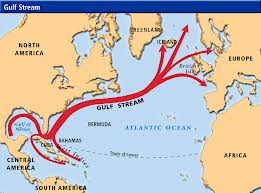
The Gulf Stream is a current that brings warm ocean water from the south to the north.
a)
conduction
b)
convection
c)
radiation
54.
Walking on the warm sand sand with your bare feet.
a)
conduction
b)
convection
c)
radiation
55.
Blow drying your wet hair.
a)
conduction
b)
convection
c)
radiation
56.

The amount of water vapor in the air is known as ___.

a)

dew point

b)

humidty

c)

relative humidity

d)

rain

57.

The amount of water vapor in the air is known as ___.

a)

dew point

b)

humidty

c)

relative humidity

d)

rain

58.

Wispy, feathery clouds are called

a)

cirrus clouds.

b)

cumulus clouds.

c)

stratus clouds.

59.

Clouds that look like fluffy, rounded piles of cotton are called

a)

cirrus clouds.

b)

cumulus clouds.

c)

stratus clouds.

60.
They are highest clouds in the sky. They look curly, white and feathery. Usually mean good weather.
a)
Cumulus
b)
Cumulonimbus
c)
Cirrus
d)
Stratus
61.
Which cloud is this?
a)
cumulus
b)
cumulonimbus
c)
cirrus
d)
stratus
62.
Which cloud forms layers in the sky?
a)
stratus
b)
cumulus
c)
cirrus
d)
cumulonimbus
63.
These are the clouds that we commonly see shapes in.
a)
cumulus
b)
cumulonimbus
c)
cirrus
d)
stratus
64.
They are highest clouds in the sky. They look curly, white and feathery. Usually mean good weather.
a)
Cumulus
b)
Cumulonimbus
c)
Cirrus
d)
Stratus
65.
Which cloud brings nice weather?
a)
Cumulonimbus
b)
Cumulus
c)
Stratus
66.
Low clouds (like fog), that are thick, cover the sky, and block the sun.  Usually bring continuous precipitation (rain or snow).
a)
stratus
b)
cumulus
c)
cirrus
d)
nimbo
67.
what type of cloud is shown?
a)
cumulus
b)
cirrus
c)
stratus
68.
Dew is most likely to form 
a)
after heavy rain on a humid day
b)
when humid air contacts cold ground
c)
when the snow on the ground melts
d)
during windy nights when it rains
69.
For a cloud to form the temperature needs to be right and there needs to be something for the water to hold on to such as particles of dust, salt or smoke.  True or false?
a)
True
b)
False
70.
Which type of cloud is the fastest moving?
a)
Cumulonimbus
b)
Cirrus
71.
Fog is a type of stratus cloud? True or false?
a)
False
b)
True
72.
You lay on the same hot rock at night and keep warm from the rock by
a)
conduction
b)
convection
c)
radiation
73.
Weather systems in the Earth's atmosphere are due to
a)
conduction
b)
convection
c)
radiation
74.
Warm air over the beach rises while cooler, dense air from the ocean rushes in due to
a)
conduction
b)
convection
c)
radiation
75.
Your best friend has a bunk bed. You move from the bottom bunk to the top bunk and notice that the air is warmer. The warm air rises because of _?_.
a)
conduction
b)
convection
c)
radiation