
 Worksheets
The Chemical Basis of Life
Total questions: 46
Worksheet time: 31mins
Name
Class
Date
1.
Hydrogen is a pure substance represented by the chemical symbol H. Which of the following best describes hydrogen?
a)
Hydrogen is an element made of two or more kinds of atoms.
b)
Hydrogen is a compound made of only one kind of atom.
c)
Hydrogen is a compound made of two or more kinds of atoms.
d)
Hydrogen is an element made of only one kind of atom.
2.
The element oxygen, represented by the symbol O, is classified as
a)
a pure substance
b)
a compound
c)
a mixture
d)
a solution
3.
Carbon (C) and hydrogen (H) are pure substances. Each is made of only one type of atom, but carbon atoms are different from hydrogen atoms. Carbon and hydrogen chemically combine to form methane (CH4).
a)
methane is an element and carbon and hydrogen are compounds.
b)
carbon, hydrogen, and methane are all elements.
c)
carbon, hydrogen, and methane are all compounds.
d)
carbon and hydrogen are elements and methane is a compound.
4.
What is a compound?
a)
an atom with more electrons than protons
b)
a substance in which the atoms of two or more elements are combined together
c)
an atom with more neutrons than protons
d)
a substance in which the atoms of three or more elements are combined together
5.
The chemical combination of two or more different kinds of atoms in fixed amounts is called a(n)
a)
orbit
b)
compound
c)
mixture
d)
element
6.
Atoms combine to form _______.
a)
electrons
b)
molecules
c)
nuclei
d)
neutrons
7.
The air we breathe contains different individual gases (mostly nitrogen and oxygen). Which of the following correctly describes the air we breathe?
a)
compound
b)
liquid
c)
element
d)
mixture
8.
When salt is dissolved in water, the result is a
a)
homogeneous mixture
b)
gas
c)
compound
d)
heterogeneous mixture
9.
What is the charge on a proton?
a)
positive
b)
neutral
c)
negative
10.
What is the charge of an electron?
a)
positive
b)
neutral
c)
negative
11.
What part of the atom is responsible for determining an atom's chemical properties?
a)
all electrons
b)
protons
c)
neutrons
d)
valence electrons
12.

Glucose (C6H12O6) contains atoms of carbon, hydrogen, and oxygen that are chemically bonded together. What type of matter is glucose?
a)
Glucose is an element
b)
Glucose is a compound
c)
Glucose is a mixture
d)
Glucose is a metal
13.

How many TOTAL atoms make up the molecule 8K2SO4?
a)
8
b)
56
c)
7
d)
15
14.

TRUE OR FALSE:
There are millions of elements.
There are millions of elements.
a)
True
b)
False
15.

TRUE OR FALSE:
There are millions of compounds.
There are millions of compounds.
a)
True
b)
False
16.

TRUE OR FALSE:
There are about 118 elements.
There are about 118 elements.
a)
True
b)
False
17.

TRUE OR FALSE:
Water is a compound.
Water is a compound.
a)
True
b)
False
18.
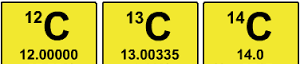
What do these isotopes of carbon all have in common?
a)
neutrons & mass number
b)
atomic number and neutrons
c)
atomic number and electrons
d)
protons, atomic number, and mass number
19.
How many neutrons in C-14?
a)
6
b)
7
c)
14
d)
8
20.
Isotopes are atoms of the same element with different #’s of __________ & therefore different __________.
a)
n0 ; atomic #’s
b)
p+ ; atomic #’s
c)
e- ; atomic masses
d)
n0 ; atomic masses
21.
What is an isotope?
a)
An atom with an unstable nucleus
b)
An atom with more/less neutrons than 'normal'
c)
An atom with an isotopic charge
d)
An atom with more/less protons than 'normal'
22.
What is the difference between an isotope and a radioisotope?
a)
An isotope is radioactive, a radioisotope is not
b)
A radioisotope is radioactive, and isotope is not
c)
No differences
d)
An isotope is slightly radioactive, a radioisotope is very radioactive
23.
What are the three types of radiation?
a)
Alpha, Bravo, Charlie
b)
Alpha, Beta, Gamma
c)
Alpho, Beto, Gammo
d)
Primary, Secondary, Tertiary
24.
Which is the most dangerous type of radiation?
a)
Alpha
b)
Beta
c)
Gamma
d)
Epsilon
25.
Ionic bonds are between...
a)
nonmetals and nonmetals
b)
carbon and oxygen
c)
metals and nonmentals
d)
hydrogen and chlorine
26.
Covalent bonds are between...
a)
two or more nonmetals
b)
sodium and chlorine
c)
metals and metals
d)
metals and nonmetals
27.
What is the name for an ion with a positive charge?
a)
cation
b)
anion
c)
onion
d)
union
28.
What is the name for an ion with a negative charge?
a)
cation
b)
anion
c)
onion
d)
union
29.
What are valence electrons?
a)
sum of the protons and neutrons
b)
protons minus electrons
c)
electrons in the inner shells
d)
electrons in the outer shell
30.
If an atom loses two electrons what charge will it have?
a)
-2
b)
-1
c)
+1
d)
+2
31.
How many valence electrons does oxygen have?
a)
2
b)
4
c)
5
d)
6
32.
In a ___________change, a substance changes into a different substance.
a)
Physical
b)
Chemical
33.
In a chemical reaction, bonds are broken and new bonds are formed that create new substances. The bonds that are broken are called what?
a)
Reactants
b)
Products
c)
Atoms
d)
Catalysts
34.
The Law of Conservation of Mass states
a)
that matter exists in all states and reacts the same
b)
that matter can only be changed into new substances by introducing a catalyst
c)
that matter exists in the same state throughout any chemical change
d)
that matter cannot be created or destroyed and that the mass of the products must equal the mass of the reactants
35.

a copper penny turning greenish after a few years.
a)
Chemical Change
b)
Physical Change
36.
Which of the following is the correct equation for PHOTOSYNTHESIS?
a)
CO2 + light + H2O --> O2 + Sugar
b)
CO2 + sugar + H2O --> O2 + light
c)
O2 + light + H2O --> CO2 + Sugar
d)
CO2 + O2 + H2O --> Light+ Sugar
37.
What process occurs when light energy is captured in autotrophs and converted into sugar?
a)
Photosynthesis
b)
Cellular Respiration
38.
What are the products of photosynthesis?
a)
water and carbon dioxide
b)
oxygen and glucose
c)
oxygen and carbon dioxide
d)
oxygen and water
39.

Question: Using the figure above, order these items in order of increasing acidity:Coffee, Seawater, Ammonia, Lemon Juice, Blood
a)
Lemon Juice, Seawater, Ammonia, Blood, Coffee
b)
Ammonia, Seawater, Blood, Coffee, Lemon Juice
c)
Blood, Coffee, Lemon Juice, Ammonia, Seawater
d)
Lemon Juice, Coffee, Blood, Seawater, Ammonia
40.

In the figure above, water is the ________________________ while Sodium Chloride (Table Salt) is the __________________________.
a)
solvent, solute
b)
solute, solvent
c)
solute, solute
d)
element, molecule
41.
Question: What does it mean when a molecule is said to be “polar”?
a)
The molecule has tendency to absorb a lot of heat, therefore it remains 'cold' easily
b)
The molecule has an even distribution of charges, all parts are positive
c)
The molecule has an even distribution of charges, all parts are negative
d)
The molecule has an uneven distribution of charges, some parts are positive while others are negative
42.
Statement: Water may be one of the most familiar substances on the planet, but it certainly isn’t ordinary. In fact, water’s unique chemical properties make it so complicated that even after decades of research, scientists still have much to learn about this remarkable and versatile substance.That’s water, as in the clear, sparkling fluid that covers three quarters of the Earth’s surface—not to mention the basis of life as we know it, and possessor of the world’s most recognizable chemical formula (H2O). Water is everywhere. And yet, scientists are still learning about its properties.Water simply doesn’t behave like other liquids.Question: Which of the following is not a special property of water?
a)
Water has the ability to moderate temperature
b)
Water is polar, therefore it is very adhesive
c)
Water contracts when it freezes
d)
Water is polar, therefore it is very cohesive
43.

According to the figure, A hydrogen bond can form between a hydrogen atom of one molecule and which atom of another molecule?
a)
Carbon
b)
Hydrogen
c)
Oxygen
d)
Sodium
44.

According to the figure above, a solution with a pH of 11 is
a)
acidic
b)
alkaline
c)
neutral
d)
a buffer
45.

According to the figure above, polar molecules such as water have
a)
no negative or positive poles.
b)
both negative and positive poles.
c)
only a negative pole.
d)
only a positive pole.
46.
pH Values of Some Common Substances
Substance pH
Hydrochloric acid 1.0
Sulfuric acid 1.2
Tomatoes 4.2
Rainwater 6.2
Pure water 7.0
Sea water 8.5
Ammonium chloride 11.1
Sodium hydroxide 13.0
Figure 2–5
Question: What is the strongest acid listed in Figure 2–5?
Substance pH
Hydrochloric acid 1.0
Sulfuric acid 1.2
Tomatoes 4.2
Rainwater 6.2
Pure water 7.0
Sea water 8.5
Ammonium chloride 11.1
Sodium hydroxide 13.0
Figure 2–5
Question: What is the strongest acid listed in Figure 2–5?
a)
Hydrochlorica acid
b)
Pure water
c)
rainwater
d)
Sodium hydroxide
100 %

