
 Worksheets
Macromolecules: Carbs, Lipids, Proteins, and Nucleic Acids
Total questions: 41
Worksheet time: 26mins
The element _______is found in all of the organic compounds.
Iron
Nitrogen
Carbon
Calcium

Which macromolecule is shown?
lipid
protein
nucleic acid
carbohydrate
Which of the following does NOT describe an element that makes up biomolecules?
Carbon (C)
Hydrogen (H)
Oxygen (O)
Helium (He)
I am a biomolecule that is useful for a fast source of energy. Who am I?
lipid
protein
carbohydrates
nucleic acid
I am a biomolecule that is important for insulation. What am I?
lipid
protein
carbohydrates
nucleic acid
Both of us are made up of the elements C, H, and O. Who are we?
Carbohydrates and lipids
Proteins and nucleic acids
Carbohydrates and Nucleic Acids
Proteins and Lipids
Pasta has a lot of which biomolecule?
Carbohydrates
Protein
Nucleic Acids
Lipids
A narwhal needs blubber to stay warm. Which biomolecule would this animal need most to survive?
Carbohydrates
Protein
Nucleic Acids
Lipids
Water dissolves many substances. This occurs because water has
Surface tension
Polarity
Specific heat
Cohesion

Which property of water is being demonstrated in the picture.
Polarity
Surface Tension
Density of Ice
Capillarity

Polarity
Surface Tension
Density of Ice
Capillarity

Polarity
Surface Tension
Density of Ice
Capillarity
What does the prefix mono- mean
one
two
three
four
What does the prefix di- mean?
one
two
three
four
What does the prefix poly- mean?
one
two
three
many, 3 or more

What is the main type of macromolecule is found in this food?
carbohydrate
lipid
protein
nucleic acid

What is the main type of macromolecule in this food?
carbohydrate
lipid
protein
nucleic acid

How many monosaccharides are in this carbohydrate?
one
two
three
four

How much money is shown?
28 cents
53 cents
48 cents
39 cents
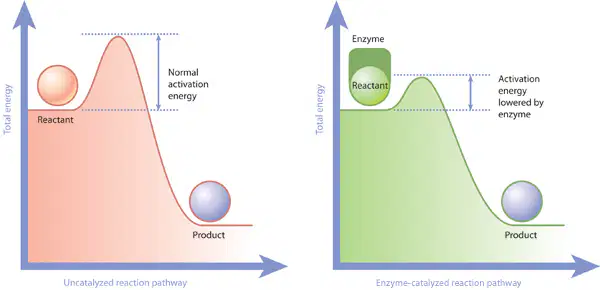
What energy is reduced in an enzyme assisted chemical reaction?
endothermic energy
potential energy
activation energy
kinetic energy
What is the building block of proteins
monosaccharides
glycerol and fatty acids
amino acids
nucleotides
Which is NOT an example of type of protein
antibodies
muscle
enzymes
polysaccharides

What macromolecule helps build muscle?
carbohydrates
lipids
proteins
nucleic acids
Which is NOT an element in proteins?
carbon
phosphorus
oxygen
nitrogen

Identify letter X in the diagram
active site
enzyme
product
substrate

What is the function of enzymes?
fight infection
control rate of reaction
build body structures
carry oxygen in our blood

What molecule has a double helix shape?
carbohydrates
lipids
proteins
deoxyribonucleic acid

What macromolecule has a single helical shape?
protein
ribonucleic acid
deoxyribonucleic acid
lipids

What macromolecule has the elements: carbon, hydrogen, oxygen, nitrogen, and phosphorous?
Deoxyribonucleic Acid
Proteins
Lipids
Carbohydrates
Which sugar is found in DNA?
lactose
sucrose
ribose
deoxyribose
Which of the following is NOT a function of nucleic acids?
Encodes genetic information
Digests genetic information
Directs genetic information
Transmits genetic information

What is the building block of nucleic acids?
glycerol and 3 fatty acids
amino acids
nucleotides
monosaccharides

Identify letter Y in the diagram
active site
enzyme
product
substrate

