
 Worksheets
Cell Structure and Function - Chapter 2 Quiz
Total questions: 189
Worksheet time: 3hrs 31mins

Is this a plant cell or an animal cell?
Plant Cell
Animal Cell
Explain how scientists’ understanding of cells developed.
They didn’t have a tool to study cells.
They study cork oat tree under the microscope
They created a microscope to study cell.
The scientists study plant and animal cells.
What did Robert Hooke first examine?
Pond water
Plant cells
Cork
Animal fat

Is this a plant cell or an animal cell?
Plant Cell
Animal Cell
What was Matthias Schleiden convinced of?
All plants are made of cells
All animals are made of cells
All cells form spontaneously
None of the above
What part of the cell is H?
Golgi Apparatus
Chloroplast
Nucleus - Nuclear Envelope
Nucleus - Nucleolus
What part of the cell is E?
Cytoskeleton
Mitochondrion
Vesicle
Nucleus - Nuclear Envelope
Nucleus - Nucleolus

Robert Hooke, Theodor Schwann, Rudolf Virchow, and Matthias Schliden were all responsible for what theory?
The Theory of Gravity
The Theory of Relativity
The Cell Theory
The Theory of Continental Drift
What part of the cell is A?
Central Vacuole
Cytoskeleton
Cell Wall
Cell Membrane
Which of the following is NOT a cell theory.
All non-living things are made of cells
All living things are made of one or more cells
The cell is the smallest unit of life.
All new cells come from preexisting cells.
Nucleic Acids can pass from parent to offspring.
True
False
What part of the cell is K?
Nucleus - Genetic Material
Smooth Endoplasmic Reticulum
Centriole
Lysosome
DNA includes instructions for ______, _____, and _____
cell growth
cell reproduction
cell processes
cell genes
Macromolecules cannot function without ____.
heat
fat
water
cells
Which macromolecule store energy, protective membranes, and communications?
Lipids
Proteins
Carbohydrates
Nucleic Acids
Order of nucleotides in DNA and RNA is important.
True
False
What part of the cell is C?
Cell Membrane
Rough Endoplasmic Reticulum
Ribosome
Golgi Apparatus
Cholesterol, phospholipids, and vitamin A are examples of _______.
Nucleic Acid
Lipid
Proteins
Carbohydrate
Each Protein has a unique ______
cell
function
DNA
RNA
This is one job proteins do NOT have in the body
storing genetic information
structural support
speed up chemical reactions or chemical breakdown of substances
communication; transport things through cell membrane
What part of the cell is I?
Cytoskeleton
Mitochondrion
Vesicle
Nucleus - Nuclear Envelope
Nucleus - Nucleolus
Long chains of amino acid molecules
Nucleic Acid
Lipid
Proteins
Carbohydrate
What part of the cell is B?
Central Vacuole
Cytoskeleton
Cell Wall
Cell Membrane
Major part of cell membranes
Nucleic Acid
Lipid
Proteins
Carbohydrate
_____ form by joining many small molecules together
Nuleic Acids
Macromolecules
Proteins
Carbohydrates
This is an example of _____.
Example - Amylase in saliva helps break down nutrients in food
Proteins
Lipid
Macromolecules
Carbohydrates
What part of the cell is H?
Cytoskeleton
Mitochondrion
Vesicle
Nucleus - Nuclear Envelope
Nucleus - Nucleolus

Which statement is true?
Cell contains hundreds of proteins
Cell contains one protein
DNA is used to make RNA; RNA is used to make _______
proteins
lipid
carbohydrates
Nucleic acids
If you change DNA and RNA, you are changing the _______ ______ in a cell.
genetic growth
genetic size
genetic information
genetic process
What part of the cell is M?
Nucleus - Genetic Material
Smooth Endoplasmic Reticulum
Centriole
Lysosome
Larger macromolecule that does not dissolve in water
Nucleic Acid
Lipid
Proteins
Carbohydrate
What part of the cell is K?
Vesicle
Ribosome
Mitochondrion
Rough Endoplasmic Reticulum
Smooth Endoplasmic Reticulum
What is the most important roles in a cells?
Proteins
Lipid
Macromolecules
Carbohydrates
____ contains instructions for joining amino acids together
DNA
RNA
RAN
DAN
This is an example of _____.
Example - Keratin found in hair, horns, and feathers provide structural support
Proteins
Lipid
Macromolecules
Carbohydrates
One sugar molecule, two sugar molecules, or a long chain of sugar molecules
Proteins
Lipid
Macromolecules
Carbohydrates
What part of the cell is B?
Cell Membrane
Rough Endoplasmic Reticulum
Ribosome
Golgi Apparatus
Which macromolecules store energy, structural support, and communicate?
Proteins
Lipid
Macromolecules
Carbohydrates
_______ and ________ are carbohydrates that store energy.
Sugars and starches
Sugars and salt
Salt and starches
Sun and sugars
What part of the cell is L?
Vesicle
Ribosome
Mitochondrion
Rough Endoplasmic Reticulum
Smooth Endoplasmic Reticulum
Fruits contains sugars and breads and pasta are mostly starch. The energy in sugars and starches can be released quickly through chemical reactions in cells. This is an example of ______.
Proteins
Lipid
Macromolecules
Carbohydrates
Cellulose is a carbohydrate in the cell walls in plants that provides structural support
True
False
What part of the cell is L?
Nucleus - Genetic Material
Smooth Endoplasmic Reticulum
Centriole
Lysosome
Which type of cell DOES NOT have a nucleus?
Prokaryotic
Eukaryotic
What part of the cell is D?
Central Vacuole
Cytoskeleton
Cell Wall
Cell Membrane
Which type of cell HAS a nucleus?
Prokaryotic
Eukaryotic
Which type of cell is found in BACTERIA?
Prokaryotic
Eukaryotic
What part of the cell is C?
Central Vacuole
Cytoskeleton
Cell Wall
Cell Membrane
Which type of cell is found in plants, animals, fungi and protists?
Prokaryotic
Eukaryotic
Which type of cell has DNA that is NOT in a nucleus?
Prokaryotic
Eukaryotic
Which type of cell has DNA IN A NUCLEUS?
Prokaryotic
Eukaryotic
What part of the cell is N?
Vesicle
Ribosome
Mitochondrion
Rough Endoplasmic Reticulum
Smooth Endoplasmic Reticulum
Which type of cell makes up ONLY unicellular organisms?
Prokaryotic
Eukaryotic
What part of the cell is D?
Cell Membrane
Rough Endoplasmic Reticulum
Ribosome
Golgi Apparatus
True or False: ALL cells have a CELL WALL
True
False
This is an example of _________.
Example: Cilia – short, hairlike structures; move a cell or move molecules away from a cell; microscopic organism called paramecium moves around its watery environment using cilia
Cytoplasm
Cell Membrane
Cytoskeleton
Cell Appendages
What part of the cell is E?
Golgi Apparatus
Chloroplast
Nucleus - Nuclear Envelope
Nucleus - Nucleolus
What part of the cell is G?
Cytoskeleton
Mitochondrion
Vesicle
Nucleus - Nuclear Envelope
Nucleus - Nucleolus
What part of the cell is F?
Golgi Apparatus
Chloroplast
Nucleus - Nuclear Envelope
Nucleus - Nucleolus
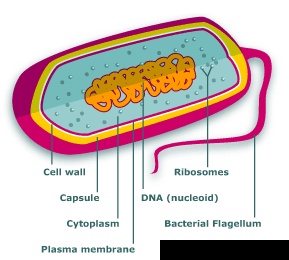

Which type of cell is this?
Prokaryotic
Eukaryotic

Which type of cell is this?
Eukaryotic
Prokaryotic
The first person to see cells, he was looking at cork and noted that he saw "a great many boxes
Robert Hooke
Matthias Schleiden
Theodore Schwann
Rudolf Virchow
What part of the cell is F?
Cytoskeleton
Mitochondrion
Vesicle
Nucleus - Nuclear Envelope
Nucleus - Nucleolus

Which two organelles are NOT found in animal cells?
Cell membrane
Cell wall
Cytoplasm
Nucleus
Chloroplast
Which is not true about Prokaryotic cells?
They do not have a nucleus.
They have DNA.
They are larger than Eukaryotic cells.
Examples include cyanobacteria and E. coli.
True or false: Skin cells have a very different structure and function than brain cells
True
False
What part of the cell is A?
Cell Membrane
Rough Endoplasmic Reticulum
Ribosome
Golgi Apparatus
The proteins form a framework inside a cell.
Cytoskeleton
Cell Membrane
Cell Wall
Cytoplasm
This is an example of _________.
Example: Flagella – long, taillike appendages that whip back and forth and move a cell
Cell Appendages
Cell Membrane
Cytoskeleton
Cytoplasm
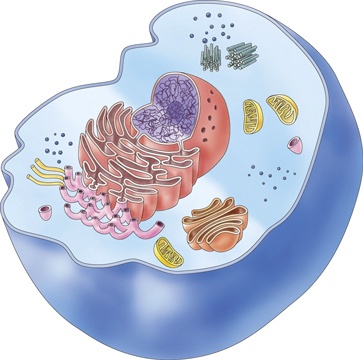


What part of the cell is G?
Golgi Apparatus
Chloroplast
Nucleus - Nuclear Envelope
Nucleus - Nucleolus


Which organelle is only in the plant cell?
cell membrane
cell wall
nucleus
Arms, legs, claws, and antennae are all types of __________.
Cell Appendages
Cell Membrane
Cytoskeleton
Cytoplasm


Fluid inside a cell that contains salts and other molecules.
Cytoplasm
Cell Membrane
Cell Wall
Cytoplasm
Organelles where photosynthesis occurs, are green due to chlorophyll pigment found in them.
Chloroplasts
Cell Wall
Cell Membrane
Cytoplasm
What part of the cell is M?
Vesicle
Ribosome
Mitochondrion
Rough Endoplasmic Reticulum
Smooth Endoplasmic Reticulum

I am the "brain" of the cell or the "control center" for everything happening within the cell. I am a...
Golgi Body/Apparatus
Nucleus
Ribosome
Lysosome

Photosynthesis takes place within me. I am a...
Cytoplasm
Cell Wall
Cytoskeleton
Chloroplast
Plant Cells can perform which reactions? Check ALL that apply.
Photosynthesis
Rock and Roll
Cellular Respiration
Surprised reactions
What part of the cell is J?
Nucleus - Genetic Material
Smooth Endoplasmic Reticulum
Centriole
Lysosome
What is used for movement?
Cell Appendages
Cell Membrane
Cytoskeleton
Cytoplasm
In some plant cells and fungal cells, a cell wall helps maintain the cell’s shape and gives structural support
Cell Appendages
Cell Membrane
Cell Wall
Cytoplasm
What part of the cell is I?
Nucleus - Genetic Material
Vesicle
Ribosome
Mitochondrion
Rough Endoplasmic Reticulum
Water is the main ingredient in a cell, most of this water is in the ________.
Cell Appendages
Cell Membrane
Cell Wall
Cytoplasm
Network of threadlike proteins that are joined together
Cytoskeleton
Cell Membrane
Cell Wall
Cytoplasm
What part of the cell is J?
Vesicle
Ribosome
Mitochondrion
Rough Endoplasmic Reticulum
Smooth Endoplasmic Reticulum
A cell membrane is ___________. This means it allows only certain substances to enter or leave a cell.
passive transport
semipermeable
diffusion
osmosis
The movement of substances through a cell membrane without using the cell’s energy
Passive Transport
Active Transport
What are the 2 types of Transport Proteins?
Carrier Proteins
Carriage Proteins
Channel Proteins
Tunnel Proteins
This is an example of ______.
Example: Suppose oxygen there are more molecules of oxygen outside a cell than inside it. Oxygen will move into that cell until the amount of oxygen is equal on both sides of the cell’s membrane. Oxygen is a small molecule, it will passes through a cell membrane without using the cell’s energy
Active Transport
Osmosis
Passport Transport
Diffusion
Movement of substances from an area of higher concentration to an area of lower concentration
passive transport
semipermeable
diffusion
osmosis
Usually, diffusion continues through a membrane until the concentration of a substance is the same on both sides of the membrane; then it is called _______.
equilibrium
semipermeable
diffusion
osmosis
Diffusion of water molecules only through a membrane. And semipermeable cell membranes also allow water to pass through them until equilibrium occurs.
equilibrium
semipermeable
diffusion
osmosis
Carry large molecules, such as the sugar molecule
glucose, through the cell membrane.
Carrier Proteins
Channel Proteins
When molecules pass through a cell membrane using special proteins called ______ ______.
active proteins
passive proteins
diffusion proteins
transport proteins
Facilitated Diffusion does not require a cell to use energy.
True
False
Form pores through the membrane;
Atomic particles, such as sodium ions and potassium ions, pass through the cell membrane by channel proteins
Carrier Proteins
Channel Proteins
The movement of substances through a cell membrane only by using the cell’s energy
Passive Transport
Active Transport

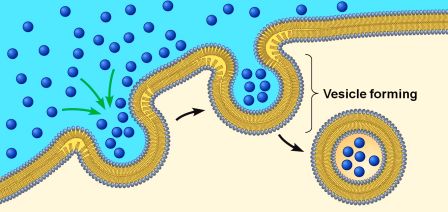
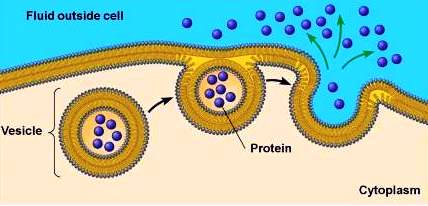
Which process requires cellular energy to move molecules across the cellular membrane from a region of low concentration to a region of higher concentration?
active transport
diffusion
osmosis
hydrolysis

In the picture of the animal cell, what is the function of he organelle the arrow is pointing to? (select all that apply)
maintain homeostasis
allow materials in and out of the cell
only allows materials to enter the cell
only allows materials to exit the cell
Which of the following are examples of passive transport? (Select all that apply)
osmosis
diffusion
endocytosis
exocytosis
Which of the following are examples of active transport? (Select all that apply)
osmosis
diffusion
endocytosis
exocytosis
The process during which a cell takes in a substance by
surrounding it with the cell membrane
endocytosis
exocytosis
diffusion
osmosis
The process during which a cell’s vesicles release their
contents outside the cell
endocytosis
exocytosis
diffusion
osmosis
Cells are so small because they need to be able to get the nutrients in and the waste out quickly.
True
False
What is cellular respiration?
the breakdown of glucose to release ATP
the breakdown of glucose to release carbon

you breathe in oxygen for
photosynthesis
fermentation
mitosis
cellular respiration
Cellular Respiration is a complex process that occurs in two parts of a cell – the ________ and the ________.
cytoplasm
mitochondria
fermentation
osmosis
First Step of Cellular Respiration called ________ – process by which glucose, a sugar, is broken down into smaller molecules
Mitochondria
Glycolysis
Fermentation
Endocytosis
Second Step of Cellular Respiration called ________ _______ _________ – requires oxygen
Mitochondria of Eukaryotic Cells
Glycolysis
Fermentation
Endocytosis
Reaction that eukaryotic and prokaryotic cells can use to obtain energy from food when oxygen levels are low
cytoplasm
mitochondria
fermentation
osmosis
Which process makes less ATP?
cellular respiration
fermentation
photosynthesis
facilitated diffusion
Fermentation occurs in a cell’s cytoplasm, not in mitochondria
True
False
What macromolecule describes glucose?
lipid
protein
nucleic acid
carbohydrate
Some bacteria and fungi help produce cheese, yogurt, and sour cream using _________ ____________.
lactic-acid fermentation
alcoholic fermentation
Occurs when bacteria and yeast make ATP through a process called________ ________.
lactic-acid fermentation
alcoholic fermentation
Occurs when glucose is converted into ATP and a waste product called ________ ________.
lactic-acid fermentation
alcoholic fermentation
Do you want to make a _____ on this test?
A
B
C
D

