wayground logo

Free Printable Worksheets

Font size

S
M
L
XL
Worksheets

Science STAAR review

Total questions: 192

Worksheet time: 9hrs 43mins

Name
Class
Date
1.
The features of two groups of natural resources are listed here. • Fossil fuels are considered nonrenewable resources because of which feature?
a)
where they come from
b)
how they are produced
c)
how long they take to form
d)
how useful they are
2.
What is the process and agent that forms sand dunes?
a)
deposition by water
b)
weathering, erosion by water
c)
deposition by wind
d)
weathering, erosion by glacier
3.
What's the process and agent for the formation of a canyon?
a)
deposition by river water
b)
weathering, erosion by river water
c)
deposition by wind
d)
weathering, erosion by glacier
4.
What's the process and agent involved with the formation of a delta?
a)
deposition by glacier
b)
deposition by wind
c)
deposition by river wter
d)
deposition by ice
5.
Which of these is not an example of deposition?
a)
river dropping sediments to form a delta
b)
wind dropping sand to form sand dunes
c)
receding glacier leaving a hill of sediment called a moraine
d)
ice expanding and breaking a rock into smaller pieces
6.
Which statement is true about the sedimentary rock layers?
a)
The top layer is the oldest.
b)
The area was a desert first then became an ocean
c)
The area was an ocean first then became a forest
d)
The bottom layer is the youngest
7.
Fossils are found in what type of rock?
a)
Metamorphic
b)
Sedimentary
c)
Igneous
d)
Metamorphosis
8.

Which statement correctly describes the transfer of energy in a food chain in this wetland?

a)

Energy is transferred from hawks to shrews to grasshoppers to marsh grasses.

b)

Energy is transferred from marsh grasses to crickets to hawks to frogs.

c)

Energy is transferred from grasshoppers to crickets to frogs to hawks.

d)

Energy is transferred from cattails to crickets to shrews to hawks.

9.

Which of these describes one or more living organisms that depend on another living organism to survive?

a)

Bacteria living in the mouth of a horse

b)

Ivy plants growing up a fence to obtain more sunlight

c)

Mold living on a hard, rocky surface

d)

An angelfish releasing carbon dioxide into pond water

10.

A bright-red male cardinal comes to a school bird feeder every morning. Like other cardinals, this bird makes a sharp chirping sound as it hops around the bird feeder. Which of these is a learned behavior of this bird?

a)

Having red feathers

b)

Eating seeds during the day

c)

Coming to the bird feeder each morning

d)

Making a chirping sound

11.
An atom of a certain element has 36 protons, 36 electrons, and a mass number of 84.  At room temperature this element is a very stable gas.  How many neutrons are in this atom?
a)
48
b)
36
c)
84
d)
120
12.
What types of particles are found in the cloud surrounding the atom's nucleus?
a)
Positively charged particles and negatively charged particles.
b)
Negatively charged particles only
c)
Neutral particles and positively charged particles
d)
Positively charged particles only
13.
A student draws the odel shown.  Which of these best compares the conditions at Location X and Location Y?
a)
It is day at Location X and night at Location Y.
b)
It is winter at Location X and summer at Location Y.
c)
There are more hours of daylight at Location X than at Location Y.
d)
The moon is brighter when viewed from Location X than when viewed from Location Y.
14.
The weather map shows the weather conditions for one day across the United States.  Based on the weather map, which city will most likely experience decreasing temperatures during the next 24 hours?
a)
Denver, because it is raining there.
b)
Minneapolis, because a cold front is approaching
c)
Atlanta, because a warm front is approaching
d)
Houston, because it is in a high pressure area.
15.
The image shows a plate boundary.  Arrows have been added to indicate the movement of the plates.
What plate boundary feature is shown?
a)
A ridge formed by an inactive convergent boundary
b)
A valley forming at an active divergent boundary.
c)
A fault forming at an active transform boundary
d)
A volcano formed by an active transform boundary
16.
Coal contains carbon and other elements.  Carbon dioxide forms when coal burns in the presence of oxygen.  Which of these is the best evidence that a chemical reaction occurs when coal burns?
a)
The shape of the coal changes.
b)
Oxygen is present.
c)
A new substance is produced.
d)
Coal is made up of more than one element.
17.
A bus travels 20 km in 30 minutes.  What is the average speed of the bus?
a)
20 km/hr
b)
30 km/hr
c)
40 km/hr
d)
50 km/hr
18.
When a lion eats a zebra and then uses the energy from the zebra to run, the lion's body converts --
a)
chemical energy to mechanical energy
b)
electrical energy to chemical energy
c)
chemical energy to light energy
d)
mechanical energy to chemical energy
19.
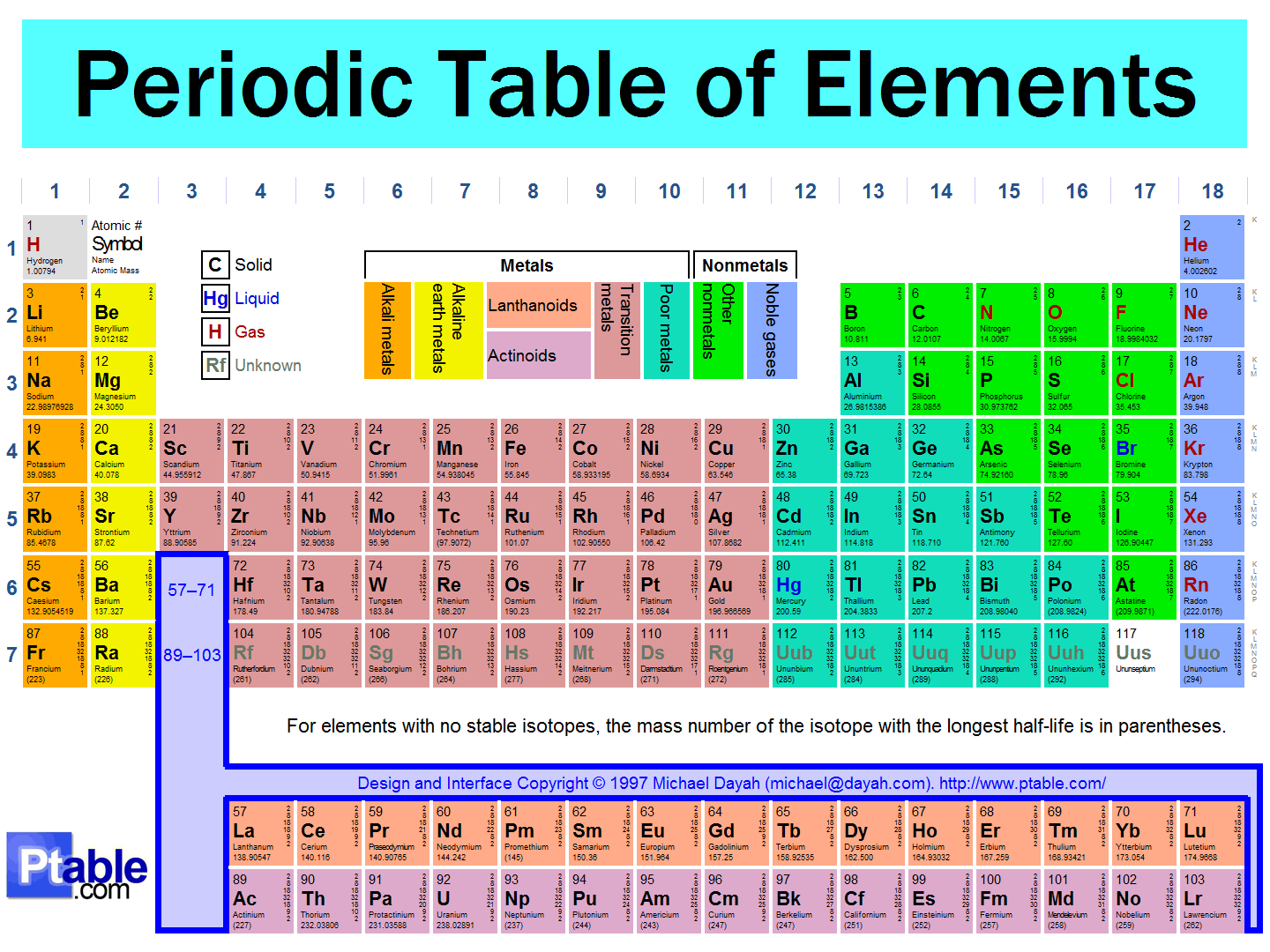
Aluminum, sulfur, and chlorine are all elements found on the periodic table.  Tests involving these three elements would show that at normal room temperature ---
a)
Sulfur is malleable and aluminum conducts electricity
b)
Chlorine is malleable and conducts electricity
c)
Aluminum is malleable and conducts electricity
d)
all three elements are malleable and conduct electricity
20.
When people run long distances, their muscles require increased amounts of oxygen.  Which system is responsible for carrying this oxygen to the muscles?
a)
Nervous
b)
Respiratory
c)
Digestive
d)
Circulatory
21.
Based on its chemical formula, which of the following substances is an organic compound? (HINT: this was on a recent homework SPONCH)
a)
Urea, CH4N2O
b)
Ammonium sulfide, (NH4)2S
c)
Silane, SiH4
d)
Sodium Chloride, NaCl
22.
Certain species of whiptail lizards have only female individuals and no males.  These lizards reproduce asexually.  What is one advantage of asexual reproduction for these lizards?
a)
A new population can be established by a single individual in a relatively short period of time.
b)
All members of a population are genetically very similar and less able to survive environmental changes.
c)
They are smaller than lizards that reproduce sexually.
d)
They are more likely to develop a variety of tail lengths.
23.
Three cousins have a similar appearance but different face shapes.  Which of these cell components are most involved in determining the basic shape of each girl's face?
a)
Genes, chromosomes, and nucleus
b)
Cytoplasm, chloroplasts, and genes
c)
Vacuoles, nucleus, and chromosomes
d)
Chromosomes, chloroplasts and vacuoles
24.
Which of the following best describes the velocity of an object?
a)
30 m/s
b)
30 m east
c)
30 m/s east
d)
30 m/s2
25.
Scientists recently discovered that rocks collected from the Franklin Mountains in West Texas and rocks collected from mountains in eastern Antarctica were exactly the same age.  Further research showed that the rocks where chemically and geologically the same and came from the same magma source.  This discovery provides evidence of --
a)
coastal erosion
b)
plate tectonics
c)
ocean currents
d)
glacial melting
26.
<--------8N  4N-------->
a)
2N
b)
12N
c)
4N
d)
32N
27.
A greater applied force is required to move an object with a greater mass than one with a smaller mass.
a)
True
b)
False
28.
If two forces act on an object in the same direction, the net force is the _____________
a)
the difference between the two forces
b)
the sum of the two forces
c)
Only one of the forces acts on the object
d)
DOOMSDAY!
29.
Total distance divided by total time is
a)
average speed
b)
constant speed
c)
instantaneous speed
d)
acceleration
30.
Pushing  a child on a swing is easier than pushing an adult on the same swing. 
a)
1st Law 
b)
2nd Law
31.
Which of Newton's laws is illustrated when a magician pulls a tablecloth out from under the dishes without disturbing them?
a)
first
b)
second
c)
third 
d)
fourth
32.
Why might an organism have more than one arrow coming from them in a food web?
a)
More than one organism may eat them. 
b)
They may eat more than one other organism. 
c)
This organism gets its energy from multiple sources. 
d)
They have no resources available to them.
33.
An organism that needs to eat other organisms to obtain energy is known as a:
a)
Autotroph
b)
Producer
c)
Consumer
d)
Mutualist
34.
Consumer that eats plants
a)
heterotroph
b)
herbivore
c)
producer
d)
community
35.
What does a biotic do?
a)
do nothing
b)
move, repopulate, and live
c)
stand still
d)
dead things
36.
if an eagle/hawk population goes down what happens?
a)
predators are booming
b)
nuke
c)
Mouse population explodes
d)
nothing
37.
What does a limiting factor do?
a)
makes a population grow large
b)
stops a population from growing large
c)
helps organisms adapt to abiotic factors
d)
provides geographical boundaries for migration
38.
If a disease were to infect frogs and kill them off what would be the likely impact of this system?
a)
Decrease the amount of flies
b)
Increase the amount of frogs
c)
Decrease the amount of algae
d)
Increase the amount of algae
39.
anything that an organism needs to live, ex. food, water, space
a)
carrying capacity
b)
resource
c)
succession
d)
denitrification 
40.
Biodiversity refers to
a)
extinct species
b)
the variety of species on Earth
c)
nonrenewable resources
d)
the rate of species decline
41.
A dichotomous key for insects is given. To what order does an insect with two pairs of scaly wings belong?
a)
Coleoptera
b)
Heteroptera
c)
Diptera
d)
Lepidoptera
42.
Using this dichotomous key, identity the name of the circled fish.
a)
band-tail puffer
b)
spotted goat fish
c)
peacock flounder
d)
trumpet fish
43.
The _______________________ consists of blood, blood vessels, and the heart. 
a)
respiratory system 
b)
circulatory system 
c)
urinary system 
44.
a body system that controls growth and homeostasis by secreting hormones from glands.
a)
skeletal system
b)
nervous system
c)
endocrine sytem
d)
integumentary system
45.
Where is DNA stored in a cell? 
a)
Lysosomes
b)
Golgi Complex
c)
Ribosomes
d)
Nucleus
46.
Cells that do not have a true nucleus are called....
a)
eukaryote
b)
prokaryote
c)
unicellular
d)
multicellular
47.
a)
4N 
b)
6N 
c)
10 N 
d)
14 N 
48.
a)
40,000 N
b)
100 N
c)
100 m/s^2
d)
10,000 kg
49.
a)
The cart was stationary with a velocity of 0 m/s for the entire 7 seconds. 
b)
The cart was stationary except for a short burst of acceleration of 0.5 m/s^2 . 
c)
The cart moved at a constant velocity of 0.5 m/s for the entire 7 seconds.
d)
The cart accelerated at a constant rate of approximately 0.8 m/s^2 . 
50.
a)
The book, the ball, and the car 
b)
The ball, the car, and the bird 
c)
The can, the swing, and the bird 
d)
The book, the ball, the can, and the swing 
51.
a)
Procedures 1, 2, and 3 
b)
Procedures 4 and 5 
c)
Procedures 3 and 4 
d)
Procedures 1, 3, and 5 
52.
a)
As the fuel burns, gases push against the rocket, moving it upward. 
b)
As the fuel burns, gases move out of the rocket and reduce air resistance. 
c)
As the fuel burns, the mass of the rocket decreases. 
d)
As the fuel burns, the rocket moves faster. 
53.
a)
Activity 3 required more work than Activity 1, but Activity 3 did not require more work than Activity 2. 
b)
Activity 1 required the same amount of work as Activity 3. 
c)
Activity 2 required the most work. 
d)
Activity 1 was the only activity that required work. 
54.
a)
Airplane W has a greater kinetic energy than Airplane X. 
b)
The two airplanes have the same gravitational potential energy but different kinetic energies. 
c)
Airplane X has more gravitational potential energy than Airplane W. 
d)
The two airplanes have the same kinetic energy but different gravitational potential energies.
55.
a)
0.2 m/s 
b)
0.5 m/s
c)
5.0 m/s 
d)
10.0 m/s 
56.
a)
The toy train speeds up while going forward and then slows down. 
b)
The toy train slows down while going forward and then moves backward. 
c)
The toy train moves forward at a constant speed, slows down, and then stops. 
d)
The toy train moves forward at an increasing speed, stops, and then moves forward. 
57.
A teacher rubbed a match against a piece of sandpaper. The match started to burn. Which statement best describes the energy changes that occurred? 
a)
The chemical energy stored in the match changed to thermal energy and light energy. 
b)
The thermal energy stored in the match changed to light energy and chemical energy. 
c)
The light energy and thermal energy stored in the match changed to mechanical energy. 
d)
The light energy and thermal energy stored in the match changed to chemical energy. 
58.
a)
The Pacific and Nazca plates are both moving to the east. 
b)
The Pacific and Nazca plates are both moving to the west. 
c)
The Pacific plate is moving to the west, and the Nazca plate is moving to the east. 
d)
The Pacific plate is moving to the east, and the Nazca plate is moving to the west. 
59.
a)
2,050 m 
b)
450 m 
c)
910 m 
d)
3,650 m 
60.
a)
The activities prevent most of the water from evaporating into the atmosphere. 
b)
Pollutants from the activities percolate through the soil and enter the water table. 
c)
The activities replace the groundwater used. 
d)
All of the above 
61.
a)
The mallard, because it hunts for fish while wading near the edge of the pond 
b)
The pied-billed grebe, because it dives in open water to get crayfish on the bottom of the pond 
c)
The great egret, because it hunts in water near the edge of the pond for fish and other prey
d)
None of these 
62.
a)
Increased gill surface area has allowed the cichlids to change their diet and avoid competing with the Nile perch. 
b)
Increased gill surface area has allowed the cichlids to be camouflaged and avoid being eaten by the Nile perch. 
c)
Increased gill surface area has allowed the cichlids to leave Lake Victoria and establish populations in nearby bodies of water. 
d)
Increased gill surface area has allowed the cichlids to better absorb the limited oxygen in the water. 
63.
a)
The functions of living things occur in cells. 
b)
Cells exist only in multicellular organisms. 
c)
Living things are composed of cells. 
d)
Cells contain hereditary information. 
64.
a)
Position 1, because North America receives the most direct sun 
b)
Position 2, because North America is tilted toward the sun 
c)
 Position 3, because North America is parallel to the sun
d)
Position 4, because North America is tilted away from the sun 
65.
a)
February 5, March 7, April 5, May 4 
b)
February 15, March 17, April 15, May 14 
c)
February 25, March 27, April 25, May 24 
d)
February 29, March 31, April 29, May 28 
66.
a)
a main-sequence star in spectral class B 
b)
a supergiant in spectral class K
c)
a main-sequence star in spectral class K or M 
d)
a white dwarf in spectral class B 
67.
a)
About 46 light-years
b)
390 light-years
c)
Approximately 2800 light-years
d)
7.18 light-years
68.
Which season is taking place in the NORTHERN Hemisphere in Position 3?
a)
Winter
b)
Spring
c)
Summer
d)
Fall
69.
As the Earth rotates, the part of the Earth facing the sun has ________.
a)
an axis
b)
darkness (night)
c)
daylight
d)
winter
70.
What phase comes AFTER this one?
a)
Waning Crescent
b)
Waning Gibbous
c)
Waxing Crescent
d)
Third Quarter
71.
A collection of stars, dust, and gas bound together by gravity is...
a)
Universe
b)
Solar System
c)
Planet
d)
Galaxy
72.
In the diagram given, what happens as we move to the left?
a)
Stars Get Larger
b)
Stars get Colder
c)
Stars get hotter
73.
In the diagram given, what happens as we move to the left?
a)
Stars Get Larger
b)
Stars get Colder
c)
Stars get hotter
74.
Scientist use Light years to measure objects in space rather than units such as Miles or Kilometers because of how massive the Galaxy and Universe is.
a)
True
b)
False
75.
The illustration provided shows four locations in or near the Milky Way Galaxy. Which of the labeled locations shows the approximate position of the Sun?
a)
W
b)
X
c)
Y
d)
Z
76.
Hot clouds of gaseous elements and compounds that act as nurseries for stars
a)
Galaxies
b)
Star
c)
Nebulae
d)
Black holes
77.
Compared to the rest of the stars, our sun is considered...
a)
Extremely Large and Cold
b)
Small with a medium temperature
c)
Medium size with medium temperature
78.
electromagnetic waves with the longest wavelengths are
a)
gamma rays
b)
x-rays
c)
infrared waves
d)
radio waves
79.
The Himalayas in Asia are an example of what type of plate boundary?
a)
divergent
b)
continent-to-continent convergent
c)
ocean-to-continent convergent
d)
transform
80.
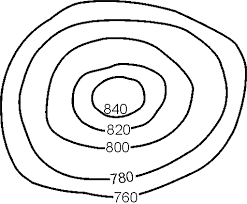
Determine the contour interval:
a)
5 m
b)
10 m
c)
15 m
d)
20 m
81.
What do close contour lines represent on a map?
a)
waterfall
b)
steep area
c)
gradual area
d)
river
82.
Low pressure will usually bring what kind of weather?
a)
Sunny
b)
Calm
c)
Stormy
83.
Which type of front often produces thunderstorms?
a)
cold
b)
stationary
c)
 warm
d)
occluded
84.
A _____________ tide occurs when the moon, sun, and Earth are aligned.  This is a period of the highest high tides and lowest low tides.
a)
neap
b)
spring
c)
slack water
d)
ebb
85.
Oceans have a big impact on climate because they move _________ around the world
a)
trash
b)
heat
c)
water
d)
salt
86.
What is the formula for density?
a)
density = mass x volume
b)
density = mass / volume
c)
density = mass + volume
d)
density = mass - volume
87.
In general what is the most dense form of matter?
a)
Solid
b)
Liquid
c)
Gas
d)
Plasma
88.
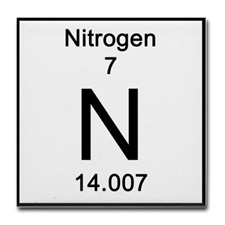
What is the number of protons that the element in this image contain?
a)
14
b)
7
c)
15
d)
18
89.
The positive particles of an atom are called:
a)
electrons 
b)
positrons 
c)
neutrons 
d)
protons 
90.
Which answer best fits a description of why Alfred Wegener is famous?
a)
German meteorologist that proposed the idea of continental drift
b)
proposed sea floor spreading
c)
Canadian geophysicist who combined sea floor spreading and continental drift into Plate Techtonics Theory
d)
theory that new seafloor is formed when magma is forced upward toward the surface at a mid ocean ridge
91.
Subduction is:
a)
process by which ocean crust is taken into the trenches and back to the mantle
b)
theory that new seafloor is formed when magma is forced upward toward the surface at a mid ocean ridge
c)
plates slide past each other in opposite directions
d)
a gradual movement of the continents across the Earth's surface over time
92.
Tectonic plates are:
a)
largest section of Earth's layers - composed of three layers
b)
Earth's crust and part of the upper  mantle that are broken into sections
c)
lowest or deepest layer of the mantle - semi rigid
d)
landmass in which all continents were once joined together
93.
Which description best describes the crust?
a)
smallest section of Earth's layers
b)
the plastic like or tar like layer below the lithosphere - middle layers of the mantle
c)
largest section of Earth's layers - composed of three layers
d)
lowest or deepest layer of the mantle - semi rigid
94.
Mantle is:
a)
molten and is composed of iron and nickle
b)
largest section of Earth's layers - composed of three layers
c)
smallest section of Earth's layers
d)
solid, dense and is composed of iron and nickle
95.
What makes it possible for you to see the surface of the moon from Earth?
a)
 The moon gives off its own light.
b)
Light from Earth is reflected by the moon's surface.
c)
Light from Sun is reflected by the moon's surface.
d)
The moon absorbs sunlight during the day and glows at night.
96.
A _______ is a reflecting surface that curves outward like the back of a spoon.
a)
convex mirror
b)
concave
c)
cracked mirror
d)
concave lens
97.
What is the atomic number of an atom with 13 protons, 14 neutrons, and 10 electrons? 
a)
1
b)
13
c)
27
d)
37
98.
A eukaryote that makes its own food would be classified as a member of which kingdom?
a)
Fungi 
b)
Animalia
c)
Bacteria
d)
Plantae
99.
The main function of the nervous system is to: 
a)
Support and protect delicate organs such as the brain, lungs, and heart
b)
Supply oxygen from the lungs to the blood
c)
Pump oxygen and nutrients through the blood to every part of the body
d)
Coordinate all actions and reactions of the body
100.
The function of the respiratory system is to: 
a)
Convert food into simpler substances for the body to absorb as nutrients
b)
Supply the blood with oxygen and remove carbon dioxide in the lungs
c)
Send signals in the form of hormones to the body to control growth, reproduction, and metabolism
d)
Circulate blood through the body to supply cells with oxygen and nutrients
101.
Which is the function of the endocrine system
a)
to produce offspring
b)
to separate and eliminate wastes
c)
to protect the body from disease
d)
to produce hormones that regulate the body
102.
Which cell structure would carry out the function of photosynthesis?
a)
Mitochondria
b)
Chloroplast
c)
Nucleus
d)
Vacuole
103.
What percent of the energy from the producer level is available to the herbivores?
a)
100%
b)
90%
c)
10%
d)
1%
104.
All of the following are examples of a producer/consumer relationship except --
a)
water lily and turtle
b)
algae and snail
c)
frog and heron
d)
cattails and insects
105.
Which of the following represents the correct flow of energy in a food chain found within the food web?
a)
Water lily - insect - frog - turtle
b)
Algae - insect - frog - fish - heron
c)
Heron - frog - insect - algae
d)
Cattail - insect - fish - turtle - heron
106.
Bacteria live in our intestines, use indigestible foods, and produce vitamin K for our bodies. This type of relationship is called --
a)
predator-prey
b)
mutualism
c)
commensalism
d)
parasitism
107.
In the symbiotic relationship between the pig and the hookworm, the pig is called the --
a)
producer
b)
prey
c)
host
d)
mutualist
108.
The relationship of a hookworm attaching itself to the intestines of a pig and absorbing nutrients from the pig is called --
a)
commensalism
b)
parasitism
c)
mutualism
d)
competition
109.
Which of the following organisms is both a predator and a prey?
a)
Heron
b)
Fish
c)
Snail
d)
Insect
110.
There are 3 species of birds on an island. Bird A has a heavy bill for eating big seeds and. Bird B has a sharply pointed bill for eating insects. Bird C has a sharp bill for eating insects and small seeds. If the insect population suddenly disappeared one season, which bird or birds would probably be least affected that season?
a)
Bird A
b)
Bird B
c)
Bird C
d)
Bird A and Bird B
111.
Which of the following is part of the theory of natural selection?
a)
Individuals that acquire characteristics will pass those characteristics on to their offspring
b)
Most offspring of a species will survive to reproduce
c)
Individuals within the same population have identical traits
d)
Individuals that have favorable traits are more likely to survive and reproduce
112.
What is the name for a period of reduced activity that some animals experience during the winter months?
a)
hibernation
b)
estivation
c)
seasonal behavior
d)
learned behavior
113.
The overall charge of the nucleus is...
a)
Positive
b)
sometimes positive and sometimes negative
c)
neutral 
d)
negative
114.
Which property of an unknown element determines the other elements it will react with?
a)
The total number of neutrons 
b)
The total number of particles
c)
The number of protons in the nucleus
d)
The number of valence electrons
115.
What do groups determine on the periodic table?
a)
Number of protons
b)
Number of valence electrons
c)
Number of neutrons
d)
Number of energy levels
116.
Sodium, aluminum, and chlorine are alike in that they all three _____
a)
are compounds
b)
are nonmetals
c)
have one valence electron
d)
have three energy levels
117.
Which of the following pieces of lab equipment is needed to measure the amount heat energy released during a chemical change? 
a)
A
b)
B
c)
C
d)
D
118.
A heterotroph is also known as a what?
a)
producer
b)
consumer
119.
Rocks, water, dirt, sunlight, & temperature are all examples of what type of organism?
a)
biotic
b)
abiotic
120.
Name this rock.
a)
sandstone
b)
coal
c)
shale
d)
flint
121.
What characteristic to sedimentary rocks often have?
a)
weather patterns
b)
tiny crystals
c)
striped layers
d)
glassy surfaces
122.
Which type of alternative energy source is shown in this picture?
a)
Wind
b)
Solar
c)
Hydroelectric
d)
Geothermal
123.
The poster shown below advertises tours of a power plant.
This power plant produces electricity most likely by using-
a)
fossil fuels
b)
biofuels
c)
solar energy
d)
geothermal energy
124.

Which of the following best describes a relationship in this grassland?

a)

Badgers are top predators because they eat upland sandpipers and beetles.

b)

A producer–consumer relationship exists between lupines and ants.

c)

A predator–prey relationship exists between beetles and ground squirrels.

d)

Upland sandpipers are primary and secondary consumers because they eat grasses and grasshoppers.

125.

Which statement about stars is correct?

a)

Star formation begins in a nebula.

b)

White dwarfs become main-sequence stars when they gain mass.

c)

Supergiants are stars that can absorb black holes.

d)

Main-sequence stars are formed by comets.

126.

What is the primary function of this body system?

a)

The protection of vital organs from injury

b)

The chemical breakdown of food into smaller pieces

c)

The transport of nutrients, water, and oxygen to body cells

d)

The production of hormones that regulate growth and metabolism

127.

Which statement describes the geologic process that is most likely responsible for the formation of these mountains?

a)

They are along a transform plate boundary that is no longer active, so erosion is creating deep valleys.

b)

They are along a transform plate boundary in which plates are currently moving side by side, causing earthquakes and faults.

c)

They are along a plate boundary in which plates are currently converging, causing uplift and steep slopes.

d)

They are along a plate boundary in which plates diverged in the distant past, allowing new rock to build up.

128.

An action–reaction pair of forces exists between —

a)

the aerialist’s feet and the rope

b)

the rope and the balancing bar

c)

the two ends of the rope

d)

the aerialist’s arms and legs

129.

Which inference is best supported by these data?

a)

Pine trees in a dense forest can grow taller than pine trees in an open meadow.

b)

Pine trees in a dense forest compete for sunlight with the surrounding trees.

c)

Pine trees in a dense forest are part of a less-complex food web than pine trees in an open meadow.

d)

Pine trees in a dense forest have more living branches than pine trees in an open meadow.

130.

At which location does the marble have maximum kinetic energy?

a)

Location W

b)

Location X

c)

Location Y

d)

Location Z

131.

How are the convection currents in the student’s model different from the convection currents in Earth’s atmosphere and oceans?

a)

The warm air in Earth’s atmosphere and the warm water in Earth’s oceans sink instead of rise.

b)

The heat source for Earth’s atmosphere and oceans is the sun, which heats from above instead of below.

c)

Convection cells in Earth’s atmosphere and oceans flow in the same direction instead of opposite directions.

d)

Cold air in Earth’s atmosphere and cold water in Earth’s oceans are less dense than warm air and warm water instead of being more dense.

132.

Based on the life-cycle information, which statement best describes the relationship between the nest fly larvae and the young birds?

a)

The larvae are prey for the young birds.

b)

The larvae are predators of the young birds.

c)

The young birds are hosts for the larvae.

d)

The young birds are consumers of the larvae.

133.

A mid-ocean ridge is located at the boundary of two tectonic plates. Which diagram correctly models the relative plate motion on each side of a mid-ocean ridge?

a)

A

b)

B

c)

C

d)

D

134.

Four boxes are sliding with constant speed before each box experiences an unbalanced force of 8 N. Which box would experience the greatest acceleration when the unbalanced force is applied?

a)

The box with a mass of 2 kg

b)

The box with a mass of 4 kg

c)

The box with a mass of 6 kg

d)

The box with a mass of 8 kg

135.
a)

Cold temperatures in the North favored the survival of populations of larger sparrows over populations of smaller sparrows.

b)

High elevations in the West provided a survival advantage for populations of larger sparrows over populations of smaller sparrows.

c)

Warm temperatures in the South allowed populations of larger sparrows to survive over populations of smaller sparrows.

d)

Coastal environments in the East tended to give a survival advantage to populations of larger sparrows over populations of smaller sparrows.

136.
a)

Cold temperatures in the North favored the survival of populations of larger sparrows over populations of smaller sparrows.

b)

High elevations in the West provided a survival advantage for populations of larger sparrows over populations of smaller sparrows.

c)

Warm temperatures in the South allowed populations of larger sparrows to survive over populations of smaller sparrows.

d)

Coastal environments in the East tended to give a survival advantage to populations of larger sparrows over populations of smaller sparrows.

137.

Which picture shows how the moon appears from Earth when it is in the position shown in this model?

a)

Waxing Gibbous

b)

Waning Crescent

c)

Waning Gibbous

d)

Waxing Crescent

138.
a)

A

b)

B

c)

C

d)

D

139.

Which area of the diagram represents the white dwarfs?

a)

Area M

b)

Area X

c)

Area P

d)

Area Z

140.

Which sentence best describes how energy flows through this pyramid?

a)

Energy is transferred down each level of the energy pyramid.

b)

The energy lost at each level is consumed by organisms in the top level.

c)

Energy is transferred from organisms in one level to those in the level above.

d)

The organisms at the bottom level provide energy directly to organisms in all the other levels.

141.
a)

F

b)

G

c)

H

d)

J

142.

What keeps planets in the solar system from moving in straight lines through the galaxy?

a)

Light energy

b)

Gravity

c)

Inertia

d)

Potential energy

143.
an atom with atomic number 6 would have how many protons 
a)
6
b)
12
c)
3
d)
cannot be determined 
144.

What is the mass number of the atom shown in the Bohr model?

a)

11

b)

12

c)

23

d)

Can't be determined

145.

The vertical (up and down) columns in the Periodic Table are called

a)

groups

b)

towers

c)

periods

d)

atomic numbers

146.

The horizontal (side to side) rows in the Periodic Table are called

a)

groups

b)

families

c)

periods

d)

atomic numbers

147.

what group number are the noble gases

a)

17

b)

18

c)

14

d)

15

148.
How many Oxygen (O) atoms are in 2C2HO8Cl2
a)
2
b)
16
c)
8
d)
5
149.
What is the net force?
a)
5000 N right
b)
4000 N right
c)
40 N left
d)
4000 N left
150.
What law is best described by inertia?
a)
1st
b)
2nd
c)
3rd
d)
law of conservation of mass
152.
What is Newton's Third Law?
a)
Object in motion stays in motion and an object at rest stays at rest unless acted on by a outside force
b)
Force = mass x acceleration
c)
For every action there is an equal and opposite reaction
152.
What is Newton's Third Law?
a)
Object in motion stays in motion and an object at rest stays at rest unless acted on by a outside force
b)
Force = mass x acceleration
c)
For every action there is an equal and opposite reaction
153.
When something has speed in a certain direction it is called ___________.
a)
motion
b)
position
c)
velocity
d)
speed
154.
At position A, which hemisphere would have summer?
a)
Northern hemisphere
b)
Southern hemisphere
c)
Neither hemisphere
155.
What does the tilt of the earth cause?
a)
heating
b)
Seasons
c)
Atmosphere
d)
Years
156.
What type of moon is this?
a)
Waning gibbous
b)
Waxing gibbous
c)
Waxing crescent
d)
Waning crescent
157.
What kind of galaxy is this?
a)
Ring
b)
Irregular
c)
Spiral
d)
Elliptical 
158.
In the diagram given, what happens as we move to the left?
a)
Stars Get Larger
b)
Stars get Colder
c)
Stars get hotter
159.
Which category is our Sun located in?
a)
White Dwarfs
b)
Supergiants
c)
Main Sequence
d)
Giants
160.
Blue stars are the _____________.
a)
hottest
b)
coolest
c)
smallest
161.
What is the elevation of point B?
a)
800 ft
b)
850 ft
c)
900 ft
d)
1000 ft
162.
Determine the contour interval:
a)
5 m
b)
10 m
c)
15 m
d)
20 m
163.
What type of boundary occurs when two plates slide past each other?
a)
divergent
b)
transform
c)
lateral
d)
convergent
164.
A rift valley occurs at a ____________ boundary.
a)
divergent
b)
convergent
c)
transform
d)
horizontal
165.
What do contour lines that are farther apart represent?
a)
waterfall
b)
steep area
c)
gentle slope
d)
river
166.

An organism that can make its own food

a)

decomposer

b)

producer

c)

consumer

167.

NON-living things found in an ecosystem

a)

biotic

b)

abiotc

c)

habitat

168.

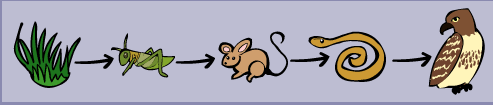
Explain the flow of energy in this food chain (who passes energy to who).

a)

The hawk gives energy to the snake. The snake gives energy to the mouse. The mouse gives energy to the grasshopper who gives energy to the grass.

b)

The mouse gives energy to the hawk. The snake gives energy to the grasshopper. The grass gives energy to the snake.

c)

The grass gives energy to the grasshopper. The grasshopper gives energy to the mouse. The mouse gives energy to the snake who gives energy to the hawk.

169.
What type of air pressure is present?
a)
High 
b)
Low
170.
What type of air pressure is present?
a)
High 
b)
Low
171.
a)

cold

b)

stationary

c)

warm

d)

occluded

172.
a)

cold

b)

stationary

c)

occluded

d)

warm

173.
What are the final two stages of a medium mass star?
a)
white dwarf - black dwarf
b)
neutron star - black hole
c)
supernova - neutron star
d)
pulsar - neutron star
174.
Our sun is currently in what star stage?
a)
Protostar
b)
Nebula
c)
Main Sequence
d)
Red Giant
175.

Water flows through turbines in dams like the one shown in the picture. The flowing water makes the turbines spin. What type of energy is used to make the turbines spin in this type of dam? (5.6A)

a)

Light energy

b)

Thermal energy

c)

Sound energy

d)

Mechanical energy

176.

Three different objects that use the same source of energy are shown here. What is the energy source for these objects? (5.6A)

a)

Light energy

b)

Mechanical energy

c)

Sound energy

d)

Electrical energy

177.

A class is learning about states of matter. The teacher shows the students how to set up the investigation shown in the diagram. What kinds of energy are needed in this investigation to change the state of matter of the candle?(5.6A)

a)

Light, mechanical, and thermal

b)

Electrical and thermal

c)

Mechanical, light, and electrical

d)

Thermal and mechanical

178.

Rube Goldberg was an artist who drew cartoons that showed a very complicated way to do a simple task. The picture shows a cartoon like the ones Goldberg drew. Which form of energy is used to turn on the switch? (5.6A)

a)

Light energy

b)

Thermal energy

c)

Electrical energy

d)

Mechanical energy

179.

Many types of fans are used in homes. One type of electric fan is shown below. In addition to mechanical energy, which of these is produced as electric current passes through the circuit of this fan? (5.6A)

a)

Heat

b)

Mass

c)

Light

d)

Water vapor

180.

Which object requires only mechanical energy to perform its main function? (5.6A)

a)
b)
c)
d)
181.

Which object requires only mechanical energy to perform its main function? (5.6A)

a)
b)
c)
d)
182.
______________________ is any push or pull on an object.
a)
Force
b)
Mass
c)
Gravity
d)
Air Resistance
183.
If I kick a soccer ball across the field, what vocabulary word tells me why the ball would slow down in the grass?
a)
acceleration
b)
friction
c)
gravity
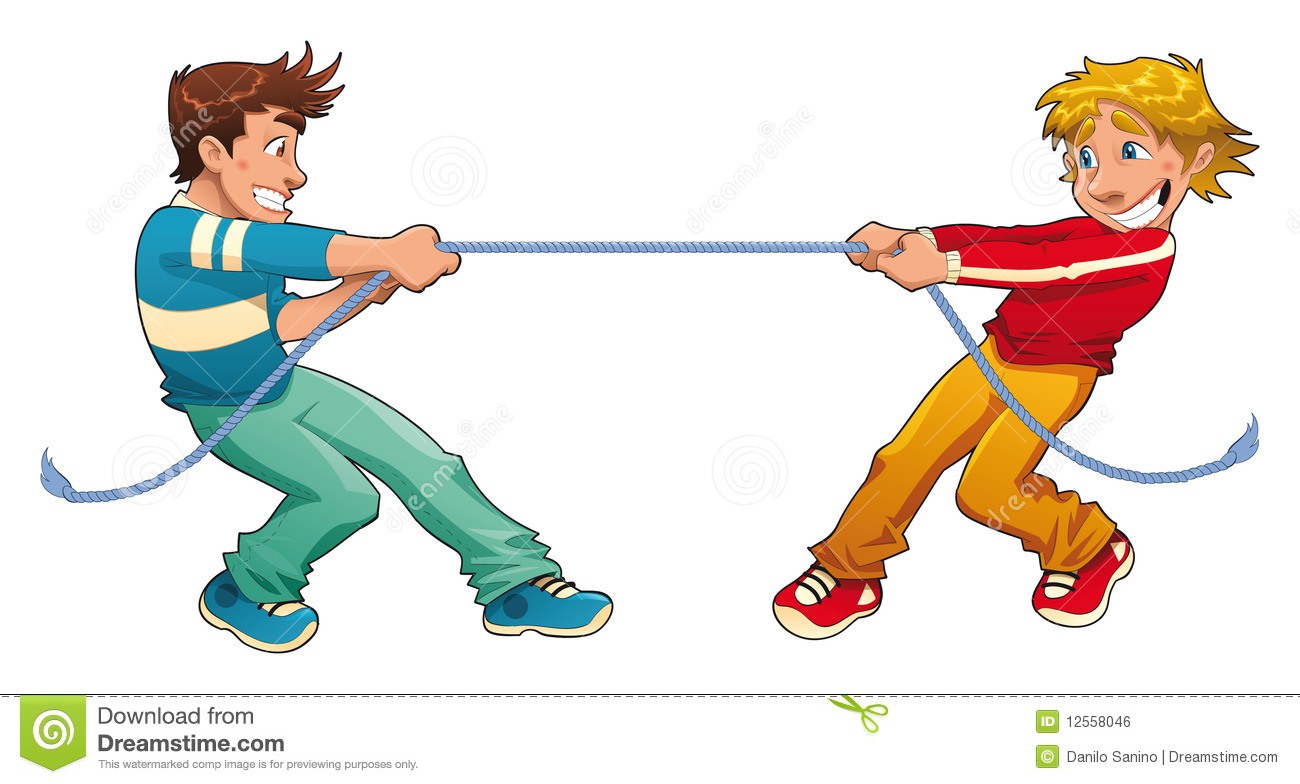
184.
If these boys are pulling with the same amount of force.  What will happen?
a)
The boy in blue will win.
b)
They will not move at all.
c)
The boy in red will win.
d)
Both will fall down.
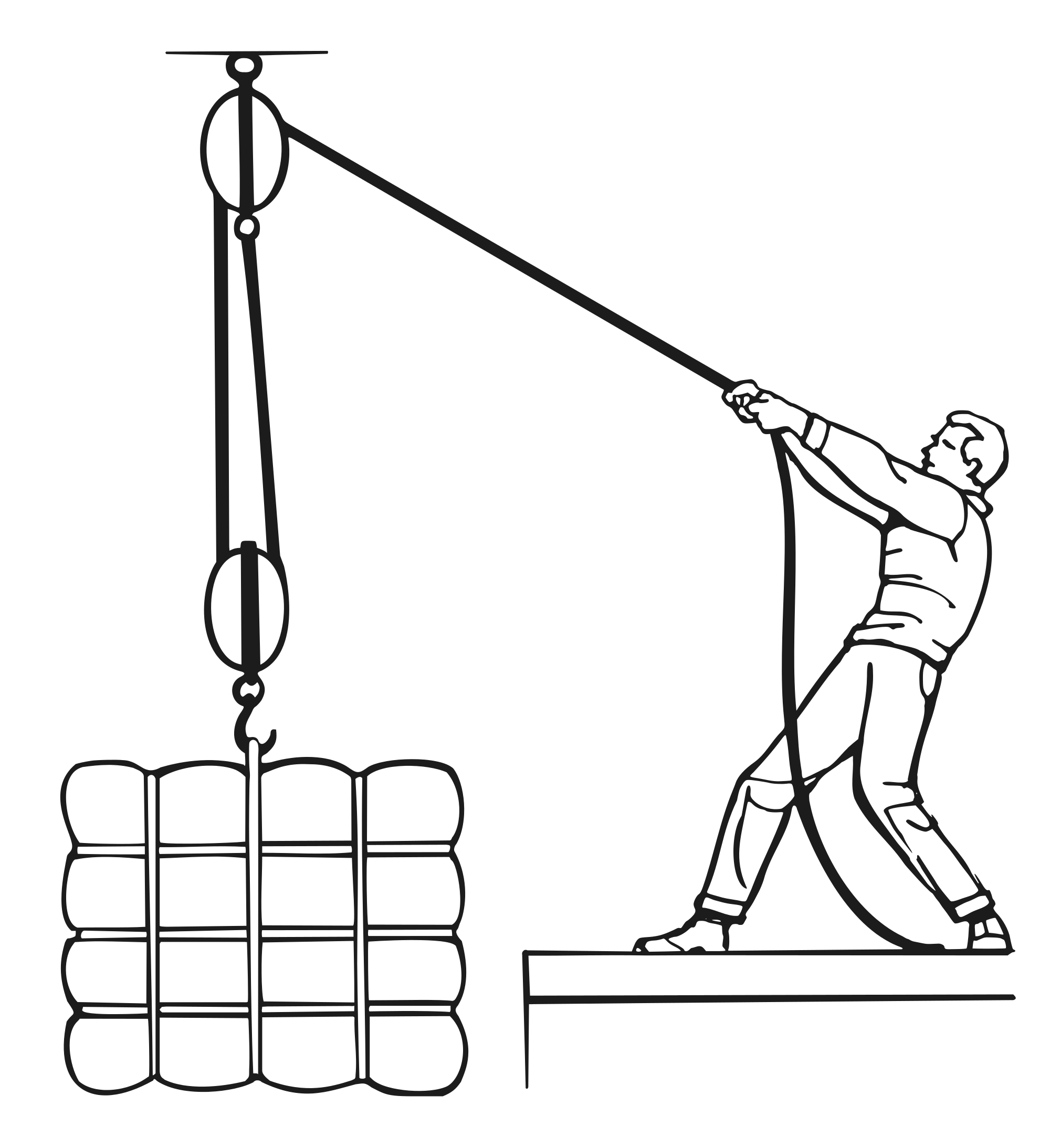
185.
If you pull the cord, what direction will the box move?
a)
Up
b)
Down
c)
Left
d)
Right
186.

Which table best shows some functions of the circulatory, respiratory, digestive and endocrine systems?

a)
b)
c)
d)
187.

The diagram shows parts of a cell. Which organelle stores the information that determines an individual's blood type?

a)

Organelle 1

b)

Organelle 2

c)

Organelle 3

d)

Organelle 4

188.

The diagram shows a hot air balloon rising. Propane gas tanks are seen at the bottom of the balloon. What energy transformations occur when propane gas is used to life the balloon?

a)

Mechanical to light to chemical

b)

Chemical to mechanical to thermal

c)

Thermal to chemical to light

d)

Chemical to thermal to mechanical

189.

A hobbyist collected data about the motion of a toy train on a straight track and then recorded the data in the graph. Which of these accurately describes the motion of the toy train?

a)

The toy train speeds up while going forward and then slows down.

b)

The toy train slows down while going forward and then moves backward.

c)

The toy train moves forward at a constant speed, slows down, and then stops.

d)

The toy train moves forward at an increasing speed, stops, and then moves forward.

190.

A student's model of an area near a city depicts many activities that affect the quality of the water in the area. How does the agricultural activity most likely affect the surface water of the area?

a)

Excess crop fertilizer is carried by runoff into the river, causing excess growth of water plants.

b)

Excess crop material accumulates on the riverbanks, slowing the movement of the river water.

c)

Crops reduce erosion, increasing the amount of soil entering the river.

d)

Crops absorb pure water from soil, causing the remaining water to contain more salt.

191.

The flow of energy in some Australian food chains is modeled in the energy pyramid shown. Based on the model, which consumers would receive the greatest amount of energy captured by the producers in their food chains?

a)

Wedge-tailed eagles

b)

Chuditch

c)

Ring-tailed opossums

d)

Eucalyptus trees

192.

Both primary and secondary succession begin with pioneer species that -----

a)

change the area and make it safer from predatory organisms

b)

invade the area so that new organisms cannot be established

c)

modify the area and allow larger and more complex organisms to appear

d)

use up all the existing resources and prevent establishment of non-native organisms