
 Worksheets
1st Semester SUPER Review
Total questions: 136
Worksheet time: 2hrs 44mins

What type of force is this man using to push his grocery cart?
Normal Force
Gravity
Air Resistance
Applied Force
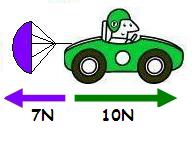
What is the net force?
3 N
3 N, right
17 N, right
3 N, left


Distance something travels in a certain amount of time
Speed
Velocity
Acceleration
Mass
Which is kinetic energy?
energy that is increasing
energy that is decreasing
the energy of a moving object
energy that is stored in the position of an object
Another name for stored energy is...
kinetic energy
energy of movement
potential energy
inelastic energy
True or False: The law of conservation of energy states that energy cannot be created or destroyed.
True
False
Which of these is evidence that an unbalanced force is acting on an object?
The mass of the object is changing
The object continues moving in a straight line
The object remains at rest
The motion of the object is changing
Newton's third law states.......
For each action there is a larger reaction associated with it.
None of these choices
For each action there is an equal and opposite reaction.
For each action there is a smaller reaction associated with it.
Stacy is rowing a boat. She wants the boat to move forward. According to Newton's Third Law, in which direction should she move her paddle in the water?
Backwards
Above her head
Forward
East
The sum of all forces acting on an object.
Added forces
Net force
forcey force
Equation force

Which of the following is NOT an example of potential energy ?
A stretched rubber band
Releasing the arrow from a bow
A yoyo held in your hand
Boulder on top of a mountain
Which has more Kinetic Energy: A person running 5 m/s or a car driving 5 m/s?
The Car
The Person
Same
Neither

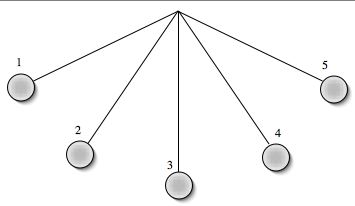
Which position in the picture does Myra have the most Potential energy?
1
2
3
4
Elastic Energy is a form of what type of energy?
Kinetic Energy
Thermal Energy
Solar Energy
Potential Energy
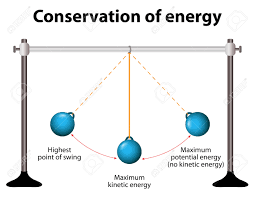

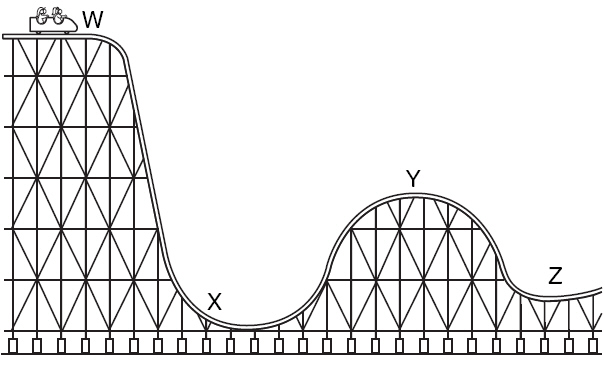


What type of energy transformation occurs, when a hawk eats a mouse and then uses the energy from the mouse to fly?
mechanical energy to chemical energy
thermal energy to mechanical energy
chemical energy to mechanical energy
mechanical energy to thermal energy
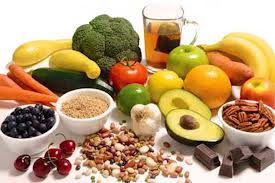
What kind of energy is represented in the picture?
Thermal
Chemical
Sound
Kinetic

What energy transformation occurs when a crock pot is plugged into an outlet and then the control knob is turned "on"?
thermal to electrical
mechanical to thermal
electrical to thermal
electrical to sound

What type of energy is stored in batteries or food?
Potential energy
Thermal energy
Chemical energy
Mechanical energy

Identify the correct sequence of energy transformations using a television.
Electric --> radiant + sound + thermal
Electric --> solar + sound + elastic
Electric --> mechanical + radiant + thermal
Electric --> chemical + thermal + nuclear

Identify the correct sequence of energy transformations in the campfire.
Chemical --> thermal + radiant
Chemical --> solar + radiant
Nuclear --> sound + thermal
Chemical --> electric + sound
Plants turn_______ energy into _______ energy for food.
thermal, mechanical
radiant, chemical
electromagnetic, light
potential, kinetic

A student wants to use the diagram below to explain what happens when the light bulb turns on. How could she best explain what is happening?
Light energy is transformed to electric energy.
Electric energy is transformed to light energy.
Electric energy is transformed to motion energy.
Motion energy is transformed to electric energy.

What kind of wave is pictured?
compressional wave
transverse wave
sound wave
mechanical wave


In what state of matter is kinetic energy the highest most likely?
Solid
Liquid
Gas
Which model is demonstrating what molecules in a solid look like.


Which model is demonstrating what molecules in a liquid look like.
Which model is demonstrating what molecules in a gas look like.
If thermal energy is increasing, what is happening to the kinetic energy.
Kinetic energy would be decreasing
Kinetic energy would stay the same
Kinetic energy would be increasing
Movement of energy from one object to another.
Heat
Energy Transfer
Themal Energy
Temperature
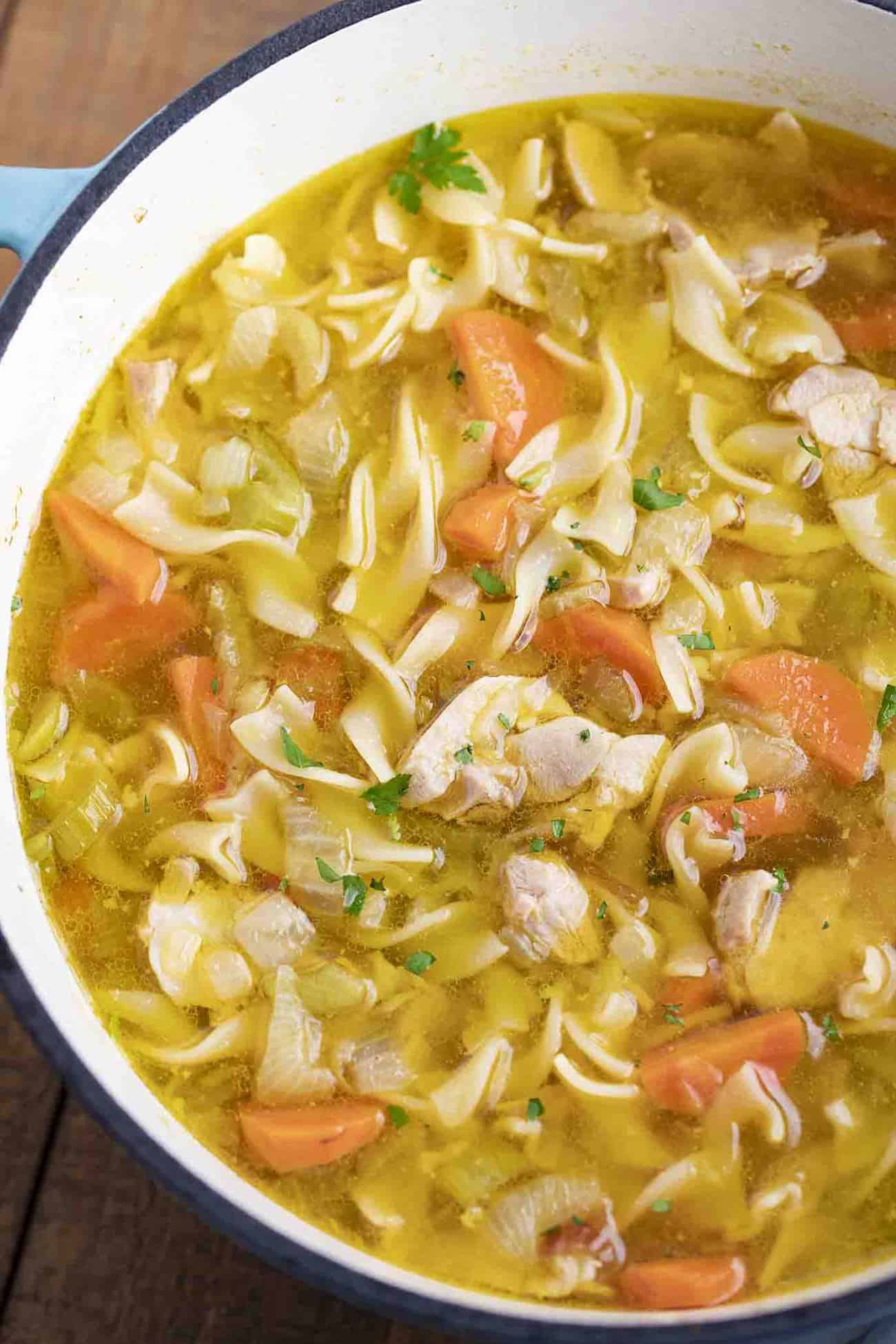
Chicken noodle soup is
Homogeneous mixture
Heterogeneous mixture
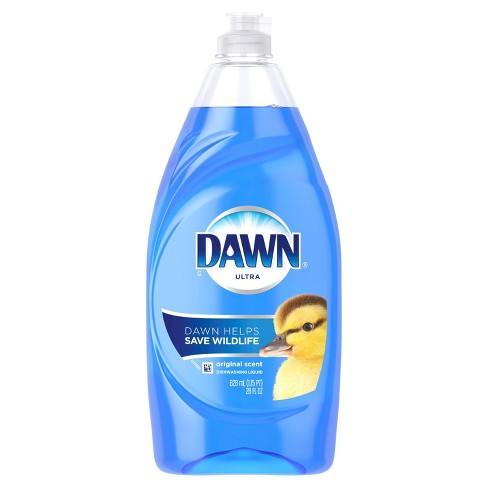
A bottle of dishwashing detergent contains a label on the back. The label has a long list of ingredients, including water, sodium lauryl sulfate, fragrance, and Blue dye #5.
What can you infer about the material in the bottle from this label and the appearance of the liquid?
It is a heterogeneous mixture.
It is a homogeneous mixture.

What is gold?
Element
Compound
Homogenous mixture
Heterogenous mixture

What is hot cocoa?
Element
Compound
Homogenous Mixture
Heterogenous mixture

What is carbon dioxide (CO2)?
Element
Compound
Homogenous Mixture
Heterogenous Mixture

What is soda?
Homogenous Mixture
Heterogenous Mixture
Element
Compound

What is neon (Ne)?
Element
Compound
Homogenous Mixture
Heterogenous Mixture

What is pizza?
Element
Compound
Homogenous Mixture
Heterogenous Mixture

What is water (H2O)?
Element
Compound
Homogenous Mixture
Heterogenous Mixture
Neon is colorless, a poor conductor of heat and is not able to be stretched. How would it be classified?
Nonmetal
Metalloid
Metal
None of the above
Manganese is shiny, conducts heat and electricity, and can be hammered into thin sheets. What is is?
Nonmetal
Metal
Metalloid
None of the above
What properites do nonmetals have in common?
Poor conductor of electricity
Good conductor of thermal energy
Soft and Malleable
Shiny, lustrous surface
This word is used to describe a substance that breaks apart easily and is weak and fragile
Conductivity
Ductile
Malleable
Brittle
Metals are...
dull, brittle, insulators.
shiny or dull, brittle, semiconductor.
shiny, malleable, conductors.
shiny, dull, insulator.

I have properties of both metals and nonmetals.
metals
nonmetals
metalloids
Luster
how an object reflects light
can be hammered into a shape
transfers heat and/or electricity
Conductivity
how an object reflects light
can be hammered into a shape
transfers heat and/or electricity
Malleability
how an object reflects light
can be hammered into a shape
transfers heat and/or electricity
____________is the ability of a substance to be drawn out into a wire.
Conductivity
Ductility
Mass
Luster
Which property explains why copper is often used in electric wiring?
density
mass
volume
conductivity
If the formula for density is mass/volume then what is the density of an element that has a mass of 8 g and volume of 2 ml?
4 g/cm3
3 g/cm3
40 g/cm3
30 g/cm3
Which are physical properties of matter?
mass
conductivity
volume
boiling/melting point
all of these
It is shiny or has luster.
Good conductor of heat and electricity.
When a metal can be pounded into thin sheets, we say it is ___________.
lustrous
malleable
ductile
conductive
What is the symbol for iron?
I
Fe
F
Ir
What is the symbol for sodium?
Na
So
Sd
S
What element is identified by the symbol K?
Krypton
Potassium
Khlorine
Fluorine
What is the symbol for magnesium?
M
Ma
Mg
Mn
What is the symbol for silicon?
S
Si
Sc
Sn
What is the symbol for helium?
H
He
Hi
Hl
What is the symbol for chlorine?
Ch
C
Cl
Co
Which element is identified by the symbol C?
Calcium
Carbon
Chlorine
Cesium

Choose the best description below for the image
physical change
chemical change

Choose the best description below for the image
physical change
chemical change

Choose the best description below for the image
physical change
chemical change

Did a chemical change take place?
yes
no

Did a chemical change take place?
yes
no

Did a chemical change take place?
yes
no

Did a chemical change take place?
yes
no
A green powder is heated & a gas is given off while it turns to a black solid. This describes
Physical Change
Chemical Change
Change in State
Change in Temperature
Which of the following could indicate that a chemical change took place?
Change in color
Production of Energy
Formation of Gas
All are correct
The formation of a solid when two liquids combine is called?
Solidification
Freezing
Precipitate
Solubility
The difference between a Physical change and a Chemical change is…
Physical change is only a change to the outside appearance.
Chemical change is when matter is changed into something new.
Atoms are rearranged in chemical changes & not in physical.
All are correct.
What does a chemical change result in?
A change in state of the substance (ex. liquid to solid)
A change in texture of the substance.
A change in the way atoms are bonded to each other.
A change in the appearance of the substance.
Which type of change is most often easily reversed?
Chemical
Physical
Both a physical and chemical change.
Neither a physical or chemical change.

Identify what type of change happening in the picture below...
Chemical Change
Physical Change
Endothermic Reaction
Exothermic Reaction
Which type of change are irreversible?
Chemical Changes
Physical Changes
Changes in State
Changes in Temperature
Which is not a clue that could indicate a chemical change has occurred?
Change in color
Change in shape
Release of energy
Formation of an odor


Food is digested in the stomach ________________
Physical Change
Chemical Change
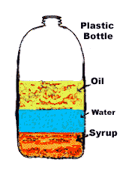

density = volume / mass

.14 g/cm3

Nathan has an eraser. It has a mass of 4 g, and a volume of 2 cm3. What is its density?
.5 g/cm3

Claire has a liquid. It has a mass of 9g and a volume of 3mL. What is its density?
3 g/mL
.33 g/mL
27 g/mL
39 g/mL
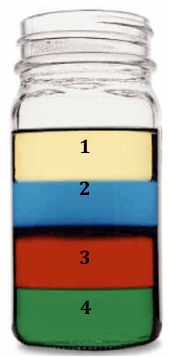

What is the formula for Mass?
Mass/Volume
Density x Volume
Mass/Density
Density/Mass
Volume/Mass

What is the formula for Volume?
Mass/Volume
Density x Volume
Mass/Density
Volume/Mass
Density/Mass

What is the volume of 55 grams of lead if it has a density of 11 g/cm3?
605 cm3
5 cm3
66 cm3
.2 cm3

What is the volume of a 40 gram liquid if it has a density of 4 g/mL?
.1 mL
10 mL
160 mL
44 mL

What is the mass of a 100mL liquid if it has a density of 3 g/mL?
300 g
33.3 g
.03 g
103 mL

