
 Worksheets
Quiz #3 - Seasons
Total questions: 193
Worksheet time: 3hrs 45mins
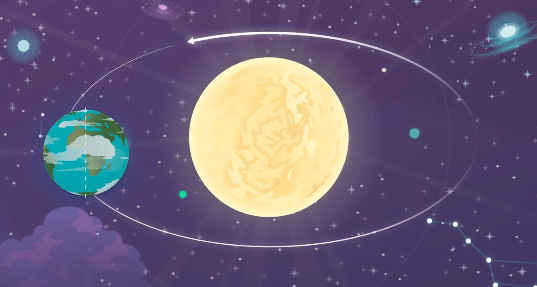


If a diagram shows the Earth's movement around the Sun. What is this diagram demonstrating?
day and night
seasons


The Earth sits straight up and down (NO TILT).
true
false
The spinning movement on it axis is called __________.
summer
Earth's rotation
seasons

The Earth is rotating AND revolving.
True
False

The Earth’s rotation and revolution happen at the same time.
True
False
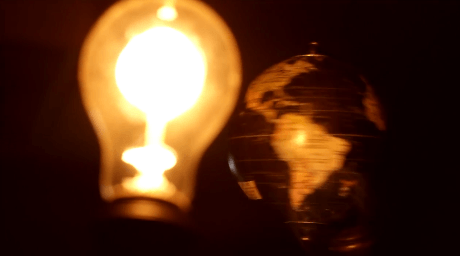
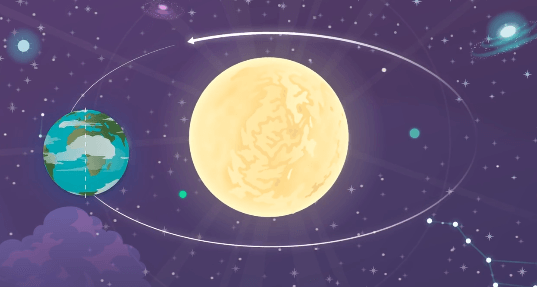
Why do we experience the changing of the season on the earth?
distance from the sun
rotation of the earth
change in solar output
tilt of the earth's axis

What is the earth's tilt in degrees
205
22.5
23.5
24.5
What is an Equinox
Full tilt toward sun
Full tilt away from sun
Shortest day
Equal day and night
define a solstice
Full tilt toward sun
equal day and night
10 degrees toward sun
10 degrees away from sun
What is the name of the first day of summer
Autumnal equinox
Winter solstice
Vernal equinox
Summer solstice
What is the name of the first day of winter
Winter solstice
Vernal equinox
Autumnal equinox
Summer solstice
On which of the following days the day and night are of equal duration throughout the world?
28th March and 21st September
21st March and 21st September
21st June and 21st December
23rd March and 22nd December
During the month of June ______ is inclined towards the sun.
Moon
Earth
South Pole
North Pole
Which of the following places has equal day and night throughout the year?
Equator
Tropic of Cancer
Arctic Circle
Tropic of Capricorn
The changes in the seasons is due to
Rotation
Revolution
Tilt of the axis
All the three
Why is summer warmer than winter?
The hemisphere experiencing summer is tilted more directly toward the sun
During summer, the entire planet is closer to the sun
The sun radiates more energy during the summer
The earth spins slower on its axis during the summer

In the northern hemisphere, the next event that would occur after number 2 would be
the summer solstice
the winter solstice
the autumnal equinox
the vernal equinox

The events labeled 1 and 3 are called
solstices
equinoxes

During the event pictured at number 2, which of the following would occur?
The northern hemisphere would receive the most direct sunlight
The northern hemisphere would experience the longest day
The southern hemisphere would experience the longest day
The sun's rays would be focused most directly on the equator

The event pictured at number 4, in the northern hemisphere, is the
summer solstice
winter solstice
autumnal equinox
vernal equinox
Vernal equinox marks the onset of which season?
Summer
Autumn
Spring
Winter
How many types of Solstices are there?
4
2
1
3
Earth is tilted at _____________ degrees.
23.5
90
0
25.3
On the day that the northern hemisphere has it's longest day, the southern hemisphere will have it's shortest day.
True
False
1 Revolution for Earth
365 days
1 Rotation for Earth
24 hours
1 Season for Earth
3 months
Which term best describes Earth's spin on its axis?
revolution
rotation
orbital period
year
Which term best describes Earth orbiting around the sun?
revolution
rotation
orbital period
day
What causes DAY and NIGHT?
Revolution
Tilt
Rotation
Tilt and Revolution
What causes DAY and NIGHT?
Revolution
Tilt
Rotation
Tilt and Revolution
What causes DAY and NIGHT?
Revolution
Tilt
Rotation
Tilt and Revolution
What causes DAY and NIGHT?
Revolution
Tilt
Rotation
Tilt and Revolution
What causes DAY and NIGHT?
Revolution
Tilt
Rotation
Tilt and Revolution
What causes DAY and NIGHT?
Revolution
Tilt
Rotation
Tilt and Revolution
What causes DAY and NIGHT?
Revolution
Tilt
Rotation
Tilt and Revolution
What causes DAY and NIGHT?
Revolution
Tilt
Rotation
Tilt and Revolution
What causes DAY and NIGHT?
Revolution
Tilt
Rotation
Tilt and Revolution
What causes DAY and NIGHT?
Revolution
Tilt
Rotation
Tilt and Revolution
What causes SEASONS?
Revolution
Tilt
Rotation
Tilt and Revolution
What causes SEASONS?
Revolution
Tilt
Rotation
Tilt and Revolution
What causes SEASONS?
Revolution
Tilt
Rotation
Tilt and Revolution
What causes SEASONS?
Revolution
Tilt
Rotation
Tilt and Revolution
What causes SEASONS?
Revolution
Tilt
Rotation
Tilt and Revolution
What causes SEASONS?
Revolution
Tilt
Rotation
Tilt and Revolution
What causes SEASONS?
Revolution
Tilt
Rotation
Tilt and Revolution
What causes SEASONS?
Revolution
Tilt
Rotation
Tilt and Revolution
What causes SEASONS?
Revolution
Tilt
Rotation
Tilt and Revolution
What causes SEASONS?
Revolution
Tilt
Rotation
Tilt and Revolution

In the hemisphere experiencing winter, the axis of the earth is pointed away or toward the sun?

In the hemisphere experiencing summer, the axis of the earth is pointed away or toward the sun?


1. Based on the model above, which season is point X most likely experiencing?
spring
summer
winter
fall or autumn
Why is summer warmer than winter?
The hemisphere experiencing summer is tilted more directly toward the sun
During summer, the entire planet is closer to the sum
The sun radiates more energy during the summer
The earth spins slower on its axis during the summer
How long does it take the Earth to rotate on its rotation axis?
1 week
1 year
1 day
Like 15 hours or something.
What causes the seasons?
How close we are to the sun.
The tilt of the Earth
The rotation of the Earth
Solar Storms


In the summer, many people enjoy going to the beach. There is a beautiful beach in Argentina, which is located in the Southern Hemisphere. Which diagram shows the position of Earth when it is summer in Argentina?
A
B
C
D
The path of an object as it revolves around another object
revolution
rotation
orbit
gravity
The movement of one object around another
revolution
rotation
orbit
inertia
The amount of light you see on the moon as it goes around the Earth
Spring Tides
Neap Tides
Moon Phases
Eclipses
Partial or total blocking of one object in space
gravity
inertia
Eclipse
Orbit
Relating to the sun
gravity
inertia
solar
lunar
choose 2 things that cause seasons
Moon Phases
Rotation
Tilt of the Earth
Revolution of the Earth around the sun

What season is it in the Southern Hemisphere in the picture?
Summer
Fall
Spring
Winter
The imaginary line through Earth that extends from the North Pole to the South Pole and is the center of Earth's Rotation
Axis
Tilt
Equator
Tropic of Capricorn
What is the cause of the seasons?
The distance of Earth to the Sun
The tilt of Earth as it rotates around the Sun
The changing distance of Earth to the Sun as it revolves around the Sun
The tilt of Earth as it revolves around the Sun
The shape of the illuminated portion of the Moon as seen by an observer, usually on Earth
Lunar Phases
Tides
Axis
Tilt
Why can't we see a New Moon?
The light side is facing toward the Sun
The light side is facing toward Earth
Clouds are covering the Moon
The light side is between the Sun and Earth, forming an eclipse

What moon phase would occur ONE week after the moon shown
New Moon
Full Moon
Waning Crescent
First Quarter
Solar eclipses occur when
The Sun is between Earth and the Moon
There is a full Moon
The Moon is between Earth and the Sun
Earth is between the Moon and the Sun
A lunar cycle is
approx. 28 days
approx. 14 days
approx. 30 days
approx. 365 days
The slant of Earth's axis, which is 23.5 degrees from vertical compared to Earth's orbital plane around the Sun; as a result, the North Pole always points toward the North Star.
Tilt
Eclipse
Earth's Rotation
Axis
An obscuring of light from a celestial body by the passage of an object between the celestial body and the observer or between the celestial body and its source of illumination.
Earth's Rotation
Lunar Phases
Seasons
Eclipses
Describe the days and nights on Earth when the Northern Hemisphere is experiencing direct sunlight.
Shorter days and longer nights
Longer days and longer nights
Longer days and shorter nights
Shorter days and shorter nights
The four natural divisions of the year based on changes in temperature due to the varied amounts of sunlight (both intensity and number of daylight hours received); caused by tilt of Earth's axis during revolution
Seasons
Tilt
Axis
Earth's Rotation
The spinning of Earth on its axis is called
Seasons
Tilt
Earth's Rotation
Earth's Revolution
What are the seasons that have Solstices?
Winter and Spring
Spring and Fall
Winter and Summer
Spring and Summer
What are the seasons that have Equinoxes?
Winter and Spring
Spring and Fall
Winter and Summer
Spring and Summer
Which of the following describes a lunar eclipse?
The Moon's shadow is on Earth
Earth's shadow is on the Sun
Earth's shadow is on the Moon
The Moon's shadow is on the Sun
What causes the ocean tides on Earth?
Earth's Rotation
Gravitational Pull of the Moon and Sun
Gravitational Pull of Earth
Earth's Revolution
What causes the moon's phases
Where you are standing on Earth
the amount of sunlight reflected onto the moon from the sun
The tilt of Earth
how fast the moon is moving
The spinning of the earth on its axis that causes day and night is called
orbit.
axis.
rotation.
revolution.
The path of an object in space around another object is a(n)
orbit.
axis.
rotation.
revolution.


What is the missing phase?


What is the missing phase?


What moon phase comes after this?


True or False: The moon is always half lit by the sun.
True
False


A celestial body that consist primarily of ice and dust and often develops a long tail
asteroid
moon
galaxy
comet

What Moon Phase is shown?
New Moon
Full Moon
First Quarter

What Moon Phase is shown?
New Moon
Full Moon
First Quarter

What Moon Phase is shown?
New Moon
Full Moon
First Quarter

What Moon Phase is shown?
New Moon
Full Moon
First Quarter

What Moon Phase is shown?
Waxing Crescent
Waxing Gibbous
Waning Crescent
Waning Gibbous

What Moon Phase is shown?
Waxing Crescent
Waxing Gibbous
Waning Crescent
Waning Gibbous

What Moon Phase is shown?
Waxing Crescent
Waxing Gibbous
Waning Crescent
Waning Gibbous

What Moon Phase is shown?
Waxing Crescent
Waxing Gibbous
Waning Crescent
Waning Gibbous

What moon phase comes AFTER a New Moon?
Waxing Crescent
First Quarter
Waxing Gibbous
Full Moon

What moon phase comes AFTER a Waxing Crescent?
New Moon
First Quarter
Waxing Gibbous
Full Moon

What moon phase comes AFTER a First Quarter?
Waxing Crescent
New Moon
Waxing Gibbous
Full Moon

What moon phase comes AFTER a Waxing Gibbous?
Waxing Crescent
New Moon
Waxing Gibbous
Full Moon

What moon phase comes AFTER a Full Moon?
Waning Gibbous
Third Quarter
Waning Crescent
New Moon

What moon phase comes AFTER a Waning Gibbous?
Full Moon
Third Quarter
Waning Crescent
New Moon

What moon phase comes AFTER a Third Quarter?
Full Moon
Waning Gibbous
Waning Crescent
New Moon

What moon phase comes AFTER a Waning Crescent?
Full Moon
Waning Gibbous
Waning Crescent
New Moon

In which hemisphere do we live (in US)?
Northern
Southern
The day of the year with the most daylight hours is the
spring equinox
fall equinox
summer solstice
winter solstice
In the northern hemisphere, the winter solstice happens in which month?
March
June
September
December
In the northern hemisphere, the summer solstice happens in which month?
March
June
September
December
The day of the year with the fewest daylight hours is called the
spring equinox
fall equinox
summer solstice
winter solstice
When daylight hours are almost equal to night time hours, it is called
equinox
solstice
On the day that the northern hemisphere has it's longest day, the southern hemisphere will have it's shortest day.
True
False
In summer, the poles have 6 months of daytime.
True
False
In the winter, the poles have 3 months of night.
True
False
The day with the longest night time hours is the fall equinox.
True
False
Which of the following is the reason that Earth experiences seasons?
Earth's tilt on its axis
The revolution of Earth around the Sun
The rotation of Earth on its axis
Earth is tilted at _____________ degrees.
23.5
90
0
25.3
A solstice event occurs when
the sun's rays reach their highest or lowest point in respect to the equator
the sun's rays shine most directly at the equator
the Earth has it's longest period of daylight hours
An equinox occurs when
The sun's rays reach their highest or lowest point in respect to the equator
The sun's rays shine most directly on the equator
The Earth experiences the greatest period of daylight hours
How many types of Solstices are there?
4
2
1
3
All of the following are true about equinox events except
the length of day and night are equal
the sun's rays reach their highest point above the equator
the sun's rays shine most directly on the equator
they occur in March and September
During a summer solstice the America, the southern hemisphere experiences
a vernal equinox
the autmunal equinox
a summer solstice
a winter solstice
The autumnal equinox will occur for the northern hemisphere in
March
September
June
December
The event pictured at number 4, in the northern hemisphere, is the
summer solstice
winter solstice
autumnal equinox
vernal equinox
During the event pictured at number 2, which of the following would occur?
The northern hemisphere would receive the most direct sunlight
The northern hemisphere would experience the longest day
The southern hemisphere would experience the longest day
The sun's rays would be focused most directly on the equator
The events labeled 1 and 3 are called
solstices
equinoxes

Earth is tilted at _____________ degrees.
23.5
90
0
25.3

What imaginary line is drawn around the earth’s center?
axis
equator
prime meridian
hemisphere
The Earth’s axis is tilted __________ and remains pointed in the same direction at all times as the Earth revolves around the Sun
23.5
23
24.5
22.5
True or False: The Earth’s axis remains pointed in the same direction at all times as the Earth revolves around the Sun.
True
False
The Northern and Southern Hemispheres have (a) seasons.
When it's summer in the Northern hemisphere it is __________ in the Southern Hemisphere
spring
summer
winter
fall
When it's spring in the Northern Hemisphere it is ________________ in the Southern Hemisphere
spring
summer
winter
fall
Earth's __________ causes the total number of daylight hours to change around the world.
rotation
revolution
tilt
speed
What is the name of the phenomenon where nighttime lasts for more than 24 hours?
Polar night
Polar midnight
Midnight Sun
Polar sun
When one hemisphere is tilted toward the Sun it experiences more direct rays from the Sun that strike Earth at higher angles (closer to 90 degrees) causes ______________ temperatures.
cooler
warmer
When one hemisphere is tilted away from the Sun it experiences ____________ rays from the Sun that strike Earth at lower angles cause cooler temperatures
direct
indirect
A solstice is an event that happens twice each year when the Sun reaches its ____________position in the sky as seen from the North or South Pole.
lowest
eastern
highest
northern
A ___________ is either the longest day of the year or the shortest day of the year for any place on Earth as a result of Earth's tilt as it revolves around the Sun
equinox
solstice
polar night
midnight sun
An equinox occurs twice a year when the Earth's tilt is _____________ to the Sun and both the Northern and Southern Hemispheres receive approximately the same amount of energy and daylight hours.
parallel
perpendicular
next to
behind
When it is spring in the Northern Hemisphere it is fall/autumn in the Southern Hemisphere. This is sometimes called the ______________ in the North
vernal equinox
spring equinox
summer solstice
fall solstice
An equinox occurs during which TWO seasons?
summer
spring
fall
winter

Which position would the northern hemisphere experience summer?
Position A
Position B
Position C
Position D
Which position would the northern hemisphere experience spring?
Position A
Position B
Position C
Position D

Which position would the southern hemisphere experience spring?
Position A
Position B
Position C
Position D
The event pictured at number 4, in the northern hemisphere, is the
summer solstice
winter solstice
autumnal equinox
vernal equinox
The events labeled 1 and 3 are called
solstices
equinoxes

