
 Worksheets
2.1 and 2.2 Chem. for Bio, Water and PH Test Review
Total questions: 36
Worksheet time: 36mins

What part of the molecule is labeled #1?
hydrogen
oxygen
carbon

What part of a molecule is labeled #2?
Hydrogen
Carbon
Oxygen

What part of a molecule is labeled #3?
Hydrogen bond
Covalent Bond
Chain bond

Identify the charge of the molecule labeled #4.
Negative
Positive
Neutral

Identify the charge of the molecule labeled #5.
Positive
Negative
Neutral
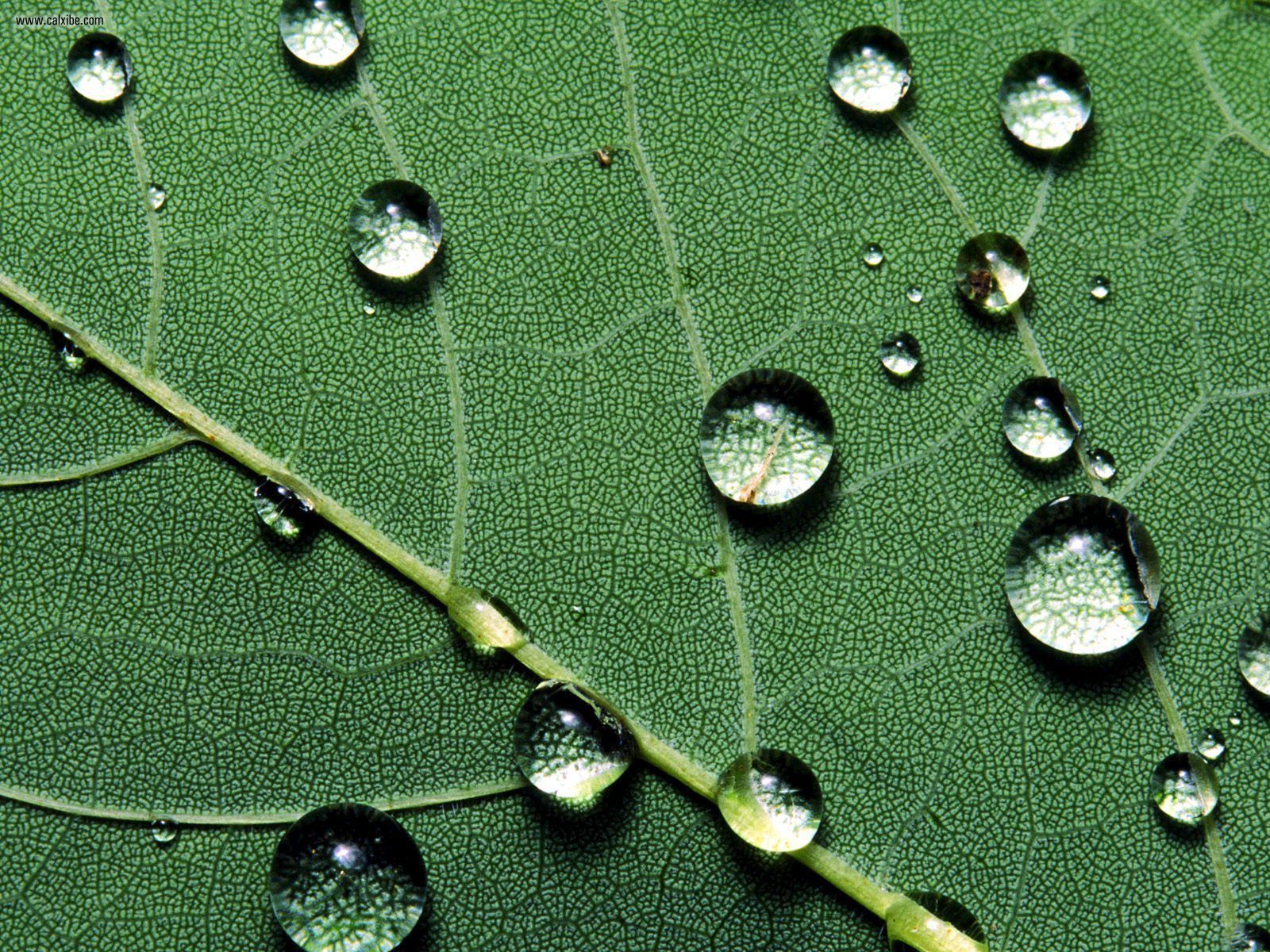
Refer to the picture of water sticking to a leaf; this is occurring because of:
Adhesion
Cohesion
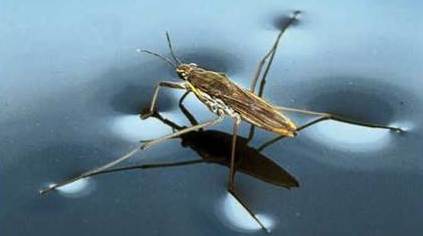
Refer to the picture; the water strider can walk over waters surface. This is occurring due to:
Adhesion
Cohesion

In a water molecule ________________ has the positive charge.
Hydrogen
Oxygen
Nitrogen
Helium
In a water molecule _____________ has the negative charge.
Hydrogen
Oxygen
Nitrogen
Helium
Water molecules have a separation of charge in its H and O atoms because
something comes between it.
Protons are attracted to the hydrogen
electrons favor the nucleus of the hydrogen
electron favors the nucleus of the oxygen
Describe CAPILLARY ACTION.
Measure of how difficult it is to break the surface of a liquid.
Water molecules climbing up against the force of gravity.
Water molecules attracted to other substances.
Water molecules dissolving many substances because of its polarity.
Water is a universal solvent because of its_________.
Polarity
Adhesion
Cohesion
Electrons
A substance with pH of 5 has...
more OH- ions than H+ ions.
has the same number of OH- ions as H+ ions.
more hydrogen ions than hydroxide ions.
tastes sweet.
What is PH SCALE?
The substance that gets dissolved in a solution
Ranges from 0-14 by measuring hydrogen ion concentration
Any atom or group of atoms that has a positive or negative charge.
When all components are evenly distributed in a mixture
What is acid?
The substance that gets dissolved in a solution
Prevents drastic pH changes
Forms H+ ions in solution in a higher concentration than water
What is base?
Forms OH- ions in solution in a higher concentration than water
Prevents drastic pH changes
When all components are evenly distributed in a mixture
What is hydrogen ion?
A hydrogen atom that has lost an electron resulting in a positive one charge
Part of water that has a negative charge when water breaks apart (written as OH-)
Any atom or group of atoms that has a positive or negative charge.
What is hydroxide ion.
When one side of a molecule has a positive charge & other has a negative charge
Forms H+ ions in solution in a higher concentration than water
Part of water that has a negative charge when water breaks apart (written as OH-)
Substance formed by the chemical combination of two or more elements in definite proportions.
An oxygen atom that has a mass number of 16, atomic number of 8 and -2 charge. How many protons?
10
8
16
What is at the center of every atom?
An electron
A compound
A molecule
A nucleus
The number of neutrons equals...
Protons - neutrons
Electrons - protons
mass number - atomic number
Where are electrons located in the atom?
Nucleus
Shells
rings
center
Number of electrons equals...
Atomic number
Protons- charge
Mass number + atomic number

Identify the parts of the oxygen atom in the image labeled #1.
proton
neutron
electron

Identify the parts of the oxygen atom in the image labeled #2.
Energy Level
Neutron
Nucleus

Identify the parts of the oxygen atom in the image labeled #3.
Electron
Neutron
Energy Level

Identify the parts of the oxygen atom in the image labeled #5.
Energy Level
Electrons
Nucleus
This is created when there is a slight attraction between oppositely charged regions of nearby molecules.
is a(an)atom
isotope
van der Waals forces
element
compound
An atom that has a different number of neutrons but same number of protons and electrons is a (an)atom
isotope
ionic bond
nucleus
covalent bond
Any atom or group of atoms that has a positive or negative charge is a(an)
element
compound
ion
isotope

