wayground logo

Free Printable Worksheets

Font size

S
M
L
XL
Worksheets

A&P Second Six Weeks Test Review

Total questions: 60

Worksheet time: 35mins

Name
Class
Date
1.

ABCD rule for determining the presence of melanoma stands for

a)

Asymmetry

b)

Border irregularity

c)

Color

d)

Diameter

2.

Herpes simplex virus causes

a)

cold sores

b)

impetigo

c)

HIV

d)

athletes foot

3.
First cervical vertebra.
a)
Axis
b)
Body
c)
Vertebra prominens
d)
Atlas
4.
Second cervical vertebra.
a)
Axis
b)
Body
c)
Vertebra prominens
d)
Atlas
5.
How many cervical vertebrae exist in the spine? 
a)
7
b)
12
c)
5
d)
4
6.
There are __________ lumbar vertebrae. 
a)
12
b)
5
c)
7
d)
6
7.
How many thoracic vertebra exist in the spinal column? 
a)
15
b)
5
c)
12
d)
7
8.

Which of the following is not a function of the vertebral column

a)

surrounds & protects spinal cord

b)

supports head & trunk

c)

point of attachment for ribs & back muscles e. Help maintain an upright position

d)

Provides movement

9.

How many false ribs are there?

a)

2

b)

5

c)

7

d)

3

10.
How many floating ribs are there?
a)
2
b)
3
c)
7
11.
How many true ribs are there?
a)
2
b)
3
c)
7
12.
The hardest, most dense part of the bone tissue is the
a)
periosteum
b)
spongy bone
c)
osteoblast
d)
compact bone
13.
What are functions of the skeleton?
a)
Protection
b)
Blood cell production
c)
Movement
d)
All of these
14.
Which of these is a long bone?
a)
Femur
b)
Patella
c)
Scapula
d)
Carpal
15.
Which of these is an irregular bone(s)?
a)
Pelvis
b)
Humerus
c)
Phalanges
d)
Tarsals
16.
Which of these is a flat bone?
a)
Vertebra
b)
Tibia
c)
Fibula
d)
Frontal
17.
This type of bone is porous, allowing blood vessels to move through it and containing bone marrow.
a)
Compact Bone
b)
Spongy or Cancellous Bone
18.
This type of bone is solid throughout except for the central canals and lacunae.
a)
Compact Bone
b)
Spongy or Cancellous Bone
19.
Which of the following is filled with yellow marrrow? 
a)
medulary cavity
b)
spongy bone
c)
periosteum
d)
compact bone
20.
If cartilage remains in this "specific" area, then growth is still occurring; it is located at the end of long bone
a)
Epipyseal plate
b)
 Medulary Cavity 
c)
Diaphysis 
d)
Endosteum 
21.
This lines the medullary cavity
a)
Periosteum 
b)
Endosteum 
c)
Diaphysis 
d)
Osteoblasts 
22.
The ends of the long bone are anatomically referred to as the: 
a)
Epiphyseal plate 
b)
Medulary Cavity 
c)
Periosteum 
d)
Epiphysis 
23.
OUTER COVERING OF BONE THAT COVERS DIAPHYSIS AND IS LOCATION WHERE MUSCLES ATTACH
a)
ARTICULAR CARTILAGE
b)
OSTEON
c)
HAVERSIAN CANAL
d)
PERIOSTEUM
24.

Covering on the end of the epiphysis as represented in structure D. Also on the end of B. Provides protection

a)

red bone marrow

b)

yellow bone marrow

c)

articular cartilage

d)

medullary cavity

25.

What is this part of the skeleton called?

a)

Appendicular

b)

Thoracic

c)

Axial

d)

Vertebral

26.

What is this part of the skeleton called?

a)

Appendicular

b)

Thoracic

c)

Axial

d)

Vertebral

27.

What is the function of the axial skeleton?

a)

Support

b)

Movement

c)

Protection

d)

Flexibility

28.

What is the function of the appendicular skeleton?

a)

Support

b)

Movement

c)

Protection

d)

Flexibility

29.
Manubrium, Body, and Xiphoid Process are all parts of the 
a)
Sternum
b)
Vertebral column
c)
Temporal bone
d)
Pelvis
30.
Which of the following would be found in the neck?
a)
C3
b)
C10
c)
T3
d)
L4
31.
Which of the following would be found in the lower back?
a)
C4
b)
T5
c)
L3
d)
L10
32.

This image represents the __________ skeleton.

a)

appendicular skeleton

b)

axial skeleton

33.

This image represents the __________ skeleton.

a)

appendicular skeleton

b)

axial skeleton

34.

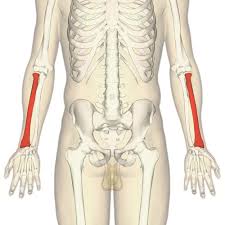
Which bone is highlighted

a)

humerus

b)

radius

c)

ulna

d)

femur

e)

fibula

35.

Which bone is highlighted

a)

ilium

b)

ischium

c)

pubis

d)

coccyx

e)

sacrum

36.

Which bone is highlighted

a)

ilium

b)

ischium

c)

pubis

d)

sacrum

e)

coxal bone

37.

Which bone is highlighted

a)

ilium

b)

ischium

c)

pubic

d)

sacrum

38.

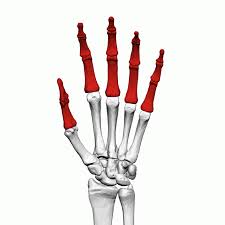
Which bones are highlighted

a)

phalanges

b)

carpals

c)

metatarsals

d)

metacarpals

39.

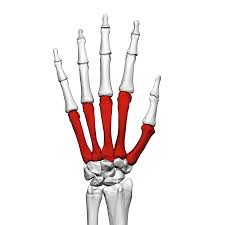
Which bones are highlighted

a)

metacarpals

b)

metatarsals

c)

carpals

d)

tarsals

40.

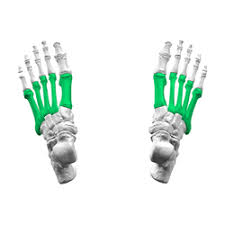
Which bones are highlighted

a)

metatarsals

b)

metacarpals

c)

tarsals

d)

carpals

41.

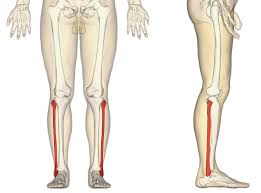
Which bone is highlighted

a)

femur

b)

radius

c)

tibia

d)

fibula

42.

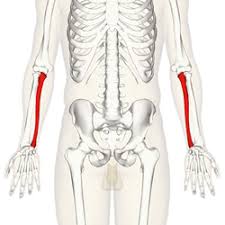
Which bone is highlighted

a)

fibula

b)

tibia

c)

ulna

d)

radius

43.

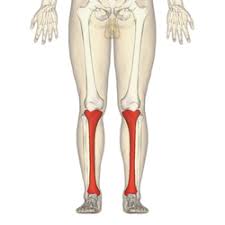
Which bone is highlighted

a)

humerus

b)

femur

c)

tibia

d)

fibula

44.

Which bones are highlighted

a)

humerus

b)

radius

c)

ulna

d)

fibula

45.

Which bones are highlighted

a)

carpals

b)

tarsals

c)

metacarpals

d)

metatarsals

46.

Which bones are highlighted

a)

carpals

b)

tarsals

c)

metacarpals

d)

metatarsals

47.
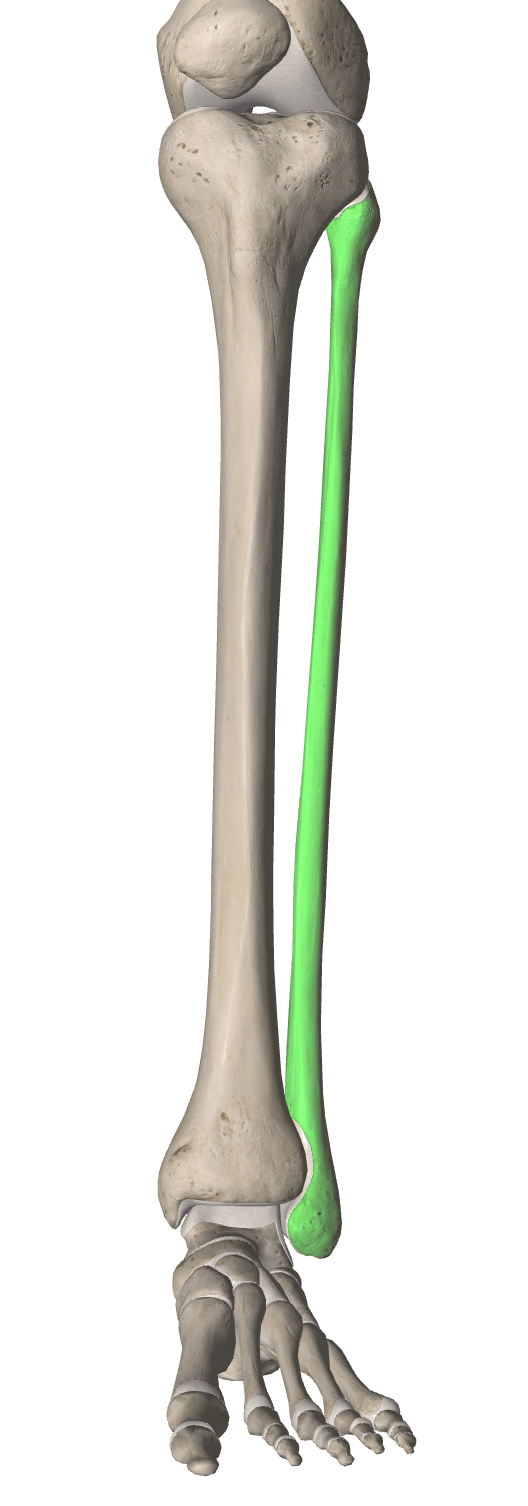
Name the bone shown in green.
a)
Femur
b)
Tibia
c)
Patella 
d)
Fibula
48.
Name the bone shown in green.
a)
Femur
b)
Tibia
c)
Patella 
d)
Fibula
49.
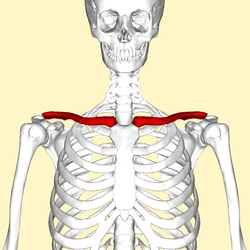
What bones are these?
a)
Sternums
b)
Scapulae
c)
Clavicles
d)
Hyoids
50.

Bone in brachial region

a)

radius

b)

tibia

c)

fibula

d)

humerus

e)

ulna

51.
Where are blood cells made? 
a)
Yellow marrow 
b)
Red marrow
c)
Spongy Bone 
d)
Periosteum
52.
Functions as fat storage area. It is chiefly composed of fat cells and is located in the medullary cavity.
a)
yellow bone marrow
b)
red bone marrow
c)
green bone marrow
d)
brown bone marrow
53.
Means pertaining to the formation of blood cells.
a)
endosteum
b)
medullary
c)
periosteum
d)
hemopoietic
54.
Which type of bone cells are responsible for dissolving old bone matrix?
a)
Osteoblasts
b)
Osteoclasts
c)
Osteocytes
d)
Osteons
55.

The bone acts as a reservoir for

a)

calcium

b)

phosphorus

c)

magnesium

d)

zinc

56.

True or False: A third-degree burn destroys the stratum basale

a)

True

b)

False

57.

Select which bones are carpal bones

a)

scaphoid

b)

lunate

c)

pisiform

d)

navicular

e)

trapezium

58.

Bone forming cells:

a)

osteocytes

b)

osteoblasts

c)

osteoclasts

d)

osteomasts

59.

Occurs when the bones of inactive people tend to lose mass:

a)

atrophy

b)

ossification

c)

shingles

d)

osteoarthritis

60.

Which of the following is NOT a category of bone?

a)

short

b)

irregular

c)

fat

d)

flat