
 Worksheets
Unit 5 Review Cell Cycle
Total questions: 60
Worksheet time: 45mins

Starting with Gap 1, what is the correct order of the cell cycle?
G1 > G2 > S > M
G1 > S > G2 > M
G1 > M > S > G2
G1 > S > M > G2
What happens during G1?
The cell grows and carries out normal functions
The DNA in the cell is copied
The cell grows a little bit more
The cell divides itself
What happens during S?
The cell grows and carries out normal functions
The DNA in the cell is copied
The cell grows a little bit more
The cell divides itself
What happens during G2?
The cell grows and carries out normal functions
The DNA in the cell is copied
The cell grows a little bit more
The cell divides itself
What happens during M?
The cell grows and carries out normal functions
The DNA in the cell is copied
The cell grows a little bit more
The cell divides itself
What is the acronym we use to remember the order of the phases of mitosis?
AMPT
TAPM
MAPT
PMAT

During what phase of Mitosis do the chromosomes line up in the Middle
Metaphase
Prophase
Telophase
Anaphase
PMAT helps us remember the correct order of the phases of Mitosis. Which of the following has the phases of Mitosis in the correct Order
Interphase, Mitosis, Cytokinesis
Prophase, Metaphase, Anaphase, Prophase
Anaphase, Telophase, Prophase, Telophase
Prophase, Metaphase, Anaphase, Telophase
Where do you find checkpoints in the cell cycle?
Only after G1 and G2
Only after S phase
Only after G2
After each phase
What is the purpose of the checkpoints in the cell cycle? Select all that apply:
To regulate the process and check for abnormalities
Prevent water from entering the cycle
Prevent unhealthy cells from continuing on the the cycle
Prevent uncontrolled growth
Cancer is defined as the
uncontrolled division of mutated cells
normal division of cells
normal DNA replication
abnormal ATP synthesis
A ________________is a critical point where stop and go signals can regulate the cycle
tumor
checkpoint
growth factor
oncogene
Any substance that is known to cause cancer is called a
Pathogen
Biopsy
Carcinogen
Retrovirus


DNA is a recipe for your genes. What happens when your DNA is exposed to Sunlight (UV Rays)
You are blessed by zeus
You sparkle like the vampires in twilight


Should the daughter cells be genetically diverse or identical to the parent cell?
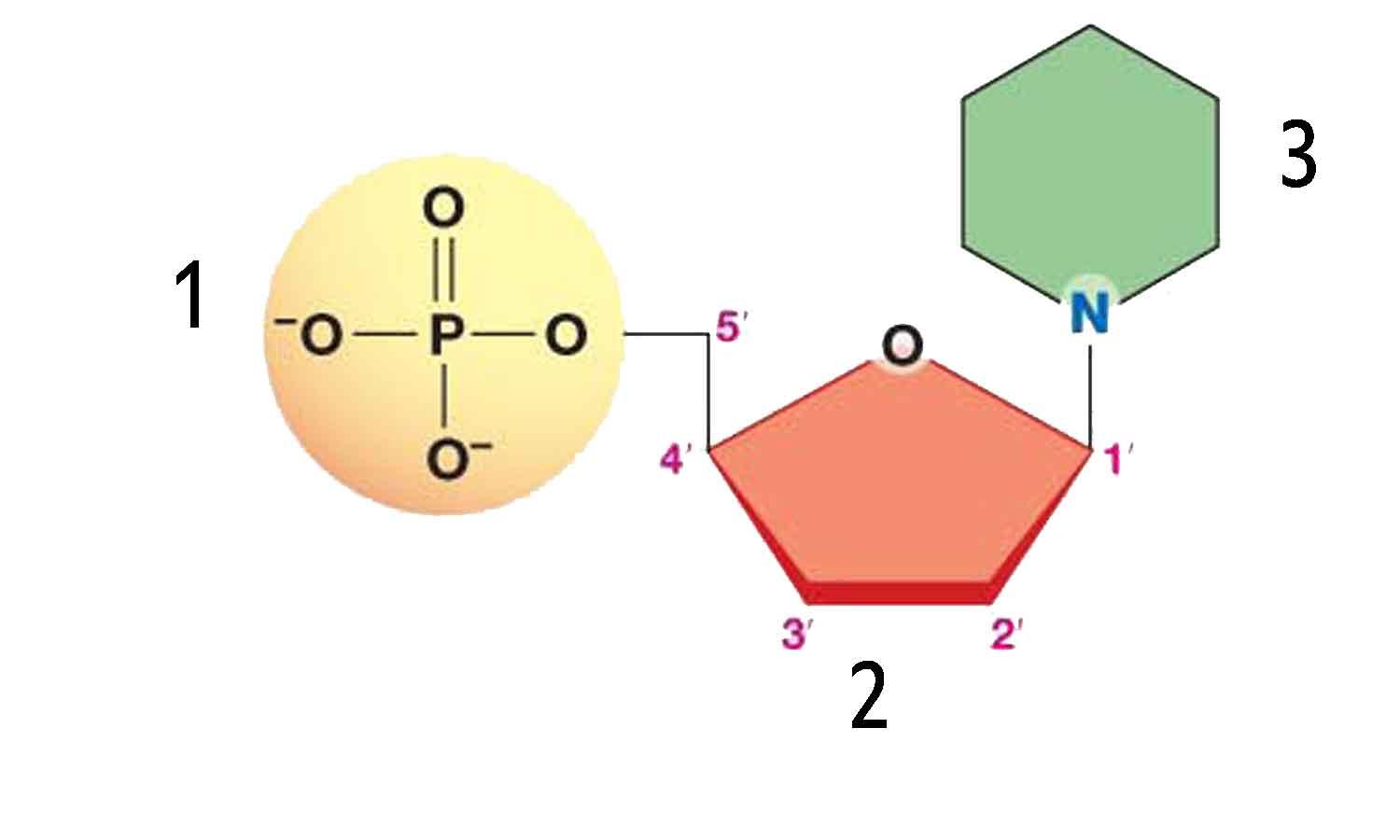
3) Nitrogen Base
2) Phosphate
3) Nitrogen Base
2) Ribose Sugar
3) Nitrogen Base
2) Deoxyribose Sugar
3) Nitrogen Base

If a cell cycle checkpoint fails, it causes the death of the cell.
Normal cells grow and divide continuously.

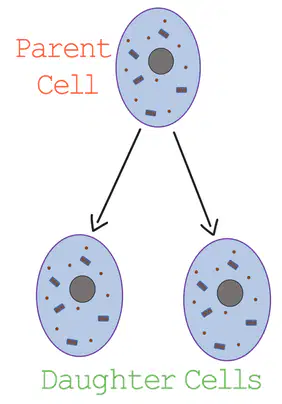
The process of one parent cell dividing into two daughter cells
chromosome
cell division
cell cycle
DNA

A structure made of DNA and protein. Found in the nucleus of a eukaryotic cell
Chromosome
DNA
Cell cycle
gene
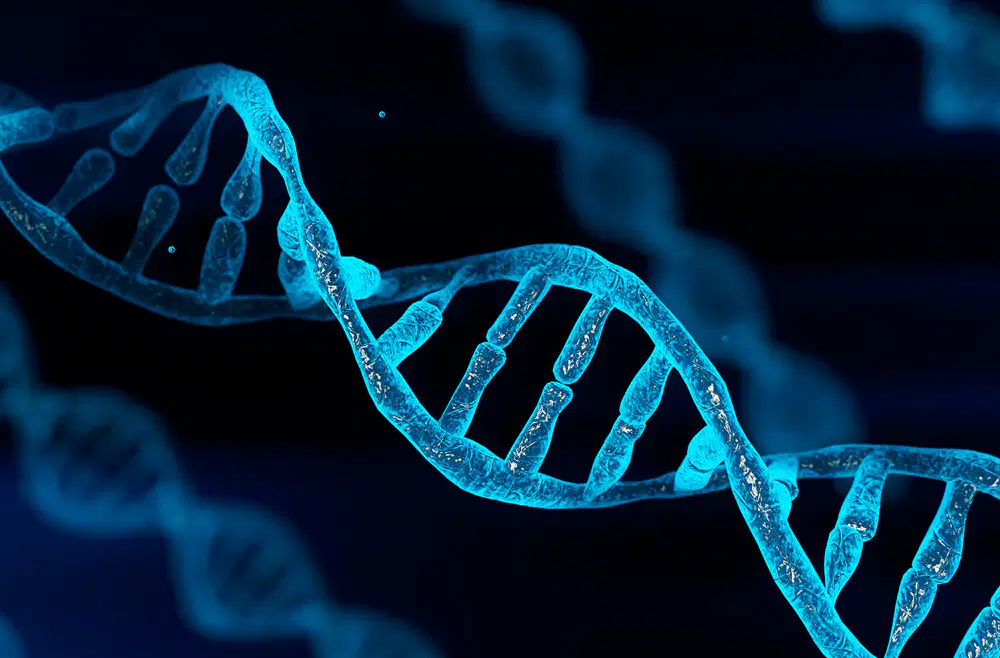
Genetic material
Cell division
DNA
chromosome

The period of time from the beginning of one cell division to the beginning of the next
cell division
mitosis
cell cycle
*The part of cell division (PMAT) where the nucleus divides and results in two identical daughter cells
**Produces body cells
DNA
mitosis
cell division
interphase
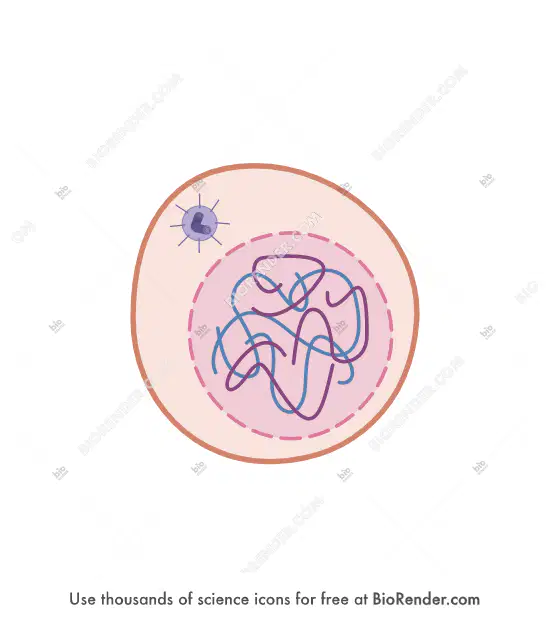
*The stage of the cell cycle that occurs between cell divisions
*The longest stage/phase
*Cell grows and develops
*Chromosomes double
mitosis
interphase
prophase
anaphase
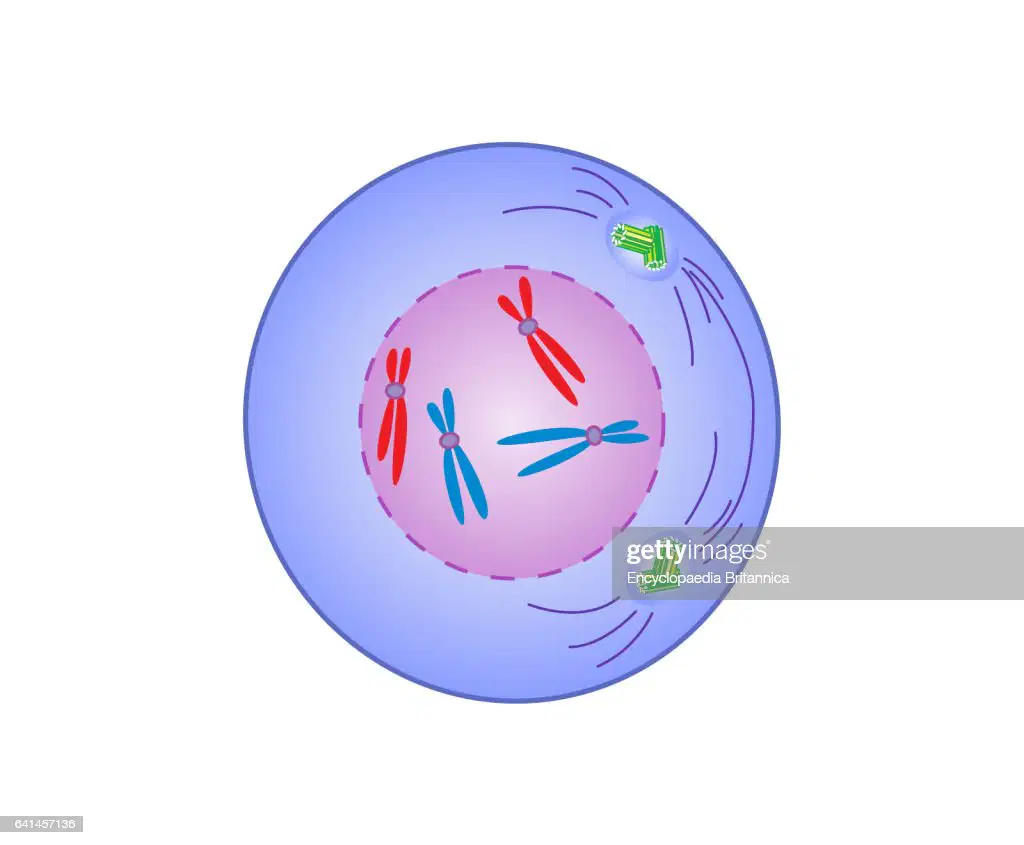
*Chromosomes are visible
*Nuclear membrane disappears
interphase
prophase
metaphase
telophase
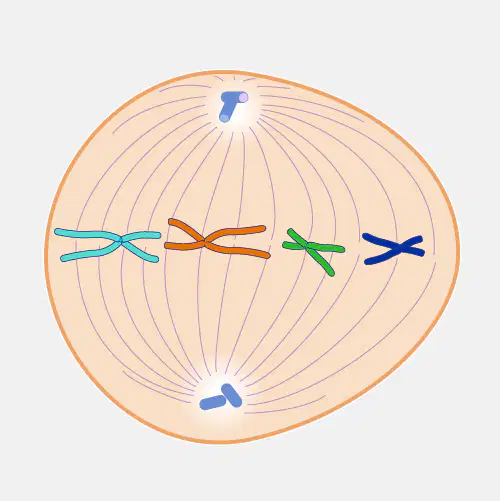
*Chromosomes line up in the middle
interphase
prophase
metaphase
anaphase

*Chromosomes split apart/pull away
interphase
metaphase
anaphase
telophase
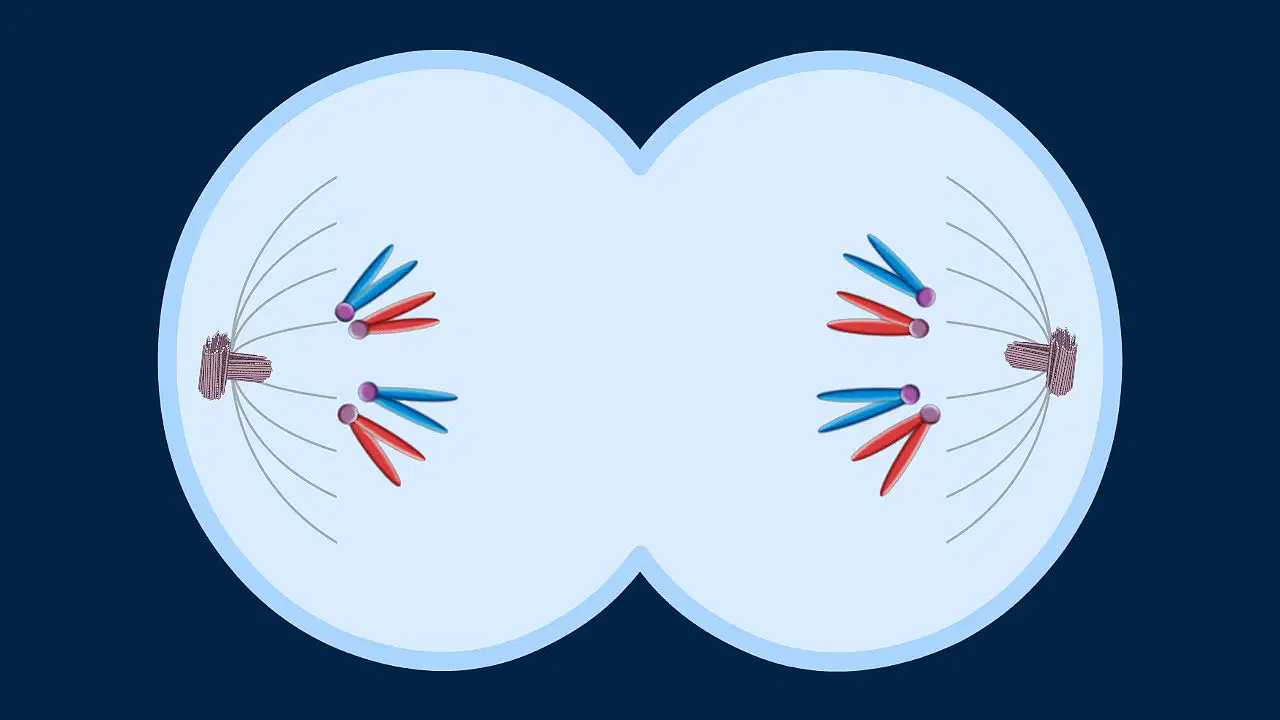
*Cells begin to separate into two daughter cells
*Chromosomes cluster in the center of each new cell
anaphase
metaphase
telophase
cytokinesis

*Cytoplasm divides
*Two daughter cells are formed
*SAME NUMBER OF CHROMOSOMES AS PARENT CELL
interphase
cytokinesis
metaphase
anaphase
The end result of replication is ________________________.
one new molecule of DNA
two identical molecules of DNA
two different molecules of DNA
What is the name of the process by which DNA is copied?
Transcription
Translation
Replication
Mutation
CAT TCA CTG
During a biology class, Aria, Henry, and Elijah were studying the cell cycle. They were asked to identify the longest stage of the cell cycle, which is also the stage where the cell spends most of its life. What is this stage called?
Cytokinesis
M phase
Interphase
G1 Phase
In a biology class, Ava and Mia were studying about the cell cycle. They learned that during the "s" phase of the cell cycle, DNA is duplicated. Rohan, their classmate, asked why this is important. What could be the correct explanation?
It allows for each daughter cell to be genetically DIFFERENT, just like Ava and Mia are different from each other.
It allows for each daughter cell to be genetically IDENTICAL, just like how Rohan's identical twins would be.
It allows for each daughter cell to have 2X the amount of DNA as the parent cell, like doubling the number of biology textbooks.
It allows for each daughter cell to have half the amount of DNA as the parent cell, like splitting a pizza into two equal halves.

In a biology class, Rohan is looking at a diagram of a cell during mitosis. He notices a structure labeled A that is used to hold sister chromatids together. Anika suggests that it's a(n)_________. What is your opinion?
chromatid
centriole
centromere
chromophere

