Wayground logo

Free Printable Worksheets

Font size

S
M
L
XL
Worksheets

Unit 2/Midterm Review

Total questions: 68

Worksheet time: 2hrs 9mins

Name
Class
Date
1.
What is the order of succession shown in this figure?
a)
A, B, C, D
b)
B, A, D, C
c)
C, D, A, B
d)
D, A, B, C
2.
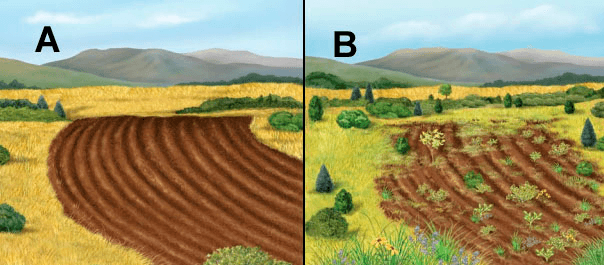
What type of succession is shown going from figure A to figure B?
a)
primary succession
b)
ecological succession
c)
secondary succession
d)
intermediate
3.
What is the goal of the pioneer species in Primary Succession?
a)
To kill the dead materials after a disaster
b)
To rebuild soil
c)
To feed Johnny
d)
To put fresh oxygen into the air
4.
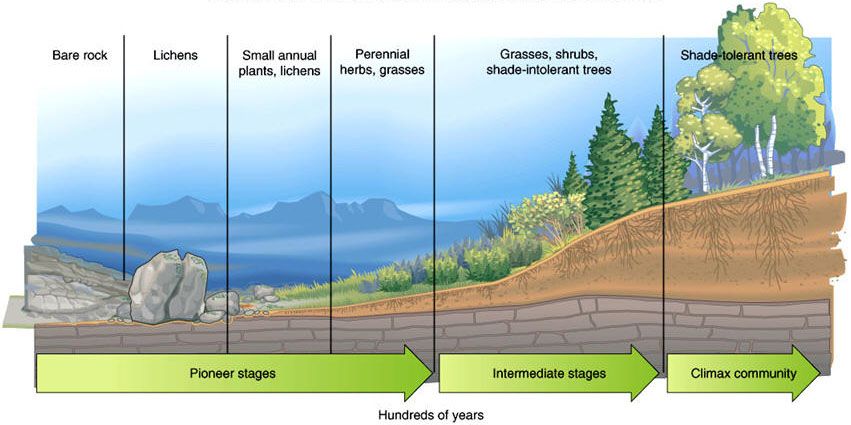
The picture shows what type of succession?
a)
primary
b)
secondary
c)
tertiary
d)
quadanary
5.
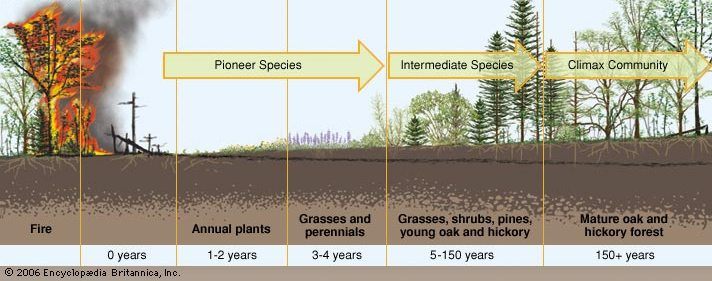
The picture shows what type of succession?
a)
primary
b)
secondary
c)
tertiary
d)
quadanary
6.
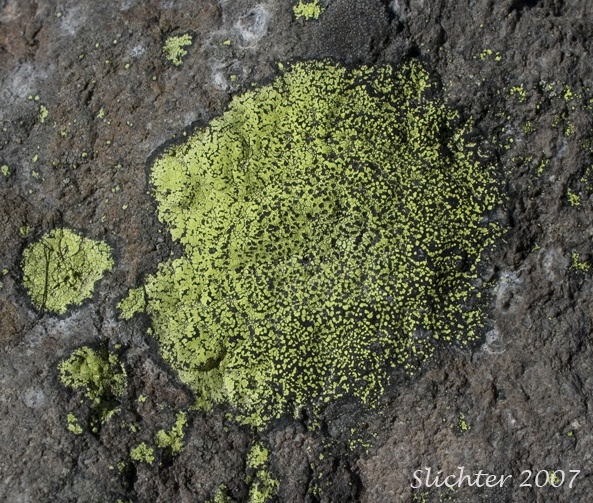
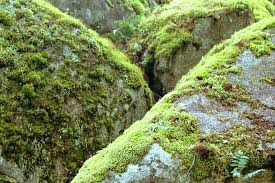
What is the name given to lichen or algae after a primary succession?
a)
pioneer species
b)
volunteer species
c)
founder species
d)
conqueror species
7.
What are examples of pioneer species in a primary succession?
a)
Bushes and Shrubs
b)
Oak trees
c)
Mossess and Lichens 
d)
A rose Bush
8.
After a volcanic eruption, lava covers the land. What is the order that plants grow to repopulate the area?
a)
Lichens → Shrubs → Grasses → Trees
b)
Lichens → tree → shrubs→Grasses
c)
Grasses → Lichens → Shrubs → Trees
d)
Lichens → Grasses → Shrubs → Trees
9.
Reaches a climax community quicker because soil is already present
a)
primary succession 
b)
secondary succession
c)
both types of succession
10.
Succession that occurs in an area with NO SOIL
a)
ecological succession 
b)
primary succession 
c)
secondary succession
d)
pioneer speciles
11.

What type of species/community is a redwood forest?

a)

Climax Community

b)

Pioneer Species

c)

Intermediate Species

d)

Tertiary Community

12.
Natural disasters such as flooding and tornadoes are linked to ________________.
a)
primary
b)
secondary
c)
old field
d)
ecosystem
13.
starts with bare rock followed by lichen
a)
primary succession 
b)
secondary succession
c)
both types of succession
14.
this type of succession occurs after a forest fire
a)
primary succession
b)
secondary succession
c)
both
15.
What is the cause of rising surface temperatures of the Pacific Ocean, drought in the western United States, and flooding on the Pacific coast of South America?
a)
the Gulf Stream
b)
the Jet Stream
c)
La Nina
d)
El Nino
16.
How could La Niña affect weather during the summer in North Carolina?
a)
It could decrease wind.
b)
It could increase rainfall. 
c)
It could decrease rainfall. 
17.
Which lists some effects of El Niño?
a)
warmer temperatures and more rain
b)
warmer temperatures and less rain
c)
cooler temperatures and less rain
18.
Which weather conditions are associated with El Niño?
a)
increased temperature, increased precipitation
b)
decreased temperature, increased precipitation
c)
increased temperature, decreased precipitation
d)
decreased temperature, decreased precipitation
19.

What oceanic and atmospheric conditions DOES NOT occur during a La Niña?

a)

changes in the intensity and distribution of rainfall in the Tropics

b)

changes in the patterns of sea level pressure

c)

atmospheric circulation that affect many areas worldwide.

d)

cold oceanic patterns that occur near the Equator

20.
Which best explains why El Niño could cause an increase in precipitation in California?
a)
Which best explains why El Niño could cause an increase in precipitation in California?
b)
Warmer ocean water allows for warm air to be blown toward the United States and cause droughts.
c)
Cooler ocean water causes the air to cool, and brings high air pressure to the United States.
d)
Warmer ocean water allows for warmer, wet air to travel east toward the United States.
21.

During a(n) ____ event, trade winds are much stronger than usual.

a)

El Nino

b)

La Nina

c)

Normal

d)

Partly sunny

22.

During an El Nino, trade winds are typically...

a)

about average

b)

stronger

c)

weaker

23.

This animation represents which of the Milankovitch Cycles?

a)

Eccentricity

b)

Precession

c)

Obliquity

24.

This animation represents which of the Milankovitch Cycles?

a)

Eccentricity

b)

Precession

c)

Obliquity

25.

This animation represents which of the Milankovitch Cycles? (tilt of the Earth's axis)

a)

Eccentricity

b)

Precession

c)

Obliquity

26.

Eccentricity influences the shape of the Earth’s orbit around the sun. As eccentricity increases, the shape of Earth’s orbit becomes more…

a)

Circular

b)

Oval-shaped

c)

Square

d)

None of the above

27.
Which of the following is a natural cause of long term climate change?
a)
Burning Fossil Fuels
b)
Milankovitch Cycles
c)
Deforestation
d)
All of them
28.
Which season is shown in the northern hemisphere?
a)
winter
b)
spring
c)
summer
d)
fall
29.
Which is NOT a process of the water cycle?
a)
precipitation
b)
freezing
c)
transpiration
d)
evaporation
30.
The process of plants losing water through their leaves is called ____.
a)
condensation
b)
evaporation
c)
transpiration
d)
exhaling
31.
What is the most abundant gas in the atmosphere?
a)
hydrogen
b)
oxygen
c)
helium
d)
nitrogen
32.
Where are denitrifying bacteria found?
a)
In the soil
b)
Root nodules
c)
In dead things
d)
In the atmosphere
33.
What happens during the process of nitrogen-fixation?
a)
Nitrogen compounds turn into free nitrogen
b)
Free nitrogen turns into nitrogen compounds
34.
What is the only process that removes carbon from the atmosphere?
a)
combustion
b)
cellular respiration
c)
photosynthesis
d)
decomposition
35.
Where is carbon stored in the environment?
a)
Fossil fuels
b)
Wood of trees
c)
Calcium carbonate (shells and bones)
d)
All of the above
36.
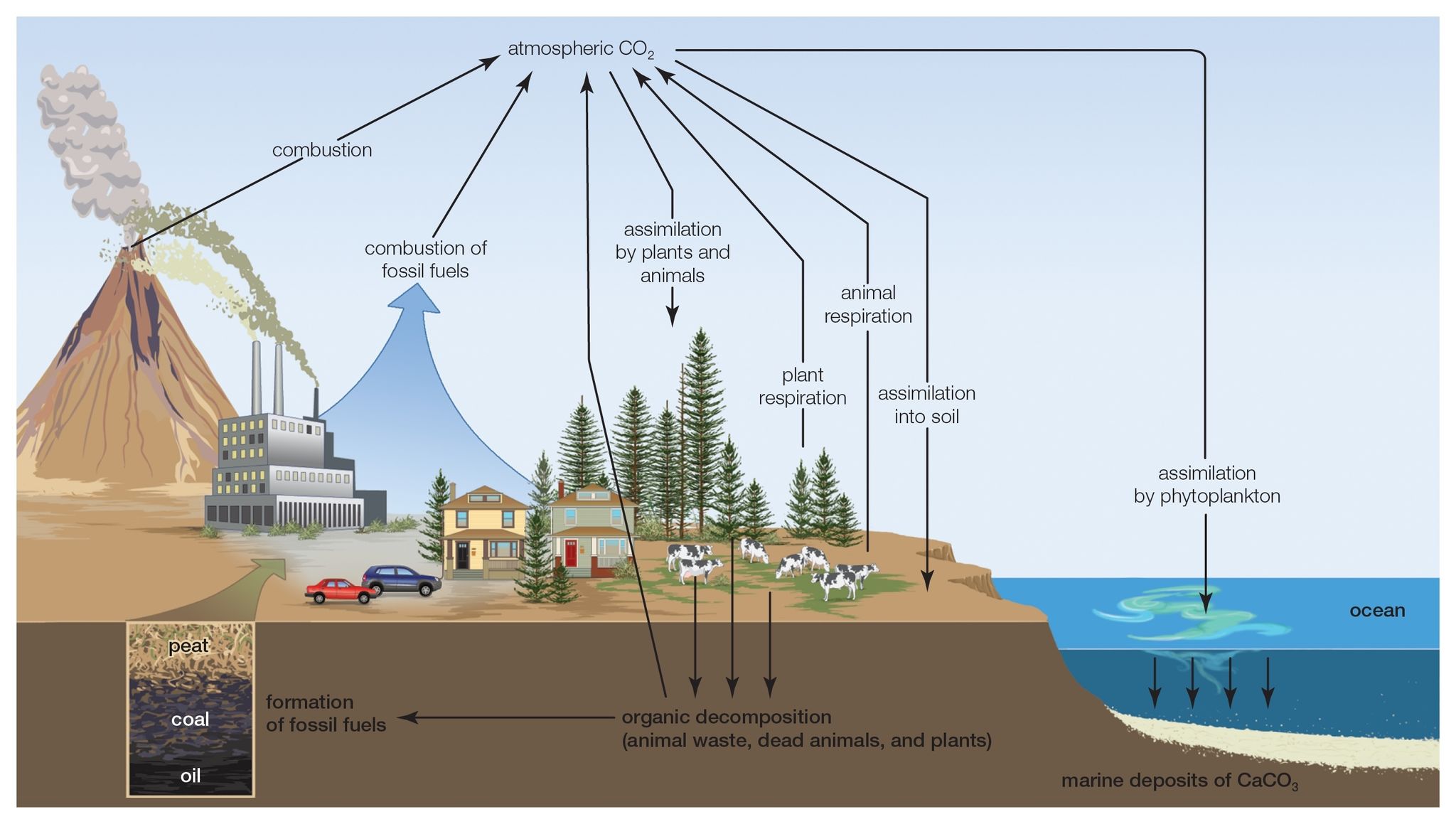
What is this a picture of?
a)
Nitrogen cycle
b)
carbon cycle
c)
water cycle
d)
plant cycle
37.
Identify the cycle pictured.
a)
The Water cycle
b)
The Carbon cycle
c)
The Nitrogen cycle
d)
The Phosphorus cycle.
38.

Which of the following absorb carbon dioxide from the atmosphere?

a)

Plants

b)

The ocean

c)

Sedimentary rocks

d)

all of these

39.
Water temperature would be an example of ...
a)
a biotic factor.
b)
an abiotic factor.
40.
A collection of organisms that belong to different populations but all live in the same area and interact with one another.
a)
Population
b)
Ecosystem
c)
Community
d)
Ecosphere
41.
A place where an organism lives.
a)
Terrain
b)
Habitat
c)
Community
d)
Population
42.
A collection of organisms that make up a community as well as all of the nonliving aspects of the environment.
a)
Population
b)
Community
c)
Habitat
d)
Ecosystem
43.
The role or function or job of a species in a community.
a)
habitat
b)
diet
c)
niche
d)
ecosystem
44.

Two organisms that are so similar they can interbreed in nature and produce fertile offspring.

a)

biotic factor

b)

herbivore

c)

ecosystem

d)

species

45.

Living factors or organisms that affect an ecosystem...

a)

abiotic factors

b)

species

c)

trophic level

d)

biotic factors

46.
What are the biotic factors in this image?
a)
sunlight, elephants, and grasses
b)
sunlight, water,  and air
c)
elephants, plants, trees 
47.
What are the abiotic factors in this image? 
a)
water, sunlight, dirt, air
b)
birds and plants
c)
water, plants, and birds 
48.
The shrew provides energy for the _______?
a)
cricket
b)
grasshopper
c)
frog
d)
snake
49.
Which of the following is a herbivore?
a)
cricket
b)
frog
c)
hawk
d)
shrew
50.
What energy role do the kelps and other algae have in this food web?
a)
Producer
b)
Composer
c)
Consumer
d)
Decomposer
51.
Which organism gets its energy by eating sea otters?
a)
Sea urchins
b)
Sea Stars
c)
Sharks
d)
Large crabs
52.
Which of the following organisms is a primary or first level consumer?
a)
Sea Urchins
b)
Small herbivorous fishes and invertebrates
c)
Sharks
d)
Sea Otters
53.
Which organism in this food web is a carnivore?
a)
Mouse
b)
Grasshopper
c)
Green Plant
d)
Snake
54.
An organism that needs to eat other organisms to obtain energy is known as a:
a)
Autotroph
b)
Producer
c)
Consumer
d)
Mutualist
55.
What is another name for producer?
a)
consumer
b)
herbivore
c)
autotroph
d)
lichen
56.
The rabbit in this food web would be considered a:
a)
Decomposer
b)
Producer
c)
Secondary Consumer
d)
Primary Consumer
57.
In the energy pyramid here, which organisms have the most energy available?
a)
Producers
b)
Carnivores
c)
Herbivores
d)
Top Predator
58.
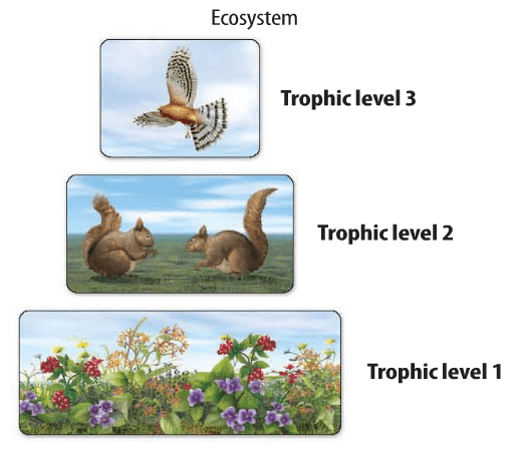
If there is 1000 Kcal available in the producers in trophic level 1, how much energy is available in the herbivores in trophic level 2?
a)
10 Kcal
b)
1 Kcal
c)
100 Kcal
d)
1000 Kcal
59.
In the energy pyramid below, which organism has the least amount of energy available?
a)
Producers
b)
Herbivores
c)
Carnivores
d)
Top Predator
60.
If these organisms were arranged in a food pyramid, which organism would have the least amount of total energy available?
a)
coyote
b)
insect
c)
lizard
d)
shrub
61.
Which level will contain plants?
a)
A
b)
B
c)
C
d)
D
62.
Position that an organism occupies based on what it eats
a)
biomass
b)
autotroph
c)
trophic level
d)
carnivore
63.
What aquatic biome is characterized by flowing fresh water?
a)
Lakes/Ponds
b)
Mangroves Swamps
c)
Rivers/Streams
d)
Coral Reefs
64.
Which brackish watery biome has some areas that are salty, and some areas that are freshwater?
a)
freshwater
b)
coral reef
c)
estuary
d)
ocean
65.
Which watery biome has the highest concentration of salt?
a)
estuary
b)
wetland
c)
freshwater
d)
coral reef
66.
Which watery biome has the lowest concentration of salt?
a)
freshwater
b)
ocean
c)
coral reef
d)
wetland
67.
Which is NOT a freshwater ecosystem?
a)
a river
b)
a lake 
c)
an estuary
d)
a stream
68.
What lake zone has the highest photosynthetic rate?
a)
Profundal
b)
Benthic
c)
Limnetic
d)
Littoral