wayground logo

Free Printable Worksheets

Font size

S
M
L
XL
Worksheets

Biology Review Quarter 1

Total questions: 55

Worksheet time: 52mins

Name
Class
Date
1.

Select the two REACTANTS of photosynthesis.

a)

oxygen

b)

carbon dioxide

c)

glucose

d)

water

2.

Select the two REACTANTS of cellular respiration.

a)

oxygen

b)

carbon dioxide

c)

glucose

d)

water

3.

Select the two PRODUCTS of cellular respiration.

a)

oxygen

b)

carbon dioxide

c)

glucose

d)

water

4.

Select the two PRODUCTS of photosynthesis.

a)

oxygen

b)

carbon dioxide

c)

glucose

d)

water

5.

What is the purpose of cellular respiration?

a)

to make oxygen

b)

to make carbon dioxide

c)

to make sugar

d)

to make ATP energy

6.

Select the step(s) of cellular respiration that require no oxygen.

a)

glycolysis

b)

Krebs cycle

c)

electron transport chain

d)

carbonation

7.

Select the step(s) of cellular respiration that require oxygen.

a)

glycolysis

b)

Krebs cycle

c)

electron transport chain

d)

carbonation

8.

What is the energy source for photosynthesis?

a)

ATP energy

b)

sunlight

c)

electricity

d)

ADP energy

9.
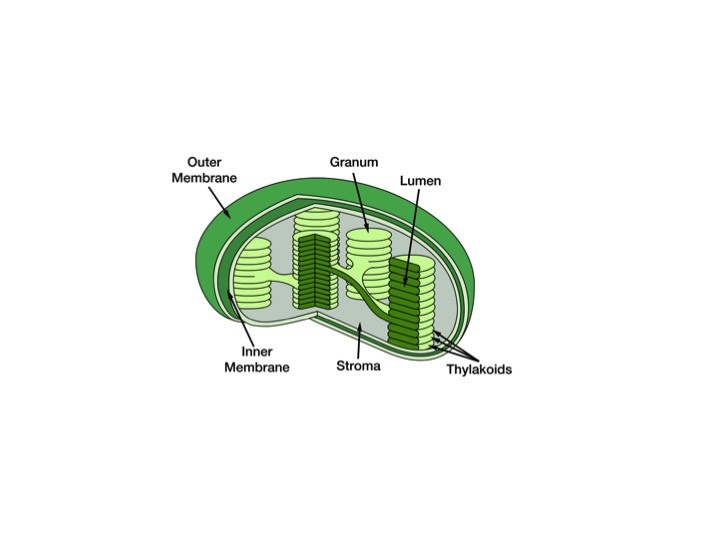
Which organelle performs PHOTOSYNTHESIS?
a)
Chloroplast
b)
Mitochondria
10.
Chloroplasts are...
a)
Structures of animal cells to produce ATP
b)
Organelles where lipids are elaborated
c)
Specialized structures of plants where food is made
d)
Waste organelle of plants
11.

What are the names of the two reactions that occur during photosynthesis?

a)

Light independent reaction

b)

Krebs Cylce

c)

Light deferment reaction

d)

Light dependent reaction

12.
Use the diagram to answer the question. Which chemical is an electron carrier molecule?
a)
H2O
b)
carbon dioxide
c)
NADP+
d)
oxygen
13.

Both plants and animals use photosynthesis.

a)

True

b)

False

14.

Select all the organisms that use cellular respiration.

a)

Bears

b)

Beets

c)

Bacteria

d)

Blue whales

15.

If a plant is facing away from the sun, it will move to face the sun.

a)

True

b)

False

16.
Which type of respiration occurs without the presence of oxygen?
a)
Aerobic 
b)
Anaerobic 
17.
What is the net gain of ATP during glycolysis?
a)
1
b)
2
c)
4
d)
34
18.
___ produces the most ATP.
a)
Aerobic respiration
b)
Anaerobic respriation
c)
Glycolysis
d)
Photosynthesis
19.

What is the total net gain of ATP at the end of aerobic respiration?

a)

2-4 ATP

b)

32-34 ATP

c)

36-38 ATP

d)

40-42 ATP

20.
What are tiny organelles that convert glucose into ATP?
a)
Ribosomes
b)
Vesicles
c)
Cytoskeleton
d)
Mitochondria
21.
Proteins are made of monomers called ___________
a)
Nucleotides
b)
Monosaccharides
c)
Amino Acids
d)
Glycerol and fatty acids
22.

The element _______is found in all of the organic compounds.

a)

Iron

b)

Nitrogen

c)

Carbon

d)

Phosphorus

23.
_________ are composed out of carbon (C), hydrogen (H), oxygen (O), nitrogen (N), and phosphorus (P)
a)
Carbohydrates
b)
Lipids
c)
Proteins
d)
Nucleic Acids
24.
DNA and RNA are examples of 
a)
Carbohydrates
b)
Lipids
c)
Proteins
d)
Nucleic Acids
25.
Monosaccharides are monomers of
a)
Carbohydrates
b)
Lipids
c)
Proteins
d)
Nucleic Acids
26.
Nucleotides are monomers of
a)
Carbohydrates
b)
Lipids
c)
Proteins
d)
Nucleic Acids
27.
Waxes, oils and fats are examples of
a)
Carbohydrates
b)
Lipids
c)
Proteins
d)
Nucleic Acids
28.
Glycerol and fatty acids are the monomers of
a)
Carbohydrates
b)
Lipids
c)
Proteins
d)
Nucleic Acids
29.
Which macromolecule is shown?
 View Figure 1 (if not visible)
a)
lipid
b)
protein
c)
nucleic acid
d)
carbohydrate
30.
What is the function of nucleic acids?
a)
store genetic information
b)
store energy (long-term)
c)
store energy (short-term)
d)
build skin, hair, nails, muscles
31.
Which macromolecule is shown?
 View Figure 2 (if not visible)
a)
lipid
b)
protein
c)
nucleic acid
d)
carbohydrate
32.
Which macromolecule is shown?
 View Figure 3 (if not visible)
a)
lipid
b)
protein
c)
nucleic acid
d)
carbohydrate
33.
Which macromolecule is shown?
 View Figure 4 (if not visible)
a)
lipid
b)
protein
c)
nucleic acid
d)
carbohydrate
34.
What type of macromolecule are enzymes?
a)
Protein
b)
Carbohydrate
c)
Lipid
d)
Nucleic Acid
35.

Which of the following organic compounds is the main and immediate source of energy for living things?

a)

carbohydrates

b)

lipids

c)

nucleic acids

d)

proteins

36.
Lipids are made of... 
a)
C H O
b)
C H O N
c)
C H O N P
d)
C H O N S
37.
Proteins are made of... 
a)
C H O
b)
C H O N
c)
C H O N P
d)
C H O N S
38.
Which macromolecule stores energy, insulates us, and makes up the cell membrane?
a)
lipids
b)
proteins
c)
carbohydrates
d)
nucleic acids
39.
Which macromolecule is made of simple and complex sugars?
a)
lipids
b)
proteins
c)
carbohydrates
d)
nucleic acids
40.

Monomer is to Macrocolecule like ___ is to ____

a)

Building is to Bricks.

b)

Brick is to Building.

c)

Carpenter is to Building.

d)

Building is to Carpenter.

41.

Homeostasis is the regulation and maintenance of the ________

a)

External Environment

b)

Ecosystem

c)

Internal environment

d)

Body temperature

42.

Every change is a challenge to your body, and the environment is _______________

a)

never changing

b)

constantly changing

c)

changing often

d)

changing sometimes

43.

In negative feedback, a control system _________________ any change in the body that moves conditions above or below a set point.

a)

increases

b)

counteracts

c)

adds to

d)

prevents

44.

Negative feedback helps to keep...

a)

the environment always changing

b)

a stable external environment

c)

the internal environment stable

d)

changes inside the body to keep changing

45.

In _______________, the control center uses information from the sensors to increase the rate of change away from a set point.

a)

Negative Feedback

b)

Homeostasis

c)

Mitochondria

d)

Positive Feedback

46.

Which term most accurately describes your body's response to temperature changes?

a)

Positive Feedback

b)

Negative Feedback

c)

Control Center

d)

Condensation

47.
The clear, jelly-like material in a cell that supports and protects the cell’s organelles.
a)
Cytoplasm
b)
Cell Membrane
c)
Nucleus
d)
Mitochondria
48.
The part of the cell that makes protein.
a)
Vacuoles
b)
Ribosomes
c)
Golgi Apparatus
d)
Cytoplasm
49.
Protects the cell from the outside environment. (Only Plants)
a)
Cell Membrane
b)
Chloroplasts
c)
Cell Wall
d)
Vacuoles
50.
Packages proteins into vesicles and ships them out.
a)
Endoplasmic Reticulum
b)
Ribosomes
c)
Golgi Apparatus
d)
Nucleus
51.
Provides support and protection for the cell while also controlling the movement of materials in and out of the cell.
a)
Cellular Membrane
b)
Nucleus
c)
Ribosomes
d)
Vacuole
52.
Breaks down food  to release energy. Known as the power plant of the cell.
a)
Endoplasmic Reticulum
b)
Mitochondria
c)
Ribosomes
d)
Cell Wall
53.
The part of the cell that is used for storage.
a)
Nucleus
b)
Cell Membrane
c)
Mitochondria
d)
Vacuole
54.
The control center of the cell.
a)
Nucleus
b)
Nuclear Membrane
c)
Chloroplasts
d)
Golgi Aparatus
55.
Uses energy from the sun to make food for the plant.
a)
Cell Wall
b)
Cell Membrane
c)
Chloroplasts
d)
Vacuole