Worksheets
Unit 1 Introduction to Economics Test
Total questions: 55
Worksheet time: 2hrs 50mins
A need is ____________.
a physical object
something that is necessary for survival
an item we want
an item we desire but that is not essential for survival
A want is _________________.
a physical object
something that is necessary for survival
an item we want
an item we desire but that is not essential for survival
According to economist a good is
a physical object
an item we need or want
an item we desire but that is not essential for survival
an action or activity that one person performs for another
According to economist service is _______________.
a physical object
something that is necessary for survival
an item we desire but that is not essential for survival
an action or activity that one person performs for someone else

Which of these examples is a service?
Mr. Farr sells guitars.
Mr. Swenson gives art supplies to consumers.
Coach provides lessons for different sports.
Ms. Miller writes books.
Economics is the study of how people make choices about ways to use _______________ resources to fulfill their unlimited wants and needs.
Limited
Unlimited
Natural
Man-made
Scarcity is known as the __________________.
limited amount of resources to meet the unlimited wants
unlimited amount of resources to meet the limited wants
limited amount of resources to meet the limited wants
unlimited amount of resources to meet the unlimited wants
Which of the following statements is true about scarcity?
A. Scarcity is our inability to satisfy all of our wants.
B. Scarcity problem arises because our wants are greater than resources available.
C. The poor and the rich both face scarcity.
D. All of the above.
WHAT ARE THE 4 FACTORS OF PRODUCTION?
Land, Capital, Need & Want
Land, Labor, Capital, Entrepreneurs
Water, Air, Food & Shelter
Land, Capital, Good & Service
WHAT IS LABOR?
work people do for pay to produce good and services
actions people do for other people
any physical object
The money people get for inheritance
_______________ IS KNOWN AS THE NATURAL RESOURCES USED TO PRODUCE GOODS AND SERVICES
Entrepreneurs
Capital
Labor
Land
_______________ IS KNOWN AS THE MANMADE RESOURCES USED TO PRODUCE GOODS AND SERVICES.
Entrepreneurs
Capital
Labor
Land
AN ENTREPRENEUR IS A PERSON WHO _______________.
owns their own business
uses goods and services to produce labor, land, and capital.
uses land, labor, and capital to produce good and services.
loves nature and runs a business

Which of the factors of production is this?
capital
entrepreneur
land
labor
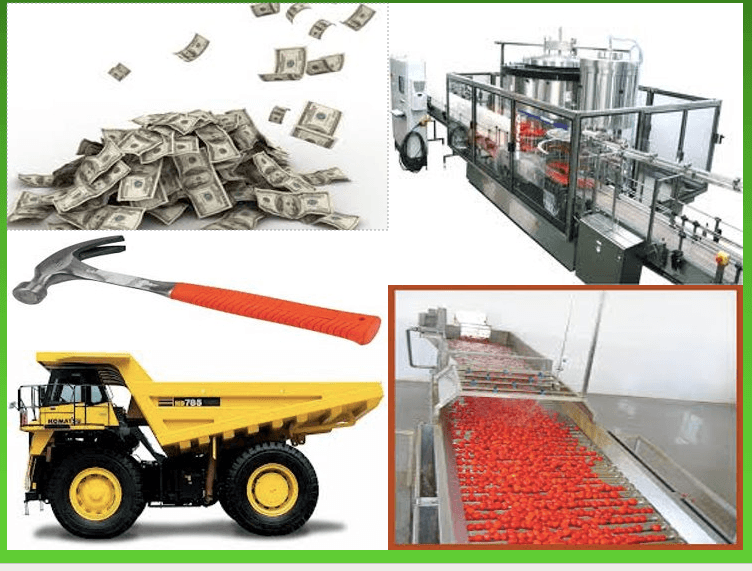
Which one of the factors of production is this?
capital
entrepreneur
land
labor
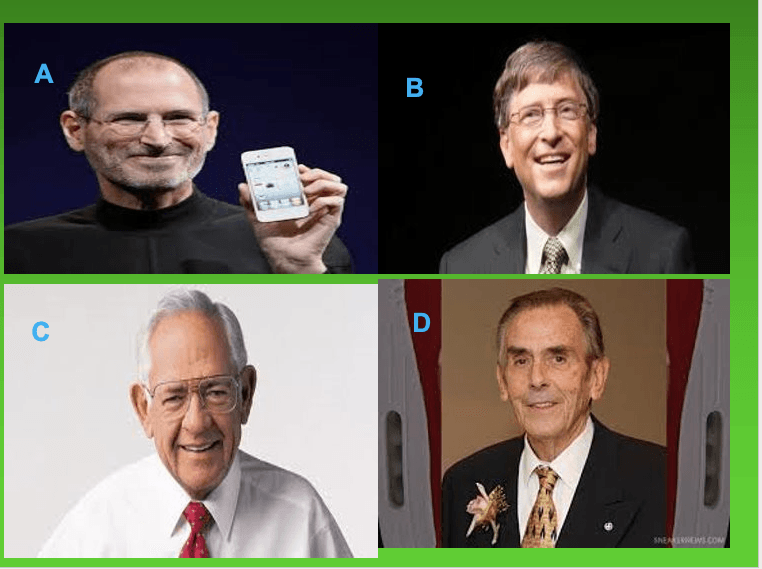
Steve Jobs the founder of Apple is holding up an I-phone. What is another name for someone who starts a business?
capital
entrepreneur
land
labor
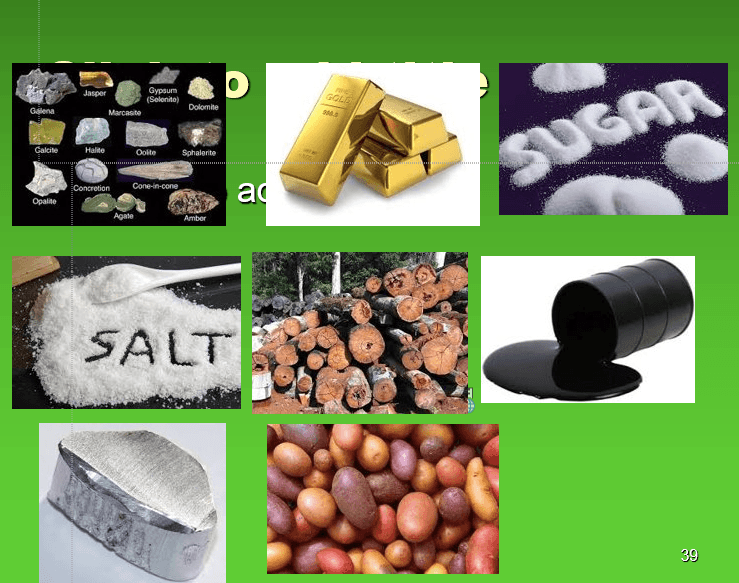
Which factor of production is this?
capital
entrepreneur
land
labor
What are the three basic economic questions?
What to produce? How to produce? For whom to produce?
Who to produce? Why you produce? Like to produce?
Why to produce? Tell who to produce? Things to produce?
Which one of these characteristics of a market economy makes it the best for buyers?
lack of choice
individual choice
competition
central ownership of property
Which type of economic system bases its decisions on custom, habits and rituals?
Market Economy
Mixed Economy
Command Economy
Traditional Economy
Who benefits from market transactions?
Buyers only
Sellers only
Both Buyers & Sellers
Only the government
What is a market? choose the best answer
A place where goods and services are exchanged
a grocery store
a place where wants and needs are given and taken
school
Another name for Buyer & Seller is?
Taker and Giver
Finder and Keeper
Student and Teacher
Consumer and Producer
What is the goal of a buyer?
to buy good and services
to sell goods and services
Fulfill wants and needs
to make a profit
What is the goal of a seller?
to buy goods and services
to sell goods and services
to fulfill wants and needs
to make a profit
_____________ establishes the monetary value of products in our economy
The price system
specialization
voluntary exchange
private property
When businesses compete for consumers and resources. This is known as __________.
specialization
market competition
private property
the price system
The right for individuals to own and control resources and products
specialization
private properly
market competition
entrepreneurship
When individuals or businesses focus on doing one thing
specialization
the price system
entrepreneurship
market competition
What other things drive economic behavior?
needs and wants
health issues
loyalty
all of the above
Opportunity Cost is
The alternatives you didn't choose because we hate them
The second best alternative given up for a decision
The negative aspects of an action
The choice you made first
Trade-offs
Are the same as opportunity costs
Can all be considered opportunity costs; or a sacrifice between two good choices
Is only the next best alternative to the choice you made
Weight the costs and benefits
The Production Possibilities Frontier shows the various combinations of output:
consumers would like to consume
producers would like to produce
an economy can produce
an economy should produce
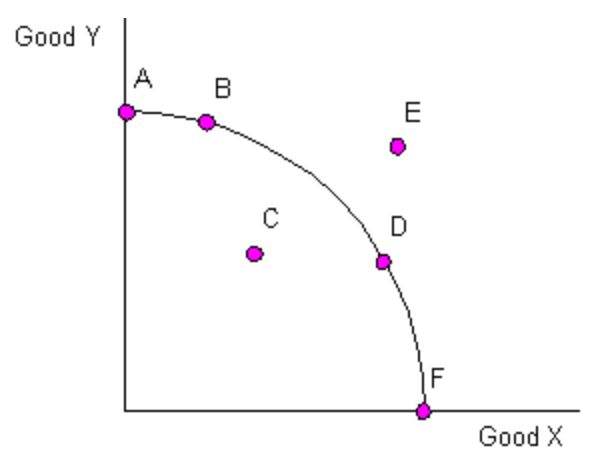
Which point represents an underutilization/inefficiency of a country's resources?
B
C
A, B, D & F
E
Which point (s) represents efficient usage of a country's resources?
A, B, D, & F
C
E
None of the above
Which point(s) represent none production with the given country's resources? Because it cannot be done.
B
C
A, D, B & F
E
The Gross Domestic Product measures the value of economic activity within a country.
True
False
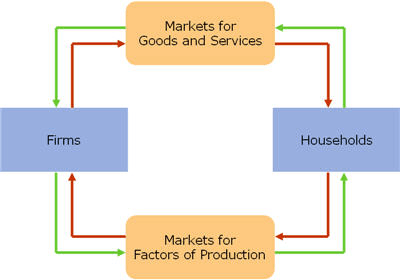
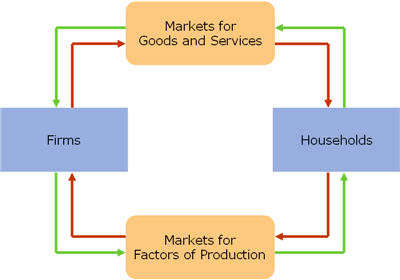
What are the four main parts of the circular flow diagram?
Product Market, Stock Market, Factor Market, Fish Market
Product Market, House Market, Factor Market, Good Market
Factor Market, Product Market, Households, Firms
Factor Market, households, Stock Market, super market
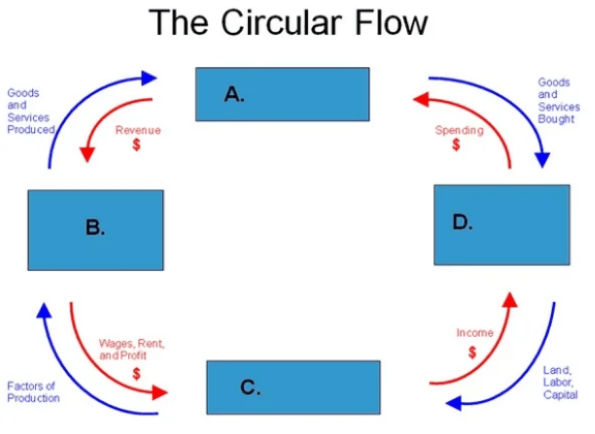
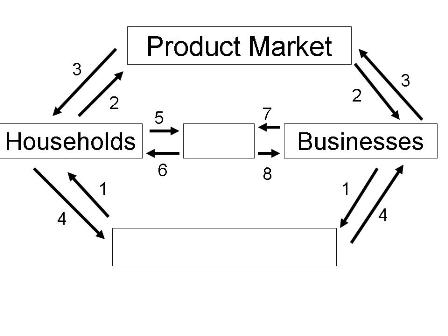
Point B represents (hint this is the opposite of our chart)
Product Market
Factor Market
Households
Businesses
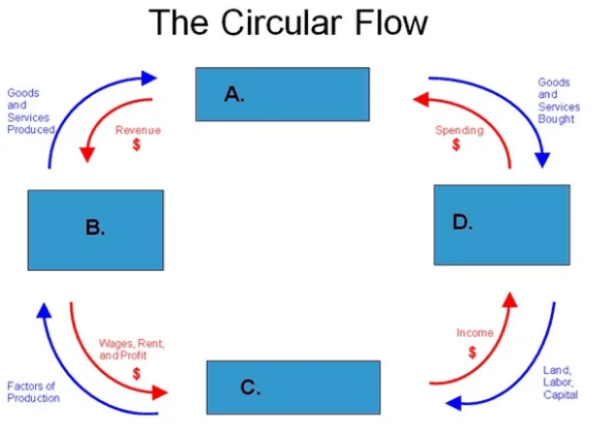
What does point A represent on the Circular flow diagram?
Households
Businesses
Factor Market
Product Market
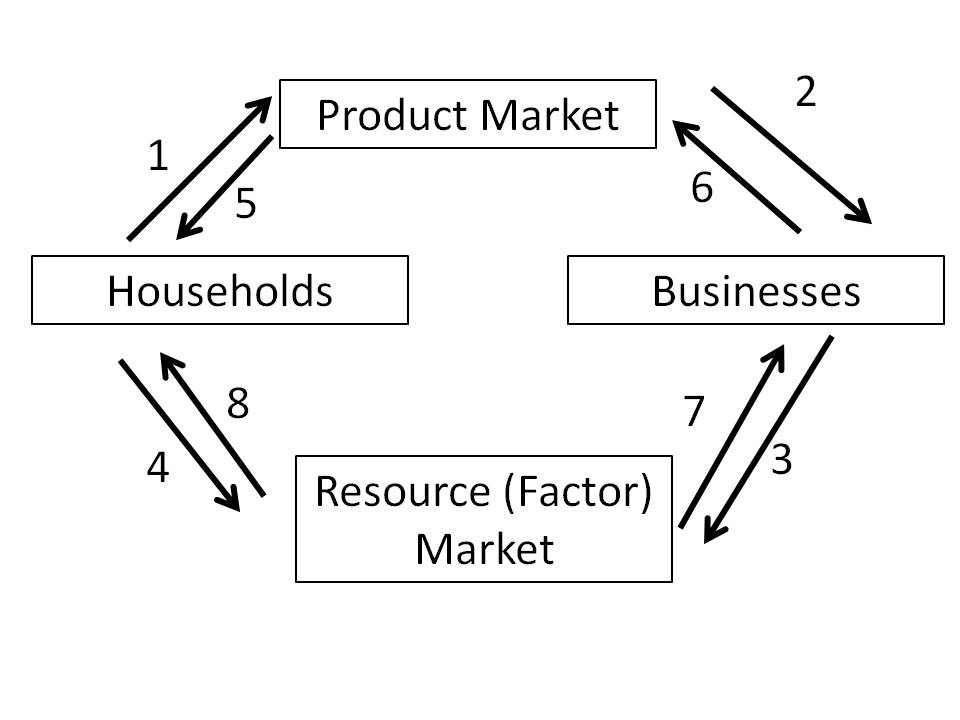
Arrows 4 and 7 on this circular flow diagram demonstrate (reminder 4 should be on the inside of the flow)
prices
taxes
goods and services flow
money flow
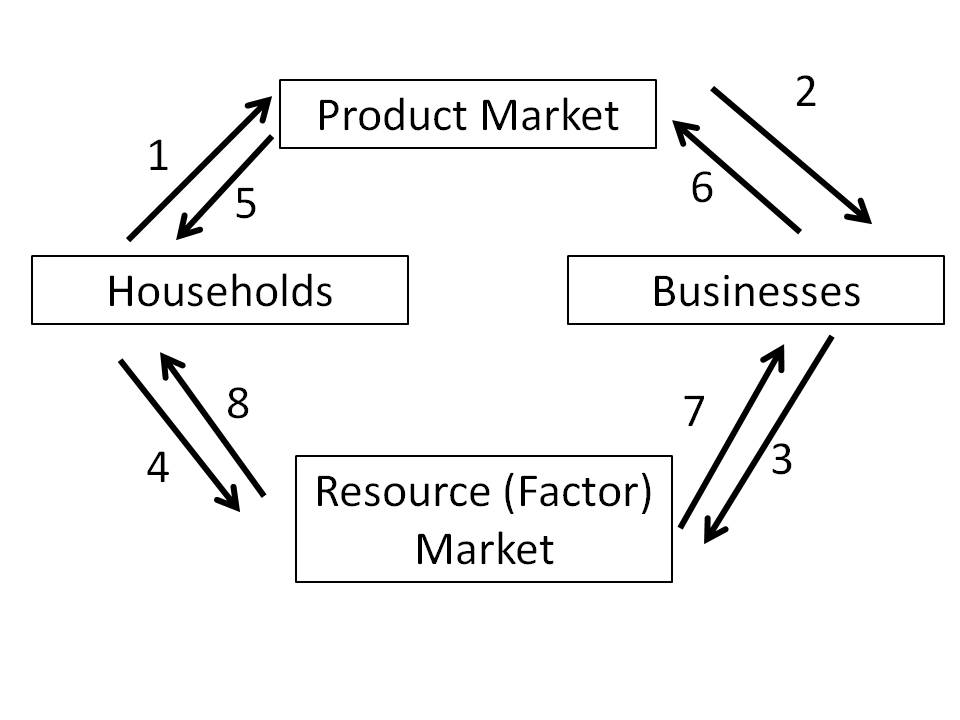
The arrows 1 to 2 in this diagram represent which aspect of the economy?
goods and services flow
money flow
taxes
factors of production