wayground logo

Free Printable Worksheets

Font size

S
M
L
XL
Worksheets

Intro to Geology Review

Total questions: 64

Worksheet time: 1hrs 16mins

Name
Class
Date
1.
Based on current scientific evidence, how old is the Earth?
a)
6,000 years old
b)
460 million years old
c)
4.6 billion years old
d)
46 billion years old
2.

Earth's layers are made up mostly of __________?

a)

Rocks and metals

b)

Plastic and rocks

c)

Molten water

d)

Gases

3.

The inner core is the thickest layer of Earth?

a)

True

b)

False

4.

Earth is made up of how many layers?

a)

1

b)

2

c)

3

d)

4

e)

5

5.

What is the Earth Constantly doing?

a)

Changing

b)

Staying the same

c)

Falling apart

d)

Nothing

6.

The supercontinent that existed 225 MYA.

a)

Lachlan Drifting Lacy

b)

Pangaea

c)

Americas

d)

Eurasia

7.

The outermost layer is the ________.

a)

mantle

b)

crust

c)

inner core

d)

outer core

8.

The layer below the crust is the ____________.

a)

oceanic crust

b)

mantle

c)

inner core

d)

continental crust

9.

The core is made up mostly of _______________.

a)

oxygen

b)

magnesium

c)

iron

d)

carbon

10.

The second abundant element that makes up the core is ______________.

a)

nickel

b)

iron

c)

oxygen

d)

calcium

11.

All know life exist on this layer.

a)

inner core

b)

mantle

c)

core

d)

crust

12.

The inner core is ____________.

a)

solid

b)

molten

c)

unknown

d)

liquid

13.

The outer core is ___________.

a)

oxygen

b)

brittle rock

c)

solid rock

d)

molten rock

14.

The rock type that makes up Oceanic Crust is __________.

a)

granite

b)

conglomerate

c)

basalt

d)

gold

15.

The rock type that makes up continental crust is ____________________.

a)

copper

b)

silver

c)

basalt

d)

granite

16.
The outer core is liquid metal while the inner core is solid due to 
a)
water vapor
b)
great pressure
c)
a decrease in pressure
d)
being solid metal
17.
This layer of Earth is solid Iron and Nickel
a)
Outer Core
b)
Mantle
c)
Inner Core
d)
Crust
18.

What are the two types of crust

a)

continental and oceanic

b)

ocean and upper

c)

lower and upper

d)

pizza and subway

19.
What happens to pressure as we move from the crust to the inner core?
a)
Pressure Decreases
b)
Pressure Increases
c)
Nothing
20.
What happens to temperature as we move from the crust to the inner core?
a)
Decreases
b)
Increases
21.

What is the outer core made out of?

a)

Liquid metal

b)

Solid metal

c)

Liquid rock

d)

Solid rock

22.

What is the rising of hot liquid and the sinking of cooled liquid called?

a)

Confection current

b)

Convention current

c)

Convection current

d)

Lava lamp

23.

What moves the lithosphere?

a)

Ocean waves

b)

High and low pressure

c)

Convection currents in the asthenosphere

d)

Convection currents in the outer core

24.

Which is the correct statement?

a)

Oceanic crust is thinner but denser and younger.

b)

Continental Crust is thinner but denser and younger

c)

Oceanic crust is underneath the continental crust.

d)

Continental crust is underneath the oceanic crust.

25.

Basalt and granite are

a)

Layers of the earth

b)

Types of rock

c)

Cartoon characters

d)

Boundaries between layers

26.
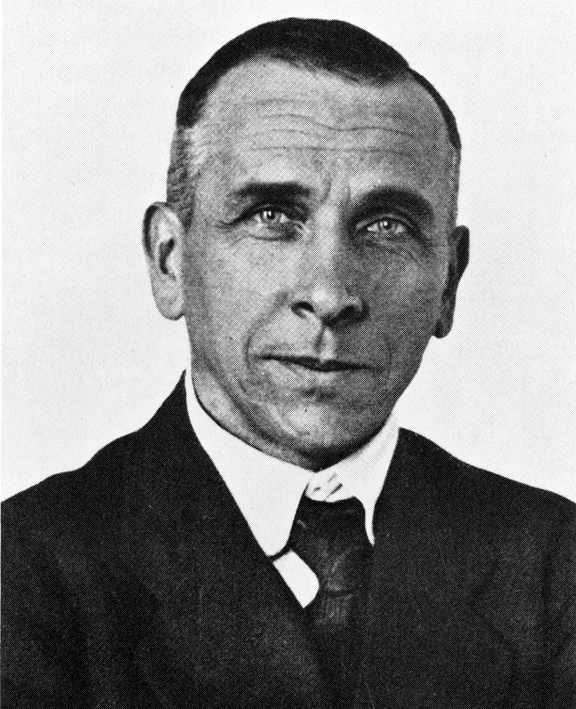
Who is the person credited with developing the theory of continental drift?
a)
Harry Hess
b)
Galileo
c)
Alfred Wegener
d)
Newton
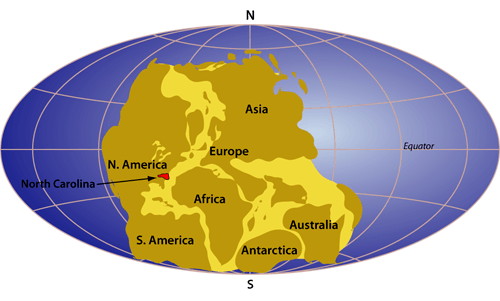
27.
What is this a picture of?
a)
plate tectonics
b)
continental drift
c)
pangea
d)
glacier scaring
28.
What does the theory of continental drift state?
a)
The continents were once joined in a super-continent and have moved over time
b)
Continents are stationary and do not move
c)
The Earth is broken into lithospheric plates that move due to convection currents
d)
none of the above
29.
What evidence did Wegener use in his theory?
a)
Continents and fossils fitting together/matching-up like puzzle pieces 
b)
glacier scars and evidence from temperature
c)
mountain ranges and coal deposits line up across continents
d)
all of the above
30.
Why did no one believe Wegener's thoery?
a)
He could not explain HOW the continents moved
b)
He didn't have evidence
c)
His data was wrong
d)
He didn't use the right technology to gather data
31.
What is the force that moves the continents? 
a)
Conduction 
b)
Convection 
c)
Radiation 
d)
Conveyor belts 
32.
What are the two types of crust?
a)
continental and oceanic
b)
ocean and basin
c)
lower and upper
d)
thick and thin
33.
What is Pangaea?
a)
the name of a German scientist
b)
the name of the super-continent that existed millions of years ago
c)
another name for continental drift
d)
the name of an ancient fossil
34.
What type of evidence was NOT used by Alfred Wegener to support his continental drift hypothesis?
a)
evidence from landforms
b)
evidence from fossils
c)
evidence from human remains
d)
evidence from climate
35.
The geological theory that states that pieces of Earth's lithosphere are in constant, slow motion is the theory of
a)
subduction
b)
plate tectonics
c)
evolution
d)
seafloor spreading
36.

What 3 things did Wegener study to support his ideas? Mark all THREE.

a)

matching fossils

b)

matching land features

c)

matching forces

d)

climate change

37.

What is the theory that continents were all once together and have drifted apart?

a)

american movement

b)

continental plates

c)

continental drift

d)

memorial drift

38.

This picture is an example of which type of evidence?

a)

matching fossil

b)

matching land formation

c)

climate change

d)

memorial movement

39.

This picture is an example of which type of evidence?

a)

matching fossil

b)

matching land formation

c)

climate change

d)

memorial movement

40.

What is the correct order (starting from the surface) of Earth’s layers?

a)

crust, outer core, inner core, mantle

b)

mantle, outer core, inner core, crust

c)

crust, mantle, outer core, inner core

d)

outer core, inner core, crust, mantle

41.

In sea-floor spreading, molten material rises from the mantle and erupts

a)

along the edges of all the continents.

b)

along mid-ocean ridges.

c)

in deep-ocean trenches.

d)

at the north and south poles.

42.

The process by which the ocean floor sinks beneath a deep-ocean trench and back into the mantle is known as _______

a)

convection.

b)

continental drift.

c)

subduction.

d)

conduction.

43.

Most geologists think that the movement of Earth’s plates is caused by _______

a)

convection.

b)

continental drift.

c)

subduction.

d)

conduction.

44.

The geological theory of _______ states that pieces of Earth’s lithosphere are in constant, slow motion.

a)

subduction

b)

plate tectonics

c)

deep-ocean trenches

d)

sea-floor spreading

45.

A place where two plates slip past each other, moving in opposite directions, is known as a _______

a)

transform boundary

b)

divergent boundary.

c)

convergent boundary.

d)

rift valley.

46.

Scientists think that convection currents flow in Earth’s

a)

continents.

b)

mantle.

c)

lithosphere.

d)

inner core.

47.

The place where two plates come together is known as a _______

a)

transform boundary.

b)

divergent boundary.

c)

convergent boundary.

d)

rift valley.

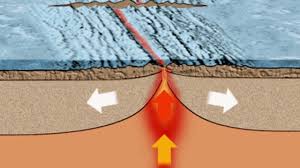
48.

Below is a picture of sea-floor spreading. How are the ocean crusts moving?

a)

Converging

b)

Diverging

c)

Sliding

d)

No movement

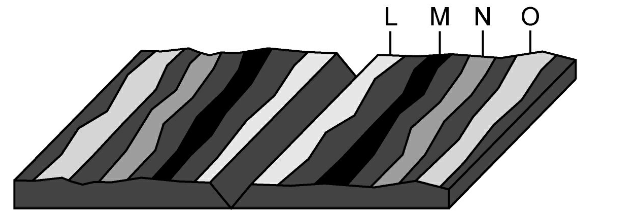
49.
Where would the oldest rock be found?
a)
L
b)
M
c)
N
d)
O
50.
How is it possible for new crust to be formed without increasing the surface area of the Earth?
a)
Crust is destroyed at the same time it is created
b)
New crust is underwater where it sinks
c)
New crust breaks more easily than old crust
51.
This layer of Earth is the thickest part
a)
crust
b)
outer core
c)
mantle
d)
inner core
52.
What are Tectonic Plates?
a)
A continent 
b)
The Trees in Vietnam 
c)
ThE PlaTES That MoVE uNdERGRound :)
d)
The Plates that move the Continents
53.
Mountains form from ...
a)
plates sliding past one another
b)
collision of plates
c)
plates moving away from each other
54.
What type of boundary occurs when two plates move away from each other?
a)
transform
b)
subduction
c)
convergent
d)
divergent
55.
Which type of crust is more dense?
a)
oceanic
b)
continental
c)
divergent
d)
pizza
56.
What type of boundary occurs when two plates move toward each other?
a)
convergent
b)
divergent
c)
transform
d)
lateral
57.
What forms at a convergent boundary between a continental plate and an oceanic plate?
a)
volcanoes
b)
rift valleys
c)
faults
d)
mid-ocean ridges
58.
A rift valley occurs at a ____________ boundary.
a)
divergent
b)
convergent
c)
transform
d)
horizontal
59.
What is the process in which hot molten rock rises, then cools and sinks back to the core?
a)
plate tectonics
b)
continental drift
c)
convection
d)
divergence
60.
A trench forms at a _________ boundary.
a)
convergent
b)
divergent
c)
transform
d)
vertical
61.
Mountains form at a ___________ boundary.
a)
transform
b)
divergent
c)
convergent
d)
subduction
62.
What type of boundary occurs when two plates slide past each other?
a)
divergent
b)
transform
c)
lateral
d)
convergent
63.
What type of boundary is shown at A?
a)
transform
b)
convergent
c)
divergent
d)
subduction
64.
What is happening at point B?
a)
subduction
b)
a divergent boundary
c)
convection
d)
an earthquake