
Font size
 Worksheets
Ionic, Covalent, and Metallic Bonding
Total questions: 103
Worksheet time: 2hrs 38mins
Identify the following compound as ionic or covalent: MgO
ionic
covalent
Identify the following compound as ionic or covalent: CF4
ionic
covalent
Identify the following compound as ionic or covalent: SO2
ionic
covalent
Identify the following compound as ionic or covalent: CO
ionic
covalent
When naming covalent compounds...
You need roman numerals and no prefixes
You do not need roman numerals or prefixes
You need roman numerals and prefixes
You do not need roman numerals but you do need prefixes
Pb4+ and O2- create...
Pb2O
PbO2
Pb2O2
PbO
Rb+ and P3- create...
Rb3P
RbP3
RbP
Rb2P
Ca2+ and F- create...
Ca2F2
Ca3F
CaF2
Ca2F
The name of FeCl₂ is
iron chloride
iron (II) chloride
iron (I) chloride
iron dichloride
LiBr is called
lithium bromine
lithium (I) bromine
lithium bromide
lithuim (I) bromide
Name the ionic compound SnSe2
Tin diselenide
Tin (IV) Selenide
Tin selenide
Tin (II) triselenide
Which of these combinations is an ionic compound made of?
Metal and Metal
Nonmetal and Nonmetal
Metal and Nonmetal
Cation and Cation
Name the following ionic compound: BeCl2
beryllium chlorine
beryllium II chloride
beryllium chloride
beryllium dichloride
Name the following ionic compound: Cs2S
cesium sulfide
cesium sulfate
cesium II sulfate
cesium II sulfide
Which of the following combinations would need roman numerals in the name?
potassium + fluorine
beryllium + oxygen
boron + iodine
gold + oxygen
When naming a compound, what must the last part be?
the element with "ide" at the end
the element with the ending "ite"
the name of the element
the element with "ide" at the end, unless its a polyatomic ion
What is the name of the compound Na2(SO4)?
Sodium sulfate
Sodium sulfide
Sodium sulfite
Sodium sulfuroxide
What is the name of the compound Sc(OH)3?
Scandium (III) hydroxide
Scandium (I) hydroxide
Scandium (II) hydroxide
Scandium hydroxide
The name of the compound Ca3(PO4)2
calcium phosphate
tricalcium diphosphate
calcium phosphorus oxide
calcium phosphide
Which of the following is NOT covalently bonded?
K2S
H2O
I2
CO2
Name the following compound:
CO2
monocarbon dioxide
carbon oxide
carbon dioxide
oxygen carbonide
Name the compound: NO
Mononitrogen monoxide
nitrogen oxide
nitrogen monoxide
mononitrogen oxide
Name the compound: SO3
Monosulfur trioxide
Sulfate trioxide
Sulfur trioxide
Monosulfate oxide
Which pair of atoms is most likely to form a covalent molecule?
Hydrogen and lithium
Phosphorus and sulfur
Helium and neon
Zinc and Boron

The following properties are all characteristics of ionic compounds EXCEPT
high melting and boiling points
soft
crystal lattice structure
conduct electricity when dissolved in water
What is the name of the three-dimensional pattern that forms when ions bond?
a crystal lattice
a chemical compound
an ionic bond
an ionic chalice
Ionic bonds could be best described as:
A bond formed when 2 atoms share electrons
A firm handshake
An electrostatic attraction between oppositely charged ions
An electrostatic attraction between anions
Why do atoms form bonds?
to attain a noble gas configuration
to increase their mass
to increase their atomic number
to attain an alkali metal configuration
Which of the following is TRUE about ionic compounds?
They have low melting and boiling points.
They can conduct electricity in the solid state.
They are stronger than covalent bonds.
They are usually formed from 2 metals.
A single covalent bond is made up of _____ electrons.
one
two
three
four
How are compounds with metallic bonds similar to ionic compounds?
Both tend to have double and triple bonds.
Both tend to have low boiling point
Both tend to have poor conductivity.
Both tend to have high melting points.




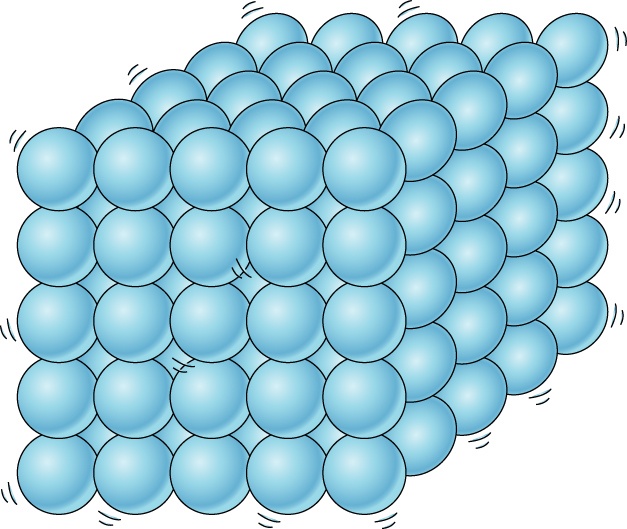
What state of matter?
Solid
Liquid
Gas
Plasma!!!
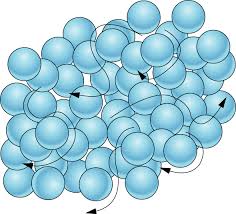
What state of matter?
Solid
Liquid
Gas
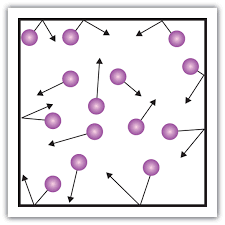
What state of matter?
Solid
Liquid
Gas
Electrons that are free to move in metals
sea of electrons
oxidation number
chemical bond
salts

Why does the melting point of metals increase across period 3, from Sodium (Na) to Aluminium (AI)?
Size of atoms gets smaller
Attraction force between nuclei and free electron increases
Increased space between the valence electrons in the "sea"
Increased number of valence electrons contributed to the "sea"
Why do metals conduct heat and electricity
They are shiny
The electrons are held tightly within the lattice
The electrons are in a sea and able to move
The electrons are shared between two metal ions
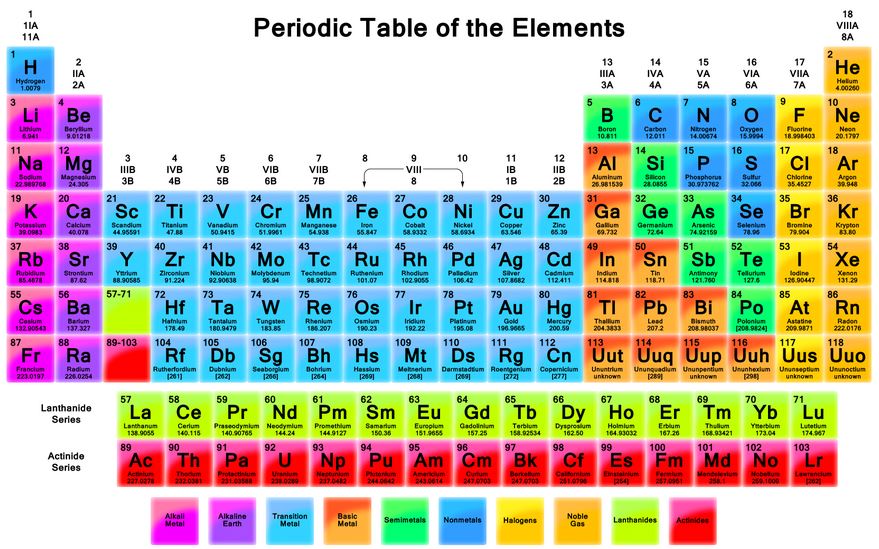
Which type of bond creates a "sea" of electrons between atoms?
Ionic Bonds
Covalent Bonds
Metallic Bonds
James Bonds

What type of bond?
Ionic
Covalent
Metallic
None
K3N

What type of bond?
Ionic
Covalent
Metallic
None

What type of bond?
Ionic
Covalent
Metallic
None

What type of bond?
Ionic
Covalent
Metallic
None

