wayground logo

Free Printable Worksheets

Font size

S
M
L
XL
Worksheets

Yr 12 Reaction Pathways

Total questions: 99

Worksheet time: 1hrs 2mins

Name
Class
Date
1.

In the reaction, which answer represents the product X?

a)
b)
c)
d)
2.

Which of the following molecules could be a reactant in an addition reaction?

a)

CH4

b)

CH3CH2CH3

c)

CH3CH2OH

d)

H2C=CH2

3.
Write a Balanced Equation for this reaction:
C2H4 + 2 O2 -->
a)
C2O2 + H4
b)
CO2 + HOH
c)
CO + H
d)
2 CO2 + 2H2O
4.
What kind of reaction is this:
2C3H7OH +9O2 -> 6CO2 + 8H2O
a)
Double Replacement
b)
Combustion
c)
Single Replacement
d)
Decomposition
5.
a)
substitution
b)
saponification
c)
addition
d)
polymerization
6.
a)
fermentation
b)
combustion
c)
addition
d)
polymerization
7.
a)
combustion
b)
addition
c)
substitution
d)
esterification
8.
a)
combustion
b)
saponification
c)
esterification
d)
fermentation
9.
a)
substitution
b)
addition
c)
polymerization
d)
fermentation
10.
a)

fermentation

b)

addition

c)

polymerization

d)

combustion

11.
a)
fermentation
b)
polymerization
c)
esterification
d)
saponification
12.
a)
addition
b)
polymerization
c)
esterification
d)
fermentation
13.
a)
fermentation
b)
combustion
c)
saponification
d)
substitution
14.
a)
addition
b)
combustion
c)
double replacement
d)
substitution
15.

Which molecule is the precursor to 3-methyl-1-butane after the addition of hydrogen in the presence of a catalyst?

a)

3-methylbutan-2-ol

b)

3-methylbut-2-yne

c)

3-methylbut-1-ene

d)

3-methylbutan-1-ol

16.
Which reactants you need to obtain the compound in the image?
a)
butanoic acid and methanamine
b)
butanoic acid and ammonia
c)
butanal and methanamine
d)
butanoic acid and methanol
17.

The oxidation of heptan-1-ol will obtain:

a)

heptanone

b)

heptanoic acid

c)

heptanal

d)

heptene

18.

What is the IUPAC name of the product from the reaction of butanoic acid and methanol?

a)

methyl butanoate

b)

butyl methanoate

c)

2-methyl butan-3-one

d)

methoxy butane

19.

What is the product of the reduction of the compund in the image

a)

3-methyl butanol

b)

3-methyl-3-butanol

c)

3-methyl butanoic acid

d)

3-methyl butanone

20.

Halogenate pent-2-ene with bromine, what is the product?

a)

pentane

b)

2,3-dibromopentane

c)

3,3-dibromopentane

d)

2,2-dibromopentane

21.
What kind of alcohol is obtained from the reduction of a ketone?
a)
primary
b)
tertiary
c)
secondary
d)
not possible
22.

What is obtained through acid-catalysed hydrolysis of heptyl propanoate:

a)

proptanol + heptanol

b)

proptanoic acid + H2O

c)

proptanal + heptanol

d)

proptanoic acid + heptanol

23.
Dehydrate the compound in the image
a)
2-butanone
b)
1-butene
c)
butanoic acid
d)
2-butene
24.
The product of reacting propene with hydrochloric acid is:
a)
2-chloropropane
b)
2-chloropropene
c)
2-chloropropyne
d)
chloropropane
25.

To obtain the compound in the image

a)

react but-2-ene with HF

b)

react but-2-yne with 2F2

c)

react but-2-yne with 2HF

d)

react but-2-ene with 2F2

26.

What is the product of partial hydrogenation of hex-3-yne?

a)

hex-3-ene

b)

hexanol

c)

hexan-3-ol

d)

hexane

27.

What kind of reaction leads to a ketone from a secondary alkanol?

a)

condensation

b)

hydration

c)

oxidation

d)

reduction

28.
a) What catalyst is needed for hydrogenation?
b) What is needed for halogenation?
a)
a) Pt, Pd or Ni
b) UV ligth
b)
a) H+
b) Heat
c)
a) [O]
b) Heat
d)
a) [-O]
b) H+
29.

Name the compound

a)

3,4-dimethyl octane

b)

3,4-diethyl octane

c)

butyl octane

d)

twelvane

30.
Name the compound
a)
2, 4 methyl-3-ethylpentane
b)
3 ethyl-2,4-methylpentane
c)
3 ethyl-2,4-dimethylpentane
d)
pentane
31.
Name the compound
a)
Fifteenane
b)
2 pentyl decane
c)
3,4,5,6 tetramethyl decane
d)
3,4,5,6,7 pentamethyl decane
32.
Name the compound
a)
3,4 dipropyl hexane
b)
3,4-diethyl 3,4-dimethyl hexane
c)
Twelvane
d)
3,3,3,4,4,4 hexamethyl hexane
33.
Name this compound
a)
4-ethyl-2,2-dimethylhexane
b)
5-dimethyl-3,3-ethylhexane
c)
3-ethyl-5,5-dimethylhexane
d)
4-ethyl-2-methylhexane
34.

How many hydrogens does a cyclopentane have?

a)

8

b)

12

c)

10

d)

14

35.

Name the compound

a)

nonene

b)

2,2-dimethylhept-3-ene

c)

1,1,5-trimethylhex-2-ene

d)

2,6-dimethylhept-3-ene

36.
What structure is found in all aromatic compounds?
a)
isomers
b)
methyl group
c)
benzene ring
d)
hydroxyl group
37.
Unsaturated hydrocarbons contain ___.
a)
at least one double or triple bond between carbon atoms
b)
only double bonds
c)
only single bonds between carbon atoms
d)
only triple bonds
38.

Name the structure.

a)

hexan-4-ol

b)

hexan-3-ol

c)

heptan-4-ol

d)

heptan-3-ol

39.
What is the catalyst used in the  production of a ester from an alcohol and a carboxylic acid?
a)
UV light
b)
AlCl3
c)
H3PO4
d)
H2SO4
40.
What is the reagent and conditions used in the  production of a alcohol from an alkene?
a)
OH & UV light
b)
H2O & AlCl3 ,3000C
c)
H2O ,H3PO4,3000C
d)
Na OH, H2SO4
41.
What is the reagent and conditions used in the  production of a alcohol from an chloroalkane?
a)
OH & UV light
b)
H2O & AlCl3 ,3000C
c)
H2O ,H3PO4,3000C
d)
NaOH
42.
What type of reaction occurs when Clis added to an alkene
I substitution
II addition
III condensation
IV oxidation
a)
I
b)
II
c)
III
d)
IV
43.
What type of reaction occurs when Cl2  with UV light is added to an alkane?
I substitution
II addition
III condensation
IV oxidation
a)
I
b)
II
c)
III
d)
IV
44.

What is the difference between aldehyde and ketones?

a)

position of C=O group

b)

position of C atoms

c)

the number of bonds carbon can form

d)

the number of oxygen atoms

45.

What is the product when excess 1-propanol reacts with hot acidified potassium dichromate?

a)

propandiol

b)

propanal

c)

propanoic acid

d)

propanone

46.
a)
Hydrogenation
b)
Substitution
c)
Elimination
d)
Esterification
47.
a)

Addition

b)

Substitution

c)

Combustion

d)

Elimination

48.
a)
Substitution
b)
Elimination
c)
Esterification
d)
Addition
49.
a)
Elimination
b)
Combustion
c)
Addition
d)
Substitution
50.
The reaction of alkanes with bromine is an addition reaction.
a)
True
b)
False
51.
Propene reacts with hydrogen chloride gas to give mainly
a)
1-chloropropane (CH3CH2CH2Cl)
b)
2-chloropropane (CH3CHClCH3)
c)
3-chloroprop-1-ene (CH2=CHCH2Cl)
d)
1,2-dichloropropane (CH3CHClCH2Cl)
52.
Alkene to alkane
a)
Hydrogen / nickel catalyst
b)
Iron, 4500C, 200 atm
c)
Tin / Hydrochloric acid
d)
LiAlH4
53.
Alkene to Diol
a)
KMnO4, (potassium Permanganate (VII))
b)
Sodium hydroxide OH- , reflux
c)
Steam ( H2O (g) ), conc H3PO4
d)
K2CrO7, Potassium dichromate
54.

Dihalogenoalkene to Diol requires the following:

a)

KMnO4, (potassium Permanganate (VII))

b)

aqueous Sodium Hydroxide OH- , reflux

c)

Steam ( H2O (g) ), conc H3PO4

d)

K2CrO7, Potassium dichromate

55.

Alkene to alcohol requires the following:

a)

KMnO4, (potassium Permanganate (VII))

b)

Sodium hydroxide OH- , reflux

c)

Steam ( H2O(g) ), conc H3PO4

d)

K2CrO7, Potassium dichromate

56.

Alkene to Diol requires the following:

a)

oxidation

b)

reduction

c)

elimination

d)

substitution

57.

Alkene to halogenoalkane requires the following:

a)

Br2, Cl2, Room Temp

b)

Br2, Cl2, Reflux

c)

HBr, HCl, Room Temp

d)

HBr, HCl, Reflux

58.

Alkene to alkane is what kind of reaction:

a)

Addition / reduction

b)

Substitution / elimination

c)

Addition / oxidation

d)

hydration / redox

59.

Halogenoalkane to alkene requires the following:

a)

HBr , HCl room temp

b)

KOH (alcoholic/ethanolic), heat under reflux

c)

KOH aqueous heat under reflux

d)

conc. H3PO4

60.

Halogenoalkane to primary amine requires the following:

a)

KCN and ethanol

b)

Alcoholic NH3 heat under pressure

c)

Aqueous KCN

d)

Aqueous NH3 heat under pressure

61.

Alcohol to alkene requires the following:

a)

conc. H3PO4

b)

LiAlH4

c)

H2, Nickel Catalyst

d)

KMnO4

62.

Alcohol to alkene is what kind of reaction:

a)

Dehydration

b)

Addition

c)

free radical

d)

polymerisation

63.

Alcohol to aldehyde requires the following:

a)

K2Cr2O7/H+ Acidified potassium dichromate, reflux

b)

K2Cr2O7/H+ Acidified potassium dichromate, distillation

c)

conc. H3PO4

d)

H2O (g) Catalyst: Conc H3PO4

64.

Aldehyde to Carboxylic acid requires the following:

a)

K2Cr2O7/H+ Acidified potassium dichromate, reflux

b)

KMnO4

c)

conc. H3PO4

d)

H2O (g) Catalyst: Conc H3PO4

65.

Alcohol to Carboxylic acid requires the following:

a)

K2Cr2O7/H+ Acidified potassium dichromate, reflux

b)

Fehling's solution

c)

conc. H3PO4

d)

H2O (g) Catalyst: Conc H3PO4

66.

Alcohol to ester requires the following:

a)

carboxylic acid, Sulphuric acid catalyst

b)

ketone, Sulphuric acid catalyst

c)

conc. H3PO4

d)

Aldehyde, hydrochloric acid

67.

Carboxylic acid to ester requires the following:

a)

Alcohol, Sulphuric acid catalyst

b)

ketone, Sulphuric acid catalyst

c)

conc. H3PO4

d)

Aldehyde, hydrochloric acid

68.

Alcohol (secondary) to Ketone requires the following:

a)

K2Cr2O7/H+ Acidified potassium dichromate, reflux

b)

Fehling's solution

c)

conc. H3PO4

d)

H2O (g) Catalyst: Conc H3PO4

69.
Alcohol to aldehyde
a)
Oxidation
b)
Reduction
c)
elimination
d)
Hydration
70.
a)
fermentation
b)
polymerization
c)
esterification
d)
saponification
71.
a)
substitution
b)
addition
c)
polymerization
d)
fermentation
72.
a)
fermentation
b)
combustion
c)
addition
d)
polymerization
73.
a)

substitution

b)

saponification

c)

addition

d)

polymerization

74.

What type of reaction is this?

a)

Hydrogenation of an alkene

b)

Hydrogenation of a primary alcohol

c)

Hydrogenation of a secondary alcohol

d)

Hydration

75.
What type of reaction is this? 
a)
Halogenation
b)
Hydrogenation
c)
Halohydration
d)
Hydration
76.
What type of reaction is this?
a)
Hydration
b)
Halogenation
c)
Halohydrogenation
d)
Hydrogenation
77.
What type of reaction is this?
a)
Hydrogenation of an alkene
b)
Hydrogenation of a primary alcohol
c)
Hydrogenation of a secondary alcohol
d)
Hydration
78.
What type of reaction is this?
a)
Dehydration to produce an alkene
b)
Dehydration to produce an Ether
c)
Hydrogenation
d)
Hydration
79.
What type of reaction is this?
a)
Oxidation of a primary alcohol
b)
Oxidation of a secondary alcohol
c)
Oxidation of a tertiary alcohol
d)
Hydration
80.
What type of reaction is this?
a)
Oxidation of a secondary alcohol
b)
Oxidation of a primary alcohol
c)
Oxidation of a tertiary alcohol
d)
Hydration
81.
What type of reaction is this?
a)
Oxidation of a tertiary alcohol
b)
Oxidation of a primary alcohol
c)
Oxidation of a secondary alcohol
d)
Hydration
82.
a)
addition
b)
polymerization
c)
saponification
d)
combustion
83.
a)
addition
b)
combustion
c)
double replacement
d)
substitution
84.
a)
fermentation
b)
combustion
c)
saponification
d)
substitution
85.
a)
addition
b)
polymerization
c)
esterification
d)
fermentation
86.

What is the product of the reduction of the compund in the image

a)

3-methyl butan-1-ol

b)

3-methylbutan-3-ol

c)

3-methyl butanoic acid

d)

3-methyl butanone

87.

Esterification is also known as

a)

Oxidation

b)

Hydrogenation

c)

Hydrolysis

d)

Condensation

88.
a)
fermentation
b)
combustion
c)
addition
d)
polymerization
89.
a)
combustion
b)
addition
c)
substitution
d)
esterification
90.
a)
addition
b)
polymerization
c)
saponification
d)
combustion
91.

Complete the reaction:


C5H12 + Cl2 --> ________________________________

a)

C5H11Cl + HCl

b)

C5H10Cl2 + H2

c)

C5H12Cl2

d)

C4H11Cl2 + CO2

92.
Classify the compound based on the functional group present.
a)
amine
b)
amide
c)
ether
d)
ester
93.
What functional group does this organic compound have? (Hydrogens have been deleted.)
a)
amide
b)
ketone
c)
nitro
d)
amine
94.
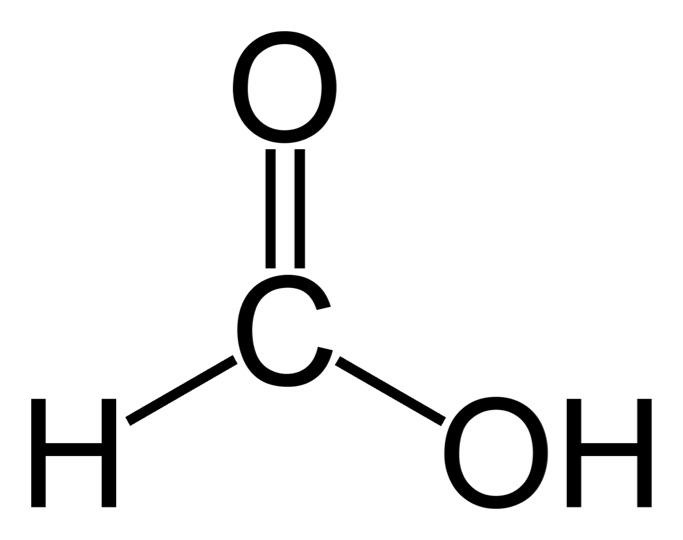
Name this structure.
a)
methanoic acid
b)
methanal
c)
methanol
d)
methanone
95.
What is the functional group of an alcohol?
a)
-COO-
b)
-COOH
c)
-C=C-
d)
-OH
96.
a)

addition

b)

polymerization

c)

saponification

d)

combustion

97.

Primary alcohols are oxidised first to aldehydes , which may be further oxidised to form:

a)

Ketones

b)

Carboxylic Acids

c)

Esters

d)

Amides

98.

Secondary alcohols are oxidised to form:

a)

carboxylic acids

b)

alcohols

c)

aldehydes

d)

ketones

99.

When listing substituents in IUPAC nomenclature, they need to be listed by:

a)

numerical order - name the substituents as I see them from lowest carbon to highest

b)

alphabetical order - including multipliers di, tri, tetra, etc.

c)

alphabetical order - excluding multipliers di, tri, tetra, etc.

d)

By substituent chain length