

wayground logo

Free Printable Worksheets

NEW

Font size

S
M
L
XL
Worksheets

Civil War

Total questions: 48

Worksheet time: 52mins

Name
Class
Date
1.

People who worked to end slavery were called:

a)

abolitionists

b)

southerners

c)

cartridges

d)

blockades

2.

Southerners were upset when Lincoln was elected president because:

a)

they believed he might one day end slavery, which would threaten their way of life

b)

they wanted a president who would support the abolition of slavery

c)

he wanted northern states to secede from the Union

d)

he had a plan to raise taxes

3.

The firing on Fort Sumter took place because:

a)

The Union wanted to get control of the fort.

b)

The Confederacy wanted to destroy the fort.

c)

The Confederacy was upset that the U.S. still had control of a fort in the South.

d)

The Confederacy wanted to punish the soldiers there.

4.

What are two ways Shermans' march affected South Carolina?

a)

Sherman's men gave out medical supplies and food to soldiers.

b)

Sherman's men burned homes and buildings and left destruction all through the state.

c)

His march helped South Carolinians by giving them some entertainment to take their mind off the war.

d)

Sherman's march freed slaves all over South Carolina and made Confederate soldiers angry.

5.

Which of the following describes the daily life of soldiers?

a)

They carried supplies in packs, ate hardtack, and marched from place to place.

b)

The owned 20 slaves.

c)

The wore fancy clothes.

d)

The set up hospitals and took care of children.

6.
Which item would best complete the list?
a)
Inexperienced military leaders
b)
Lack of Industries
c)
Larger Population
d)
Lack of agricultural land
7.
The Battle of Vicksburg was important in the Civil War because it --
a)
allowed the Confederate army to seize Washington D.C.
b)
broke the Union blockade along the Gulf of Mexico
c)
enabled the Confederate army to seek French assistance
d)
gave the Union army control of the Mississippi River
8.
The speech above shows that Lincoln believed that the South should--
a)
be allowed to continue the practice of slavery
b)
pay for the damages suffered by the Union
c)
receive fair treatment after the war
d)
be punished for seceding from the Union
9.
Which number on the map labels the state that first seceded from the Union?
a)
1
b)
2
c)
3
d)
4
10.
Abraham Lincoln's Emancipation Proclamation declared --
a)
United State's freedom from Great Britain
b)
an end to the Civil War
c)
freedom for slaves in rebellious southern states
d)
the beginning of Reconstruction
11.
Why was the Battle of Gettysburg significant to the Civil War?
a)
It led to the Emancipation Proclamation
b)
It brought an end to the Civil War
c)
It resulted in the passing of the 15th Amendment
d)
It was a turning point because General Lee was forced to fight a defensive war
12.
"A house divided against itself cannot stand. I believe this government cannot endure permanently half slave and half free." -- Abraham Lincoln 1858
According to this quotation, Abraham Lincoln believed that
a)
slavery was immoral and should be abolished immediately
b)
sectional differences threatened to destroy the Union
c)
the Souther states should be allowed to secede
d)
to save the nation, the North should compromise with the South on slavery
13.
What was the most important advantage the North had during the Civil War?
a)
unified popular support for the war effort
b)
superior military leadership
c)
economic aid from Great Britain and France
d)
greater human and economic resources
14.
What advantage did the South have the North during the Civil War?
a)
greater manufacturing
b)
more effective navy
c)
better government
d)
more capable military leaders
15.
What conclusion can best be supported by the information in the illustration?
a)
The North and the South had equal percentages of their population working for railroads
b)
The North had fewer manufacturing plants than the South
c)
Most of the nation's railroads ran through the South
d)
The North had a major advantage in industrial production when compared to the South
16.
What document is considered a primary source from the Civil War?
a)
a biography of the life of a war general
b)
a letter from the wife of a soldier during the war
c)
an encyclopedia article about women in the war
d)
a documentary on medical treatments used during the war
17.
In the Gettysburg Address, Lincoln presented the Civil War as a struggle for the --
a)
North's domination over the South
b)
preservation of the Union and democracy
c)
South's fight to become an independent nation
d)
preservation of the rights of American as individuals
18.
Which event was the immediate cause of the secession of several Southern states from the Union in 1860?
a)
The Dred Scott decision by the U.S. Supreme Court
b)
The election of President Abraham LIncoln
c)
The enactment of the Missouri Compromise
d)
The raid on the arsenal at Harpers Ferry by John Brown
19.
The graphic represents people and events that dominated which of the following era's?
a)
Colonial
b)
Revolutionary
c)
Civil War
d)
Reconstruction
20.
Ulysses S. Grant was to the Union as ___________ was to the Confederacy
a)
Jefferson Davis
b)
Stonewall Jackson
c)
Robert E. Lee
d)
Abraham Lincoln
21.
Showing loyalty to a state or section rather than the whole country is known as
a)
states' rights
b)
secede
c)
sharecropper
d)
sectionalism
22.
The Southern economy was based MOSTLY on:
a)
Paid workers
b)
Industry
c)
Agriculture
d)
Goods & Services
23.
What was the South's MAIN argument in support of slavery?
a)
They were an agricultural (farming) based economy that relied on free workers
b)
They had the right to limit the power of the federal government (states' rights)
c)
A workplace made up slave labor would work harder
24.

What was the MOST SIGNIFICANT outcome of the Dred Scott Court Case?

a)

Slaves were determined to have "no rights which any white man was bound to respect"

b)

The North scored a major victory in abolishing slavery

c)

Congress could not outlaw slavery anywhere in the US

25.
To withdraw from something, such as a nation
a)
states' rights
b)
secede
c)
abolitionist
d)
amendment
26.

When was the Civil War?

a)

1861-176

b)

1861-1865

c)

1870-1876

d)

2015-2019

27.

Why is important to know about the Appomattox Courthouse's location for the Civil War?

a)

This is where Lee surrender and it ended the Civil War.

b)

The Confederates open fired on the fort, which began the Civil War.

c)

Lincoln gave the Gettysburg Address here.
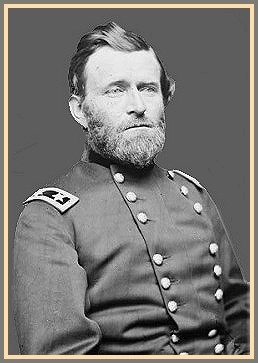
28.
The Union General that forced General Lee to surrender at Appomattox.
a)
Fort Sumter
b)
Abraham Lincoln
c)
Robert E. Lee
d)
Ulysses S. Grant
29.
A book written by Harriet Beecher Stowe that described the cruelty of slavery.
a)
Gone with the Wind
b)
Across the Lines
c)
Uncle Tom's Cabin
d)
Gettysburg
30.
General Sherman's troops marched toward Atlanta to capture it because of Atlanta's railroad center and supplies.
a)
The Atlanta Campaign
b)
Sherman's March to the Sea
c)
John Brown's Raid on Harper Ferry
d)
Fort Sumter
31.
One of General Lee's most important generals who would stand like a "Stonewall" during battles and was accidentally killed by his own men.
a)
Jefferson Davis
b)
Thomas "Stonewall" Jackson
c)
Robert E. Lee
d)
Ulysses S. Grant
32.
The place where Confederate General Robert E. Lee surrendered his army to General Ulysses S. Grant.
a)
Fort Sumter
b)
Sherman's March to Sea
c)
Appomattox Court House
d)
Uncle Tom's Cabin
33.
Southern General from Virginia who led the South's largest army and lost a major battle at Gettysburg, Pennsylvania.
a)
Jefferson Davis
b)
Robert E. Lee
c)
Abraham Lincoln
d)
Ulysses S. Grant
34.
Each state should be able to decide their issues for themselves and the Federal Government should not interfere.
a)
slavery
b)
state's rights
c)
secede
d)
Gettysburg
35.
3 day battle that the South lost and is considered the turning point in the war
a)
Gettysburg
b)
Fort Sumter
c)
The Atlanta Campaign
d)
Uncle Tom's Cabin
36.
The 1st and only President of the Confederacy during the Civil War.
a)
Abraham Lincoln
b)
Robert E. Lee
c)
Ulysses S. Grant
d)
Jefferson Davis
37.
General Sherman led his troops through Georgia toward Savannah and destroyed  things that Southerners needed for war.
a)
Sherman's March to the Sea
b)
Fort Sumter
c)
Gettysburg
d)
John Brown's Raid on Harpers Ferry
38.
Even though these were states where slavery was legal, they did not secede and join the Confederate states.
a)
Western States
b)
State of Confusion
c)
Border States
d)
Southern States
39.
The Union wanted to control the Mississippi River so that
a)
it could control the movement of trade and goods
b)
it was a natural division to “split the South”
c)
it was an easier invasion route to the South than by land
d)
all of the above
40.
The Confederates were fighting a(n)
a)
offensive war
b)
defensive war
41.
Better officers, defending their own homes, and not having to go on the attack were
a)
Union advantages
b)
reasons the Union won the battle of Antietam
c)
Confederate advantages
d)
reasons that the Confederacy won at Ft. Pillow
42.
More factories, population, and a better navy were
a)
Confederate advantages
b)
Union advantages
c)
reasons for a Confederate victory
d)
causes of the Battle of Gettysburg
43.
What was the major goal of the Confederacy at the onset of the Civil War?
a)
To overthrow the government and set up a monarchy
b)
To become independent
c)
To spread slavery to the North
d)
To eliminate slavery in the border states
44.
This battle was the single bloodiest of the Civil War
a)
Antietam 
b)
Gettysburg
c)
Shiloh
d)
Vicksburg
45.
In the Battle of _________ Sherman's troops burned down the city.
a)
Vicksburg
b)
Atlanta
c)
the Bluegrass
d)
Zombies
46.
Most common cause of death in the Civil War
a)
Disease/infection
b)
Minnie Ball
c)
Cannon ball in face
47.
Reason for such a high death count during the Civil War
a)
Mustard Gas
b)
Nuclear Bomb
c)
Old Tactics/New Weapons
d)
New Tactics/Old Weaps like rocks and sticks
48.
The Civil War was mainly fought over this devisive issue
a)
Cotton profits
b)
tariffs
c)
slavery
d)
Lincoln's hipster beard
