
NEW
Font size
 Worksheets
Unit 1B Test Review
Total questions: 40
Worksheet time: 30mins


atomic number
gas at room temperature, low boiling point
a subatomic particle that has a negative charge
number or protons and neutrons
the number of protons in the nucleus of an atom
period
Elements that occur in vertical columns on the periodic table.
A horizontal row of elements in the periodic table
Found in group two of the periodic table; highly reactive
A subatomic particle that has a negative charge
found in group one of the periodic table; highly reactive
Non-metals
Transition Metals (Groups 3-12)
alkali metals (group 1)
metalloids (semimetals)
neutron
A subatomic particle that has a positive charge and that is found in the nucleus of an atom
not able to conduct heat or electricity, little to no metallic luster
A subatomic particle that has a negative charge
A small particle in the nucleus of the atom, with no electrical charge
A subatomic particle that has a negative charge
nobles gases
protons
electrons
neutrons
not able to conduct heat or electricity, little to no metallic luster
Non-metals
noble gases
atomic mass
Neutron
Found in group two of the periodic table; highly reactive
period
Alkali Earth Metals
metalloids (semimetals)
alkali metals
The electrons in the outermost shell (main energy level) of an atom; these are the electrons involved in forming bonds
alkali metals (group 1)
Halogens (Group 17)
atomic number
valence electrons
Halogens (Group 17)
gas at room temperature, low boiling point.
most reactive nonmetals
The electrons in the outermost shell (main energy level) of an atom; these are the electrons involved in forming bonds
Number of protons and neutrons
Number of protons and neutrons
atomic number
atomic mass
noble gases
Non-metals
metalloids (semimetals)
Elements that occur in vertical columns on the periodic table.
an element that has both metallic and nonmetallic properties
not able to conduct heat or electricity, little to no metallic luster
found in group one of the periodic table; highly reactive

How many molecules are represented in the formula 3CO2?
3 carbon, 2 oxygen
6 carbon dioxide
3 carbon dioxide
3 carbon, 6 oxygen
How many of each type of atom are in 4NO2?
4 nitrogen, 2 oxygen
4 nitrogen, 6 oxygen
4 nitrogen, 8 oxygen
8 nobelium
In a reaction A + B ----> C, reactant A has 5g and product C has 9g. How many grams should reactant B have?
4g
5g
9g
14g
Matter cannot be created or destroyed describes which of the following?
Law of attraction
Law of superposition
Law of conservation of energy
Law of conservation of matter


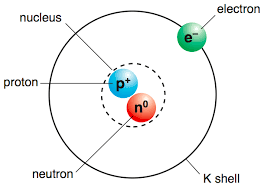
Which subatomic particles contribute the most to the mass of an atom?
Protons and Neutrons
Protons only
Electrons only
Which subatomic particles contributes the least to the mass of an atom?
Neutrons
Protons
Electrons

Which section represents the reactants?
A
B
C
Which section represents the products?
A
B
C
If a chemical reaction occurs in a closed system (no way for any part of the reaction to escape), how does the product mass compare to the reactant mass?
the mass would decrease
the mass would increase
the mass would stay the same
it depends on the type of reaction
If a chemical reaction occurs in an open system (not contained), what might happen to the measurable mass of the products when compared to the reactants?
the measurable mass might decrease because any gas produced can escape (the actual mass would stay the same)
the mass would increase because mass was created
the measurable mass would stay the same because nothing would be able to leave the system.
it depends on the type of reaction
Is the following chemical equation balanced?
3H2 + N2 --> 2NH3
No, because there are too many N in the product
Yes, because each element has the same number on each side of the equation
Example: H2
Al + O2 --> 2Al2O3
Ex: 2H2 + O2 --> 2H2O
2C2H2 + 5O2 --> 4CO2 + 2H2O

