wayground logo

Free Printable Worksheets

Font size

S
M
L
XL
Worksheets

French and Indian War thru Constitution

Total questions: 90

Worksheet time: 1hrs 14mins
Name
Class
Date
1.
Who fought in the French and Indian War?
a)
French vs. Indians
b)
British vs. French
c)
British vs. French and Indians
d)
Indians vs. British
2.
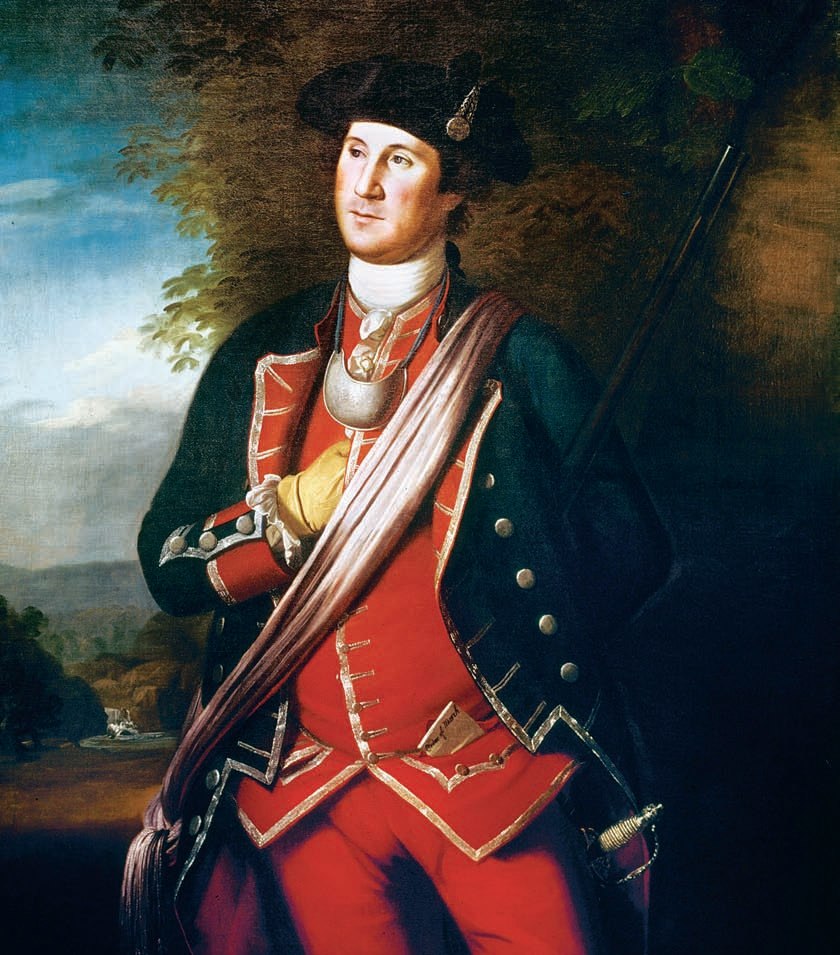
Who was the young military leader from Virginia who was sent to western Pennsylvania to fight the French?
a)
William Pitt
b)
Edward Braddock
c)
King George II
d)
George Washington 
3.
Who was the King of England during this time?
a)
King Ferdinand and Queen Isabella
b)
King Henry VIII
c)
Queen Elizabeth
d)
King George III
4.
Britain and France competed for control of which of  the following?
a)
The Hudson River Valley
b)
The Ohio River Valley
c)
The James River Valley
d)
The New River Valley
5.
This created a temporary border at the Appalachian Mountains, restricting the movement of the colonists
a)
Appalachian Line of 1769
b)
Proclamation of 1763
c)
Northwest Ordinance of 1767
d)
Colonial Border of 17
6.
The first political cartoon produced in America was created by whom?
a)
George Washington
b)
Benjamin Franklin
c)
Samuel Adams
d)
Paul Revere
7.
What was the purpose of the Albany Plan of Union?
a)
A.  to create a plan of attack against the French
b)
A.  to unite the Native Americans against the French
c)
A.  to create one general government for the colonies
8.
Why do you suppose the Indians helped the French?
a)
The French forced them to fight because the Indians were enslaved by them.
b)
The British attacked the Indians first, and the French decided to help the Indians.
c)
The French and Indians cooperated with one another often; traded with one another and taught each other many techniques for survival.
d)
The French were fighting the Indians in the war.... The Indians didn't help the French at all.
9.
The colonists did this to protest early taxes.
a)
Boycotted all British Goods.
b)
Bought British goods
c)
Bought goods from Spain
d)
Burned all British goods
10.
This act taxed all paper goods such as newspaper, playing cards.
a)
Sugar Act
b)
Stamp Act
c)
Declaratory Act
d)
Intolerable Acts
11.
Which act said that only Parliament could tax the colonists?
a)
The Declaratory Act
b)
The Stamp Act
c)
The Sugar Act
d)
The Townshend Acts
12.
The man that started the Sons of Liberty was?
a)
Patrick Henry
b)
John Adams
c)
Sam Adams
d)
Benjamin Franklin
13.
The person that actually wrote the Declaration of Independence was?
a)
Sam Adams
b)
George Washington
c)
Patrick Henry
d)
Thomas Jefferson
14.
The Townshend Acts taxed these items?
a)
Wheels, Windows and Wagons
b)
Paper, glass and tea
c)
Stamps, Mugs and pencils
d)
Sportswear and gym machinery
15.
Colonists refused to buy British tea because
a)
England's Parliament was taxing them without representation
b)
they did not like the taste of British tea
c)
they did not agree with paying taxes at all
16.
The _____________ Acts were passed to punish the colonists for the Boston Tea Party protest.
a)
Terrible
b)
Intolerable
c)
Hateful
17.
One punishment under the Intolerable Acts was...
a)
the British closed down Charleston harbor.
b)
The British forced the colonists to quarter soldiers in their homes.
c)
The colonists could only trade with Spain.
18.
People who wanted to fight England for their freedom were called...
a)
Patriots
b)
Loyalists
19.
Who was the first casualty of the American Revolution?
a)
George Washington
b)
Samuel Adams
c)
Crispus Attucks
d)
Paul Revere
20.
Who was the King of England at the time of the American Revolution?
a)
King Henry VIII
b)
Queen Elizabeth
c)
Queen Clark
d)
King George III
21.
After the colonists dumped tea into Boston Harbor, ...
a)
Parliament repealed the Stamp Act.
b)
King George III allowed the colonists to petition Parliament.
c)
Parliament passed the Intolerable Acts.
d)
King George III appoints colonial representatives to Parliament.
22.
What event does this drawing show?
a)
Tarring and feathering
b)
Boston Tea Party
c)
Boston Massacre
d)
American Revolution
23.
Why did Britain seek to tax the colonists in the 1760s?
a)
The colonists were wealthier than most British citizens.
b)
Britain needed money to pay for the French and Indian War.
c)
The British wanted to punish the colonists for rebelling against the Proclamation.
d)
Britain needed money to protect the colonists from the French.
24.
Which phrase became popular after passage of the Stamp Act?
a)
“The rights of Englishmen”
b)
“Give me liberty or give me death”
c)
“Life, liberty, and the pursuit of happiness”
d)
“No taxation without representation“
25.
The public meetings of the Sons of Liberty were held under the ___.
a)
Liberty Pole
b)
Liberty Tree
c)
Liberty Awning
d)
Freedom Tree
26.
Choose the best answer for "Tar and Feather" 
a)
How Tax collectors were treated
b)
Shot heard round the world
c)
Guerilla Warfare
d)
Sons of Liberty
27.
What word is described by, "A tax on goods"
a)
Armory
b)
Apprentice
c)
Tariff
d)
Boycott
28.
An army of volunteers for the Colonists is...
a)
Militia
b)
Continental Army
c)
Bloody Back
d)
Lobster Back
29.
The First Continental Congress was called for all the following reasons except _________
a)
Respond to the Coercive Acts
b)
Respond to Magna Carta
c)
Advised building a colonial militia
d)
Organized a boycott on all ENGLISH GOODS
30.
The ______ was sent to King George III to ask that the king protect colonists’ rights and tell him that the colonists do not want war. 
a)
List of Grievances
b)
Olive Branch Petition
c)
Declaration of Independence
d)
Magna Carter
31.
The ______ was sent to King George III to ask that the king protect colonists’ rights and tell him that the colonists do not want war. 
a)
List of Grievances
b)
Olive Branch Petition
c)
Declaration of Independence
d)
Magna Carter
32.
Why were both Continental Congress held? 
a)
To vote for the first president
b)
To decide when to go to war with Great Britain
c)
To discuss a solution to the colonists’ complaints of Great Britain 
d)
To write the Constitution
33.
The __________ were colonists that supported independence from Britain.
a)
militia
b)
Loyalists
c)
Patriots
d)
minutemen
34.
The _____________ were colonists that did not want to separate from Britain.
a)
militia
b)
Loyalists
c)
Patriots
d)
minutemen
35.
Who jumped on the horse to warn the colonist that the British were coming?
a)
Paul Revere
b)
King George III
c)
John Adams
36.
The "shot heard 'round the world" was which battle?
a)
Battle of Bunker Hill
b)
Battle of Lexington and Concord
c)
Battle of Trenton
37.
Lexington and Concord were the first battles in what war?
a)
Revolutionary War
b)
World War I
c)
War of 1812
38.
The Intolerable Acts, First Continental Congress, and Common Sense all happened during what era?
a)
The era of westward expansion
b)
The era of Good Feelings
c)
The Revolutionary Era
d)
The Jacksonian Era 
39.
What was the main point of Common Sense?
a)
We should not go to war and be loyal to the king
b)
Complete Colonial independence from England
c)
King George III should NOT repeal the 13 ACTS imposed on the colonies
d)
"We should be loyal to the King"
40.
author of common sense, persuaded colonists to seek independence
a)
Wentworth Cheswell
b)
Haym Salomon
c)
Benjamin Franklin
d)
Thomas Paine
41.

_______ agreed to prepare for war with Britain.

a)

British Parliament

b)

John Adams

c)

Indian tribes

d)

Congress.

42.

In what ways did the Second Continental Congress prepare for war?

a)

Printed Continental currency to pay the soldiers with

b)

Made John Adams second commander in chief

c)

Asked the colonies to contribute money for supplies

d)

Made George Washington commander in chief

e)

Hired full time Soldiers

43.

_______ won the Battle of Bunker Hill.

a)

The Colonists

b)

The British

c)

The French

d)

The Indians

44.

Why was it too late when the Olive Branch Petition reached the British leaders?

a)

The colonists had defeated the British troops causing the British to retreat.

b)

Britain had gotten over it and no longer cared to fight.

c)

The British troops defeated the Colonists.

d)

Britain agreed to fight the colonists and crush their rebellion.

45.
Which of the following was a purpose of the Declaration of Independence?
a)
to unite the colonies against Britain
b)
to list the reasons that justified leaving Britain
c)
both of these
d)
neither of these
46.
The Declaration of Independence states the purpose of government is 
a)
to tax and control finances
b)
to provide rules for the people
c)
to regulate trade 
d)
to serve the people
47.
According to the Declaration of Independence, what was an “unalienable right” that all governments should protect?
a)
The right to social equality
b)
The right to elect government officials
c)
The right to religious equality
d)
The right to personal liberty
48.
Which statement best describes the role of government according to the Declaration of Independence?
a)
“The main purpose of government is to expand and glorify the state”
b)
“The main purpose of government is to protect the unalienable rights of individuals”
c)
“The main purpose of government is to protect the rights and privileges of His Majesty, the King”
d)
“The main purpose of government is to promote the general welfare of the community by taking steps toward social equality”
49.
 Who wrote the Declaration of Independence?
a)
Benjamin Franklin
b)
James Madison
c)
Thomas Edison
d)
Thomas Jefferson
50.
What are the three inalienable rights that all people have?
a)
Food, Shelter, and Clothing
b)
Life, Liberty and Death
c)
Life, Liberty and the Pursuit of Happiness
51.
Who gives government the ability to govern?
a)
The people
b)
Parliament
c)
The King
d)
The Sons of Liberty
52.
What was the date that the Declaration of Independence was signed?
a)
July 4, 1776
b)
July 2, 1776
c)
July 4, 1787
d)
July 2, 1775
53.
The Declaration states that all men are created ___________.
a)
Just
b)
Equal
c)
the same
d)
Free
54.
What was the date that the Declaration of Independence was signed?
a)
July 4, 1776
b)
July 2, 1776
c)
July 4, 1787
d)
July 2, 1775
55.

What type of aid did France provide to support the colonial war effort?

a)

uniforms

b)

airplanes

c)

financial and military support

d)

no support

56.

What was the significance of the Battle of Yorktown?

a)

It was the last major battle of the Revolutionary War.

b)

It was the turning point of the Revolutionary War.

c)

It was the first battle of the Revolutionary War.

d)

George Washington killed many lobsterbacks.

57.
Why were the colonists angry about "taxation without representation?"
a)
The colonists wanted to pay taxes on stamps and tea
b)
The colonists had no representation in Parliament
c)
The colonists fought to write the Declaration of Independence
d)
The colonists were loyal to the British and wanted to keep them happy
58.
On April 15, 1783 Congress ratified, officially approved, what Treaty to end the War?
a)
Treaty of Paris 1783
b)
Treaty of Paris 1763
c)
Treaty of Yorktown
d)
Treaty of Paris 1963
59.

What was the main weakness of the Articles of Confederation?

a)

the federal government was too weak

b)

It had no legislative branch

c)

The judicial was too powerful

d)

The executive was too powerful

60.
A weakness of the Articles of Confederation is that it had __________ . 
a)
only an executive branch
b)
only a legislative branch
c)
only a judicial branch
d)
an executive and legislative branch
61.
One major problem with the Articles of Confederation is that Congress could not ______ the citizens to raise money.
a)
tax
b)
ask
c)
demand
d)
force
62.
Who had more power under the Articles of Confederation?
a)
Federal Government
b)
State Governments
c)
Individual people
d)
States with larger populations
63.
Americans were afraid that a __?__ would lead to tyranny, or oppressive rule.
a)
strong state government
b)
weak government
c)
strong central government
d)
legslature
64.

Use the table to answer the question.

Weaknesses in the Articles of Confederation

Weakness

No power to enforce laws

No executive branch

No judicial branch

How did these weaknesses impact the writing of the Constitution?

a)

The Founding Fathers gave Congress the power to legislate.

b)

The Founding Fathers created a government with three branches.

c)

The Founding Fathers gave the states the power to interpret national laws?

d)

The Founding Fathers created the office of president to settle disputes.

65.

Because this branch was missing under the Articles of Confederation the government had no power to enforce its laws?

a)

Judicial

b)

Legislative

c)

Executive

d)

Congress

66.
What did Shays' Rebellion help Americans realize they needed?
a)
A strong national government
b)
A stronger militia
c)
A common currency
d)
The ability to sign peace treaties
67.
Which of the following BEST describes the Articles of Confederation?
a)
A Constitution established after the American Revolution
b)
A Declaration of Independence
c)
The 1st Constitution of the U.S.
d)
A strong form of government
68.
Bicameral means...
a)
Three House
b)
Two House
c)
One House
d)
Five House
69.
The best definition for Federalism is...
a)
power split between states and federal government
b)
all power in one place
c)
a loose alliance of states
d)
Ms. Snyder made this word up...
70.
Having the same amount of representatives per state is an example of what?
a)
Proportional Representation
b)
The House of Representatives
c)
The Virginia Plan
d)
Equal Representation
71.
How many houses would be in Congress under the New Jersey Plan?
a)
Two
b)
Five
c)
One
d)
Three
72.

Which two things did the Great Compromise create?

a)

Two Houses in Congress, one equal and one based on population

b)

One house system, equal representation

c)

Two House system all proportional represenation

d)

Two House system, all equal representation
73.
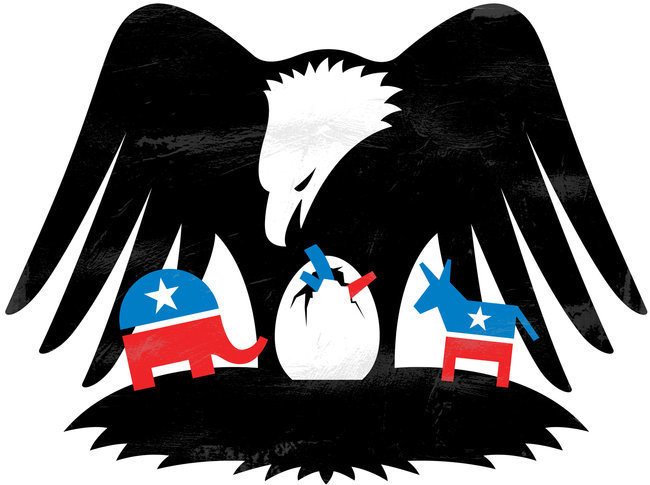
What proportion of slaves were counted for determining population?
a)
1/4
b)
2/5
c)
3/5
d)
4/5
74.
The North wanted slaves to count for what purpose?
a)
Population
b)
Taxation
c)
No purpose at all
d)
both  population and taxation
75.
Our president is elected by which of the following?
a)
Congress
b)
The People
c)
The Senate
d)
The Electoral College
76.
How do you know how many electoral votes a state has?
a)
You just look at population
b)
It is the number of representatives in Congress
c)
Number of Senators
d)
Number of people in the House of Representatives
77.
Who would support a STRONG central government?
a)
Federalists
b)
Anti-Federalists
78.
Who demanded that a Bill of Rights be added to the Constitution?
a)
Federalists
b)
Anti-Federalists
79.
Who is known as the "father" of the Constitution?
a)
George Washington
b)
George Mason
c)
John Adams
d)
James Madison
80.
When creating the legislative branch there were two proposed plans.  Which plan wanted states to have more votes based on population? 
a)
Connecticut Plan 
b)
New Jersey Plan
c)
Virginia Plan
d)
3/5th's Plan 
81.
What document replaced the Articles of Confederation and established a new national government? 
a)
The Declaration of Independence 
b)
The Constitution 
c)
The Magna Carta 
d)
The English Bill of Rights 
82.
The Great Compromise was a compromise between--
a)
Mass. Plan and New Jersey Plan
b)
Virginia Plan and New Jersey Plan
c)
Virginia Plan and New York Plan
d)
Virginia Plan and Delaware Plan
83.
Who was the president of the Constitutional Convention?
a)
George Washington
b)
Thomas Jefferson
c)
James Madison
d)
John Adams
84.
The three branches of government are ________________
a)
Executive, Legislative, and Judicial
b)
Legislative, Judicial, and National
c)
Executive, Principle, and Judicial
d)
Judicial, National, and Legislative
85.
Why is the Constitution considered a "living document"?
a)
It has changed with time
b)
It is rewritten by each president
c)
It has remained the same over the years
d)
It is signed each year by members of Congress
86.

The Federalist and Anti-Federalists groups are known as _______________.

a)

Governing Groups.

b)

Political Parties.

c)

Militia's.

d)

Delegates.

87.

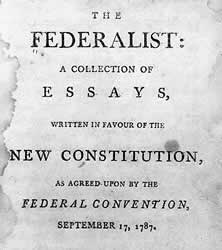
The "Federalist Papers" were written to:

a)

Explain and convince the people into supporting the new U.S Constitution.

b)

spark a new revolution among the American people against their government.

c)

oppose a strong centralized government.

d)

create a new monarchy.

88.

Anti-Federalists were in favor of:

a)

States Rights and the protection of individual rights.

b)

A strong Central Government.

c)

A Monarchy (King & Queen) to rule over the country.

d)

a powerful National Government

89.

How did the Federalists and Anti-Federalists "compromise" to ratify (approve) the U.S Constitution?

a)

The added the Bill of Rights (First 10 Amendments)

b)

They outlawed cruel and unusual punishment.

c)

Ensured due process of the law.

d)

The Federalists threatened the Anti-Federalists to war.
90.

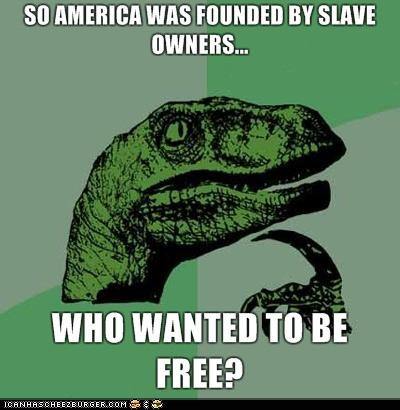
The Delegates (Representatives) who signed the U.S Constitution are known as:

a)

Free Masons.

b)

leaders of the New U.S.

c)

Founding Fathers.

d)

Anti-Federalists.