wayground logo

Free Printable Worksheets

NEW

Font size

S
M
L
XL
Worksheets

Valence Electron Practice

Total questions: 52

Worksheet time: 53mins

Name
Class
Date
1.
How many valence electrons are in an atom of Se?
a)
2
b)
8
c)
6
d)
5
2.
How many valence electrons are in an atom of Ba?
a)
2
b)
8
c)
4
d)
1
3.
a)
2
b)
8
c)
3
d)
13
4.
a)
2
b)
3
c)
5
5.
a)
12
b)
7
c)
8
d)
14
6.
a)
7
b)
8
c)
9
d)
10
7.
Valence electrons are the...
a)
Innermost electrons
b)
Middle electrons
c)
Outermost electrons
d)
Any electrons
8.

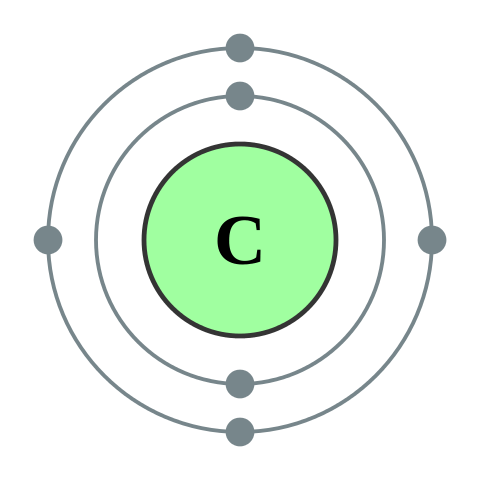
How many valence electrons does carbon have?

a)

4

b)

5

c)

6

d)

7

9.

USE THE PERIODIC TABLE

How many valence electrons does carbon have?

a)

4

b)

12

c)

6

d)

14

10.

USE THE PERIODIC TABLE

How many valence electrons does sodium have?

a)

1

b)

2

c)

3

d)

4

11.

USE THE PERIODIC TABLE

How many valence electrons does Phosphorus have?

a)

31

b)

5

c)

15

d)

4

12.

USE THE PERIODIC TABLE

Find the element that has 3 Valence Electrons and 2 energy levels.

a)

Magnesium - Mg

b)

Lithium - Li

c)

Aluminum - Al

d)

Boron - B

13.
Elements in the same column of the periodic table always have the same # of _______ as one another.
a)
Protons
b)
Neutrons
c)
Electrons
d)
Valence Electrons
14.

Hydrogen needs _____ electrons in its valence shell to be stable.

a)

4

b)

6

c)

8

d)

2

15.
Which group has the greatest number of valence electrons?
a)
1
b)
14
c)
18
d)
16
16.
How many valence electrons are found in atoms of group 14?
a)
4
b)
3
c)
14
d)
16
17.
How many valence electrons are found in atoms of group 1?
a)
7
b)
6
c)
4
d)
1
18.
How many valence electrons are found in atoms of group 15?
a)
4
b)
5
c)
2
d)
3
19.

Which elements have the most similar chemical properties?

a)

boron and carbon

b)

oxygen and sulfur

c)

aluminum and bromine

d)

argon and silicon

20.

All atoms are most stable with (or would "prefer") how many electrons in their valence shell?

a)

1

b)

2

c)

8

d)

18

21.
Valence electrons are: 
a)
Electrons farthest away from the nucleus
b)
Electrons closest to the nucleus
c)
Electrons that just come and go - they don't stay with the atom
d)
Electrons in the second shell
22.

What groups are the most reactive metals?

a)

2 and 3

b)

1 and 18

c)

1 and 2

d)

16 and 17

23.

What groups are the most reactive non metals?

a)

1 and 2

b)

16 and 17

c)

2 and 17

d)

1 and 16

24.

Why are halogens so reactive?

a)

They want to get rid of their only valance electron

b)

They only need one more electron

c)

They are non reactive, they have a full shell

25.
Describe this element.
a)
Highly reactive metal
b)
Highly reactive nonmetal
c)
Stable
d)
Less stable non metal
26.
How many valence electrons are in an atom of Ar?
a)
2
b)
8
c)
4
d)
1
27.
What is the charge of the electron
a)
positive
b)
no charge
c)
negative
d)
neutral
28.
The first orbital can hold a maximum of how many electrons?
a)
2
b)
3
c)
8
d)
6
29.
Which of the following elements has 18 electrons?
a)
Flourine
b)
Helium
c)
Argon
d)
Chlorine
30.

What element is represented in this Bohr Model?

a)

Carbon

b)

Hydrogen

c)

Aluminum

d)

Lithium

31.
What group does this element belong to?
a)
Group 1: Alkali metals
b)
Group 18: Noble Gases
c)
Group 2: Alkaline-Earth Metals
d)
Group 17: Halogens
32.

On the periodic table, Groups are

a)

Horizontal rows

b)

Vertical columns

33.

On the periodic table, Periods are

a)

Horizontal rows

b)

Vertical columns

34.
A charged particle that has gained or lost electrons is called a _____.
a)
molecule
b)
ion
c)
isotope
d)
element
35.
A cation is a ____ ion.
a)
negative
b)
positive
c)
neutral
d)
ficticious
36.
A anion will be a ____ ion.
a)
negative
b)
positive
c)
neutral
d)
ficticious
37.
Nitrogen will form which of the following ions?
a)
N
b)
N-3
c)
N-5
d)
N+5
38.
Beryllium will ____ valence electrons when forming an ionic bond.
a)
lose 4
b)
gain 4
c)
lose 2
d)
gain 2
39.
In the compound aluminum oxide, which is the cation?
a)
Al+3
b)
Al
c)
O-2
d)
O
40.
Ionic bonds form between metals and ____.
a)
metalloids
b)
metals
c)
nonmetals
41.
What determines how ionic bonds will form?
a)
Number of protons
b)
Mass of the atom
c)
Number of total electrons
d)
Number of valence electrons
42.
Ionic bonds happen because of the ____ of valence electrons.
a)
sharing
b)
transfer
43.
Boron will ____ valence electrons when forming an ionic bond.
a)
lose three
b)
gain three
c)
lose 5
d)
gain 5
44.
Nitrogen will ____ valence electrons when forming an ionic bond.
a)
gain 1
b)
lose 1
c)
gain 3
d)
lose 3
45.
What type of bond is this? Lithium with Fluorine?
a)
ionic
b)
covalent
46.
How many electrons are needed in the outer energy levels of an atom to be stable?
a)
2
b)
4
c)
6
d)
8
47.
Nitrogen will do what to gain a stable octet?
a)
Lose 3
b)
Gain 3
c)
Lose 1
d)
Gain 2
48.
Which of the following would produce an anion?
a)
Ca
b)
Al
c)
K
d)
F
49.
What element always has an oxidation number of +1?
a)
Hydrogen
b)
Fluorine
c)
Chlorine
d)
Iodine
50.
Which of the following will form an ion with a 2- charge?
a)
Ca
b)
Se
c)
Ge
d)
N
51.

Which of the following would have the same number of electrons?

a)

N, Ne, F

b)

Al3+, F1+, Ne

c)

S2+, Ar, K1-

d)

As3-, Kr, Rb1+

52.

What will be the charge of a bromine ion?

a)

+7

b)

-7

c)

-1

d)

+1