
 Worksheets
Physical Science Cumulative (8th)
Total questions: 50
Worksheet time: 3570secs
Urban growth and uncontrolled waste disposal by humans most likely results in
conservation of fossil fuels
environmental degradation
improved soil composition
a balanced ecosystem

The sign below was posted near a lake.
Which environmental problem is most likely indicated by the sign?
toxic waste
global warming
ozone depletion
species extinction
Which human activity would help reduce the amount of carbon dioxide in the atmosphere?
decrease the burning of fossil fuels
decrease the number of recycling programs
increase the human population
increase the number of cars being driven
What is the main source of energy for the water cycle?
the Moon
the Sun
winds
oceans
Which terms best describe the properties of a gas?
defi nite volume and a defi nite shape
defi nite volume and no defi nite shape
no definite volume and a definite shape
no definite volume and no definite shape
Which event is an example of a physical change?
iron rusting
fi reworks exploding
eggs cooking
ice melting

The diagram below represents a portion of the Periodic Table of the Elements.
Based on its position in the Periodic Table, at room temperature, cadmium is most likely a
noble gas
nonmetal
metal

The model below represents a molecule of ammonia gas.
Ammonia gas would be classified as
a compound
a mixture
an element
an atom

When calcium carbonate (CaCO3 ) is heated, it decomposes to form calcium oxide (CaO) and carbon dioxide (CO2 ). The equation below shows this reaction.
In this reaction, the mass of CaCO3
is less than the mass of CaO plus the mass of CO2
is greater than the mass of CaO plus the mass of CO2
equals the mass of CaO plus the mass of CO2
equals the mass of CaO minus the mass of CO2

Ryan has 2 boxes. One weighs 5 pounds. The other weighs 50 pounds. If he pushes on the boxes with the same amount of force, what will happen?
The 5lb box will move more easily.
The 50lb box will move more easily.
The boxes will move at the same speed.
The smallest particle of an element that still retains the properties of that element is a(n)
atom.
compound.
mixture.
eelctron.
The number of protons in an atom's nucleus is the
mass number.
atomic number.
atomic mass.
average mass.
A machine that is a combination of two or more simple machines is a
lever.
wedge.
wheel & axle.
compound machine.
The change of one substance into a new substance is a(n)
chemical change.
physical change.
sublimation.
evaporation.
What is a substance that has atoms that are all alike?
element
compound
water
carbon dioxide
A mixture in which different materials are unevenly distributed and are easily identified is
homogeneous.
heterogeneous.
hemophilia.
homosapien.
An element that is typically a hard, shiny solid, is malleable, ductile, and a good conductor of heat and electricity is a
metal.
nonmetal.
metalloid.
synthetic.
An element that shares some of the properties with metals and some with nonmetals is a
metal.
nonmetal.
metalloid.
synthetic.
Any characteristic of matter that you can observe without changing the identity of the material is a
physical property.
chemical property.
characteristic.
identifier.
The scientific method is
a set of investigation procedures.
used by scientists to solve problems.
used in our daily lives to solve problems.
all of the above.
Which of the following is NOT an element?
water
oxygen
carbon
nitrogen
How would you classify the color of a rose?
chemical change
chemical property
physical change
physical property
WHich of the following warnings refers to a chemical property of a substance?
fragile
handle with care
flammable
shake well
The atomic number of Re is 75. The mass of one of its isotopes is 186. How many neutrons are in an atom of this isotope?
75
186
111
261
In which state of matter are most of the elements to the left of the stair-step line in the periodic table?
gas
plasma
liquid
solid
Because electrons move freely in metals, which property describes metals?
brittle
dull
soft
conductors
Which set of elements makes up the most reactive group of all metals?
iron triad
alkali metals
coinage metals
alkaline earth metals
Which elements are least reactive?
metals
noble gases
halogens
alkali metals
In the chemical reaction HCl + NaOH --> H2O + NaCl, the reactants are
HCl & H2O
NaOH & NaCl
HCl & NaOH
H2O & NaCl
The chemical formula for water is
HCl
NaOH
H2O
NaCl
In the following chemical equation, what coefficient should be placed in the blank to balance the chemical equation?
3C + ___H2 --> C3H8
4
3
8
1
Which system uses a nonrenewable energy source to generate electricity?
wind turbines
solar panels
geothermal power plant
nuclear power plant
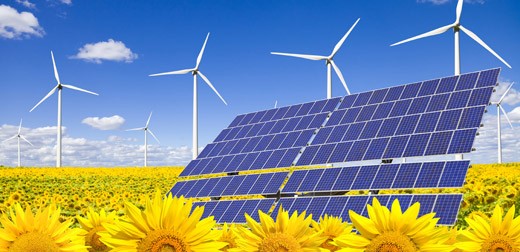
Fuels such as coal, oil, and natural gas that were formed over millions of years from decayed plants and animals. This process requires time, pressure, and heat.
Fossil Fuels
Renewable Resources
Replenish
Geothermal

Which is NOT true about renewable resources
There is an never-ending supply of renewable resources.
All renewable resources can be used to keep the earth cleaner.
Using renewable resources can keep the environment more healthy.
All renewable resources are bad for the environment.

