Wayground logo

Free Printable Worksheets

Font size

S
M
L
XL
Worksheets

Characteristics of life, life processes and experiment review

Total questions: 55

Worksheet time: 26mins

Name
Class
Date
1.

All living things are made up of structures called

a)

DNA

b)

Cells

c)

Homeostasis

d)

Seeds

2.

If an organism is made entirely of one cell it is called...

a)

Multicellular

b)

Prokaryotic

c)

Unicellular

d)

Eukaryotic

3.

Maintaining a stable internal

environment is called

a)

homeostasis

b)

equilibrium

c)

balance

d)

evenness

4.
Rocks are not living because
a)
they never move
b)
they aren't needed for humans
c)
they are not made of cells
d)
they don't break down
5.

A worm turns away from light is an example of a worm

a)

reproducing

b)

doing cellular respiration

c)

having cells

d)

responding to a stimulus in its environment

6.
A _____ is something in the environment that causes an organism to respond.
a)
stimulus
b)
response
c)
cause
d)
effect
7.
What is another way of saying organism?
a)
living thing
b)
organ system
c)
tissue team
d)
critter
8.
Your body shivers when you are cold. This is because of the concept of...
a)
homeostasis
b)
heredity
c)
energy metabolism
d)
cellular organization
9.

If an organism is made entirely of one cell it is called...

a)

Multicellular

b)

Prokaryotic

c)

Unicellular

d)

Eukaryotic

10.

Reproduction that involves two cells from different parents unite to produce the first cell of a new organism.

a)

Asexual

b)

Sexual

c)

Budding

d)

Division

11.

Reproduction that only involves one parent and all offspring are identical; for example, binary fission of bacteria or amoebas.

a)

Asexual

b)

Sexual

c)

Division

d)

Addition

12.

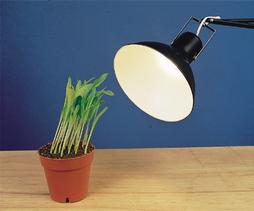
A plant growing towards the light is an example of

a)

reproduction.

b)

responding to a stimulus

c)

metabolism.

d)

homeostasis.

13.
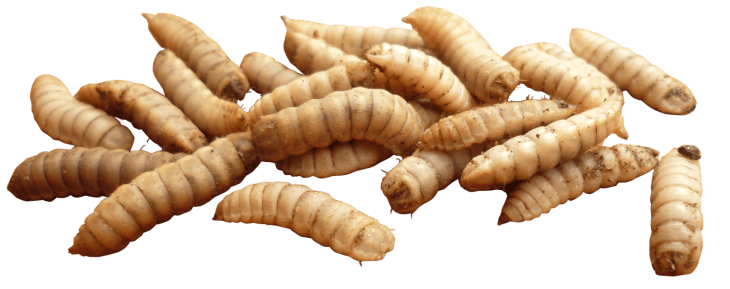
A maggot changing into a fly is an example of 
a)
reproduction.
b)
growth and development.
c)
homeostasis.
d)
evolution.
14.
The "cause" for something to happen is the
a)
response
b)
effect
c)
stimulus
d)
homeostasis
15.
What is an adaptation?
a)
A feature or behavior that helps an animal survive.
b)
The food that an animal eats.
c)
How energy moves in a food web.
d)
How animals evolve throughout time.
16.
An amoeba is a unicellular organism. Which characteristic of life is this?
a)
All living things use energy
b)
All living things contain cells
c)
All living things respond to their environment
d)
All living things grow
17.
What is the main source of energy on Earth?
a)
stars
b)
moon
c)
water
d)
sun
18.
The dismissal bell rings and you pack up your belongings. In this scenario, what is the stimulus?
a)
The bell ringing
b)
You packing up your belongings
c)
More information is needed
19.
The process whereby an organism produces more of its own kind
a)
development
b)
adaptation
c)
homeostasis
d)
reproduction
20.
 All organisms contain instruction molecules that help determine which traits the organism will have is an example of 
a)
universal genetic code (DNA/RNA)
b)
metabolism
c)
evolution
d)
growth and development
21.
All living things are composed of cells. 
a)
True
b)
False
22.
Temperature and sunlight would be examples of ____________ factors within an environment.
a)
biotic
b)
abiotic
23.
Define BIOLOGY.
a)
The study of life and living organisms.
b)
The study of animals.
c)
They study of matter.
d)
The study of earth and its atmosphere.
24.

Which of the following is a stimulus?

a)

removing your hand from a hot stove

b)

swinging a bat at a baseball

c)

screaming when something scares you

d)

a ball moving from the pitching mound to home plate towards a batter

25.

Which of the following is a response?

a)

a flashlight shined into the eye

b)

a rubber band popping your hand

c)

your pupils constricting when exposed to bright light

d)

blood glucose levels drop significantly

26.
What is a living thing?
a)
Reproduction
b)
Organism
c)
Development
d)
Homeostasis
27.
All living organisms are made up of ____.
a)
Cells
b)
Bacteria
c)
Organs
d)
Tissue
28.
All living things grow and develop. 
a)
True
b)
False
29.
Living things require energy to survive.
a)
True
b)
False
30.
The postman is running away from the dog. This shows that living things _________.
a)
grow
b)
respond to changes
c)
reproduce
d)
die
31.

What is digestion?

a)

Breaking down food into molecules usable by cells

b)

Taking in food or drink

c)

Maintaining a stable internal environment

d)

Taking in or releasing of oxygen or carbon dioxide

32.
The main source of energy for all life comes from ____.
a)
the Earth
b)
the moon
c)
the sun
d)
the food we eat/make
33.

A 7-pound baby becomes a 180-pound man

a)

Excretion

b)

Respiration

c)

Metabolism

d)

Growth

34.

A person sweats to keep body temperature at a safe level

a)

Nutrition

b)

Digestion

c)

Homeostasis

d)

Circulation

35.

The cells utilize glucose to produce energy

a)

Nutrition

b)

Excretion

c)

Respiration

d)

Homeostasis

36.

The process by which food is changed into a form the body can use.

a)

Nutrition

b)

Synthesis

c)

Digestion

d)

Respiration

37.

Waste products are eliminated during urination

a)

Circulation

b)

Homeostasis

c)

Excretion

d)

Metabolism

38.

The bloodstream brings oxygen and food to cells.

a)

Synthesis

b)

Growth

c)

Excretion

d)

Transport

39.

The production of offspring-- can be sexual (2 parents) or asexual (1 parent)

a)

RESPIRATION

b)

REPRODUCTION

c)

REGULATION

d)

EXCRETION

40.

The removal of waste products produced by cell activities from the organism. This can involved the skin, the kidneys and the lungs.

a)

RESPIRATION

b)

REPRODUCTION

c)

REGULATION

d)

EXCRETION

41.

What is ingestion?

a)

Breaking down food into molecules usable by cells

b)

Taking in food or drink

c)

Maintaining a stable internal environment

d)

Taking in or releasing of oxygen or carbon dioxide

42.
This part of the experiment serves as a basis of comparison; the one variable being tested has been omitted. 
a)
experimental group
b)
control group
c)
data
d)
variables
43.
This variable in an experiment is the one being deliberately changed by the scientist. 
a)
dependent variable
b)
independent variable
c)
data
d)
control group
44.
What step does every scientific experiment begin with?
a)
hypothesis
b)
question/problem
c)
procedures
d)
conclusion
45.
An experiment is performed on plants to see how different liquids affect plant growth. Each plant in the experiment is given a different liquid; water, apple juice, or milk. Each plant has the same amount of soil, sunlight, and listens to the same music. In this investigation, the independent variable is ...
a)
The type of plant
b)
The amount of sunlight
c)
The type of music
d)
The type of liquid
46.
Testing a hypothesis often involves a(n):
a)
answer
b)
experiment
c)
problem
d)
safety check
47.
A student wants to test the effects of type of exercise on heart rate.  What is the dependent variable?
a)
heart rate
b)
type of exercise
c)
amount of exercise
d)
time of day exercise occurs
48.
Observations made during an experiment are called:
a)
data
b)
problems
c)
conclusions
d)
questions
49.
An experiment is performed on plants to see how different liquids affect plant growth. Each plant in the experiment is given a different liquid; water, apple juice, or milk. Each plant has the same amount of soil, sunlight, and listens to the same music. In this investigation, what are the controlled variables?
a)
Type of plant, amount of music, and sunlight
b)
Water, apple juice, milk
c)
Plant growth
50.
There are two types of data. Which type of data involves descriptions that cannot be counted or measured?
a)
qualitative
b)
quantitative
51.
There are two types of data. Which type of data involves numbers that are obtained by counting or measuring?
a)
quantitative
b)
qualitative
52.
Should experiments be repeated over and over to see if the results are the same each time?
a)
yes
b)
no
53.
This variable in an experiment is the one being deliberately changed by the scientist. 
a)
dependent variable
b)
independent variable
c)
data
d)
control group
54.
The factors in an experiment that can be changed. 
a)
variables
b)
quantitative data
c)
hypothesis
d)
steps
55.

How many independent variables should be changed in an experiment?

a)

0

b)

1

c)

2

d)

3