
 Worksheets
Reproduction
Total questions: 58
Worksheet time: 19mins
Which is NOT a form of asexual reproduction?
binary fission
meiosis
budding
parthenogenesis
The menstrual cycle repeats every?
Month
28 days
Week
Year
In day 1 of the cycle women are in which phase?
Luteal
Follicular
Menstrual
Ovulation
Which hormone causes the egg to ripen in the ovary?
Progesterone
FSH
Oestrogen
Testosterone
Which hormones continue to increase if fertilisation occurs? Select two
Progesterone
FSH
LH
Oestrogen
Which phase is the final phase to occur?
Luteal
Ovulation
Follicular
Menstrual
Which hormone spikes and consequently causes the release of the ova into the uterus?
LH
FSH
Oestrogen
Progesterone
What is the main function of the luteal phase?
The shed the lining of the uterus
The thicken the lining of the uterus
To release the egg
To ripen the egg
What is the second phase of the cycle?
Ovulation
Menstrual
Follicular
Luteal
Follicle stimulating hormones function is to
mature eggs in the uterus
mature eggs in the womb
mature eggs in the cervix
mature eggs in the ovaries
What hormones are released by the Pituitary Gland?
FSH, Oestrogen, LH and Progesterone
FSH, Oestrogen, and Progesterone
FSH, LH and Progesterone
FSH and LH
Why do some cells in the females body respond to reproductive hormones while other cells do not?
the hormones avoid contact with cells so they cannot trigger those cells to respond
some cells have the correct shape receptors to respond while others do not have the correct receptors
cells are only made when they are needed so if they are not needed they are not made and will not respond
the hormones are only made in the cells that will use them so they avoid the other cells of the body
A temporary suspension of the menstrual cycle normally occurs during
menstruation
pregnancy
ovulation
menopause

A temporary suspension of the menstrual cycle normally occurs during
menstruation
pregnancy
ovulation
menopause
A _______________ is any sex cell. (egg or sperm)
zygote
chromosome
gamete
gene
Homologous chromosome
A __________________ is a fertilized egg (a cell that is formed when an egg and a sperm combine).
zygote
chromosome
gamete
gene
Homologous chromosome
A primary spermatocytes...
divide by mitosis to produce two secondary spermatocytes
divide by meiosis to produce two secondary spermatocytes
divides by meiosis to produce four spermatids
divides by meiosis to produce two spermatids
Each spermatid....
divides by meiosis to produce four sperm cells
divides by mitosis to produce four sperm cells
divides by meiosis to produce two sperm cells
differentiates into a sperm cell
The primary spermatocytes and the spermatogonia each contain 46 chromosomes
TRUE
FALSE
The spermatids and the secondary spermatocytes each contain 23 chromosomes
TRUE
FALSE
Which of the following is a correct sequence of cells in spermatogenesis?
spermatogonium -> secondary spermatocyte -> primary spermatocyte
primary spermatocyte -> spermatogonium -> secondary spermatocyte
spermatogonium -> primary spermatocyte -> secondary spermatocyte
none of the above
Meiosis II of spermatogenesis results in the formation of secondary spermatocytes
True
False
Spermatogenesis occurs in the
epididymis
seminiferous tubules
prostate glands
seminal vesicles
Oogenesis produces 4 eggs per cycle.
false
True
The second polar body is only made after fertilisation.
True
False
Which one of the following is not diploid?
germinal epithelial cell
oogonia
primary oocyte
secondary oocyte
If fertilisation doesn't happen in what stage of meiosis II does the secondary oocyte reach?
Telophase
Prophase
Metaphase
Anaphase

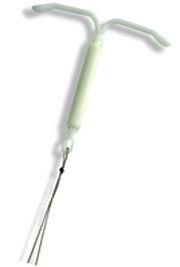
Which type of birth control is pictured here?
Sponge
Intrauterine Device (IUD)
Condom
Implant

