wayground logo

Free Printable Worksheets

Font size

S
M
L
XL
Worksheets

Solar System & Gravity

Total questions: 50

Worksheet time: 1hrs 25mins

Name
Class
Date
1.
Gravity is the force objects put on each other because of their ______.
a)
Mass
b)
Friendliness
c)
Acceleration
d)
Speed
2.
An example of a gravitational interaction is that the Earth. . . 
a)
orbits the Sun.
b)
orbits the moon.
3.

If an object has MORE _______, it will have more gravitational force.

a)

mass

b)

distance

4.
________ hold all of the planets in orbit around the sun.
a)
gravity
b)
string
c)
Bill Nye
d)
duct tape
5.
Gravity on Mars’ surface is much lower than it is here on Earth. This is because the mass of mars is ______ than Earth.
a)
less
b)
more
c)
the same
6.

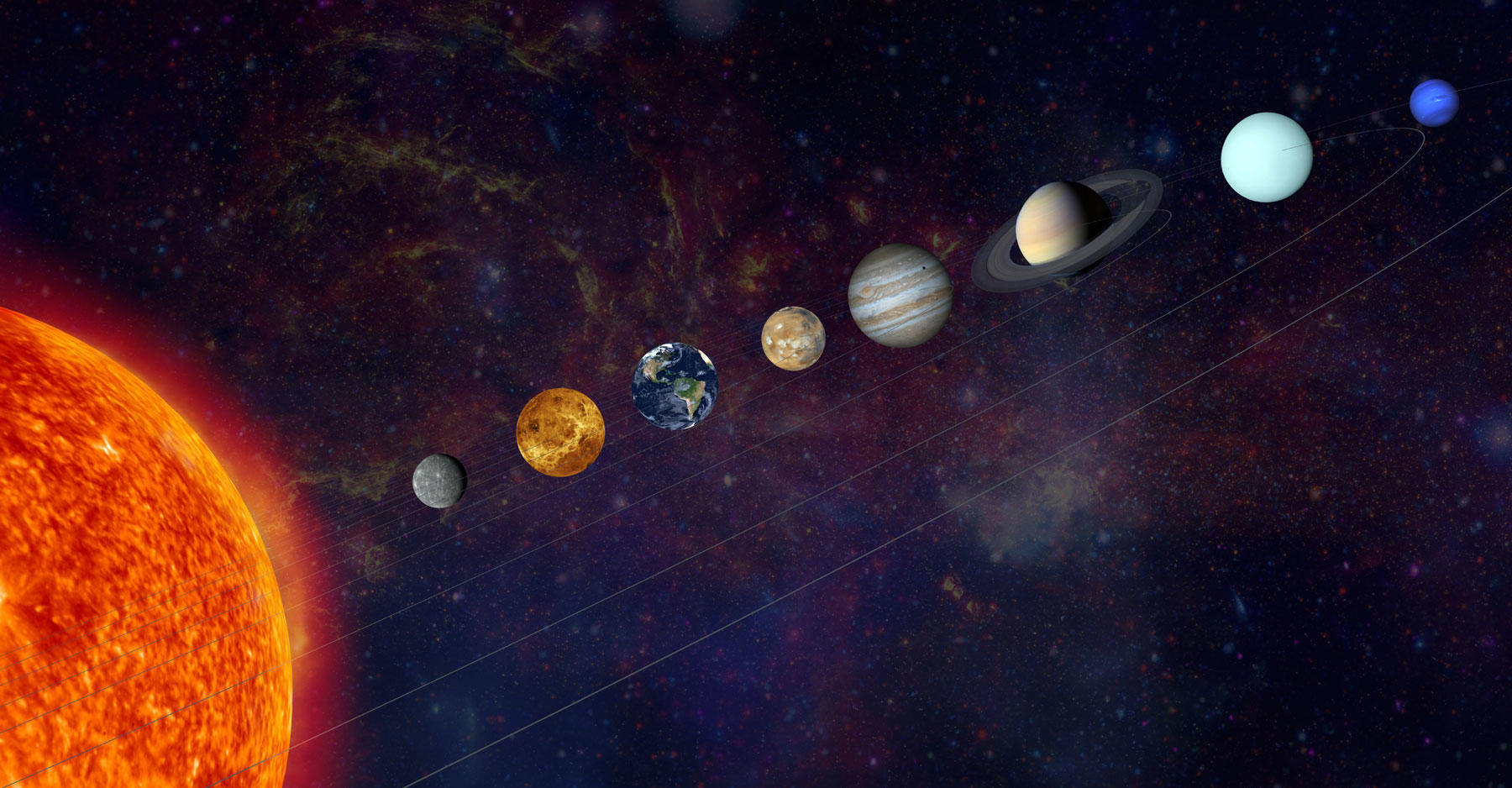
Which planet is between Venus and Mars?

a)

Mercury

b)

Earth

c)

Saturn

d)

Uranus

7.

Which planet is between Mars and Saturn?

a)

Mercury

b)

Jupiter

c)

Earth

d)

Uranus

8.

What is the order of the inner planets from the sun?

a)

Mercury, Venus, Earth, Mars

b)

Jupiter, Venus, Earth, Mars

c)

Mars, Venus, Mercury, Earth

d)

Uranus, Saturn, Jupiter, Neptune

9.

What is the order of the outer planets from the sun?

a)

Mercury, Venus, Earth, Mars

b)

Jupiter, Saturn, Uranus, Neptune

c)

Neptune, Jupiter, Saturn, Uranus

d)

Uranus, Saturn, Jupiter, Neptune

10.

What keeps the moon in orbit around the Earth?

a)

gravity

b)

friendship

c)

magnets

d)

electricity

11.

A ________ is a space object consisting of a ball of ice and dust and, when near the sun, a “tail” of gas and dust particles pointing away from the sun.

a)

comet

b)

moon

c)

meteor

d)

meteorite

12.

A meteor from outer space that passes through Earth's atmosphere and strikes the ground is a _________.

a)

comet

b)

moon

c)

meteor

d)

meteorite

13.
The four inner planets are...
a)
Rocky and small
b)
Very large and made of ice
c)
Small and made of ice
d)
Very large and made of gases
14.
The outer planets are...
a)
Rocky and small
b)
Very large and made of ice
c)
Small and made of ice
d)
Very large and made of gases
15.
Which two planets are out of order in this list of our solar system?
Mercury-Earth-Venus-Mars-Jupiter-Saturn-Uranus-Neptune-Pluto.
a)
Mercury and Earth
b)
Earth and Venus
c)
Saturn and Jupiter
d)
Uranus and Neptune
16.
Without gravity, what would be the shape of the solar system?
a)
Planets would revolve in perfect circles
b)
Much different than it is now.
c)
Planets' orbits would cross
d)
All planets would be in the same orbit
17.
What keeps a planet moving on its path around the sun
a)
gravity & inertia
b)
heat & pressure
c)
inertia & pressure
d)
gravity & heat
18.
What is an astronomical unit?
a)
distance between the moon and earth
b)
distance between the earth and pluto
c)
distance between the earth and sun
d)
distance between NJ and Cali
19.
The closer a planet is to the sun...
a)
the faster it travels
b)
the slower it travels
20.
Which statement best describes a galaxy?
a)
a cluster of millions of stars held together by gravity
b)
a star, with planets, moons and other small space bodies revolving around it
c)
all known objects
d)
all of the above
21.
Which movement creates day/night?
a)
rotation
b)
revolution
22.
What is a common characteristic of the inner  planets?
a)
Gaseous
b)
Distance between them is longer
c)
Rings
d)
Distance between them is shorter
23.
Which movement creates years?
a)
rotation
b)
revolution
24.
All of the outer planets--
a)
have many moons
b)
are small
c)
have a short orbit around the Sun
d)
are rocky
25.
What is located between the inner and outer planets.
a)
Sun
b)
Asteroid belt
c)
Uranus
d)
Moons
26.
The Sun is at the center of our solar system.  All the planets in the solar system orbit around the Sun. Which of the following planets has the longest orbit? 
a)
Mercury
b)
Earth
c)
Saturn
d)
Neptune
27.
Which of the following is a common characteristic of outer planets?
a)
have rings
b)
shorter years
c)
terrestrial
d)
less than 5 satellites
28.
The idea that an object in motion will stay in motion unless acted upon is known as
a)
gravity
b)
inertia
c)
pressure
d)
heat
29.
An _______ is between the orbits of Mars and Jupiter. 
a)
Oort Cloud
b)
Asteroid belt
c)
Kuiper belt
d)
Photosphere
30.
What planet is it?
a)
Jupiter
b)
Saturn
c)
Uranus
d)
Venus
31.
Jupiter, Saturn, Uranus, and Neptune are what type of planets?
a)
Gas Giants
b)
Ice Giants
c)
Terrestrial Planets
d)
Exterior Planets
32.
The curved path in which a planet, satellite, or spacecraft moves in a circle around another object.  The path one object takes around another.
a)
rotate
b)
orbit
c)
moon
d)
revolve
33.
Almost Earth’s twin in size and mass, this planet has very thick atmosphere.
a)
Venus
b)
Mars
c)
Mercury
d)
Neptune
34.
This gas giant has a large storm in its atmosphere known as The Red Spot
a)
Jupiter
b)
Saturn
c)
Uranus
d)
Neptune
35.
Planets that are closer to the sun
a)
take more time to orbit
b)
take less time to orbit
36.
True or False
The planets are all equally distanced from each other.
a)
True
b)
False
37.
When the lighted part of the moon is getting SMALLER.
a)
waning
b)
waxing
38.
When the moon moves between the Sun and the Earth.
a)
lunar eclipse
b)
solar eclipse
c)
planetary eclipse
39.
Made of ice, called a "dirty snowball", and its tail is pointing away from the sun.
a)
asteroid
b)
meteor
c)
comet
40.
Rotate means:
a)
to move around another object
b)
to spin
c)
move up and down
41.
Which is an example of revolving?
a)
Moon moving around Earth
b)
fan
c)
toy top
42.
What does waxing mean?
a)
Lighted side of the moon is getting bigger
b)
Lighted side of the moon is getting smaller
c)
Lighted side of the moon is staying the same.
43.
Which of the following is a "shooting star"?
a)
comet
b)
meteor
c)
asteroid
44.
Which one does NOT describe the asteroid belt?
a)
separates Inner and Outer Planets
b)
Separates the Rocky Planets from Gas Giants
c)
Separates Sun and Mecury
45.
Pluto is described as a ____.
a)
dwarf planet
b)
9th planet in our solar system
c)
giant planet
46.
What affects the force of gravity of two objects in space?  (HINT:  Outer Planets in comparison to Inner Planets)
a)
weight and height
b)
mass and distance
c)
because they're made of gases
47.
Occurs in fall and spring when day and night are "equal":
a)
solstice
b)
equinox
c)
eclipse
48.

What characteristics are used to classify stars? (Select all that apply)

a)

Size

b)

Brightness

c)

Temperature

d)

Distance from sun

49.

Rank the colors of stars from hottest to coolest.

a)

Blue, white, yellow, orange/red, red

b)

Blue, yellow, white, orange/red, red

c)

Red, orange/red, white, yellow, blue

d)

Red, orange/red, yellow, white, blue

50.

What is absolute brightness?

a)

Brightness the star would have if it were at a standard distance from Earth

b)

How bright the star looks from Earth