wayground logo

Free Printable Worksheets

NEW

Font size

S
M
L
XL
Worksheets

Unit Test PS1-1

Total questions: 48

Worksheet time: 41mins

Name
Class
Date
1.
Which particle has a positive charge?
a)
electron
b)
orbital
c)
proton
d)
neutron
2.
Choose the particle that has no charge.
a)
nucleus
b)
neutron
c)
proton
d)
electron
3.

This particle determines the elements identity.

a)

electron

b)

proton

c)

neutron

d)

valence shell

4.
An electron has a _____ charge.
a)
negative
b)
positive
c)
neutral
5.
Which particles make up the nucleus of an atom?
a)
protons and neutrons
b)
electrons and protons
c)
electrons, protons, and neutrons
d)
electrons and neutrons
6.
What is the atomic number of the atom pictured? 
a)
11
b)
12
c)
22
d)
23
7.
What does the nucleus of an atom contain?
a)
Electrons and neutrons
b)
Protons and neutrons
c)
Neutrinos and positrons
d)
Electrons and megatrons
8.
Which is an electron?
a)
A
b)
B
c)
C
9.

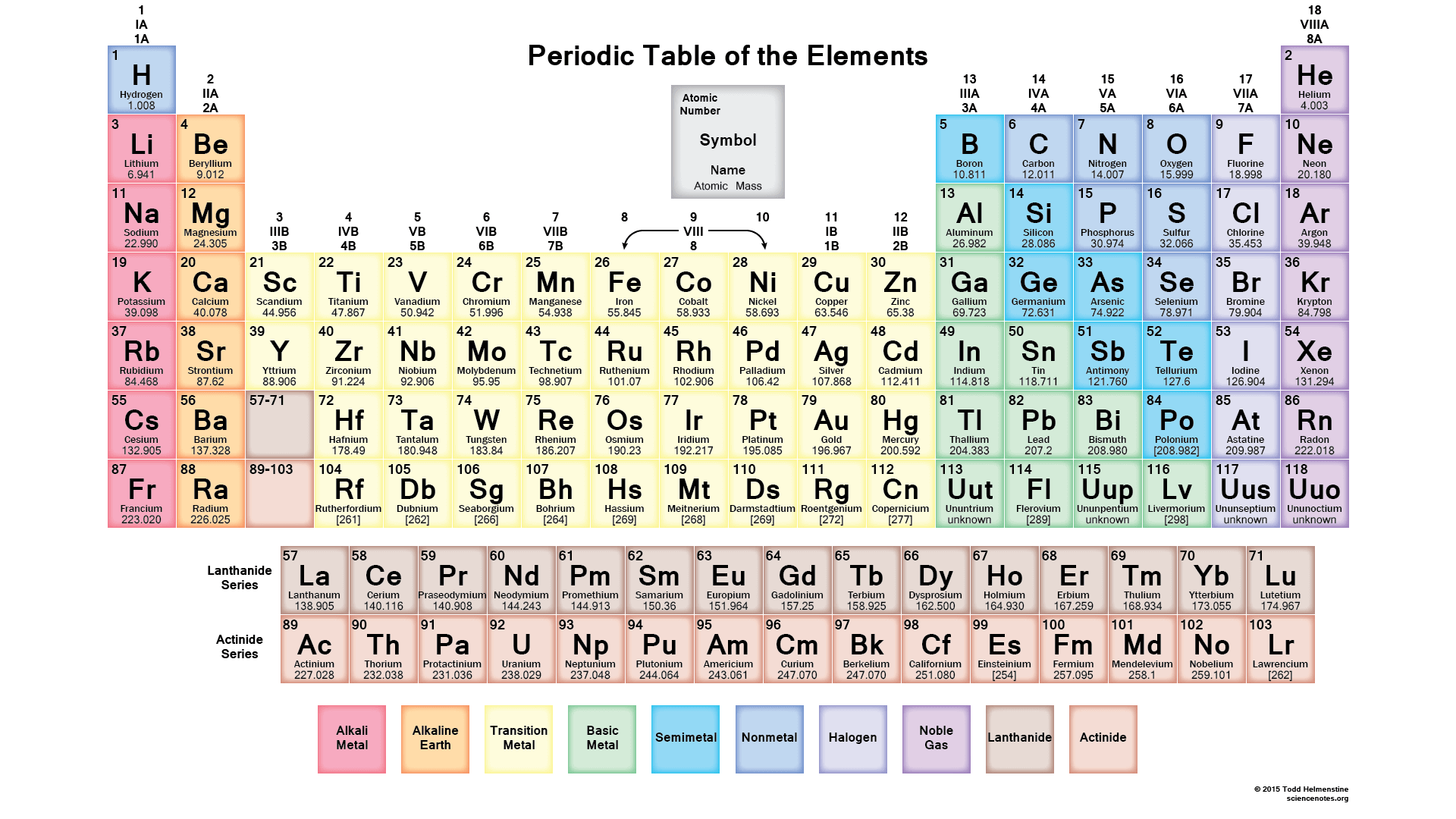
The vertical (up and down) columns in the Periodic Table are called

a)

groups

b)

towers

c)

periods

d)

atomic numbers

10.
Sodium (Na) is found in period 
a)
3
b)
2
c)
4
d)
1
11.

Sodium (Na) is found in which group?

a)

alkali metals

b)

alkaline earth metals

c)

halogens

d)

noble gases

12.

The horizontal (side to side) rows in the Periodic Table are called

a)

groups

b)

families

c)

periods

d)

atomic numbers

13.

What family is calcium a part of?

a)

Transition Metals

b)

Halogens

c)

Alkali Metals

d)

Alkaline Earth Metals

14.
Silicon is a 
a)
Metal
b)
Nonmetal
c)
Metalloid
d)
Halogen
15.

what is the small group of elements called that include C,N,O

a)

metals

b)

nonmetals

c)

metaloids

d)

noble gases

16.
The atoms along the staircase are called 
a)
metals
b)
nonmetals
c)
metalloids
d)
noble gases
17.
Which is a halogen?
a)
Helium
b)
Chlorine
c)
Oxygen
d)
Neptune
18.
Elements in a ..................have similar chemical properties.  
a)
period
b)
group
c)
row
19.

This could be the dot diagram of

a)

Mg

b)

Cl

c)

C

d)

O

20.

What element could be X?

a)

Magnesium

b)

Hydrogen

c)

Phosphorus

d)

Chlorine

21.
This could be the dot diagram of
a)
O
b)
B
c)
Li
d)
Ne
22.
This could be the dot diagram of
a)
Be
b)
B
c)
C
d)
Ne
23.
This could be the dot diagram of
a)
Al
b)
Si
c)
Na
d)
Mg
24.
How many electrons should Magnesium have around its Lewis dot model?
a)
1
b)
2
c)
3
d)
4
25.
What's a valence electron?
a)
electrons in the second energy level
b)
electrons in the outermost energy level
c)
the atomic number
d)
electrons in the first level
26.
What is the name of this element?
a)
Beryllium
b)
Boron
c)
Barium
d)
Bromine
27.
An element with five valence electrons is
a)
phosphorus
b)
oxygen
c)
beryllium
d)
rubidium
28.

How many valence (outer) electrons does an Oxygen atom have?

a)

2

b)

6

c)

8

d)

16

29.
Which of these represents a molecule?
a)
NaCl
b)
MgBr2
c)
CaO
d)
NH3
30.
A __________ bond exists between two nonmetals.
a)
Ionic
b)
Covalent
31.
In a _______ bond the electrons are gained or lost.
a)
Ionic
b)
Covalent
32.

What is the formula for potassium nitride?

a)

P3N

b)

KN

c)

KNO3

d)

K3N

33.

Ionic bonds are formed when….

a)

Metals gain electrons and become cations.

b)

Metals lose electrons and become cations.

c)

Metals gain electrons and become anions.

d)

Metals lose electrons and become anions.

34.

A covalent bond will form between…

a)

SCl2

b)

NaCl

c)

MgF2

d)

CaCl2

35.

What type of bond is formed between nitrogen and oxygen?

a)

Metallic

b)

No bond will form

c)

Ionic

d)

Covalent

36.
Which part of the atom is responsible for chemical bonding?
a)
Inner/Core Electrons
b)
Outer/Valence Electrons
c)
Protons
d)
Neutrons
37.

How many valence electrons do elements in Group 2A, the Alkaline Earth Metals, have?

a)

1

b)

2

c)

6

d)

7

38.
If an element gains an electron, will it form a positive ion or a negative ion?
a)
Positive.
b)
Negative.
c)
Neutral.
d)
Square root of -1.
39.
If an element gives away an electron, will it form a positive ion or a negative ion?
a)
Positive.
b)
Pawww-sitive.
c)
Negative.
d)
Neutral.
40.

What is the NAME for the Lewis Dot image?

a)

calcium dichloride

b)

calcium chlorine

c)

dicalcium monochloride

d)

calcium chloride

41.

What is the formula for the Lewis Dot example pictured?

a)

CaCl

b)

Ca2Cl

c)

CaCl2

d)

CaCl2

42.

What is the name of this compound?

a)

carbon tetrahydride

b)

monocarbon tetrahydride

c)

carbon hydride

d)

tetracarbon monohydride

43.

What is the formula for the compound in the image?

a)

NaCl2

b)

Na2Cl

c)

nacl

d)

NaCl

44.
What charge will a sulfide ion have?
a)
3+
b)
2+
c)
2-
d)
3-
45.
What charge will a nitride ion have?
a)
3+
b)
2+
c)
2-
d)
3-
46.
what charge will an aluminum ion have?
a)
3+
b)
2+
c)
2-
d)
3-
47.
If an element gains 1 electron, what charge will it have?
a)
+1
b)
-1
c)
+7
d)
-7
48.
Beryllium will ____ valence electrons when forming an ionic bond.
a)
lose 4
b)
gain 4
c)
lose 2
d)
gain 2