
 Worksheets
Unit 6.1 Test Review
Total questions: 45
Worksheet time: 55mins
Select the term that matches with the definition below:
The natural and man-made place where water is found
Infiltration
Reservoir
Watershed
Energy driver
Select the term that matches to the definition below:
The process that causes a liquid to turn into a gas
Groundwater
Elevation
Evaporation
Condensation
Select the term which matches the definition below:
Water that falls to the ground in the form of rain, snow, sleet, etc.
Precipitation
Groundwater
Transpiration
Energy driver
Select the term which matches the definition below:
The process that causes a liquid in plants to be released as a gas is called _______________________.
Watershed
Surface water
Transpiration
Infiltration
Select the term which matches the definition below:
The source of energy that causes water to move (for example gravity).
Water system
Energy driver
Surface water
Runoff
Select the term which matches the definition below:
Water located on the surface of the earth such as lakes and streams
Groundwater
Surface water
Reservoir
Infiltration
Select the term which matches the definition below:
An area of higher elevation land that dictates where surface water and groundwater drain
Transpiration
Water system
Elevation
Watershed
Select the term which matches the definition below:
When water drains down into the ground/soil
Surface water
Infiltration
Evaporation
Groundwater
Select the term which matches the definition below:
A series of reservoirs that are connected through the movement of water
Water system
Watershed
Reservoir
Transpiration
Select the term which matches to the definition below:
_______________________________is the force that pulls things towards the Earth.
Gravity
Transpiration
Evaporation
Watershed
Select the term which matches to the definition below:
Height above or below a given location
Elevation
Watershed
Water System
Runoff
Select the term which matches the definition below:
The process of water turning from a gas into a liquid
Condensation
Evaporation
Tranpiration
Runoff
Select the term which matches the definition below:
Water that drains over the surface of the earth after falling as precipitation
runoff
watershed
precipitation
elevation
Choose the term that matches to the definition below:
A state of matter with no definite shape or volume
liquid
gas
solid
state of matter
Choose the term that matches the definition below:
A state of matter that has no definite shape but has a definite volume
gas
liquid
solid
state of matter
Choose the term that matches the definition below:
A group of atoms held together by a bond
gas
molecule
solid
liquid
Choose the term that matches the definition below:
how close together or far apart atoms/molecules are
molecule
relative spacing
solid
thermal energy
Choose the term that matches the definition below:
when molecules move slowly/vibrate and are tightly packed with a definite shape and volume
gas
liquid
solid
molecule
Choose the term that matches the definition below:
a physical property that describes matter as a solid, liquid, or gas
state of matter
gas
liquid
solid
Choose the term that matches the definition below:
The total amount of energy carried by a system's molecules
state of matter
thermal energy
molecule
relative spacing
Choose the term that matches the definition below:
The continuous movement of water between the earth's water reservoirs driven by energy from the sun and gravity
thermal energy
relative spacing
water cycle
molecule

What water transfer process is happening in BOX F?
Infiltration
Evaporation
Transpiration
Condensation
Runoff
What water transfer process is happening in BOX G?
Infiltration
Evaporation
Transpiration
Condensation
Runoff
What water transfer process is happening in BOX H?
Infiltration
Evaporation
Transpiration
Condensation
Runoff
What water transfer process is happening in BOX I?
Infiltration
Evaporation
Transpiration
Condensation
Runoff
What water transfer process is happening in BOX J?
Infiltration
Evaporation
Transpiration
Condensation
Runoff

What is the ENERGY DRIVER for water movement in this model?
Gravity
Sunlight
Water
Soil

What is the ENERGY DRIVER for water moving DOWN in this model?
Gravity
Sunlight
Water
Soil

What state of matter is being represented by this diagram?
solid
liquid
gas

What state of matter is being represented by this diagram?
solid
liquid
gas

What state of matter is being represented by this diagram?
solid
liquid
gas
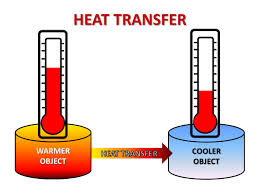
Thermal energy transfers from an area of ____temperature to an area of ___ temperature.
high to low
low to high
high to high
It can travel high to low and low to high.
A cup of HOT tea is placed into a freezing room. What happens to the thermal energy and the molecular motion of the tea when it is left on the table?
The thermal energy increases and the molecules move faster.
The thermal energy decreases and molecules move more slowly.
The thermal energy increases and the molecules move more slowly.
How does energy transfer cause water to move into the atmosphere?
Sun increases thermal energy causing water to move
Sun decreases thermal energy causing water to move
Sun keeps the thermal energy the same causing water to move

After a few minutes, you notice that larger drops of water are beginning to drip down the outside of the bottle, as shown in the image above.
What is causing the liquid water to move in this way?
The air pressure near the bottle is increasing.
There is less friction on the surface of the bottle.
The force of gravity is acting on the water drops.
The thermal energy of the bottle is decreasing.

Which of the following is/are true about the process that causes the movement of water which occurs in both the water cycle and the bottle examples?
Both of these examples involved liquid water moving downward.
Both these examples are caused by thermal energy increase of the liquid water.
Both of these examples are chased by a change of state.
Both of these examples are caused by thermal energy decrease of the liquid water.
Both of these examples are caused by the force of gravity acting on the liquid water.

The bottle was removed from the refrigerator was left on the table and after a period of time some water begins to move down he side of the bottle as shown in the figure below.
What is the term for the process that is occurring when the water moves down the side of the bottle?
Condensation
Transpiration
Evaporation
Runoff

The drops of liquid are coming from the __________________________.
liquid
air
bottle
water

The water droplets are formed as the motion of the particles in the air _____________.
decreases
increases
stays the same

This change in motion causes _____________________in the air to change.
air
water
gas

This change in motion causes water in the air to change from a ______________________to a __________________________.
liquid to a gas
gas to liquid
liquid to solid
solid to liquid

The water level is decreasing as the water in the beaker is being heated by the burner as shown in the figure.
What is the term for the process that is causing water to be transferred out of the beaker?
Condensation
Evaporation
Transpiration
Precipitation
Your teacher has taken a beaker of water and placed it carefully over a lit burner (fire) in the classroom, as shown in the diagram below.
Predict what will happen to the motion of the water molecules and the reason why you think this will occur.
The speed of the molecules will increase because the thermal energy of the water in the beaker increases.
The speed of the molecules will decrease because the molecules are moving farther apart.
The speed of the molecules will increase because the water molecules are breaking apart.
______ are things that will make a solution more successful.
Criteria
Constraints
Chickens
Cafeteria
_______ are things that if NOT MET, will make a solution unacceptable. They are often referred to as "limitations."
Criteria
Constraints
Chickens
Cafeteria

