wayground logo

Free Printable Worksheets

Font size

S
M
L
XL
Worksheets

Physical Science SLO #1 Review (Chemistry)

Total questions: 90

Worksheet time: 2hrs 46mins

Name
Class
Date
1.
In order for an atom to be neutral what has to be true?
a)
The atom has more protons than neutrons
b)
The atom has more neutrons than protons
c)
The atom has the same number of protons and neutrons
d)
The atom has the same number of protons and electrons
2.
Which subatomic particle has a negative charge in the atom?
a)
proton
b)
neutron
c)
electron
d)
quark
3.
The atomic number represents the identity of the ________________.
a)
mass of the atom
b)
element
c)
electrons
d)
isotopes
4.
What is the electrical charge of a proton?
a)
1+
b)
1-
c)
neutral
d)
2-
5.
Atoms of the same element which have a different number of neutrons are called _________________.
a)
ions
b)
isotopes
c)
quarks
d)
molecules
6.
What is the atomic number?
a)
the number of protons
b)
the number of protons and neutrons
c)
the number of neutrons
d)
the number of protons and electrons
7.
What is the mass number?
a)
the number of protons
b)
the number of protons and neutrons
c)
the number of neutrons
d)
the number of protons and electrons
8.
Each column in the periodic table is called a 
a)
period
b)
group
c)
cluster
d)
unit
9.
Which is an alkali metal?
a)
Magnesium
b)
Iron
c)
Sodium
d)
Europium
10.
What is the boiling point of water in degrees Celsius? 
a)
100 degrees
b)
0 degrees
c)
32 degrees
d)
212 degrees
11.
Which unit would be best to measure the distance from the classroom to the bathroom?
a)
kilometers
b)
centimeters
c)
millimeters
d)
meters
12.
What is the metric unit for volume?
a)
gram
b)
meter
c)
Liter
d)
ounce
13.
A bottle of hand sanitizer is 88mL. What is its volume in Liters?
a)
.88 Liters
b)
.088 Liters
c)
8.8 Liters
d)
88 Liters
14.
A milligram is ____________ a gram.
a)
less than
b)
greater than
c)
equal to
15.
75 mL = ________ L
a)
.75 L
b)
7.5 L
c)
.075 L
d)
75 L
16.
Metrics and metric converstions are based on the number _______.
a)
9
b)
1
c)
10
d)
2
17.
The base for mass is the
a)
meter
b)
gram
c)
kilogram
d)
liter
18.

3 kg = ______ g

a)

3

b)

30

c)

300

d)

3,000

19.
490,000 g =____ kg
a)
490
b)
49
c)
4,900
d)
0.49
20.
42 L = ___mL
a)
4,200
b)
.0042
c)
4.20
d)
42,000
21.
A series of steps used by scientists to solve a problem or answer a question. 
a)
scientific method
b)
recipe
c)
data collection
d)
metric system
22.
In a controlled experiment, how many independent variables can be worked with at a time? 
a)
one
b)
none
c)
two or more
d)
how ever many makes sense.
23.
what is the correct way to find the slope of the line?
a)
Rise/Run (Rise over Run)
b)
Run/Rise (Run over Rise)
c)
Slope/Run (slope over Run)
d)
Rise/Slope (Rise over slope)
24.

How long is the paperclip?

a)

4.3cm

b)

2.3cm

c)

2.3mm

d)

4.3mm

25.

Graphing in science is important. What is needed on a graph?

a)

title, independent and dependent variables labeled on the x-axis and y-axis.

b)

just the data points

c)

title only

d)

labels only, no title

26.
The splitting of a nucleus into smaller nuclei is
a)
fusion
b)
fission
c)
half-life
d)
gamma radiation
27.
Two nuclei with low masses are combined to form one nucleus of larger mass is called what?
a)
Nuclear fission
b)
Nuclear fussion
c)
Nuclear half-life
d)
Half-life
28.

___________________ is the measure of the average kinetic energy of particles.

a)

A thermometer

b)

Expansion

c)

Fahrenheit

d)

Temperature

29.
Is this equation balanced?
a)
yes
b)
no
c)
Not enough information
30.
Is this equation balanced?
a)
yes
b)
no
c)
Not enough information
31.
Balance this equation
_Al +_HCl --> _H+_AlCl3
a)
2, 6, 3, 2
b)
it is already balanced
c)
4, 12, 3, 4
d)
2, 1, 4, 5
32.
Balance this equation-
__P+ __O--> __P2O3
a)
it is already balanced
b)
2, 1, 3
c)
1, 2, 3
d)
1, 3, 2
33.
Balance this equation.
_Mg + _Cl--> _MgCl2
a)
1, 2,1
b)
already balanced
c)
2,1,1
d)
1,1,2
34.
Balance this equation
_Zn+_HCl-->_ZnCl+_H2
a)
1,1,2,1
b)
1,1,1,2
c)
1,2,1,1
d)
2,1,1,1
35.
What does the Law of Conservation of Mass state?
a)
Matter cannot be gained or lost in a chemical reaction.
b)
Matter can only be lost in a chemical reaction.
c)
Matter can only be gained in a chemical reaction.
d)
Matter can be gained and lost in a chemical reaction. 
36.
What is the little number after an element in a chemical equation called.
Example: H2
a)
Coefficient 
b)
Subscript
c)
Atom
d)
Equation
37.
What is the arrow in a chemical equation...
H2 + O --> H2O
a)
Reactants
b)
Products 
c)
Yields 
d)
Chemical Equation 
38.
At the end of chemical reactions, what is the total mass of the reactants compared to the total mass of the products?
a)
the product is doubled
b)
the product is half the mass of the reactants
c)
the mass is the same
d)
the mass changes depending on the reaction
39.
What is a coefficient?
a)
The small number on the right of the chemical symbol.
b)
The large number to the left of a formula.
40.
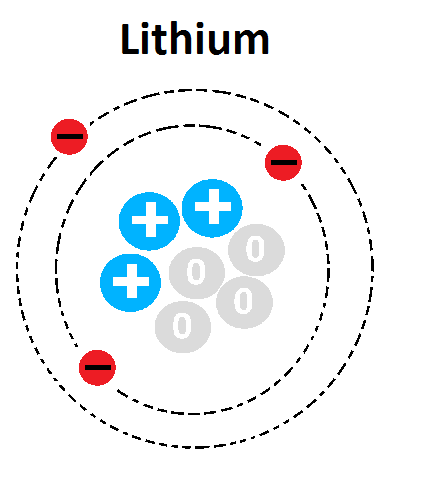
What element is represented in this Bohr Model? 
a)
Carbon
b)
Hydrogen
c)
Aluminum
d)
Lithium
41.
What is the mass number of this atom?
a)
1
b)
3
c)
4
d)
7
42.
What is the atomic number of this atom?
a)
2
b)
4
c)
6
d)
none of the above
43.
Element or compound?
H2O
a)
element
b)
compound
44.
Element or compound?
O2
a)
Element
b)
Compound
45.
Which is the correct formula for:
 three hydrogen (H)
one sulfur (S)
four oxygen (O)
a)
H3SO4
b)
HSO4
c)
H4S3O
d)
H2O
46.
How many atoms are there TOTAL in:
H2SO4
a)
6
b)
5
c)
7
d)
3
47.
Which element is found in group 16 period 3?
a)
Sulfur (S)
b)
Selenium (Se)
c)
Chlorine (Cl)
d)
Carbon (C)
48.
Which compound contains an alkaline earth metal and a halogen? 
a)
CaS
b)
Rb2S
c)
RbCl
d)
CaCl2
49.
An atom that has 20 protons, 20 neutrons, and 20 electrons is classified as
a)
an alkali metal
b)
a noble gas
c)
an alkaline earth metal
d)
a halogen
50.
What do these isotopes of carbon all have in common?
a)
neutrons & mass number
b)
atomic number and neutrons
c)
atomic number and electrons
d)
protons, atomic number, and mass number
51.
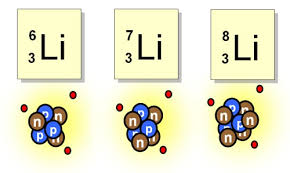
which atom has  4 neutrons?
a)
Li-6
b)
Li-7
c)
Li-8
d)
they have the same # of neutrons
52.
In an exothermic reaction, heat is ...
a)
taken in
b)
given out
53.
What type of reaction occurs in a hand warmer
a)
exothermic
b)
endothermic
54.

Is glass breaking a chemical or physical change?

a)

chemical

b)

physical

c)

neither

d)

both

55.
This picture represents which of the following?
a)
element
b)
compound
c)
mixture
56.

Milk is

a)

a heterogeneous mixture

b)

a homogeneous mixture

c)

a compound

d)

an element

57.

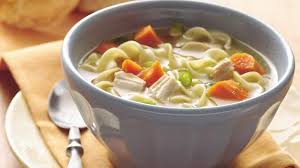
Chicken noodle soup is

a)

a heterogeneous mixture

b)

a homogeneous mixture

c)

a compound

d)

an element

58.
When the temperature of matter increases the particles...
a)
speed up and move closer
b)
speed up and move farther apart
c)
slow down and move closer together
d)
slow down and move farther apart
59.
Why does the graph have two flat lines at "b" and "d"?
a)
Those are times when we took the water off the hot plate
b)
Those are phase changes where temperature doesn't change while adding heat
c)
The line is flat because the water is all in the solid or gas phase
d)
The line is flat because temperature increases the most at those locations
60.
When two atoms share electrons, a chemical bond is formed.  This type of bond is called:
a)
covalent bond
b)
ionic bond
c)
crystal bond
d)
polyatomic bond
61.
If my charge becomes 2+ what does that say about me?
a)
I am stealing 2 electrons
b)
I am losing 2 electrons
c)
I am in period 2
d)
I have an atomic # of 2
62.
Metals tend to 
a)
gain electrons
b)
lose electrons
63.

If I gain electrons I become

a)

Positive because I've added to my atom

b)

negative because I've added electrons

c)

the same because I'm balanced

d)

equal because now I have electrons

64.
When metals bond with non-metals they form what type of bonds
a)
covalent
b)
ionic
c)
cooperative
d)
lewis
65.
How do the following two elements bond together?
Na1+  F1-         
a)
NaF
b)
NaF3
c)
Na3F
d)
Na1F2
66.
How do the following two elements bond together?
Cr3+  O2-         
a)
CrO
b)
Cr3O2
c)
Cr2O3
d)
CrO3
67.
How do the following two elements bond together?
K1+  S2- 
a)
KS
b)
K8S
c)
K6S3
d)
K2S
68.
When an ionic compound is formed, its charge is 
a)
negative
b)
neutral (no charge)
c)
positive
69.
How many valence electrons does calcium have?
a)
2
b)
4
c)
6
d)
7
70.
This is a correct dot diagram for oxygen (O)
a)
true
b)
false
71.
How are covalent bonds explained?
a)
When one atom takes the other atom's electron
b)
When the atom shares an electron with an another atom
c)
When the two nucleus merge
d)
When the neutrons leave the nucleus
72.
What two types of atoms make a covalent bond?
a)
2 Nonmetals
b)
1 Nonmetal and 1 Metal
c)
2 Metals
d)
2 Noble Gases
73.
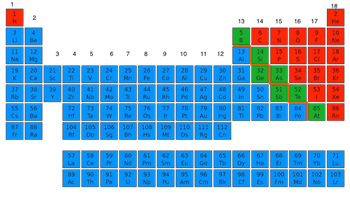
Where are the nonmetals located on the periodic table? 
a)
Blue
b)
Red
c)
Green
74.
Name CCl4
a)
carbon carbon tetraiodide
b)
carbon tetrachloride
c)
monocarbon tetrachloride
d)
water
75.
Give the formula for oxygen dichloride
a)
OCl2
b)

O2Cl2

c)
OCl
d)
O2Cl
76.
Give the formula for phosphorus trifluoride
a)
P3F
b)
PF
c)
PF3
d)
P3F3
77.
Name CO2
a)
carbon dioxide
b)
carbon monoxide
c)
carbon oxide
d)
monocarbon dioxide
78.
What is the prefix for 8?
a)
non
b)
tri
c)
di
d)
oct
79.
What is the name of N2O3
a)
Nitrogen trioxide
b)
Dinitrogen oxide
c)
Dinitrogen trioxide
d)
Nitrogen oxide
80.
Which following is a nonmetal?
a)
Se
b)
Mn
c)
Na
d)
Be
81.

The chemical name of Mg₃N₂ is

a)

trimanganese nitride

b)

magnesium nitride

c)

magnesium (III) nitride

d)

trimagnesium dinitride

82.
How many elements are in C6H12O6?
a)
1
b)
2
c)
3
d)
4
83.
How many atoms of carbon (C) are in  C6H12O6?
a)
3
b)
6
c)
12
d)
24
84.
How many atoms are there TOTAL in:
H2SO4
a)
6
b)
5
c)
7
d)
3
85.
An atom has an atomic number of 15 and a mass number of 31. How many protons are there in the atom?
a)
15
b)
31
c)
16
d)
47
86.
What is the ionic symbol for a phosphorus atom?
a)
P-3
b)
P+3
c)
P-2
d)
P+2
87.
What will nitrogen's charge be as an ion?
a)
+3
b)
-3
c)
0
d)
-1
88.
What is the charge does a sodium ion have?
a)
+2
b)
+1
c)
-1
d)
-2
89.
Magnesium's ion
a)
Mg+
b)
Mg2+
c)
Mg-
d)
Mg2-
90.
What takes place when a liquid changes to a gas?
a)
condensation
b)
melting
c)
evaporation
d)
freezing