Worksheets
Unit 2 Matter
Total questions: 89
Worksheet time: 50mins
the positively charged subatomic particle contained in the nucleus of an atom
proton
neutron
electron
matter
a subatomic particle, contained in the nucleus of an atom, having the same mass as a proton but no electrical charge
proton
neutron
electron
matter
a negatively charged subatomic particle that orbits the nucleus of an atom
proton
neutron
electron
matter
an arrangement of the elements according to their atomic numbers so that elements with similar properties are in the same column and properties repeat from row to row
Periodic Table of Elements
Atomic Theory
Isotopes
Subatomic Particles
one or two letters that represent the name of an element
element name
element symbol
atomic number
atomic mass
a unique number for each element that equals the number of protons in an atom of that element
element name
element symbol
atomic number
atomic mass
a row on the Periodic Table of Elements
family
period
row
isotope


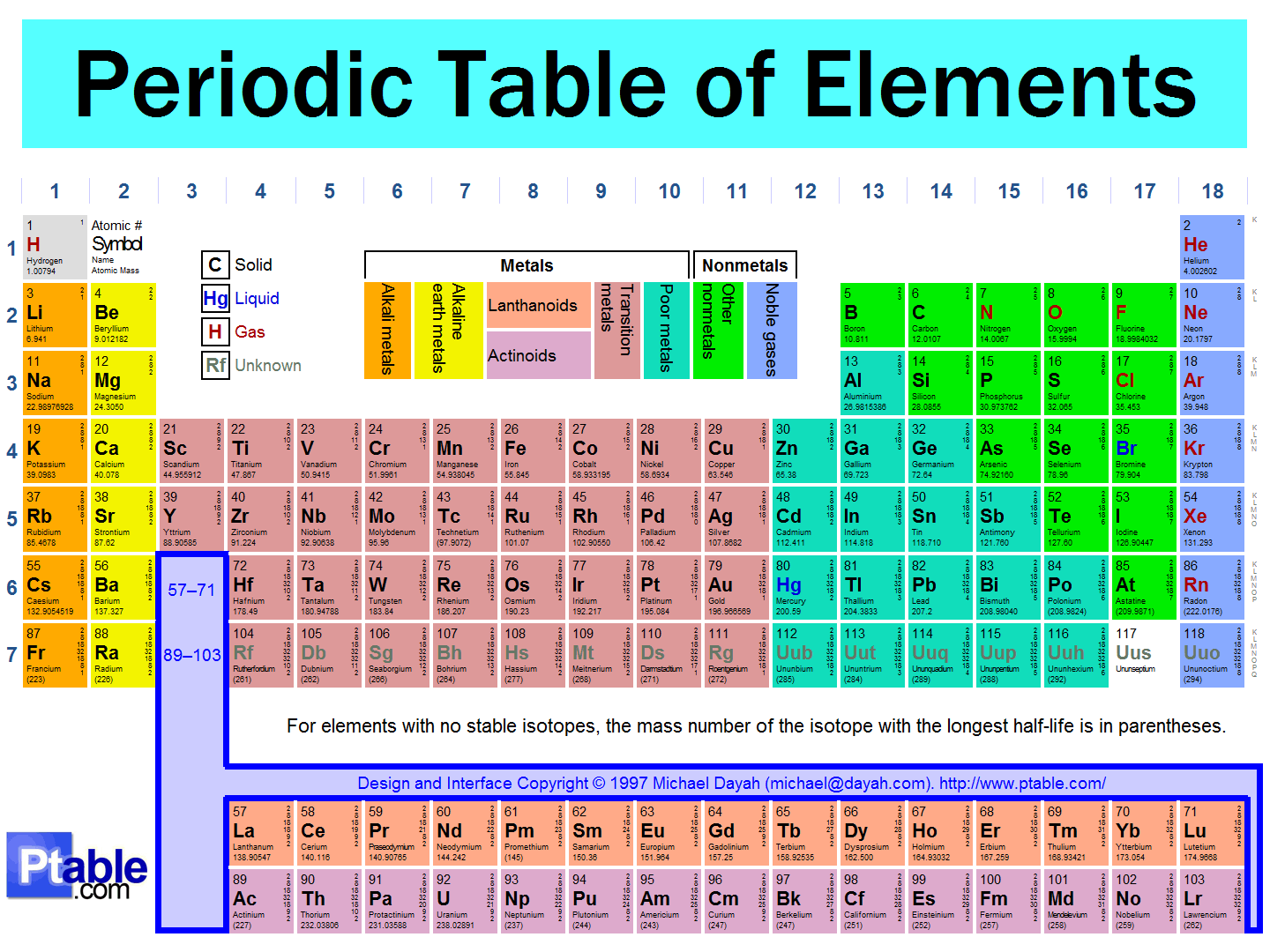
The vertical (up and down) columns in the Periodic Table are called
groups
towers
periods
atomic numbers
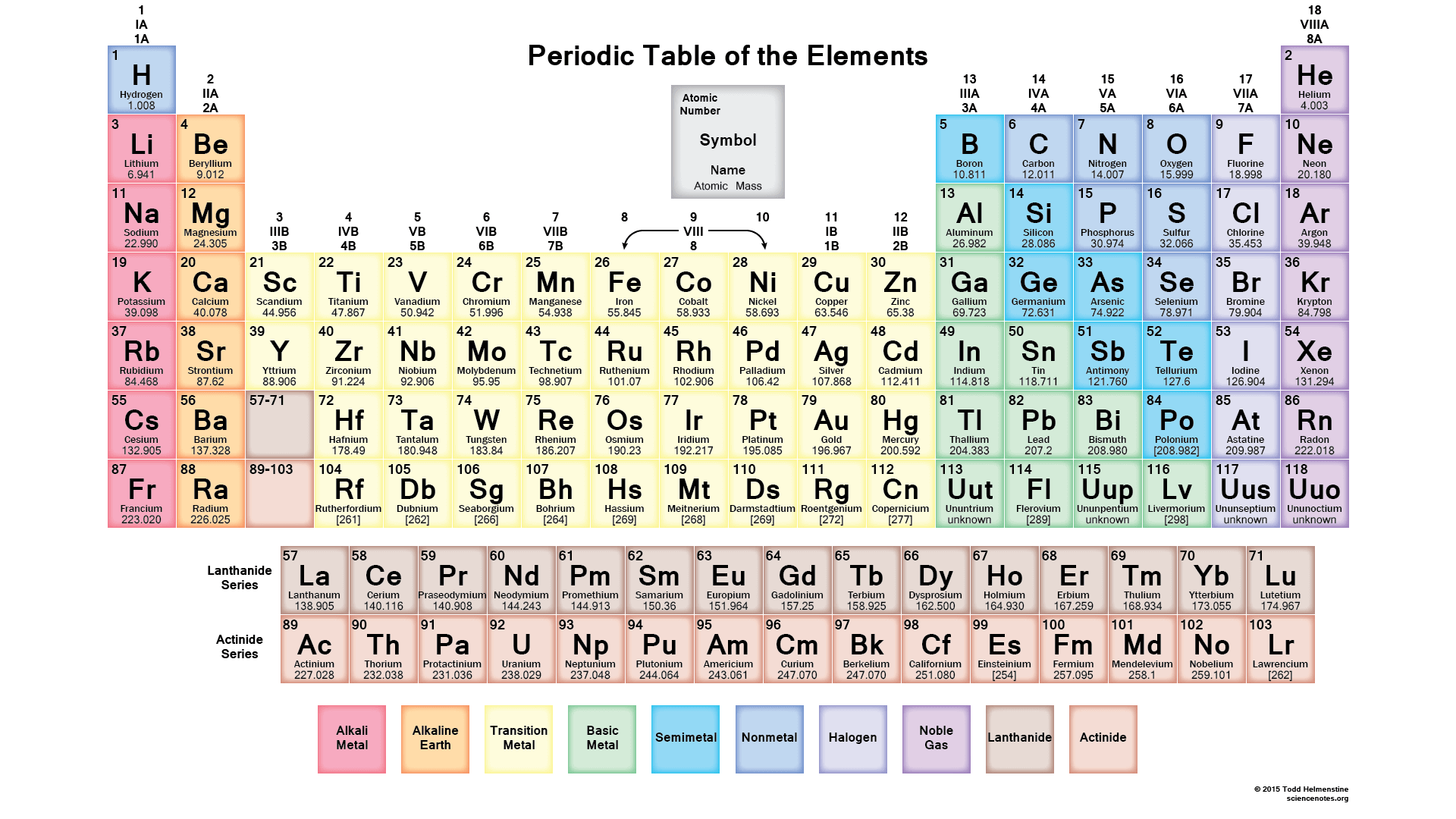
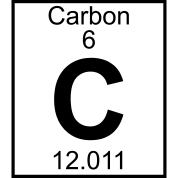
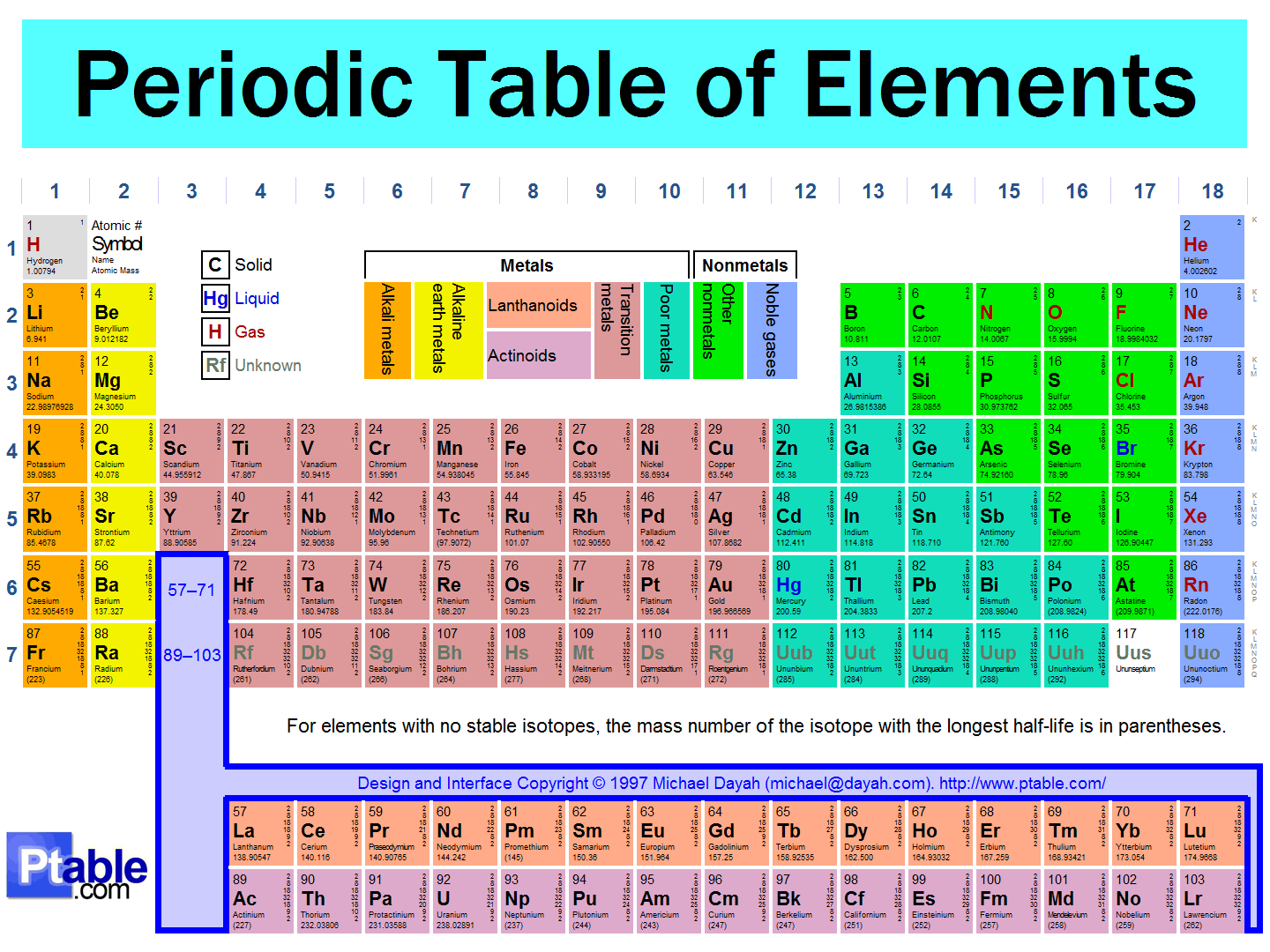
The horizontal (side to side) rows in the Periodic Table are called
groups
families
periods
atomic numbers
what is the biggest group on the table
metals
nonmetals
metaloids
halogens
how many rows are on the table
4
5
6
7
how many groups/families are on the table
15
16
17
18
what is the name of group number 1
halogens
noble gases
alkali
alkaline earth
what is the name of group number 2
transition metals
halogens
metaloids
alkaline earth
where are the metaloids found
far left, vertical
stair step/diagonal
far right horizontal
at the bottom
what group number are the halogens
18
1
2
17
what group number are the noble gases
17
18
14
15


Which is NOT a solute in a cup of coffee?
coffee
milk
sugar
water
Salt is dissolved in water. How can you separate the salt from water?
add more salt
filter the water
dispose the water
boil the water and let it evaporate


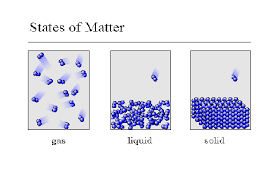
solid
liquid
gas

solid
liquid
gas
The amount of space that matter takes up.
matter
volume
mass
The amount of matter in an object.
matter
volume
mass
The particles in a gas are very ____________________ packed together.
shapely
tightly
loosely

a. Mom is boiling water for spaghetti. What state of matter is the water when she puts the pot on the stove?
gas
liquid
solid

a. The glass now has less water in it. What happened to the water?
condensation
gas
evaporation
solid