wayground logo

Free Printable Worksheets

NEW

Font size

S
M
L
XL
Worksheets

Ecology review

Total questions: 40

Worksheet time: 1hrs 20mins

Name
Class
Date
1.

Photosynthetic plants are what part of a food web?

a)

tertiary consumers

b)

secondary consumers

c)

producers

d)

primary consumers

2.

What are herbivores?

a)

Animals that eat plants and animals.

b)

Animals that eat only plants.

c)

Animals that eat only animals.

d)

Animals that break down dead matter.

3.

What is a decomposer?

a)

Organisms that make their own food.

b)

Animals that eat only plants.

c)

Organisms that break down organic matter.

d)

Organisms that feed on animal's remains and other dead matter.

4.

The diagram pictured shows what?

a)

A food chain

b)

A food web

c)

A food pyramid

d)

A biomass pyramid

5.

What is an example of a limiting factor?

a)

shelter

b)

strength

c)

number of offspring

d)

height

6.
Movement of individuals from a population
a)
density-independent factor
b)
density-dependent factor
c)
emigration
d)
immigration
7.

Movement of individuals into a population

a)

density-independent factor

b)

density-dependent factor

c)

emigration

d)

immigration

8.
Largest number of individuals in a species that the environment can support long-term.
a)
population delpunsity
b)
dispersion
c)
population growth rate
d)
carrying capacity
9.

What is the original source of energy in most ecosystems?

a)

carbohydrates

b)

sunlight

c)

water

d)

carbon

10.
symbiotic relationship in which both organisms benefit
a)
competition
b)
Mutualism
c)
nitrogen fixation
d)
energy pyramid
11.
A living relationship between two species in which one organism is harmed is called...
a)
mutualism
b)
commensalism
c)
parasitism
d)
niche
12.

The amount of energy that transfers from one trophic level to the next...

a)

10%

b)

20%

c)

80%

d)

50%

13.
A collection of organisms that belong to different populations but all live in the same area and interact with one another.
a)
Population
b)
Ecosystem
c)
Community
d)
Ecosphere
14.
A living organism that puts materials from dead  plants and animals back to the soil is called a ____________?
a)
carnivore
b)
decomposer
c)
herbivore
d)
omnivore
15.
Commensalism is where one organism is benefiting and the other organism is _____________________. 
a)
not effected
b)
helped
c)
harmed
d)
hurt
16.

1. A bee and a flower work together to benefit each other. This is an example of _________________. The bee helps the flower by pollinating it and the flower helps the bee by providing it with nectar.

a)

commensalism

b)

parasitism

c)

mutualism

17.
A clown fish and a sea anemone are in a close relationship. The sea anemone provides shelter and protection for the clown fish. However, the sea anemone is not harmed. This is an example of  ______________________. 
a)
commensalism
b)
parasitic relationship
c)
mutualism 
18.
Succession that occurs in an area with NO SOIL
a)
ecological succession 
b)
primary succession 
c)
secondary succession
d)
pioneer speciles
19.
Which is NOT an abiotic factor:
a)
soil
b)
air
c)
bacteria;
d)
water
20.
A biome is......
a)
Like a snowglobe that you shake and can see different types of animals.
b)
A large region of earth with a certain type of climate
c)
An area of earth only found in the United States.
d)
A community of living things.
21.
True of False?  
Animals that live in the desert have adapted to live with little water since the desert gets little rainfall.
a)
True
b)
False
22.
The earth's coldest biome is the....
a)
Antartica
b)
Grasslands
c)
Tundra
d)
Freshwater
23.
The climate in a tropical rain forest can be described as
a)
cold and wet 
b)
warm and dry 
c)
cold and dry 
d)
warm and wet 
24.
A Biome covered with grasses is called....
a)
Grasslands
b)
Africa
c)
Meadow
d)
Forest
25.
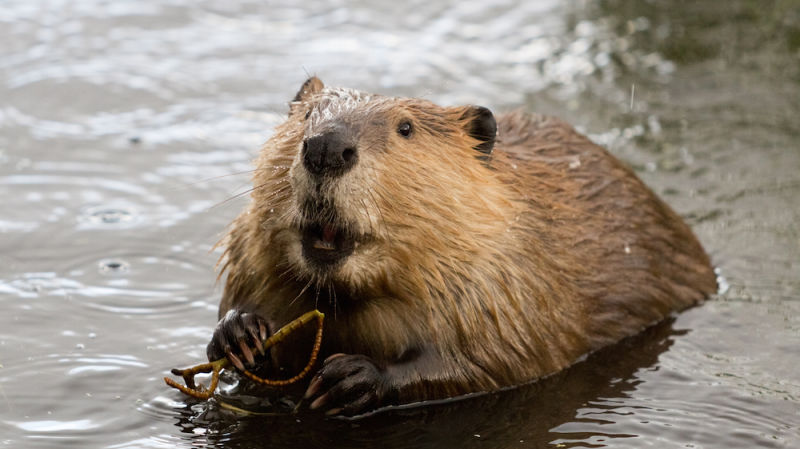
Birds, beavers, fish, and insects live in this biome.
a)
Marine
b)
Freshwater
c)
Tundra
d)
Taiga
26.

In which biome would you find Tennessee?

a)

coniferous forest (taiga)

b)

tundra

c)

grassland

d)

deciduous forest

27.

Which biome has the least amount of biodiversity? (the least different kinds of organisms)

a)

tropical rain forest

b)

savanna

c)

grassland

d)

desert

28.

Which biome is the driest? It receives less than 10 inches of rain a year.

a)

desert

b)

grassland

c)

deciduous forest

d)

tropical rain forest

29.

Which biome gets the most amount of rain every year?

a)

decidious forest

b)

tropical rain forest

c)

desert

d)

tundra

30.

Which biome has the greatest amount of biodiversity? (the most different kinds of organisms)

a)

tundra

b)

grassland

c)

desert

d)

tropical rain forest

31.

Which biome has trees that lose their leaves in the fall and regrow them in the spring?

a)

deciduous forest

b)

coniferous forest (taiga)

c)

tropical rain forest

d)

desert

32.

Which biome has conifer trees or evergreens? These trees have needles that are coated in a waxy substance and drop cones.

a)

deciduous forest

b)

desert

c)

coniferous forest (taiga)

d)

tropical rain forest

33.

Which biome has NO trees because much of the ground is frozen all the time?

a)

tundra

b)

desert

c)

savanna

d)

coniferous forest (taiga)

34.
Biodiversity refers to
a)
extinct species
b)
the variety of species on Earth
c)
nonrenewable resources
d)
the rate of species decline
35.
When taken to a new habitat, non-native plants often threaten native plants of the new habitat.  Why do they do this?
a)
Non-native plants are able to mutate rapidly
b)
Non-native  plants cause native animals to relocate
c)
Non-native plants are able to be used for medicine
d)
Non-native plants compete with native plants for resources
36.
1. What makes a species invasive?
a)
Moving to a new ecosystem and taking resources from natives 
b)
Not having papers
c)
Species that can't adapt
d)
Plants that take up too much space
37.
If a blue catfish is introduced and eats the large fish who eat the smaller fish, what will happen to the population of the smaller fish?
a)
Increase
b)
Decrease
c)
Stay the same
d)
No affect on smaller fish
38.
Which of the following is NOT a method of energy conservation?
a)
taking public transportation to work (bus, subway)
b)
riding your bike to work
c)
walking to work 
d)
driving alone in your car to work
39.
Pollution can cause harm to the ___________.  
a)
air
b)
land
c)
water
d)
all of the above
40.
Conservation is the act of conserving, or protecting the environment, plants, and animals. What are some things you can do to help conserve our environment? 
a)
leave water on, leave TV on, run dishwasher with 1 plate
b)
run the washing machine with 1 shirt
c)
leave the refrigerator door open
d)
turn off water, turn off lights, turn off TV