wayground logo

Free Printable Worksheets

Font size

S
M
L
XL
Worksheets

Space Study Guide

Total questions: 88

Worksheet time: 1hrs 12mins

Name
Class
Date
1.
What is at the center of the Solar System?
a)
Earth
b)
Moon
c)
Sun
d)
Jupiter
2.
How many planets orbit the Sun?
a)
1
b)
4
c)
8
d)
10
3.
The sun is a glowing ball of _______.
a)
water
b)
liquid
c)
gases
d)
rocks
4.
The sun is a _______.
a)
star
b)
planet
c)
satellite
5.
The light from the sun....
a)
only reaches part of the moon because of clouds
b)
lights up the whole moon but Earth's shadow gets in the way sometimes
c)
lights up 1/2 the moon and we see different portions of the 1/2 lit moon
d)
illuminates different amounts of the moon because the distance from the sun changes
6.
How many suns do we have
a)
13
b)
21
c)
1
d)
4
7.
The sun appears to move across the sky each day.  What causes this?
a)
the spinning of the Earth's axis
b)
The path of the sun around the Earth
c)
the production the nuclear energy around the sun
d)
the tilt of the Earth on its axis
8.

What planet is closest to the sun?

a)

Mars

b)

Earth

c)

Venus

d)

Mercury

9.

What are the four inner planets?

a)

Earth, Uranus, Mercury, Venus

b)

Mercury Venus Earth Saturn

c)

Mars, Earth , Mercury, Venus

d)

Mars, Earth, Neptune, Mercury

10.

Which planet is farthest from the sun?

a)

Neptune

b)

Jupiter

c)

Mercury

d)

Uranus

11.

What are the outer planets?

a)

Jupiter, Saturn, Earth, Neptune

b)

Saturn, Neptune, Mars, Uranus

c)

Uranus, Saturn, Neptune, Jupiter

d)

Mercury, Venus, Earth, Mars

12.

What is the fourth planet from the sun?

a)

Mars

b)

Earth

c)

Saturn

d)

Venus

13.

What is at the center of our solar system?

a)

asteroid belt

b)

Earth

c)

sun

d)

moon

14.

What is the sixth planet from the sun?

a)

Uranus

b)

Saturn

c)

Earth

d)

Venus

15.

Which planets are made of solid surfaces and rocky cores?

a)

terrestrial

b)

gas giants

c)

outer planets

16.

Which planets are mostly made of gases?

a)

terrestrial

b)

gas giants

c)

inner planets

17.

Which planet is third from the sun?

a)

Mars

b)

Earth

c)

Mercury

d)

Venus

18.

Which planet is a gas giant?

a)

Mercury

b)

Earth

c)

Saturn

d)

Venus

19.

Which planet is a terrestrial planet?

a)

Uranus

b)

Neptune

c)

Jupiter

d)

Venus

20.

Which planets are the gas giants?

a)

Earth, Jupiter, Venus, Neptune

b)

Saturn, Uranus, Jupiter, Neptune

c)

Jupiter, Saturn, Uranus, Mars

d)

Uranus, Jupiter, Earth, Neptune

21.

Which planets are all inner planets?

a)

gas giants

b)

terrestrial planets

22.

Which planets are all outer planets?

a)

gas giants

b)

terrestrial planets

23.

How many planets are in our solar system?

a)

6

b)

7

c)

8

d)

9

24.

Which two facts describe Earth?

a)

inner planet

b)

outer planet

c)

terrestrial planet

d)

gas giant

25.

What causes seasons to change on Earth?

a)

Earth's rotation

b)

Earth's revolution around the sun

26.

What causes day and night on Earth?

a)

Earth's rotation on it's axis

b)

Earth's revolution around the sun

27.

What hemisphere do we live in?

a)

Northern Hemisphere

b)

Southern Hemisphere

28.

How long does it take for Earth to make one complete revolution around the sun?

a)

1 day

b)

1 year

c)

365 days

d)

24 hours

29.

How long does it take for Earth to rotate on it's axis?

a)

1 day

b)

1 year

c)

365 days

d)

24 hours

30.

What season is the northern hemisphere experiencing in the photo?

a)

Fall

b)

Spring

c)

Winter

d)

Summer

31.

In the US, what time of day is it, according to the photo?

a)

Day

b)

Night

32.

TRUE or FALSE. The Earth rotates in a clockwise position.

a)

True

b)

False

33.

How many phases of the moon are there?

a)

5

b)

4

c)

10

d)

8

34.

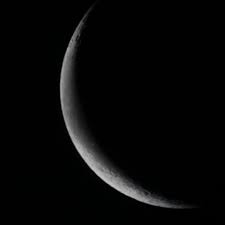
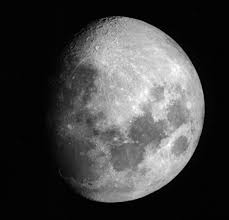
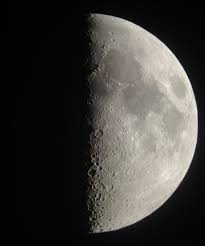
What phase of the moon is shown above?

a)

New moon

b)

Waxing crescent

c)

Full moon

d)

First quarter

35.
A constellation is a group of visible ____ that form a pattern when viewed from Earth.  
a)
planets
b)
stars
c)
patterns
d)
creatures
36.
The constellation pattern may take the shape of an ___, ___, ____, ___, or object such as a crown or compass.
a)
planets, stars, animals, people
b)
stars, animals, people, man
c)
man, animals, stars, planets
d)
animal, mythological creature, man, woman, 
37.
The stars we see in each constellation are very close to us.
a)
True
b)
False
38.
As the earth rotates on its axis, the constellations and stars in them appear to _________.  
a)
move across the sky
b)
stand still in the sky
c)
move around each other
d)
rotate
39.
The stars in a constellation appear to be close to each other in the shape, but may be ______  in space.
a)
very close
b)
some are close
c)
great distances apart
d)
some are great distances apart
40.
At the equator, the stars move in a ______ across the sky.  
a)
circle
b)
straight line
c)
rotating motion
d)
slow motion
41.
 At the equator, the stars rise in the ___ and set in the ___.
a)
north, south
b)
east, east
c)
east, west
d)
north, east
42.
Near the poles, the stars appear to rotate in a circle in the sky and never set.
a)
True
b)
False
43.
People in the Northern Hemisphere do see the same constellations as the people in the Southern Hemisphere.
a)
True
b)
False
44.
Constellations may be only visible during certain seasons due to the Earth’s orbit around the____.  
a)
Earth
b)
Mars
c)
Planets
d)
sun
45.
What are the three important constellations?
 
a)
Ursa Major, Ursa Minor, Orion  
b)
Ursa Major, Big Dipper, Orion  
c)
Ursa big, Ursa small, Orion 
d)
Polaris, Ursa Minor, Orion  
46.
Ursa Major is also called “Great Bear” and is one of the largest constellations.  
a)
True
b)
False
47.
Ursa Minor means “Little Bear” in Latin and is commonly known as the Big Dipper.
a)
True
b)
False
48.
Orion is visible during the winter night sky and is one of the most recognizable constellations – it contains some of the____stars that we can see and is named for the hunter from Greek mythology.
a)
biggest
b)
brightest
c)
smallest
d)
darkest
49.
Which constellation is best known because it contains the “big dipper,” which looks like a ladle.
a)
Ursa Major
b)
Ursa Minor
c)
Orion
d)
Polaris
50.
Name the moon phase
a)
waning crescent
b)
waxing crescent
c)
waning gibbous
d)
waxing gibbous
51.
Name the moon phase
a)
waning crescent
b)
waxing crescent
c)
waning gibbous
d)
waxing gibbous
52.
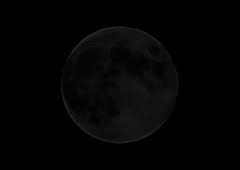
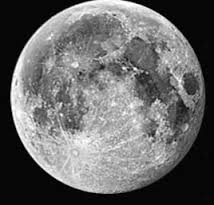
Name the moon phase
a)
First Quarter
b)
Last Quarter
c)
New Moon
d)
Full Moon
53.
Name the moon phase
a)
First Quarter
b)
Last Quarter
c)
New Moon
d)
Full Moon
54.
Name the moon phase
a)
First Quarter
b)
Last Quarter
c)
New Moon
d)
Full Moon
55.
What is illuminating the Moon?
a)
Nuclear Fusion
b)
Sunlight
c)
Mirrors
d)
Flood Lights
56.
Name the moon phase
a)
waning crescent
b)
waxing crescent
c)
waning gibbous
d)
waxing gibbous
57.
Which moon phase is when you can't see the moon at all?
a)
Waning crescent
b)
Full moon
c)
Waxing gibbous
d)
New moon
58.
The cycle of the moon lasts about a _.
a)
day
b)
year
c)
week
d)
month
59.
Which of the following words describe the phases of the moon?
a)
none, quarter, half, three quarters, full
b)
new, crescent, quarter, gibbous, full
c)
dark, light, half, quarter, blue
d)
first quarter, second quarter, third quarter, fourth quarter
60.
What is the difference between a gibbous moon and a crescent moon?
a)
The gibbous shows more than half of the bright side of the moon.
b)
The crescent shows more than half of the bright side of the moon.
c)
The gibbous shows less than half of the bright side of the moon. 
61.
How many phases does the moon go through?
a)
4
b)
8
c)
10
d)
16
62.
The moon ____________ or goes around the Earth.
a)
orbits
b)
cries
c)
climbs
63.
Changes in the moon's appearance are
a)
phases
b)
eclipses
c)
stages
d)
cycle
64.
Define Gibbous
a)
Less than half of moon visible
b)
More than half of moon visible
c)
All of moon visible
d)
None of moon visible
65.
Name the moon phase
a)
Waning Crescent
b)
Waxing Crescent
c)
Waning Gibbous
d)
Waxing Gibbous
66.
The 1st Quarter moon is lit on the:
a)
Left Side
b)
Right Side
67.
Name the moon phase that would come AFTER this moon.
a)
waning crescent
b)
waxing crescent
c)
waning gibbous
d)
waxing gibbous
68.
This tool shows the cardinal directions 
a)
astrolabe
b)
compass
c)
sextant
d)
telescope
69.
This navigational tool measure the height of the horizon to an object in space to help explorers plot their location. 
a)
astrolabe
b)
compass
c)
sextant
d)
telescope
70.
This tool is used by astronomers to make faint, faraway objects appear brighter and closer. 
a)
astrolabe
b)
compass
c)
sextant
d)
telescope
71.
This navigational tool measure the height of the horizon to an object in space to help explorers plot their location. 
a)
astrolabe
b)
compass
c)
sextant
d)
telescope
72.
When would an astronomer most likely use a telescope? 
a)
to view the types of clouds in the sky
b)
to study the characteristics of a planet in our solar system
c)
to measure the amount of sunlight Earth receives
d)
to view objects across the ocean
73.
Which description correctly describes constellations? 
a)
the group of planets that are found within our solar system
b)
all of the stars in our galaxy 
c)
a collection, or group, of stars that create a pattern or image
d)
a person who studies astronomy
74.
Why do constellations appear to "move" throughout the year? 
a)
stars rotate in the sky
b)
Earth's rotation 
75.
Also known as the "big bear" and contains the Big Dipper
a)
Ursa Major
b)
Ursa Minor
c)
Orion 
76.

Also known as the "little bear" and contains the Little Dipper

a)

Ursa Major

b)

Ursa Minor

c)

Orion

77.
Also known as "the hunter" 
a)
Ursa Major
b)
Ursa Minor
c)
Orion 
78.

When the sun gets higher in the sky, shadows get ______.

a)

longer

b)

gone

c)

shorter

d)

darker

79.

When the sun gets higher in the sky, shadows get ______.

a)

longer

b)

gone

c)

shorter

d)

darker

80.

When the sun gets lower in the sky, shadows get______.

a)

longer

b)

gone

c)

shorter

d)

darker

81.

Shadows are longest during _______.

a)

morning and evening

b)

noon

c)

night

82.

Shadows are shortest around______.

a)

morning and evening

b)

noon

c)

night

83.

The sun appears to __________.

a)

rise in the east, set in the west

b)

rise in the west, set in the east

84.
Where does the sun rise? 
a)
North
b)
South
c)
East
d)
West
85.
Where does the sun set? 
a)
North 
b)
South
c)
East
d)
West
86.
Which light source causes shadows in the outdoor environment? 
a)
The Sun
b)
The Lightbulb
c)
The House
d)
The School
87.

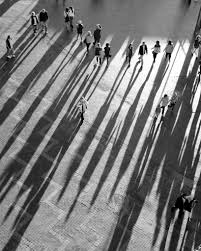
When was this picture most likely taken?

(Hint: think about the shadow's length)

a)

morning or evening

b)

night

c)

noon

d)

afternoon

88.

What do shadows on Earth help show?

a)

Earth's rotation

b)

Earth's revolution

c)

Earth's equator

d)

Earth's axis