
 Worksheets
WH 1st semester review
Total questions: 130
Worksheet time: 1hrs 9mins
Justinian's most famous achievement is the
Wall of Constantine
Holy Crusade
Crowning of Charlemagne
Justinian Code
The Byzantine Empire reached its greatest extent under:
Justinian
Constantine
Vladimir
Diocletian
Why was trade so much better in Constantinople?
Goods in Constantinople were far superior to those in the western Roman Empire
It was easier for traders to access Constantinople over land
Constantinople was at the center of east and west trade, and could be reached by water
Constantinople was protected from outside intruders by the Alps and Gobi dessert
What is the Hagia Sophia?
The center of Christianity in the Roman Empire
The center of trade in the capital of Constantinople
The main government building of Justinian's reign
An enormous church built by Justinian I
How did Justinian I expand his Empire?
By taking back lands in North Africa, Italy, and Spain
By taking lands in the Ottoman Empire
By waging wars against China and the Eastern Empires
By fighting back the armies of Carthage to regain territory in Spain and Africa
Prejudice against Jews is known as
zionism
anti- semitism
apartheid
imperialism
Roman Emperor _______________ made Christianity the main religion of the Roman Empire.
Diocletian
Galerius
Constantine
Augustus
Papal Supremecy
Exchange of pledges between lords and vassals
campaign to drive muslims from Spain
authority over all secular rulers
division of the church
Journeymen is
a salaried worker employed by a guild master
a guild master
a secular ruler
a person who doesn't get paid but learns a skill
Monasteries and convents often proved basic
sacred rites of the church
legacy of religious hate
basic social services
banking needs
charter
obedience and poverty
excommunication of an entire region
a group of merchants who pooled their funds
written document that set out the rights and privileges of a town
Why did so many people embark on the crusades
better plows and land
Religious and some yearend for adventure
politically divide and no trade
legacy and more power
guilds
workers who were tied to the land on which they lived
a ruler who has absolute power
association of merchants or artisans who cooperated to protect their economic interest
association of middle class and upper class who proposed a written document to govern the city
serfs
workers who were tied to the land
a ruler who has absolute power
workers who were slaves
worker who were paid
excommunication
protected cities from disarray
church wealth
Banishment from the church
Banishment from the throne
schism
the great wall
the great divide with the Christian world
Campaign to drive Muslims from Spain
Sacred rites of the church
Reconquista
Campaign to drive Vikings out of Byzantine
Campaign to drive Muslims out of Spain
Slaves tied to the land
Religious ceremony
Manor System
Mounted warrior
Association of Knights, nibbles and monarchs
A system developed to help protect the king and queens court
an economic system of exchanging land use and protection for goods and services.
feudal contract
authority over all secular rulers
a salaried worker
exchange of pledges between lords and vassals
campaign to protect lords and vassals
Land granted by a lord to a vassal in exchange for loyalty and service:
fief
duke
feudalism
knight
True or False: The majority of the Crusades were very successful in capturing the Holy Land.
True
False
What religious leader from the Catholic Church helped to organize the First Crusade?
Stephen Harding
Pope Urban II
Saint Benedict

What was the original goal of the Crusades?
To make sure that kings no longer ruled over peasants.
To recapture the Holy Land from the Muslims.
To end Feudalism
To open new trade routes to the East.
Usury
a slang term for Jewish people
The act of lending money at an exorbitant rate of interest
A ruler who has absolute money power
An economic system of exchanging money for favors
a ruler who has complete authority over the government and lives of the people he or she governs
absolute monarch
abdicated monarch
intendant monarch
Which family ruled the Holy Roman Empire during the Age of Absolutism?
Bourbons
Tudors
Hapsburgs
Stuarts
series of treaties that ended the Thirty Years' War
Austrian Agreement
Peace of Westphalia
Treaty of Versailles
tsar of Russia; proclaimed emperor in 1721. He was one of Russia's greatest statesmen, organizers, and reformers.
Peter the Great
Eric the Great
Frederick II
having unlimited power
oligarchic
autocratic
democratic
soldier serving in a foreign country for pay
mercenary
freedom fighter
warlord
German-born empress of Russia (1762–1796) who led her country in becoming part of the political and cultural life of Europe.
Maria Theresa
Harriett II
Catherine the Great
served as king of France (1643–1715) and is considered the symbol of absolute monarchy
James I
Louis XIV
Voltaire
king of Scotland who also became king of England and Ireland. He deeply believed in the divine right of kings to rule over all their subjects without interference from anyone
Thomas I
James I
Edward I
A prolific English writer on political philosophy; proposed that people are born with certain natural rights that cannot be taken away, including life, liberty, and property
John Locke
Voltaire
Adam Smith
a person who flee his or her country for political reasons
emirgre
guillotine
marseilles
habius corpus
members of the working class who made the French Revolution more radical
french revolutionaries
marseilles
sans-culottes
napoleon
right to vote
civil rights
jacobin
emigre
suffrage
device used during the Reign of Terror to execute thousands by beheading
guillotine
suffrage
nationalism
marseilles
a strong feeling of pride and devotion to one's country
federalist
nationalist
nationalism
patriot
old order system of government in pre-revolutionary France
cahier
olympe de gouges
ancien regime
marie antoinette
fortress in Paris used as a prison; French revolution began when Parisians stormed it in 1789
bourgeoisie
bastille
estates-general
cahiers
What does plebiscit mean?
popular vote by ballot
a kind of French potato
a priest of the 1st estate
Code of law embodied Enlightenment principles of equality, religious tolerance and the end of feudalism and was created by Napoleon
plebiscite
Naploeonic Code
Congress of Vienna
Napoleon annexed
give up or step down from power
annexed
Napoleon
plebiscite
abdicated
In what year did Columbus sail the ocean blue?
1482
1492
1493
1491
The 1494 treaty in which the pope divided unexplored territories between Spain and Portugal
Treaty of Tordesillas
Treaty of Demarcation Line
Treaty of Tortillas
Treaty of Splitting the World in Two
The line the divided the world in half for Spain & Portugal to explore. Spain got any lands to the west of the line; Portugal got any lands to the east of the line.
Line of Thanos
Line of the Worlds
Line of Denmark
Line of Demarcation
He hacked his way through the tropical forests of Panama. He was the first to see the Pacific Ocean. He named it the South Sea.
Cabot
Balboa
Dias
Albuquerque
He was the first to circumnavigate the globe. Actually, he didn't make it, but some of the crew did. He was murdered in the Philippines.
Cabot
Cartier
Magellan
Columbus
What the Dutch farmers were called in Cape Town; they thought they were the elect of God & could kill people because they didn't believe the way they did!
Bears
Calvanists
Roman Catholic Church
Boers
It had full sovereign powers to build armies, wage war, negotiate peace treaties, & govern overseas territory. In 1642, these people captured Malacca from the Portuguese, opened trade with China, & enforced a monopoly on the Spice Islands.
Hollandese East India Company
Netherlands East India Company
Dutch East India Company
Dutch East India Navigation Company
Workers forced to labor for a landlord in order to pay off a debt. The landlords advanced them tools, seeds, food knowing they could never pay off the debt.
periguese
penguins
peninsulares
peons
A distant military station or a remote settlement
sepoy
quing
outpost
sovereign
having full, absolute power
Macao
Sovereign
Ricci
Manchus
Portuguese admiral who helped found Portugals trade, trade empire in the East
Lord Macartney
Tokugaw
Afonso de Albuquerque
Matteo Ricci
City location the Malay Peninsula near the Strategic Straits of Malacca
Nagaskai
Manchus
Macao
Malacca
People originally from Manchuria, conquered the Ming dynasty and ruled China as the Qing Dynasty
Macao
Qing
Manchus
Guangzhou
Period in European history when inflation rose rapidly
Price revolution
Price capitalism
inflation
mercantilism
tax on imported goods
columbian exchange
capitalism
mughal
tariff
A coastal city seized in 1510 that became the commercial and military base of Portugal's India trade
Muhal Empire
Ming Dynasty
Goa
Malloca
A period of European economic expansion, colonialism and mercantilism which lasted from about 1500's until the early 1700's. It included the growth of capitalism, banking and investing
Free enterprise system
Inflation
Commercial Revolution
Capitalism
Dynasty established by the Manchus in the mid 1600's that lasted until the early 1900's; Chinas last dynasty
Qing
Macao
Qianling
Guangzhou
What were causes of European exploration
the search for spices
the search for the Americas
the search for freedom
the search for improved technology
What were some improved technology's
Spices were found
maps were created
telescope was discovered
astrolabe and cartographers
This crew took 3 years to circumnavigate the world, only 1 ship survived
Vasco da Gama's crew
Christopher Columbus's crew
Bartholomeu Dias's crew
Ferdinand Magellan's crew
This group was the first permanent European settlement in Africa
The Dutch
The Portuguese
The Spanish
The British
What was one of the ways the Renaissance spread from Italy to other places in Europe?
The Black Death caused refugees who carried the ideas with them
The Catholic Church required everyone in Europe to copy the ideas of the Italian city-states
Several armies invaded Italy. The soldiers spread stories of what they saw when they returned home
The Crusades carried ideas from Italy to the Middle East
What was an explosion of discoveries and ideas that started in Europe during the 1500s?
Enlightenment
Protestant Reformation
Black Death
Scientific Revolution
One of the most important ideas from the Renaissance that allowed ideas to spread more quickly.
Perspective
Greece and Rome
Building designer
Printing Press
Which was a key intellectual movement or philosophy of the Renaissance?
Humanism
City State
Cultural relativism
Behavioralism
Who was the painter of the Sistine Chapel?
da Vinci
Raphael
Machiavelli
Michelangelo
What does the word Renaissance translate to?
Rebirth
New Born
Secular
Dowry
Book of Machiavelli which stated it was "okay to do bad if you do good for your people"....
Dante's Inferno
Dowry
Secular
The Prince
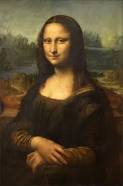
What were some important characteristics of the Renaissance
Death of another culture
Achievements and exploration
rebirth, end of medieval times, spirit of adventure
Kings, courts and knights flourished under new rule
How were the individuals judged in the different era of the Renaissance?
Classical works are presented but not focused on
Individuals achievement is frowned upon
Celebrates individual achievements
Focus on humanities
This person is known as "the magnificent"
Lorenzo Medici
Catherine the Great
Henry VIII
Owens Medici
Why did Italy’s historic legacy make it an ideal place for the Renaissance to begin
Europe was war ridden and Italy wasn't
The muslims stopped fighting everyone and allowed others to prosper
Renaissance thinkers were interested in the classical art philosophy and architecture of ancient Rome
Renaissance thinkers demanded students to learn from their past and Draw from those experiences
Which artist technique was developed during the Renaissance and used in The Last Supper
Perspective, Michalangelo
Perspective, Da Vinci
Realism, Raphael
Realism, Owen
How did Renaissance writings express Realism
Writers focused on the human experience in the world around them
Writers knew how to write short stories
Authors learned from previous stories to draw better ones from Machiavellis advice
Because of the printing press, it was easier to write books
Study of subjects such as grammar, rhetoric, poetry and history that were taught in Ancient Greece and Rome
Expressionism
Humanities
Humanism
Petrarch
Vernacular is everyday language of ordinary people
True
False
A subgroup of a major religious group
ghetto
sect
pious
canonized
First queen to rule England in her own right
Elizabeth I
Elizabeth II
Mary Tudor
Catherine of Aragon
Direct the future of the Catholic Church, a group of leaders who met to respond to Protestant Challenges.
Council of Trent
Council of Troy
Council of Church of Rome
Council of Mary
Separate section of a city where members of a minority group are forced to live is called canonized
True
False
Polish astronomer, sun is the center of the universe
Galileo Galilei
Johannes Kepler
Heliocentric
Nicolaus Copernicus
German astronomer, planets move in a particular orbit and expanded on heliocentric universe
Tycho Brahe
Nicolaus Copernicus
Johannes Kepler
Isaac Newton
Mathematician, creator of the three laws of motion,
Sir Isaac Newton
Nicolaus Copernicus
Francis Bacon
Rene Descartes
Grassy plain with irregular patterns of rainfall
Sahara
Savanna
Bantu
Piankhi
The largest desert in the world is Death Valley
True
False
Sahara
grassy plains
water fall
larges desert in the world
smallest desert in the world
Cataract
Fertile nile valley
Stream
River
Waterfall
Process by which fertile or semi-desert land becomes desert
deserticfication
cataracts
Piankhi
Meroe
Root language of West Africa on which some early African migration patterns are based
Meroe
Piankhi
Bantu
Battara
Nubia ancient kingdom or northeastern Africa, also called Kush
True
False
Ancient kingdom of north Eastern Africa, aka Kush
Bantu
Nubia
Cataracts
Uganda
Capitol of the ancient kingdom of Nubia
Meroe
Rubio
Piankhi
Bantu
King of Kush, known for his military prowess throughout N.Africa
Piankhi
Bantu
Meroe
Nubia
Emperor who converted the Roman government into a military monarchy, his reign set the stage for other Roman Rulers
Septiius Serverus
Serverus Snape
King Nabia
Phoenicians
Trading center and powerful ancient kingdom in northern present-day Ethiopia
Axum
Adulis
Ethiopia
Swhili
powerful East African medieval trading center and city-state
Swahili
Bantu
Ethiopia
Great Zimbabwe
East African culture that emerged about A.D 1000; also a Bantu-based language, blending Arabic words and written in Arabic script
Swahili
Bantu
Adulis
Lalibela
Ruler of Ethiopia who came to power in the 1200's, built 11 Christian churches carved from ground level into the solid rock of the mountain below
Ethipia
Pankhi
Lalibela
Adulis
Ruler of Ethiopia who came to power in the 1200's, built 11 Christian churches carved from ground level into the solid rock of the mountain below
Ethipia
Pankhi
Lalibela
Adulis
Ancient Greek term for Ausmite kingdom; present-day country in E. Africa
Ethiopia
Zimbabwe
Swhili
Axum
Strategic trading port of the kingdom of Axum
Ethipia
Swhahili
Adulis
Eritrea
Nubia flourished as a society because of its
Trade routes, armies, lush lands and location
Location and religion
Trade routes and great natural resources
gaining indolence from Egypt and following their own culture
Why did Bantu-speakers migrate south instead of North?
War had spread to the North
It was time to migrate and infiltrate other societies
desertification had devoured their cropland
Mero demanded them to move
What evidence suggest that Great Zimbabwe was a great commercial center?
Impressive ruins
Improved farming and coastal relations
Each region had trade routes that linked them to the Mediterranean
Artifacts found by archaeologists such as beads, porcelain suggest it was apart of a key trade route
How did Ethiopia's geographic isolation shape its culture?
Allowed the kingdom to remain dependent and rely heavily on Islamic faith
Allowed the kingdom to remain independent and develop a unique identity
Trade declined and Ethiopia entered into a famine
Trade flourished and Ethiopia prospered
The decline of Zimbabwe was due to what reason(s)
desertification
war and famine
overgrazing and drought
war and religious differences
How did geographic features affect movement in Africa?
Piankhi helped them
They used camels to over come different terrains
It didn't, people didn't move around much
It was hindered by its deserts, tropical rain forest and many more
A trainee to a guild master, usually spent several years learning the trade
apprentice
guilded learner
farmer
journeymen

