wayground logo

Free Printable Worksheets

NEW

Font size

S
M
L
XL
Worksheets

Earth in Space 1-8 Review

Total questions: 76

Worksheet time: 2hrs 39mins

Name
Class
Date
1.
​Which​ ​motion​ ​of​ ​earth​ ​could​ ​be​ ​best​ ​demonstrated​ ​by​ ​Lebron​ ​James​ ​spinning​ ​a​ ​basketball​ ​on​ ​his​ ​finger?
a)
rotation
b)
revolution
c)
tilting
d)
leap year
2.
Because the earth spins on its axis, we experience:
a)
seasons
b)
weather
c)
day and night
d)
revolution
3.
How long does it take earth to make on complete revolution of the sun?
a)
24 hours
b)
1 day
c)
365 days
d)
365.25 days
4.
The tilt of the earths axis:
a)
5 degrees
b)
10.2 degrees
c)
23.5 degrees
d)
365.25 degrees
5.
A word used to describe a moon that is "getting larger"
a)
gibbous
b)
crescent
c)
waxing 
d)
waning
6.

The imaginary line that passes through earth and the north and south poles.

a)

axis

b)

graviy

c)

equator

d)

prime meridian

7.
As the moon revolves around the earth, we always see the same side of the moon.
a)
true
b)
false
8.
Seasons on Earth are caused by how close the earth is to the sun
a)
true
b)
false
9.
A "day" and a "year" on the moon are the same length.
a)
true
b)
false
10.
A moon that is more than a quarter, but less than full is called gibbous
a)
true
b)
false
11.
When the north pole faces away from the sun we experience summer.
a)
true
b)
false
12.
Which of the following has the biggest impact on the seasons?
a)
Earth's rotation
b)
Tilted axis
c)
Moon's gravitational pull
d)
Pressure systems
13.
What causes the day and night cycle on Earth?
a)
Rotation of the Sun
b)
Revolution of the Earth
c)
Gravitational pull from the moon
d)
Rotation of the Earth
14.
In Which position would the Southern Hemisphere experience winter?
a)
Position A
b)
Position B
c)
Position C
d)
Position D
15.
In which position would the Northern Hemisphere be experiencing spring?
a)
Position A
b)
Position B
c)
Position C
d)
Position D
16.
What phase is illustrated here?
a)
1st Quarter
b)
Waning gibbous
c)
Waxing crescent
d)
New moon
17.

If there is a full moon today, what moon phase will be occur tomorrow?

a)

waning gibbous

b)

waxing gibbous

c)

new moon

d)

3rd quarter

18.

It is currently Spring in the northern hemisphere, what season is it currently in the southern hemisphere?

a)

winter

b)

spring

c)

summer

d)

fall

19.

Which term describes when the moon is less illuminated each night?

a)

waxing

b)

waning

c)

wandering

d)

whining

20.

During which season do we experience the most hours of daylight because of the tilt of the Earth?

a)

Summer

b)

Fall

c)

Winter

d)

Spring

21.
What is this diagram representing? 
a)
Earth revolving on its axis every 365 days to make day/night
b)
Earth rotating on its axis around the sun every year
c)
The sun rotates on its axis around Earth to make day/night
d)
The Earth rotates on its axis every 24 hours to make day/night
22.
Why is this model representing Earth's Revolution around the sun?
a)
It shows how there are 4 weeks in a month as Earth rotates on its axis
b)
Earth revolving on its axis in 1 month
c)
It is showing how Earth has 4 seasons as it orbits around the sun in a year
d)
All of the above are correct
23.

About how many days does the moon repeat its phases?

a)

about 29 days

b)

about 24 hours

c)

about 365 days

24.
What is the name of the missing moon phase? 
a)
New Moon
b)
Second Moon
c)
Last Moon
d)
Last Quarter/Half
25.
The Sun rises in the ______ and sets in the ____________. 
a)
sunrise - east
sunset - west
b)
sunrise - north
sunset west
c)
sunrise - east
sunset - south
d)
sunrise - west
sunset - east
26.

When the sun gets higher in the sky, shadows get ______.

a)

longer

b)

gone

c)

shorter

d)

darker

27.

Shadows are shortest around______.

a)

morning and evening

b)

noon

c)

night

28.

When the sun gets lower in the sky, shadows get______.

a)

longer

b)

gone

c)

shorter

d)

darker

29.

Shadows are longest during _______.

a)

morning and evening

b)

noon

c)

night

30.
Where does the sun rise? 
a)
North
b)
South
c)
East
d)
West
31.
Where does the sun set? 
a)
North 
b)
South
c)
East
d)
West
32.

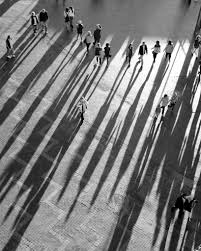
When was this picture most likely taken?

(Hint: think about the shadow's length)

a)

morning or evening

b)

night

c)

noon

d)

afternoon

33.

What do shadows on Earth help show?

a)

Earth's rotation

b)

Earth's revolution

c)

Earth's equator

d)

Earth's axis

34.

When an object blocks the path of light, what is formed?

a)

A problem

b)

A fog

c)

A reflection

d)

A shadow

35.

When the Sun is behind you, your shadow is ...

a)

behind you

b)

in front of you

c)

at the side of you

d)

not there

36.
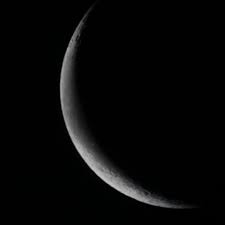
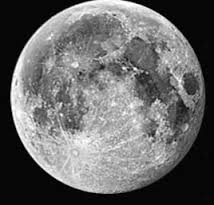
Name the moon phase
a)
waning crescent
b)
waxing crescent
c)
waning gibbous
d)
waxing gibbous
37.
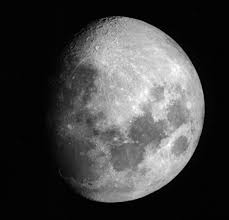
Name the moon phase
a)
waning crescent
b)
waxing crescent
c)
waning gibbous
d)
waxing gibbous
38.
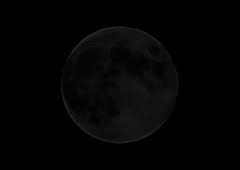
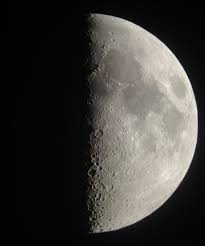
Name the moon phase
a)
First Quarter
b)
Last Quarter
c)
New Moon
d)
Full Moon
39.
Name the moon phase
a)
First Quarter
b)
Last Quarter
c)
New Moon
d)
Full Moon
40.
Name the moon phase
a)
First Quarter
b)
Last Quarter
c)
New Moon
d)
Full Moon
41.
Name the phase of the moon for letter a
a)
First Quarter
b)
Last Quarter
c)
Waxing Gibbous
d)
Waning Gibbous
42.
Name the phase of the moon for letter f
a)
Waning Gibbous
b)
Waxing Gibbous
c)
Waning Crescent
d)
Waxing Crescent
43.
Name the moon phase
a)
waning crescent
b)
waxing crescent
c)
waning gibbous
d)
waxing gibbous
44.
The cycle of the moon lasts about a _.
a)
day
b)
year
c)
week
d)
month
45.
How many phases does the moon go through?
a)
4
b)
8
c)
10
d)
16
46.
Define Gibbous
a)
Less than half of moon visible
b)
More than half of moon visible
c)
All of moon visible
d)
None of moon visible
47.
Name the moon phase
a)
Waning Crescent
b)
Waxing Crescent
c)
Waning Gibbous
d)
Waxing Gibbous
48.
The 1st Quarter moon is lit on the:
a)
Left Side
b)
Right Side
49.
Name the moon phase that would come AFTER this moon.
a)
waning crescent
b)
waxing crescent
c)
waning gibbous
d)
waxing gibbous
50.
What are dark areas on the surface of the sun that are cooler than the surrounding area?
a)
Prominences
b)
Sunspots
c)
Corona
d)
Solar Flares
51.
Intense explosions on the surface of the sun that send charged particles toward Earth
a)
Prominences
b)
Sunspots
c)
Solar Flares
d)
Corona
52.
What is the Sun mostly made of?
a)
Stars
b)
Hydrogen and Helium
c)
Oxygen
d)
Carbon Dioxide
53.
Energy released from _________ can cause damage to the International Space Station, disrupt radio and electrical transmissions on Earth, and cause Auroras in the skies near the North and South Poles
a)
Sunspots
b)
Solar Flares
c)
Prominences
d)
Corona
54.
What does #7 represent in the diagram?
a)
Photosphere
b)
Solar Flare
c)
Sunspot
d)
Prominence
55.
Auroras are frequently seen
a)
near the equator.
b)
before a sunspot cycle.
c)
every 11 years.
d)
after solar flares.
56.
What are northern lights?
a)
Auroras
b)
solar flares
c)
prominences
d)
coronas
57.
Sudden, intense explosions that result in changes in brightness when magnetic energy is released.
a)
Prominences
b)
Solar Flare
c)
Sunspot
d)
Photosphere
58.

This model is showing us a...

a)

lunar eclipse

b)

solar eclipse

c)

phases of the moon

d)

earth eclipse

59.

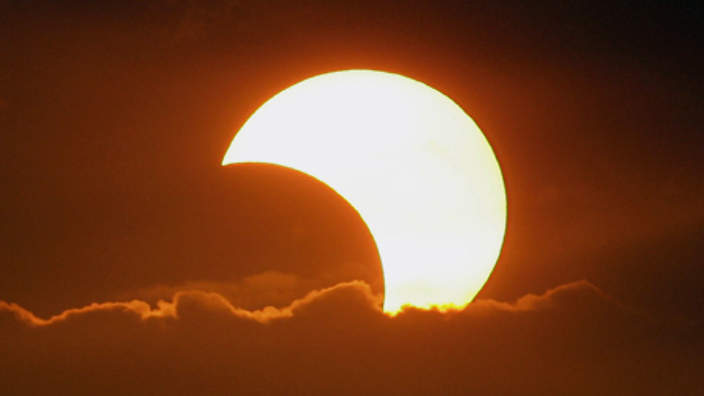
This image is showing us a.....

a)

solar eclipse

b)

lunar eclipse

c)

phases of the moon

d)

earth eclipse

60.

When the moon passes between the earth and the sun, this results in a.....

a)

Waxing moon

b)

lunar eclipse

c)

solar eclipse

d)

sun rise

61.

When the earth is between the sun and the moon, this results in a...

a)

waxing moon

b)

solar eclipse

c)

lunar eclipse

d)

sun rise

62.

If you look up at the sky and see this, you are witnessing a....

a)

solar eclipse

b)

total eclipse

c)

lunar eclipse

d)

jupiter

63.

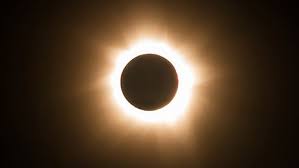
If you are looking up at the sky and see this, you are looking at a....

a)

solar eclipse

b)

total eclipse

c)

lunar eclipse

d)

jupiter

64.

Which of the following is not true about a total solar eclipse?

a)

It can be viewed once a year from every spot on earth

b)

It is dangerous to look at without the proper device

c)

When it happens, the moon blocks all of the sun except the corona

d)

You must be within the moon's umbra to see it

65.

In order to have an eclipse, the Moon, Sun and Earth have to be?

a)

Below each other

b)

Above each other

c)

In alignment

66.

This image is an example of

a)

Lunar Eclipse

b)

Full Moon

c)

New Moon

d)

Solar Eclipse

67.

During a lunar eclipse, what color does the moon appear?

a)

Black

b)

Red-orange

c)

Yellow-green

d)

White

68.
When does a lunar eclipse occur?
a)
At night
b)
When the moon's shadow is on the earth
c)
when the moon comes between the sun and earth
d)
During the day
69.
A solar eclipse only happens during a ________ moon.
a)
New
b)
Cresent
c)
Gibbous
d)
Full
70.
A lunar eclipse only happens during a ________ moon.
a)
New
b)
Cresent
c)
Gibbous
d)
Full
71.
Where must you be to see a total solar eclipse?
a)
a corona
b)
an orbit
c)
the moon's shadow
d)
the earth's shadow
72.
What is the darkest inner part of the shadow cone called, where a total eclipse can be viewed.
a)
Total
b)
Umbra
c)
Penumbra
73.
What is the larger outer lighter part of the shadow cone called, where a partial eclipse can be viewed?
a)
Partial
b)
Umbra
c)
Penumbra
74.
During a solar eclipse...
a)
The sun is blocked by the moon
b)
The Earth is blocked moon
c)
The moon is blocked by the sun
d)
You are blocked
75.
A lunar eclipse occurs when the Moon casts a shadow on Earth.
a)
True
b)
False
76.
We do NOT have a solar or lunar eclipse each month because...
a)
The tilt of the moon's orbit is at 5 degrees
b)
The moon is too small
c)
The moon's orbital distance changes
d)
All choices