wayground logo

Free Printable Worksheets

Font size

S
M
L
XL
Worksheets

Energy Test Review

Total questions: 75

Worksheet time: 4hrs 45mins
Name
Class
Date
1.
Hydropower 
a)
produces no air pollution
b)
can be built in any location
c)
has no construction costs
d)
uses a nonrenewable resource
2.
_____________ power is electricity produced by flowing water.
a)
Solar 
b)
Wind 
c)
Hydroelectric 
d)
water
3.
Which is an advantage of installing solar panels?
a)
Reduced amount of air polllution
b)
High cost to install
c)
Number of cloudy days
d)
Use of nonrenewable resources
4.
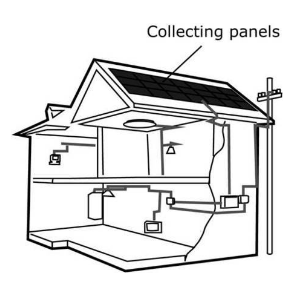
The house illustrated here uses panels on the roof to collect a natural resource and convert it into electricity that can be used.
Which alternative energy source does this house use?
a)
Water
b)
Wind
c)
Solar
d)
Geothermal
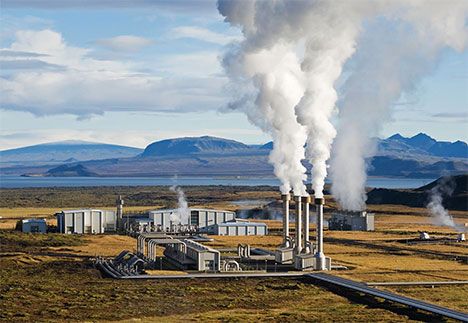
5.
This power plant produces electricity most likely by using - 
a)
fossil fuels
b)
biofuels
c)
solar energy 
d)
geothermal energy 
6.
Heat transferred from beneath the surface of Earth and used to produce energy for human use is...
a)
Hydropower
b)
Wind Energy
c)
Geothermal Energy
d)
Solar Energy
7.
What is a disadvantage of wind power?
a)
We have too many rainy days in US
b)
It is not always windy in some places
c)
Companies charge too much to make the wind blow
d)
The sun is not always out
8.
Wind Energy is...
a)
 Energy that comes from harnessing the movement of the air
b)
Energy that comes from the Sun
c)
A source of renewable energy, such as solar, wind, or geothermal energy
d)
Fuel from plant material
9.
Energy produced by burning organic matter such as wood, food scraps, and animal matter is called______________ energy.
a)
Biomass
b)
Thermal energy
c)
Solar
d)
Wind
10.

Which is NOT an example of Biomass?

a)

wood

b)

crops

c)

wind

d)

animal and plant waste

11.

Which of these is NOT a fossil fuel?

a)

nuclear

b)

oil

c)

natural gas

d)

coal

12.
Nuclear power uses ____ for fuel.
a)
steel
b)
coal
c)
uranium
d)
hydrogen
13.

All of the following are disadvantages of nuclear energy except ---

a)

radioactive waste up to 100+ years

b)

air pollution

c)

uranium will eventually run out

d)

concerned about waste storage

14.
The energy of nuclear reactions between atoms that creates heat and turns turbines is _________.
a)
Coal
b)
Wind
c)
Hydro
d)
Nuclear
15.
_________is compacted matter dug from under the Earth’s surface that is used to provide energy by burning it.
a)
Hydro
b)
Coal
c)
Nuclear
d)
Geothermal
16.
__________is a gas found under the Earth’s surface and is used to produce energy by burning it.
a)
Geothermal
b)
Natural Gas
c)
Coal
d)
Nuclear
17.

Which of the following is an advantage of using oil as an energy source?

a)

The transportation of oil has caused the ocean to be polluted at times when there is an oil spill.

b)

The substances that are emitted from oil plants are harmful to living organisms.

c)

The high energy density allows a small amount of oil to produce a large amount of energy.

d)

The release of carbon dioxide into the atmosphere contributes to the global warming effect.

18.

Which of the following activities contributes the most to global warming?

a)

Cutting down trees

b)

Agriculture

c)

Burning fossil fuels

d)

Respiration

19.

What is the greenhouse effect?

a)

The warming of a planet due to trapped radiation.

b)

The cooling of Earth due to air pollution.

c)

The heating of a solid, such as a rock.

d)

Plants and trees being cut down

20.

Fossil Fuels formed over long periods of time. What needs to be present in order for fossil fuels to form?

a)

Sand and wood

b)

Decaying organisms

c)

Lava and rocks

d)

Metals in the earth

21.

Which answer correctly has all three types of heat transfer?

a)

conduction, convection, rigatoni

b)

convergent, convection, radiation

c)

conduction, coven, radiation

d)

conduction, convection, radiation

22.

The sun's energy reaches earth by

a)

conduction.

b)

convection.

c)

radiation.

d)

solaration.

23.

Heat is transferred from a stove to a pot to boiling water by

a)

circulation

b)

conduction.

c)

convection.

d)

radiation.

24.

Why are ocean currents considered convection currents?

a)

Warm water moves counterclockwise in the northern hemisphere.

b)

Warm water rises and cold water moves in to replace it.

c)

Convection currents move in closed paths around the oceans.

d)

Convection currents are affected by the directions of global winds.

25.

Which type of spoon would be safer when stirring hot soup and why?

a)

A metal spoon is long lasting.

b)

A plastic spoon is a good insulator.

c)

A metal spoon is a good insulator.

d)

A plastic spoon is a good conductor.

26.
The transfer of heat by currents through liquids of gases is called
a)
Perspiration
b)
Radiation
c)
Conduction
d)
Convection
27.

How does heat energy transfer through matter from particle to particle?

a)

convection

b)

radiation

c)

conduction

d)

friction

28.

How can heat energy transfer by light and other kinds of electromagnetic waves?

a)

radiation

b)

convection

c)

conduction

d)

magnets

29.
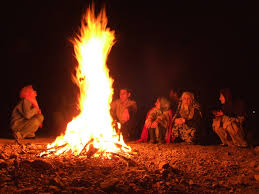
A group of friends gather around a fire to stay warm.
a)
conduction
b)
convection
c)
radiation
30.

Curling Iron

a)

Conduction

b)

Convection

c)

Radiation

31.

Lava Lamp

a)

Conduction

b)

Convection

c)

Radiation

32.

Microwaving Food

a)

Conduction

b)

Convection

c)

Radiation

33.
Walking on the warm sand sand with your bare feet.
a)
conduction
b)
convection
c)
radiation
34.
In a swimming pool the water near the surface is slightly warmer. The warm water rises because of ...
a)
Conduction
b)
Convection 
c)
Radiation
35.
Molecules in cold things move more _________
than in hot things.
a)
quickly
b)
slowly
c)
happily
d)
merrily
36.
Heat transfers from an area of ____temperature to an area of ___ temperature.
a)
high to low
b)
low to high
c)
high to high
37.
An aluminum plate and a plastic plate have been in the freezer all night long.  When you remove them the next morning, 
a)
the plates have the same temperature.
b)
the plastic plate has a higher temperature.
c)
the plastic plate has a lower temperature.
d)
the aluminum plate has a lower temperature.
38.

In heat transfer, heat always flows from the _?_ substance to the _?_ substance.

a)

hotter to colder

b)

colder to hotter

c)

hotter to hotter

d)

colder to colder

39.
What happens when ice cubes melt in a glass?
a)
Heat travels from the ice to the warmer water.
b)
No energy is transferred.
c)
Heat is transferred from the warmer water to the ice cubes.
40.
Which direction will the heat flow while this person holds a hot cup of tea?
a)
from the cup to her hand
b)
from her hand to the cup
c)
no heat is transferred
41.

For science experiments we measure temperature in:

a)

Fahrenheit

b)

Celsius

c)

Meters

d)

Grams

42.

The temperature where liquid becomes a gas is called:

a)

boiling point

b)

breaking point

c)

freezing point

d)

freeing point

43.

The temperature where liquid becomes a solid:

a)

boiling point

b)

breaking point

c)

freezing point

d)

feeling point

44.

The tool we use to measure temperature is:

a)

thermometer

b)

meter stick

c)

triple beam balance

d)

hammer

45.

The measurement of how fast particles of matter are moving:

a)

temperature

b)

conduction

c)

radiation

d)

cold

46.

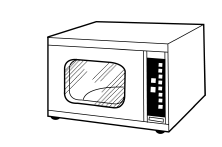
The picture shows a microwave oven. As a microwave oven is operated, electrical energy is transformed into all of the following types of energy EXCEPT —

a)

solar

b)

radiant

c)

thermal

d)

mechanical

47.
Energy transformations occur when...
a)
energy is created through conduction
b)
energy changes from one form to another
c)
two forces slide together that are touching
d)
a chemical reaction takes place
48.

Which of the following shows the correct order of the energy transformations that occur when green plants produce their food from the Sun’s energy?

a)

chemical to thermal

b)

radiant to chemical

c)

thermal to radiant

d)

chemical to electrical

49.

Which of the following shows an energy transformation from chemical --> electrical --> radiant energy?

a)

A bolt of lightning lights the night sky.

b)

A candle glows brightly in the dark.

c)

A fire in a fireplace lights up a room.

d)

A battery causes a flashlight to shine.

50.
Which items would have this energy transformation: nuclear energy -> electrical energy?
a)
tree growing fruit
b)
nuclear power plant
c)
solar calculator
d)
windmill turning
51.

Plugging in and turning on a hair dryer will transform electrical energy to-

a)

only thermal energy

b)

only sound energy

c)

thermal, sound, and mechanical energy

d)

only sound and mechanical energy

52.

Food, fuel, and batteries relate to which kind of energy?

a)

chemical

b)

thermal

c)

radiant

d)

nuclear

53.

Another word for light energy is

a)

sound

b)

solar

c)

fire

d)

radiant

54.

The Law of Conservation of Energy states

a)

energy can only be created, not destroyed.

b)

energy can only be destroyed, not created.

c)

energy can be created, destroyed, and transformed.

d)

energy cannot be created nor destroyed, only transformed.

55.

Electrical energy is only possible when you plug in something.

a)

True

b)

False

56.

Mechanical energy is the sum of which two energies?

a)

kinetic + sound

b)

potential + sound

c)

kinetic + potential

d)

kinetic + thermal

57.

What has to be true about an object for it to have kinetic energy?

a)

it must be moving

b)

it must be elevated

c)

it must be experiencing a net force

d)

it must be accelerating

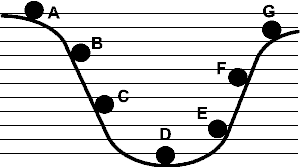
58.

Which point has the least amount of potential energy?

a)

G

b)

F

c)

D

d)

A

59.
At which point is potential energy greatest?
a)
W
b)
X
c)
Y
d)
Z
60.
As a pendulum swings from its highest to lowest position, what happens to its kinetic and potential energy? 
a)
Both the potential energy and kinetic energy decrease
b)
The potential energy decreases while the kinetic energy increases 
c)
The kinetic energy decreases while the potential energy increases 
d)
Bothe the potential energy and kinetic energy increase 
61.

The Independent Variable is represented on which Axis?

a)

A

b)

X

c)

B

d)

Y

62.

What is the name of the vertical (up and down) axis of the graph?

a)

X axis

b)

Y axis

63.
The Dependent Variable is represented on which Axis?
a)
A
b)
X
c)
B
d)
Y
64.
What is the independent variable in an experiment?
a)
the thing we change or test
b)
the normal situation
c)
what we measure in the end
d)
the thing we keep the same
65.
What is the dependent variable in an experiment? 
a)
the thing we change or test
b)
the thing we keep the same
c)
the thing we measure in the end
d)
the normal situation
66.

What is the name of the horizontal (side to side) axis of the graph?

a)

X axis

b)

Y axis

67.

Kinetic energy is affected by

a)

speed only

b)

mass only

c)

speed and mass

d)

speed, mass, and sound

68.

Potential energy is affected by

a)

mass and position/height

b)

mass only

c)

position/height only

d)

mass, position/height, and speed

69.

As you increase mass you also increase

a)

kinetic energy only

b)

potential energy only

c)

kinetic and potential energy

d)

neither kinetic or potential energy

70.
What type of graph is this?
a)
Line Graph
b)
Pictograph
c)
Bar Graph
d)
Histogram
71.
What type of graph is this?
a)
Line Graph
b)
Pictograph
c)
Bar Graph
d)
Histogram
72.
What is the title of this graph?
a)
Sports
b)
Our Favorite Sports
c)
Bar Graph
d)
Number of Students
73.
What type of graph is this?
a)
Bar graph
b)
Histogram
c)
Pie Chart
d)
Stem Chart
74.

What is the correct spelling?

a)

Marmalejo

b)

Marmolajo

c)

Marmolejo

d)

Marmolego

75.

What is the correct spelling?

a)

Shivandire

b)

Shivanderry

c)

Chivanderry

d)

Chivandire